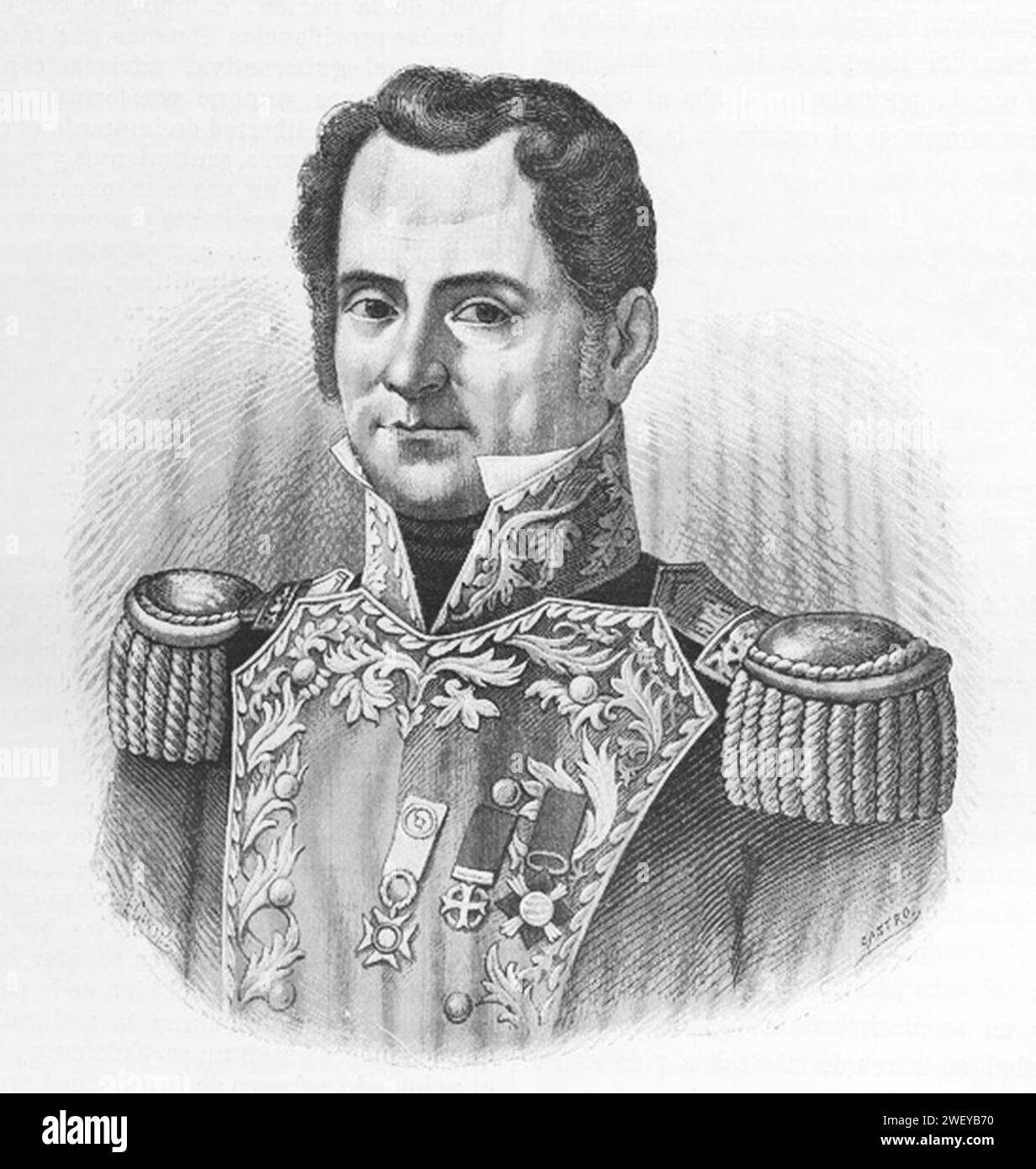
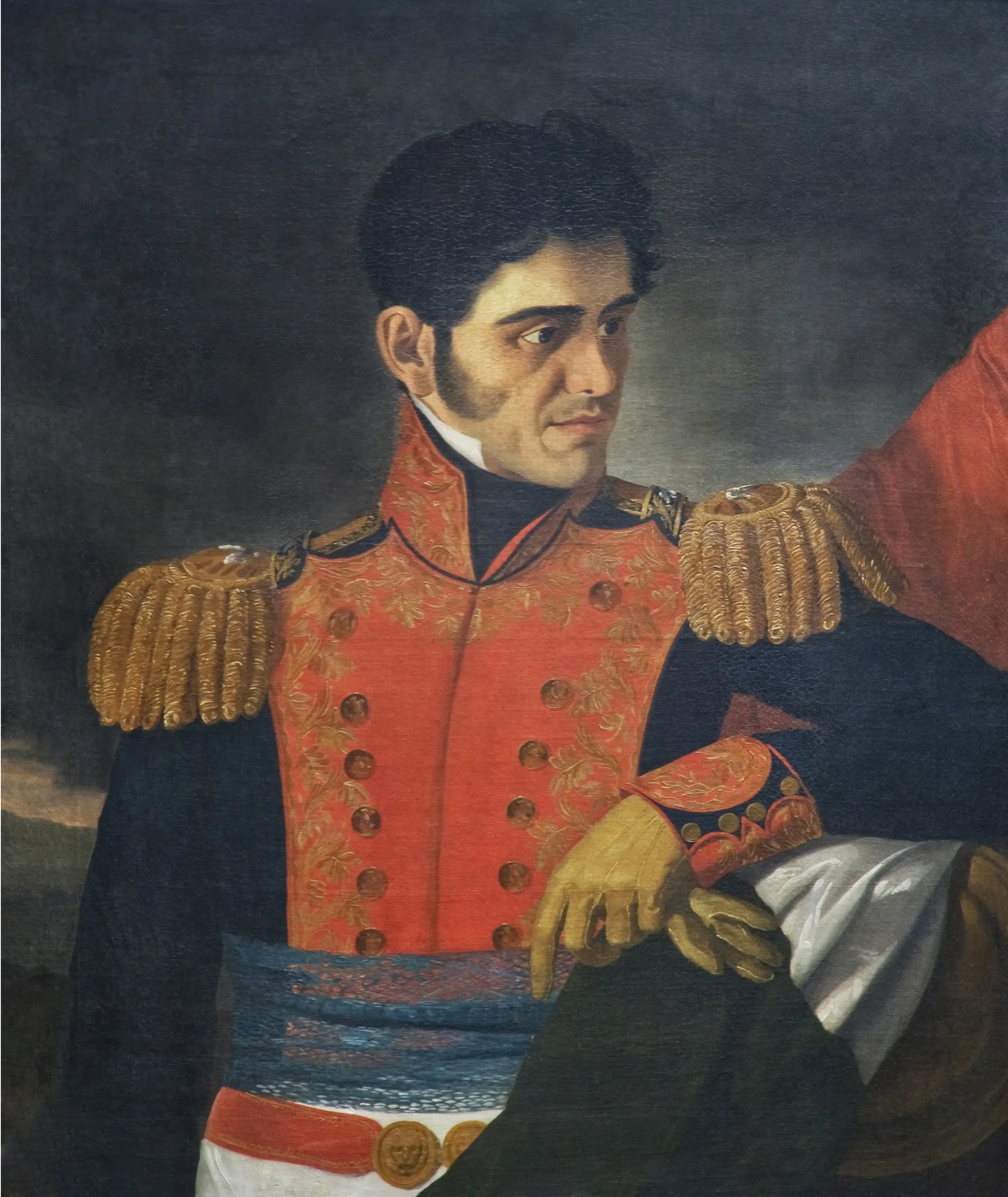
Anastasio Bustamante
 Mexico
politician•physician•military personnel
Also known as: Anastasio Bustamante y Oseguera
Birthday
July 27, 1780
Birth Sign
Leo
Birthplace
Jiquilpan, Michoacán, Mexico
Age
Died at 72
About
Anastasio Bustamante was a Mexican medical doctor, general, and politician who served as the 4th President of Mexico on three separate occasions. He led the country from 1830 to 1832, again from 1837 to 1839, and finally from 1839 to 1841, navigating the turbulent early decades of Mexican independence.
Before turning to politics, Bustamante trained as a physician, a background that set him apart from many of his military contemporaries. He is remembered as a conservative centralist who clashed with federalist factions, and his presidencies were marked by revolts, coups, and shifting alliances. His legacy is complex: he was both a royalist officer and a signatory to the Plan of Iguala, a vice president who helped overthrow his own president, and a three-time chief executive who spent his final years in exile before returning to Mexico.
Early Life & Background
Anastasio Bustamante was born on July 27, 1780, in Jiquilpan, a town in the western state of Michoacán. His parents were José Ruiz and Francisca Oseguera Bustamante, and he grew up during the final decades of Spanish colonial rule. He pursued a medical education, becoming a doctor, but the outbreak of the Mexican War of Independence in 1810 pulled him toward a military path.
Initially, Bustamante served in the Royalist Army, fighting against the insurgent forces led by Miguel Hidalgo and José María Morelos. His loyalty to the Spanish crown, however, wavered as the war dragged on. In 1821, he made a pivotal decision: he switched sides and threw his support behind Agustín de Iturbide and the Plan of Iguala, the conservative pact that ultimately secured Mexican independence. That same year, he proclaimed the independence of Mexico at the Hacienda San José de Pantoja, a moment that marked his transition from royalist officer to founding figure of the new nation.
After independence, Bustamante became a member of the Provisional Governing Junta, the first ruling body of Mexico, serving from September 28, 1821, to February 24, 1822. This early political role set the stage for his long and turbulent career in the highest echelons of Mexican government.
Career Growth
Bustamante's political ascent was rapid. He served as Vice President of Mexico from 1829 to 1832 under President Vicente Guerrero, but their alliance soured. In 1830, Bustamante led a conservative revolt against Guerrero, overthrew him, and assumed the presidency himself. This first term lasted until 1832, when federalist forces under Antonio López de Santa Anna forced him out of office and into exile.
He returned to power in 1837, during the era of the Centralist Republic, serving his second term until 1839. His third and final term ran from 1839 to 1841, but it was cut short by another rebellion, this time led by Santa Anna and other federalist generals. After his final ouster, Bustamante went into exile in Europe, returning to Mexico only in the late 1840s. He lived out his remaining years quietly, dying in San Miguel de Allende in 1853.
Throughout his presidencies, Bustamante grappled with Mexico's chronic instability, facing numerous revolts, economic crises, and the loss of Texas to revolution. His governments were characterized by centralist policies and a reliance on the military, which ultimately proved unsustainable in the face of federalist opposition.
Career Timeline
Public Image & Style
Bustamante is generally portrayed in Mexican history as a conservative centralist who prioritized order and stability over democratic ideals. His overthrow of Vicente Guerrero, which led to Guerrero's execution, has made him a controversial figure. Some historians view him as a pragmatic leader who tried to hold the country together during its fragile early years, while others see him as a power-hungry caudillo. Despite his three presidencies, he is not as widely celebrated as figures like Benito Juárez or even Santa Anna, and his legacy remains a subject of debate among scholars.
Fame & Fandom (iFAMOUS Rankings)
Anastasio Bustamante commands a legacy defined entirely by historical scholarship rather than contemporary adoration. As a figure from the early republic era of Mexico, he predates the concept of mass celebrity fandom by nearly two centuries. There is no record of fans calling themselves by a specific name, organizing for chart pushes, funding subway ads, or engaging in charity drives in his name. His interactions were strictly political and military, involving governance, rebellion, and conflict with other factions of the time. No formal or unofficial fandom exists for Anastasio Bustamante. The stories associated with him are documented historical events regarding his political career and military actions, rather than viral incidents or stage performances that caused crowds to faint or shut down streets. While the Triangular Revolt of 1841 remains a significant turning point in his career, it is a recorded political collapse studied by historians, not a folklore story told by fans. Consequently, the concepts of an official fandom name, fan campaigns, streaming pushes, birthday billboards, or viral internet lore do not apply to him. iFANN's Global Fame Engine has evaluated this person, but they do not currently hold a placement in the published rankings (Global Top 1,000 or a Top-100 scope list).
Interesting Facts and Legends
Anastasio Bustamante was one of the few Mexican presidents of his era with a medical degree, a profession he practiced before entering politics. He was known for his conservative and centralist views, which put him at odds with the federalist ideals of many of his contemporaries. He proclaimed independence at the Hacienda San José de Pantoja, a historic site that still stands in ruins in Valle de Santiago, Guanajuato. A street in Mexico City's Lázaro Cárdenas neighborhood bears his name, and a section of it was recently the subject of a municipal proposal in Chihuahua. Bustamante was also the subject of a 190th anniversary exhibition commemorating his role in the independence movement. Historical accounts note his leadership during the Provisional Governing Junta following the switch of allegiances from Royalist to Independence forces. His final fall from power occurred during the Triangular Revolt between August and October 1841, ending his third presidency. He died on February 6, 1853, in San Miguel de Allende at the age of 72.
Family & Personal Life
Details about Bustamante's family life are scarce. His parents were José Ruiz and Francisca Oseguera Bustamante. There is no public record of him ever marrying or having children, and he appears to have remained single throughout his life. His personal life was largely overshadowed by his public career, and historical records focus almost exclusively on his political and military activities.
Notable Connections
Bustamante is often associated with Agustín de Iturbide, the leader of the Plan of Iguala, and Antonio López de Santa Anna, his recurring rival. He also had a complex relationship with Vicente Guerrero, whom he overthrew. His political career was deeply intertwined with the conservative and federalist factions that shaped early post-independence Mexico.
Relationships & Dating History
There is no recorded information about Anastasio Bustamante's romantic relationships or marriages. Historical sources focus exclusively on his political and military career, and no mention of a spouse, partner, or children appears in the available records. It is likely that he remained unmarried and dedicated his life to public service.
Death & Aftermath
Died
February 6, 1853 (aged 72)
Death Place
San Miguel de Allende, Guanajuato, Mexico
Cause of Death
Reported as natural causes associated with old age
Anastasio Bustamante died on February 6, 1853, in San Miguel de Allende at the age of seventy-two. Accounts describe his death as resulting from natural causes associated with advanced age, occurring without dispute or legal investigation in a town far removed from the capital where he had once held supreme power. The reaction to his demise was notably muted, reflecting the polarized nature of his legacy among contemporaries who viewed him alternately as a stabilizing force or an authoritarian figure. Tributes were confined to brief mentions in government gazettes and formal obituaries rather than public vigils or widespread mourning ceremonies.
Funeral arrangements appear to have been modest and private, with burial taking place locally in San Miguel de Allende. Subsequent history has preserved his name primarily through academic study and biographical entries detailing his three presidencies and role in the early Mexican republic. Historical texts and encyclopedias continue to document his involvement in the Pastry War and the political instability of the 1830s and 1840s.
Net Worth (Estate Value)
$5 Million
iFANN Editorial Team estimate
As a 19th-century political and military figure, Bustamante did not accumulate vast personal wealth in the way modern celebrities do. His income came from his military salary, presidential stipends, and possibly earnings from his medical practice. After his final exile, he likely lived on a modest pension. In today's terms, per iFANN's editorial analysis, his estate would be valued at $5 Million, though exact figures are impossible to verify. As of 2026, his historical legacy is far more significant than any financial footprint he left behind.
Awards & Accolades
View 1 records, honours and achievementsKnown For
President of Mexico (three terms)
1830-1841 · President
Vice President of Mexico
1829-1832 · Vice President
Mexican War of Independence
1810-1821 · Military officer
Keywords
Sources
Quick Facts
- Profession
- politician, physician, military personnel
- Born
- July 27, 1780
- Birthplace
- Jiquilpan, Michoacán, Mexico
- Died
- February 6, 1853
- Death Place
- San Miguel de Allende, Mexico
- Gender
- Male
- Birth Sign
- Leo
Personal Details
- Full Name
- Anastasio Bustamante y Oseguera
Frequently Asked Questions
How old was Anastasio Bustamante when he died?
What was Anastasio Bustamante's net worth?
Why is Anastasio Bustamante famous?
Was Anastasio Bustamante married?
How many times was Anastasio Bustamante president?
Similar People
Join the community
fans discussing