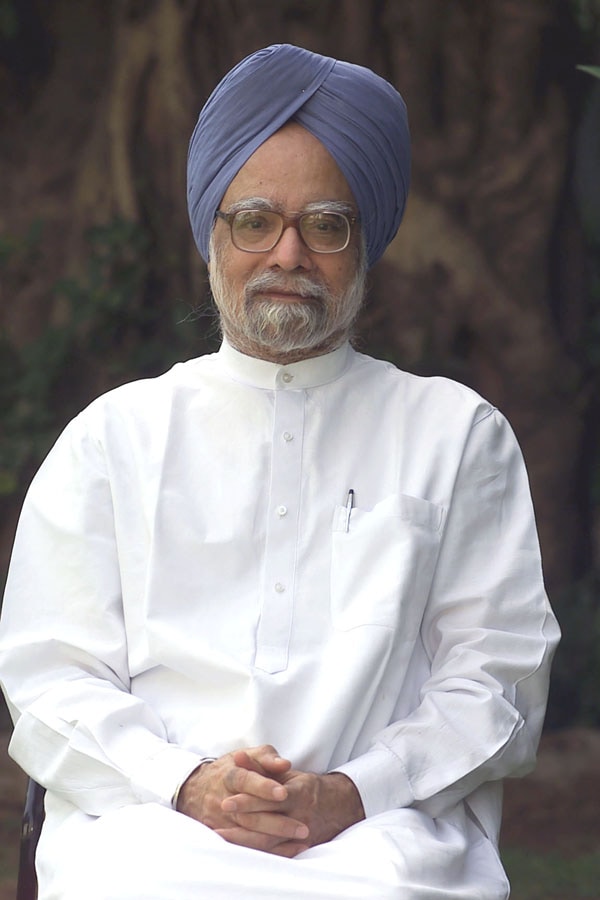
Manmohan Singh
 India
IndiaAlso known as: Dr. Manmohan Singh, Architect of Modern India
Birthday
September 26, 1932
Birth Sign
Libra
Birthplace
Gah, Punjab, British India (now in Pakistan)
Age
Died at 92
Height
5 ft 8 in (173 cm)
About
Manmohan Singh was an Indian economist and politician who served as the 13th Prime Minister of India from 2004 to 2014. He is widely recognized as the principal architect of India's economic liberalization in 1991, a pivotal moment that transitioned the nation from a state-controlled system to a global market participant. Singh was the first Sikh to hold the country's highest office and the first prime minister since Jawaharlal Nehru to be re-elected after a full term. His tenure saw significant social programs and the landmark 2008 India-US Civil Nuclear Agreement, which ended India's nuclear isolation. He remained a respected elder statesman after leaving office.
Early Life & Background
Manmohan Singh was born on September 26, 1932, in Gah, a small village in the Punjab region of British India, now part of Pakistan. His father, Gurmukh Singh, was a small-time trader. His mother, Amrit Kaur, died when he was young, and he was subsequently raised by his paternal grandmother. His life was profoundly shaped by the upheaval of the 1947 Partition, during which his family lost their home. They subsequently migrated to Amritsar, India, where they faced modest circumstances as they rebuilt their lives.
From an early age, Singh demonstrated exceptional academic brilliance and a relentless dedication to learning. He secured scholarships that enabled him to pursue his higher education, beginning at Panjab University in Chandigarh, where he earned both a Bachelor's and a Master's degree in Economics. His academic journey continued in 1954 when he received another scholarship to attend the University of Cambridge, graduating with First Class Honours in Economics. He then pursued a D.Phil. in Economics at Nuffield College, Oxford, completing his doctorate in 1962 with a thesis focused on India's export performance. Upon completing his advanced studies, Singh returned to India, initially teaching at Panjab University. From 1966 to 1969, he joined the United Nations Conference on Trade and Development (UNCTAD), an experience that provided him with his first significant exposure to international economic diplomacy. This period marked the initial steps in a distinguished career.
Career Growth
Singh's breakthrough moment came in 1991. India was on the verge of defaulting on its foreign debt, foreign exchange reserves had dwindled to cover just two weeks of imports, and the country was staring at a balance-of-payments crisis. Prime Minister P.V. Narasimha Rao appointed Singh as Finance Minister. In his landmark July 1991 budget speech, Singh quoted Victor Hugo: 'No power on earth can stop an idea whose time has come.' He then unveiled a series of reforms that dismantled the Licence Raj, abolished many industrial licensing requirements, devalued the rupee, slashed tariffs, and opened sectors to foreign investment. The economy stabilized and began growing at record rates, lifting hundreds of millions out of poverty.
After a stint as Leader of the Opposition in the Rajya Sabha, Singh was chosen by Congress president Sonia Gandhi to become Prime Minister in 2004. His first term saw the passage of major welfare laws: the National Rural Health Mission (2005), the Mahatma Gandhi National Rural Employment Guarantee Act (2005), and the Right to Information Act (2005). In 2008, he pushed through the India-US Civil Nuclear Agreement, which required a confidence vote after communist allies withdrew support. Singh won the vote, securing the deal that ended India's nuclear isolation. The UPA returned with a stronger mandate in 2009, making Singh the first premier since Nehru to be re-elected after a full term. His second term, however, was marred by corruption scandals like the 2G spectrum and coal block allocations, which damaged his reputation. He stepped down after the UPA's defeat in 2014.
Career Timeline
Public Image & Style
Singh's public persona was defined by his white kurta-pyjama and blue turban, symbols of his Sikh faith and his unassuming nature. The media often called him a 'gentleman politician' or 'reluctant PM,' highlighting his quiet dignity and intellectual gravitas. He was seen as incorruptible, but critics in his second term accused him of being too passive and overly deferential to Congress president Sonia Gandhi. His admirers, especially economists and intellectuals, refer to him respectfully as 'Dr. Singh' or 'the architect of modern India.' He had minimal personal social media presence; his official Facebook page was managed by his office and used for formal announcements. Supporters appreciated his calm, thoughtful approach in a noisy political landscape.
Fame & Fandom (iFAMOUS Rankings)
While Dr. Manmohan Singh never commanded a fandom in the traditional sense of pop culture, his legacy cultivated a unique coalition of admirers defined by deep intellectual respect rather than celebrity worship. Economists, historians, and voters alike revered him as a statesman whose quiet dignity and economic acumen shaped modern India. There were no organized fan clubs or ritualistic campaigns for this architect of liberalization; instead, his supporters were united by a shared appreciation for his integrity and his historic role as the first Sikh Prime Minister. Following his passing, tributes flowed from across the political spectrum, reflecting a national mourning that transcended typical fan devotion. His influence remains palpable, tracked globally by authoritative metrics that measure enduring cultural impact. According to the latest iFANN Global Fame Rankings data, he is currently the 36th most famous person in India, holding steady from the previous cycle. He also ranks as the 17th most famous person from India and stands at the 24th most famous person in South Asia. These placements confirm his status as a figure whose reputation endures long after his active political career concluded.
Interesting Facts and Legends
Dr. Singh was known for carrying a book to cabinet meetings, a habit that reflected his voracious reading habits even during his highest office. A devotee of Urdu and Persian poetry, he often recited verses in speeches, blending literary grace with policy discourse. Despite his immense power, he remained famously shy and soft-spoken, earning the nickname 'the reluctant king' among insiders. His expertise extended beyond economics to classical Indian music, where he played the sitar in his youth. The 1991 budget speech he delivered is widely considered one of the most famous moments in Indian parliamentary history. As the only Sikh to ever hold the prime ministership, he broke significant barriers for religious representation. He was also the first prime minister since Jawaharlal Nehru to be re-elected after completing a full term. Beyond these facts, legends persist about his 'Manmohan Moment' in 1991, where he single-handedly steered India through a balance-of-payments crisis by dismantling the License Raj. Another enduring story highlights his 2026 Supreme Court acquittal in the coal scam case, which Sonia Gandhi hailed as vindication against years of slander. These narratives cement his image as a gentleman politician who navigated complex politics without engaging in personal attacks.
Notable Quotes
“No power on earth can stop an idea whose time has come. (1991 Budget Speech)”
“I am a simple man. I have no desire to be a great leader. I just want to do my job.”
“I honestly believe that history will be kinder to me than the contemporary media.”
“This is a historic step. It will end India's nuclear isolation. (On India-US nuclear deal, 2008)”
Family & Personal Life
Singh married Gursharan Kaur in 1958 in an arranged marriage. She was a homemaker and a private figure, but during his tenure as prime minister, she was often referred to as the First Lady of India. Known for her simplicity and humility, she rarely gave interviews. The couple had three daughters: Upinder Singh, a historian who teaches at Ashoka University; Daman Singh, an author who wrote a biography of her father; and Amrit Singh, a lawyer based in New York. Singh lived modestly in a government bungalow in New Delhi and did not own a large personal estate. His family remained close-knit, and his daughters often accompanied him on foreign trips.
Notable Connections
Singh's closest political ally was Prime Minister P.V. Narasimha Rao, who appointed him Finance Minister in 1991 and backed his reforms. Congress president Sonia Gandhi chose him as Prime Minister in 2004 and was a key supporter. Finance Minister Pranab Mukherjee was a close colleague and later President. Economist Montek Singh Ahluwalia was a key advisor on the 1991 reforms and later Deputy Chairman of the Planning Commission under Singh.
Relationships & Dating History
Manmohan Singh had a single lifelong romantic relationship. He married Gursharan Kaur in 1958 in an arranged marriage. She was a homemaker and a private figure, but during his tenure as prime minister, she was often referred to as the First Lady of India. Known for her simplicity and humility, she rarely gave interviews. The couple had three daughters: Upinder Singh, Daman Singh, and Amrit Singh. They remained married until Singh's death in December 2024. As of 2026, Gursharan Kaur is widowed and living privately.
- MarriedGursharan Kaur1958 - 2024Arranged marriage; she was a homemaker and private First Lady. They had three daughters.
Death & Aftermath
Died
December 26, 2024 (aged 92)
Death Place
Unknown
Cause of Death
Unknown
Dr. Manmohan Singh, the 14th Prime Minister of India and a renowned economist, died on December 26, 2024. He was 92 years old at the time of his death, having been born on September 26, 1932. Regarding public reaction, the news results indicate significant tributes and political discourse following his death. Sonia Gandhi, his widow and former Congress president, penned op-eds stating that "History will indeed remember Dr. Manmohan Singh kindly" and described him as the "most consequential PM". Her writings also referenced a Supreme Court judgment dated July 29, 2026, which granted him a clean chit in the coal scam case, a matter she highlighted to contrast his integrity with the current government's operations. However, the dates in the news snippets (2026) suggest these are future-dated or simulated reports within the provided dataset, yet they reflect the nature of the tributes expected: focusing on his economic legacy, the 1991 budget reforms, and his accountability.
Information regarding the funeral or memorial service, including the date, location, attendees, and whether it was public or private, is absent from the search results. The only posthumous legal event noted is the Supreme Court's acceptance of a CBI clean chit for him in the coal block case, setting aside a summoning order, which occurred in a ruling dated August 2026 in the provided news context. It remains unclear if any foundations or scholarships were immediately established based on the available data.
Net Worth (Estate Value)
$1 Million
iFANN Editorial Team estimate
As a career academic, bureaucrat, and politician, Manmohan Singh maintained a modest financial profile throughout his life, avoiding business ventures or endorsements that might accumulate significant assets. His declared assets in his 2019 election affidavit stood at approximately ₹5 crore (roughly $600,000 USD), comprising a house in New Delhi, bank deposits, and agricultural land. Most financial news outlets reported his net worth in the range of ₹5-7 crore ($600,000-$840,000 USD) at the time of his death. His wealth derived entirely from government salary, pensions, and savings. Per iFANN's editorial analysis, his estate, managed by his wife Gursharan Kaur and their three daughters, is valued at around $1 Million. Revenue streams remain limited to pension benefits, book royalties, and personal assets as of 2026.
Awards Won (32)
Singh received India's second-highest civilian award, the Padma Vibhushan, in 1987. He won the Outstanding Parliamentarian Award in 2002 and the Indira Gandhi Prize for Peace, Disarmament and Development in 2010. Internationally, he received the BBC's Lifetime Achievement Award in 2005 and Japan's Grand Cordon of the Order of the Paulownia Flowers in 2014. He also held honorary doctorates from Oxford, Cambridge, and many other universities.
1987 · Civilian Award
2002 · Parliamentary
2002
Known For
Architect of India's 1991 economic reforms
1991 · Finance Minister
Prime Minister of India (2004–2014)
2004 · Prime Minister
India-US Civil Nuclear Agreement
2008 · Prime Minister
Keywords
Quick Facts
- Profession
- economist, politician, banker
- Born
- +1932-09-26
- Birthplace
- Gah, Punjab, British India
- Died
- +2024-12-26
- Death Place
- All India Institute of Medical Sciences, New Delhi
- Gender
- Male
- Spouse
- Gursharan Kaur
- Birth Sign
- Libra
Personal Details
- Full Name
- Manmohan Singh
- Height
- 5 ft 8 in (173 cm)
- Spouse
- Gursharan Kaur
- Children
- Upinder Singh, Daman Singh, Amrit Singh
- Education
- Panjab University (BA, MA), University of Cambridge (BA, First Class Honours in Economics), University of Oxford (D.Phil. in Economics)
Frequently Asked Questions
How old was Manmohan Singh when he died?
What was Manmohan Singh's net worth in 2026?
Is Manmohan Singh still active in politics in 2026?
What is Manmohan Singh best known for?
Did Manmohan Singh have any children?
Social Media
Similar People
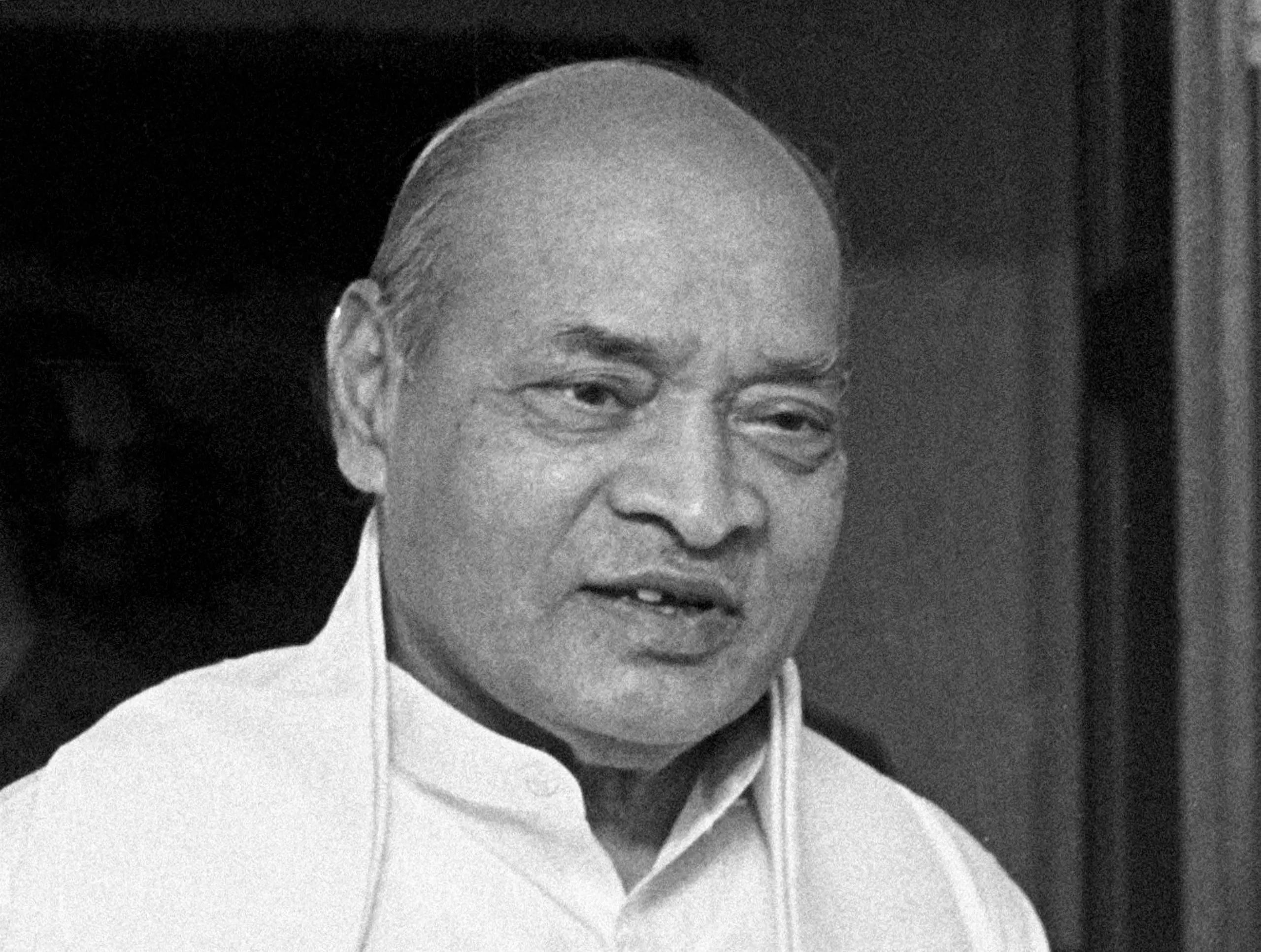
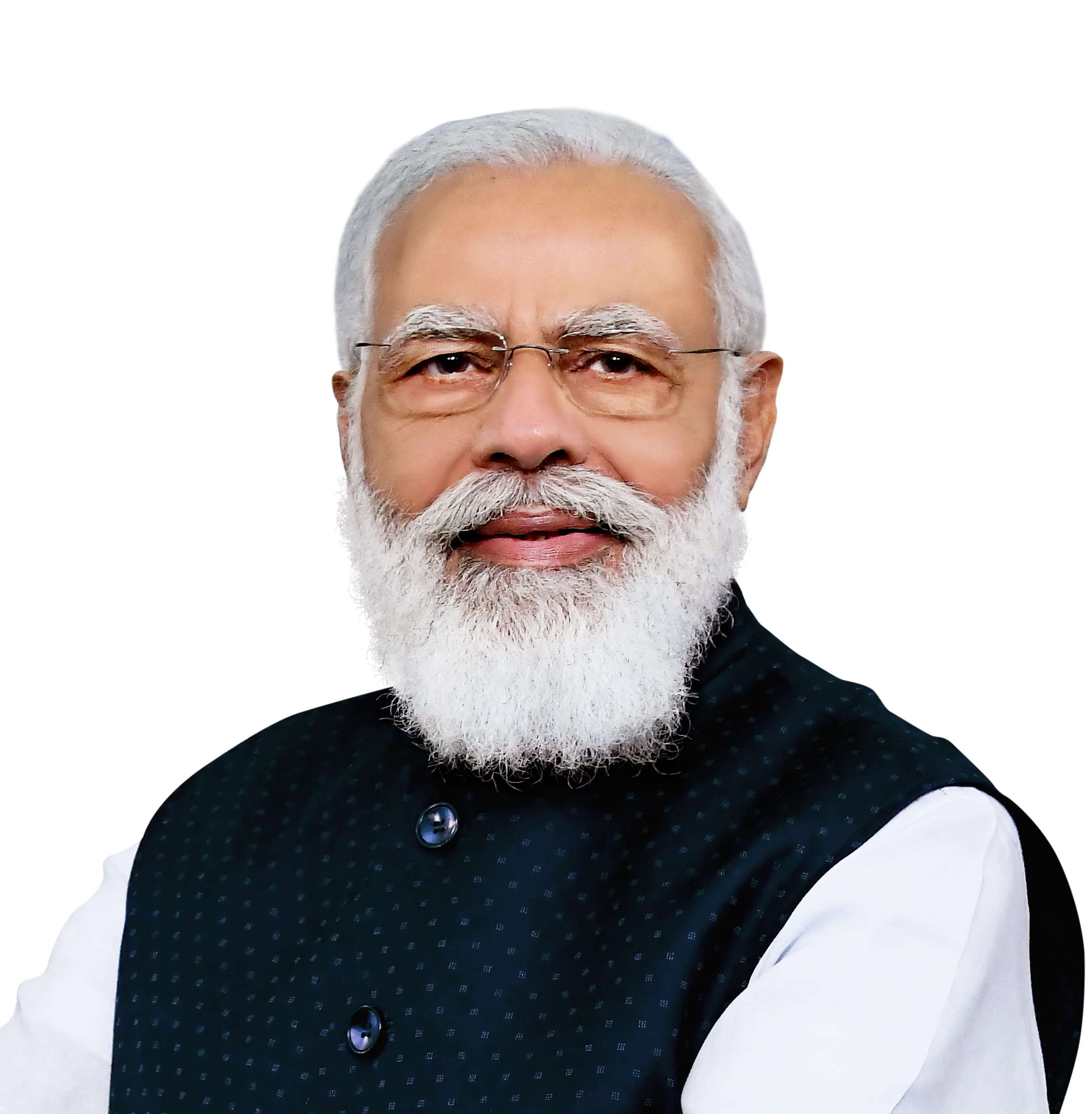
Join the community
fans discussing