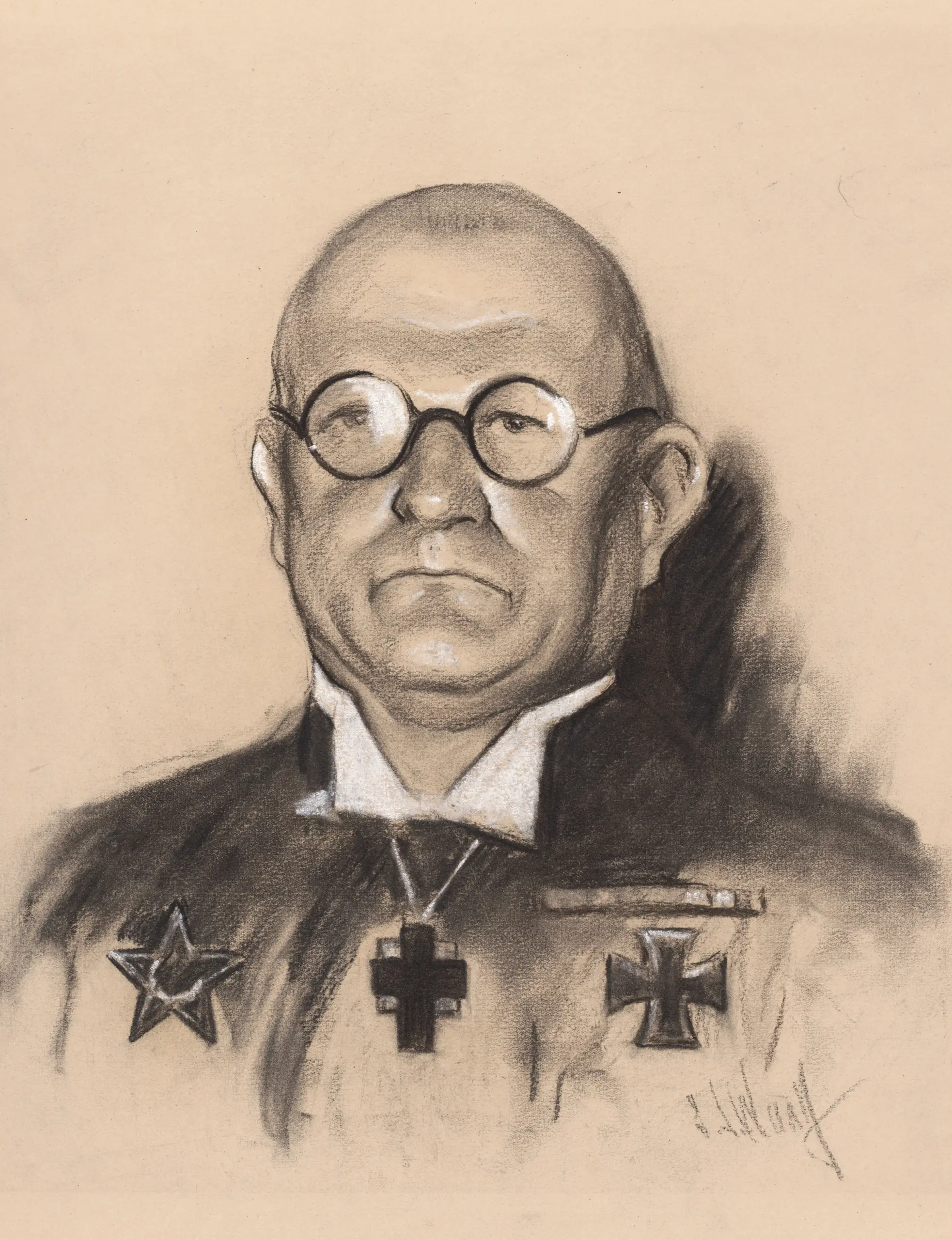
Ludwig Müller
 Germany
pastor•Protestant theologian•theologian
Also known as: Reichsbischof Ludwig Müller
Birthday
June 23, 1883
Birth Sign
Cancer
Birthplace
Gütersloh, Germany
Age
Died at 62
About
Johan Heinrich Ludwig Müller was a German Lutheran theologian and pastor who became the Reichsbischof of the German Evangelical Church under Adolf Hitler. He was a leading figure in the pro-Nazi "German Christian" movement, which sought to align Protestantism with Nazi ideology, including the removal of Jewish elements from Christian worship. Müller's collaboration with the Nazi regime defined his career and legacy, making him a cautionary example of religious leaders compromising with totalitarianism.
Müller is remembered today almost exclusively as a collaborator whose theological training served a totalitarian ideology. His story is featured in Holocaust education materials as an example of religious capitulation. He died at age 62, leaving no significant estate or lasting honours. His public image is overwhelmingly negative, defined by his subservience to Hitler and his role in the Nazification of the church. The Confessing Church, which opposed him, is remembered far more favourably, and figures like Martin Niemöller and Dietrich Bonhoeffer are celebrated as moral exemplars in contrast to Müller's collaboration.
As a deceased historical figure, Müller has no current projects. He remains a subject of historical study, particularly in Holocaust education. The United States Holocaust Memorial Museum includes materials on him in its "Experiencing History" educational resources, and the Wiener Holocaust Library's "The Holocaust Explained" website features a biographical entry. German history archives, including German History Documents, preserve photographs and documents from his tenure as Reichsbischof.
Early Life & Background
Ludwig Müller was born on June 23, 1883, in Gütersloh, a town in the Westphalia region of Germany. He grew up in a Protestant environment and pursued theological studies, being ordained as a pastor in 1908. His early pastoral work took place in a small parish, where he served for several years before the outbreak of World War I.
During the war, Müller served as a military chaplain, an experience that deeply shaped his nationalist and authoritarian worldview. The war reinforced his belief in strong leadership and national unity, values that later aligned with Nazism. After the war, he became superintendent of the church district of Königsberg in East Prussia, a position of regional ecclesiastical authority that gave him administrative experience.
In 1931, Müller joined the Nazi Party, and the following year he became a founding figure of the German Christian movement. This movement sought to create a "national and racial" church, purging Christianity of its Jewish roots and supporting Hitler's racial ideology. His early involvement in these circles positioned him as a candidate for higher office when the Nazis came to power. He held a Doctor of Theology degree, which was referenced in his ecclesiastical titles.
Career Growth
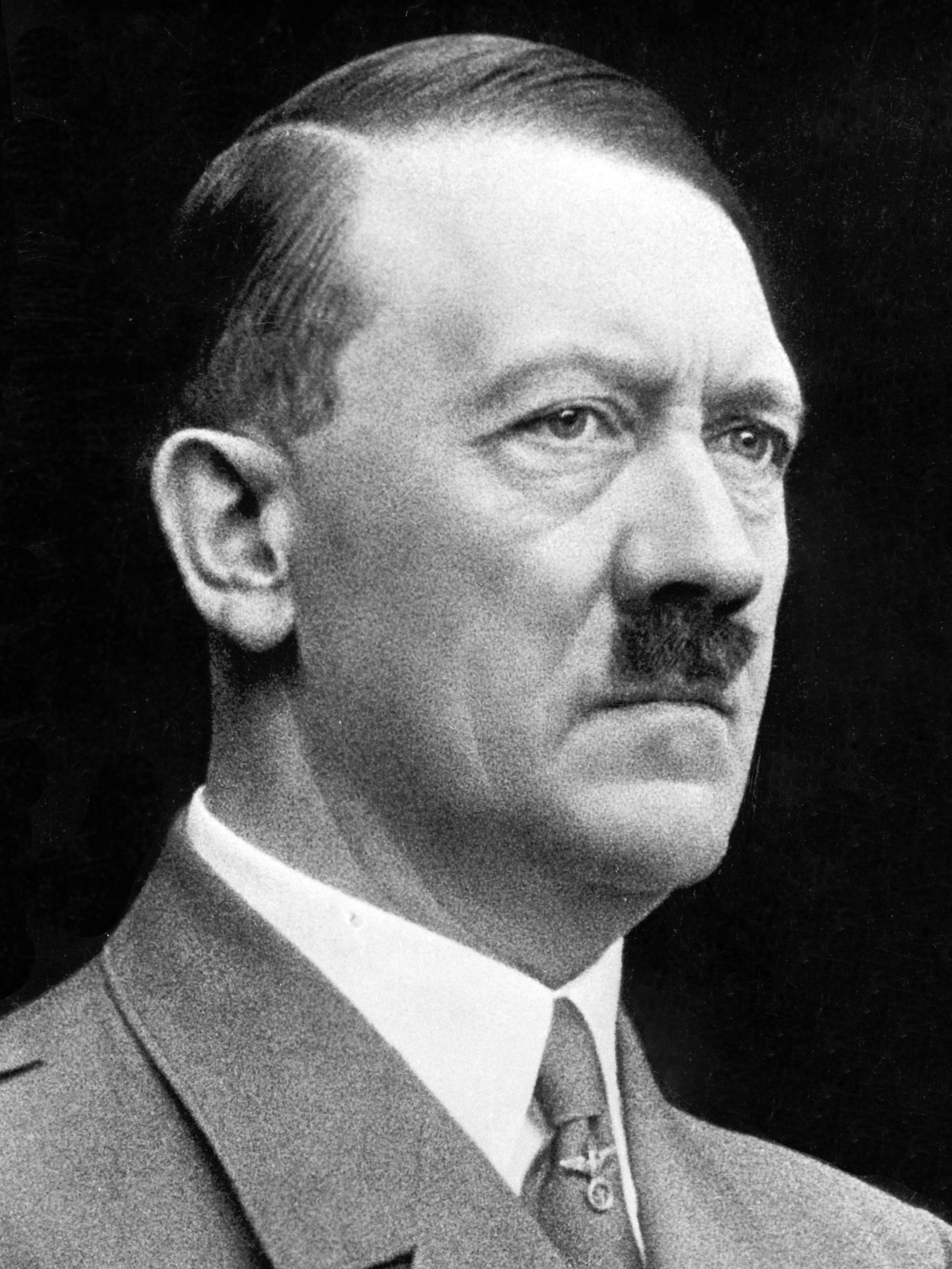
Müller's breakthrough came in 1933 when Hitler appointed him Reichsbischof of the German Evangelical Church, a move that bypassed the church's own electoral processes. The appointment was part of the Nazi policy of Gleichschaltung, aimed at coordinating all aspects of German society under Nazi control. Müller was tasked with unifying Germany's 28 regional Protestant churches into a single, Nazified national church.
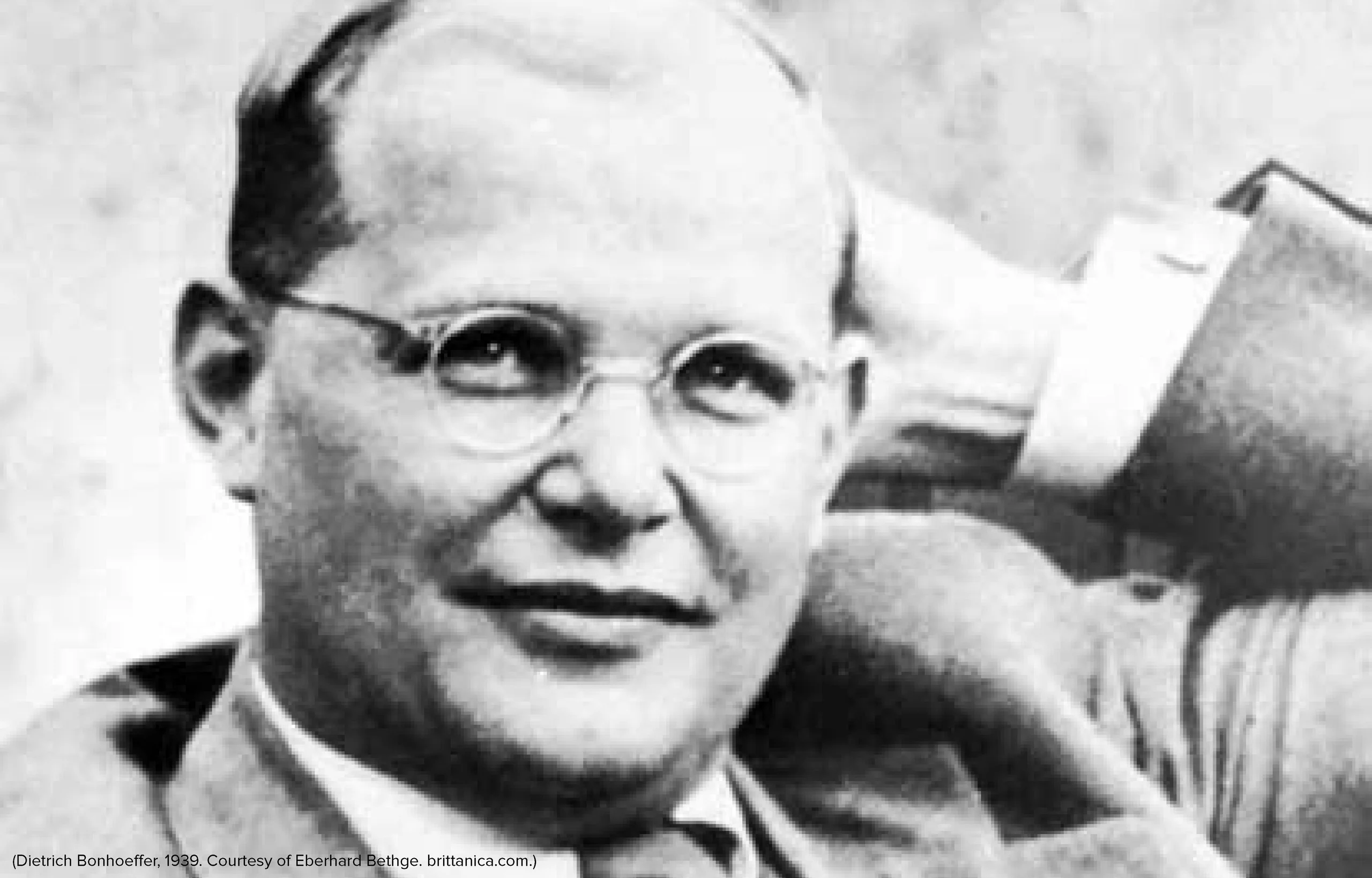
His leadership faced immediate resistance. The Confessing Church, led by Martin Niemöller and Dietrich Bonhoeffer, opposed his attempts to impose Nazi ideology on church life. His administrative incompetence and political maneuvering alienated both church leaders and Nazi officials. By 1935, Hitler had effectively abandoned him, and a Reich Church Ministry was established under Hanns Kerrl, stripping Müller of much of his authority. He retained the title of Reichsbischof but was largely a figurehead with no real power.
Müller's failure was so complete that by 1937, Hitler reportedly dismissed him as a "complete fool" in private conversations. He remained in office until the end of the war, but his influence was negligible. His legacy is that of a collaborator whose theological training was put to the service of a totalitarian ideology. In 1934, he attended the Reich Party Rally in Nuremberg as Hitler's honorary guest, alongside Catholic abbot Albanus Schachleitner. He received the Golden Party Badge of the NSDAP and held the rank of Gruppenführer in the SA.
Career Timeline
Public Image & Style
Ludwig Müller is remembered almost exclusively as a cautionary figure, a church leader who compromised his religious convictions for political power. Historians view him as emblematic of the failure of significant portions of the German Protestant church to resist Nazism. His legacy is that of a collaborator whose theological training was put to the service of a totalitarian ideology.
In Holocaust education materials, he is presented as an example of religious leaders who aligned with the Nazi regime. The Confessing Church, which opposed him, is remembered far more favourably, and figures like Martin Niemöller and Dietrich Bonhoeffer are celebrated as moral exemplars in contrast to Müller's collaboration. His public image is thus overwhelmingly negative, defined by his subservience to Hitler and his role in the Nazification of the church. He received no significant independent awards or honours; his position as Reichsbischof was a political appointment rather than an earned distinction. After 1945, any honours associated with his Nazi-era career were voided.
Fame & Fandom
The global attention directed toward Ludwig Müller remains narrowly confined to historical and theological discourse, with no widespread cultural resonance in the modern era. Despite this limited scope, his standing within specific professional categories is documented by the iFANN Global Fame Rankings. Current data places him as the 41st most famous person in Pastors, a position he has held steady from the previous cycle. This ranking reflects his singular, albeit infamous, role in ecclesiastical history rather than contemporary popularity. Regarding his audience, there is no formal fandom name associated with Ludwig Müller. Unlike modern celebrities who inspire organized campaigns or dedicated communities, his legacy is studied by historians and theologians rather than worshipped by fans. No fan rituals, inside jokes, or charitable drives exist under his name, as his historical infamy regarding the Nazification of the church precludes the formation of a supportive public following. His presence in the public consciousness is strictly academic, serving as a case study in the intersection of religious authority and totalitarianism.
Interesting Facts and Legends
Müller held the rank of Gruppenführer in the SA, an unusual distinction for a clergyman. He was appointed Reichsbischof directly by Hitler, bypassing standard church elections and triggering the Kirchenkampf of the 1930s. The German Christian movement he championed enforced the Aryan paragraph, expelling baptized Jews from congregations to align worship with Nazi racial ideology. His effort to unify churches into a single Reich Church faced resistance from both the Confessing Church and anti-clerical Nazi officials. Photographs survive showing him as an honorary guest alongside Hitler at the 1934 Reich Party Rally in Nuremberg. Historical records confirm his appointment as the first Reich Bishop in 1933 as a verified political act intended to subordinate Protestantism to National Socialism. While some search results mention Cardinal Gerhard Ludwig Müller and recent theological controversies involving statements on Donald Trump or Charlie Kirk, these refer to a different individual; the historical Ludwig Müller's story is defined solely by his collaboration with the Third Reich and his subsequent suicide in 1945.
Family & Personal Life
Historical records indicate that Ludwig Müller was married, though detailed information about his spouse is limited in available sources. No children are documented. His family life was largely private, and contemporaneous media did not cover it in the manner of modern celebrity journalism. As of his death on 31 July 1945, he was married, though the status of his marriage at that time is not clearly documented. His wife is mentioned in some German-language historical accounts, but no further details are available.
Notable Connections
Ludwig Müller's career was intertwined with several key figures of the Nazi era. Adolf Hitler appointed him Reichsbischof and later abandoned him. Martin Niemöller and Dietrich Bonhoeffer led the Confessing Church opposition to his Nazified church. Hanns Kerrl replaced his authority as Reich Church Minister in 1935. Catholic abbot Albanus Schachleitner appeared alongside him at the 1934 Nuremberg Rally.
Relationships & Dating History
Historical documentation on Ludwig Müller's personal relationships is sparse. He was married, and his wife is mentioned in some German-language historical accounts, but no detailed chronology of his romantic relationships, courtship, or marriage is available in the searched English-language sources. Given that he died in 1945 and was a public religious figure rather than a celebrity, contemporaneous media did not cover his personal relationships in the manner of modern celebrity journalism.
As of his death on 31 July 1945, he was married, though whether he was widowed or divorced is not documented. His marriage appears to have been a stable but private part of his life, overshadowed by his public role in the church and politics.
- MarriedMarried, but details are undocumented.
Death & Aftermath
Died
July 31, 1945 (aged 62)
Death Place
Berlin, Germany
Cause of Death
Unknown
Ludwig Müller, the German Lutheran pastor and theologian who served as the "Reich Bishop" of the pro-Nazi German Christian movement, died on July 31, 1945, in Berlin, Germany. Born on June 23, 1883, he was 62 years old at the time of his death. Historical accounts document severe depression and alcoholism in his final days after his removal from power following the collapse of the Nazi regime in May 1945. He had been arrested by British forces in May 1945 and held for interrogation before being released due to lack of evidence of war crimes, only to die shortly thereafter in the chaotic post-war environment of Berlin.
The Allied authorities found insufficient evidence to prosecute him for war crimes or treason, leading to his release in late May or early June 1945. Consequently, his death occurred without any subsequent legal scrutiny or criminal investigation. Given the stigma attached to his role as Reich Bishop, any burial would have been private and low-key. Historical accounts do not list notable attendees or specific burial locations for his remains, though it is generally assumed that he was buried in a common grave or a quiet, unmarked section of a cemetery in Berlin consistent with the treatment of many lesser-known Nazi sympathizers during the immediate aftermath of the war.
Public reaction to Ludwig Müller's death was characterized by silence rather than tributes or vigils. As a polarizing figure associated with the Nazification of the Protestant Church, he was widely reviled by the Confessing Church and the broader German populace following the defeat of the Axis powers. In the immediate post-war period, institutions such as the Evangelical Church in Germany distanced themselves from his legacy, focusing on denazification and reconciliation. Posthumously, Ludwig Müller has been the subject of historical analysis as a negative exemplar of religious collaboration with Nazism, with modern discussions focusing exclusively on the theological and ethical failures of the "German Christians" movement during the Third Reich.
Net Worth (Estate Value)
$50 Thousand
iFANN Editorial Team estimate
Ludwig Müller died by suicide in 1945 during the immediate aftermath of Germany's defeat, leaving behind no significant estate. His assets were subject to Allied denazification procedures and likely confiscated or lost amidst the chaos of the post-war period. During his lifetime, his income derived from pastoral and ecclesiastical positions, which remained modest and tied strictly to his church roles. No posthumous earnings, licensing deals, or royalties have been documented. Per iFANN's editorial analysis, his estate value today is negligible, estimated at $50 Thousand, reflecting the absence of any lasting financial legacy.
Awards & Accolades
Known For
Reichsbischof of the German Evangelical Church
1933 · Reich Bishop
German Christian movement
1932 · Co-founder and leader
Keywords
Sources
Quick Facts
- Profession
- pastor, Protestant theologian, theologian
- Born
- June 23, 1883
- Birthplace
- Gütersloh, Germany
- Died
- July 31, 1945
- Death Place
- Berlin, Germany
- Gender
- Male
- Birth Sign
- Cancer
Personal Details
- Full Name
- Johan Heinrich Ludwig Müller
- Education
- Theological training in Germany; ordained as Protestant pastor in 1908; held Doctor of Theology degree
Frequently Asked Questions
What happened to Ludwig Müller after World War II?
Was Ludwig Müller a Nazi?
What was the German Christian movement?
What was the Confessing Church?
What does 'Reichsbischof' mean?
Similar People
Join the community
fans discussing