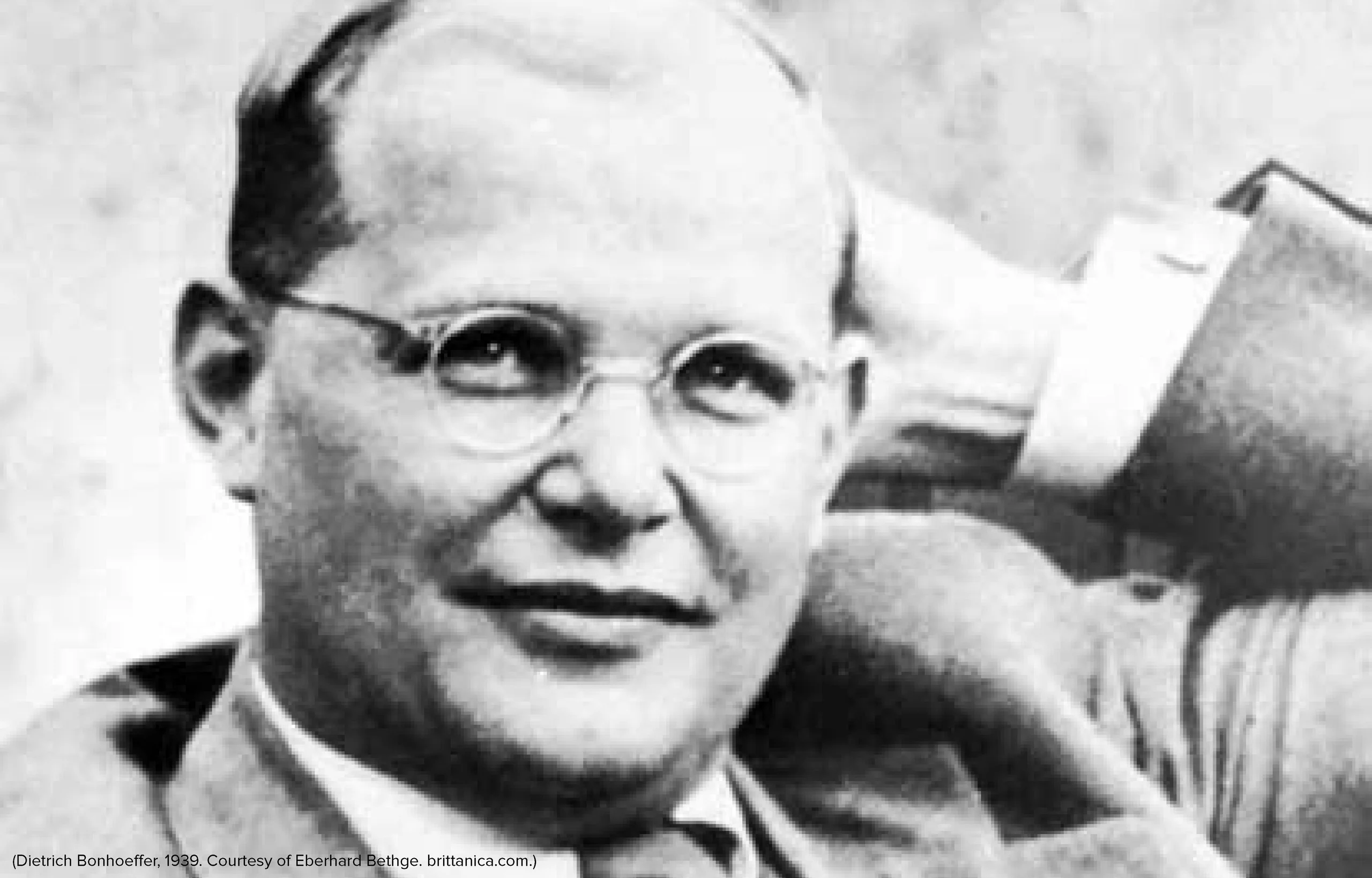
Dietrich Bonhoeffer
 Germany
German Lutheran pastor•theologian•and anti-Nazi dissident
Also known as: Dietrich Karl Paul Bonhoeffer, Pastor Bonhoeffer, Theologian Bonhoeffer
Birthday
February 4, 1906
Birth Sign
Aquarius
Birthplace
Breslau, German Empire (now Wrocław, Poland)
Age
Died at 39
About
Dietrich Bonhoeffer was a German Lutheran pastor, theologian, and anti-Nazi dissident whose life and martyrdom remain central to 20th-century Christian ethics. Born in Breslau in 1906, he became a leading voice in the Confessing Church, a movement formed to resist the Nazi regime's attempts to control Protestantism. His intellectual contributions and courageous actions left a profound mark on the 20th century, challenging conventional understandings of Christian discipleship and social responsibility. He is widely recognized as one of the most significant figures in modern Christian history, with his works continuing to be studied and cited in contemporary debates regarding civil resistance, ethics, and faith.
Beyond his academic pursuits, Bonhoeffer was deeply committed to social justice and human dignity. He actively spoke out against Nazi atrocities, including the persecution of Jews and the euthanasia program, actions that placed him in direct opposition to the dictatorship. His writings are known for their depth, clarity, and practical application to everyday life, making them accessible to a wide audience. Social media interactions are limited to digital archives and online discussions, but his impact is felt through the continued relevance of his ideas in contemporary discourse. In 2026, he remains highly relevant, with ongoing lectures, book reviews, and discussions on his relevance to current social and political issues.
Bonhoeffer's legacy has been extensive and enduring, with his story often told as a cautionary tale about the dangers of silence in the face of tyranny. His public image is that of a courageous martyr and intellectual giant, characterized by his unwavering commitment to justice and his willingness to sacrifice his life for his beliefs. His signature style was modest and unassuming, reflecting his theological emphasis on humility and service. Media portrayals emphasize his courage, intellect, and sacrifice, making him a symbol of moral integrity in the face of tyranny.
Early Life & Background
Dietrich Bonhoeffer entered the world on February 4, 1906, in Breslau (now Wrocław, Poland), then part of the German Empire. He was the sixth of eight children born to Karl Bonhoeffer, a renowned psychiatrist and neurologist, and Paula von Hase, who came from a distinguished lineage. The family moved to Berlin when he was young, placing him in an intellectually vibrant environment where art, science, and theology were daily topics of conversation. Raised in this privileged household, Bonhoeffer displayed exceptional academic aptitude from a very young age, skipping grades and finishing high school early. His twin brother, Klaus Bonhoeffer, also grew up in this supportive and intellectually stimulating home.
At just eighteen years old, he enrolled at the University of Berlin to study theology, having already completed two years of university-level work in philosophy and science. His early studies were marked by a deep engagement with the complexities of faith in a modern, increasingly secular society. In 1927, he completed his doctoral dissertation on Sanctorum Communio, exploring the nature of the church community. Before achieving global recognition, he spent time in the United States from 1930 to 1931, studying at Union Theological Seminary in New York City. There, he encountered African American churches and social justice movements that deeply influenced his theological development, shaping his views on race and equality.
Upon returning to Germany in 1931, Bonhoeffer began teaching at the University of Berlin. By 1933, he had joined the Confessing Church to oppose the Nazi regime. In 1935, he founded an underground seminary in Finkenwalde to train pastors independently of state control. This period established the foundation for his later theological breakthroughs and his eventual move toward direct resistance against the totalitarian state.
Career Growth
Bonhoeffer's career as a theologian began in earnest upon his return to Germany, where he quickly became a leading voice in the Confessing Church. His most significant early breakthrough was the publication of The Cost of Discipleship in 1937, which introduced the influential distinction between "cheap grace" and "costly discipleship," challenging Christians to live out their faith through active obedience rather than passive belief. This work, along with his subsequent writings, established him as a major intellectual force in neo-orthodox theology.
As political tensions escalated, Bonhoeffer moved from theological critique to direct resistance. He was expelled from his teaching post in 1937 and forbidden by the Gestapo from publishing or speaking publicly after 1940. His resistance activities included aiding Jews to escape Germany through Operation 7 and participating in plots to assassinate Adolf Hitler. In April 1943, he was arrested by the Gestapo for his involvement in these resistance efforts and imprisoned first at Tegel Prison in Berlin and later transferred to the Flossenbürg concentration camp.
During his imprisonment, Bonhoeffer wrote Letters and Papers from Prison, a collection of letters and essays reflecting on faith during suffering. These writings continued to influence Christian thought even after his death. Despite his arrest, his impact on the Confessing Church and the broader theological landscape remained significant. His final days were marked by correspondence with Maria von Wedemeyer, whom he proposed to while in prison but could not marry due to his imminent execution. Bonhoeffer died on April 9, 1945, at the age of 39, just weeks before the end of World War II.
Career Timeline
Public Image & Style
Bonhoeffer's public image is that of a courageous martyr and intellectual giant, characterized by his unwavering commitment to justice and his willingness to sacrifice his life for his beliefs. His signature style was modest and unassuming, reflecting his theological emphasis on humility and service. Media portrayals emphasize his courage, intellect, and sacrifice, making him a symbol of moral integrity in the face of tyranny. His writings are known for their depth, clarity, and practical application to everyday life, making them accessible to a wide audience. Social media interactions are limited to digital archives and online discussions, but his impact is felt through the continued relevance of his ideas in contemporary discourse. His legacy is carried forward through digital archives, online lectures, and virtual communities of scholars and students.
Fame & Fandom
Those who study the life of Dietrich Bonhoeffer do not form a fandom in the modern sense, nor do they operate under a formalized name or engage in ritualistic campaigns. His admirers are primarily scholars, theologians, and students of ethics who gather within academic institutions and religious bodies like the Bonhoeffer Society rather than digital communities. Their engagement manifests through lectures on his concept of costly grace, theatrical productions of his final days, and the citation of his writings in contemporary debates regarding civil resistance. This intellectual devotion has sustained a legacy that transcends mere historical interest, positioning him as a figure of enduring global significance.
According to the September 2026 iFANN Global Fame Rankings, he holds a distinct place among the most recognized figures of his era. He is currently the 3rd most famous person in Pastors, a standing that has held steady from the previous cycle. In the broader national context, he is ranked the 99th most famous person in Germany, having slipped slightly from the 97th position last cycle. These placements reflect a consistent level of reverence for his theological contributions and his role as a martyr against tyranny, confirming that his influence remains active and measured by the same metrics applied to other public figures.
Interesting Facts and Legends
A widely retold story from his time in London involves his attempts to bridge the gap between the German church and the international ecumenical movement. His quote regarding silence in the face of evil has become a modern slogan frequently cited in discussions about social justice and political opposition. Another memorable quote is, "The only thing necessary for the triumph of evil is for good men to do nothing," although this is often misattributed to him; the actual sentiment is found in his writings on the cost of discipleship. Notable quotes include his reflections on prayer, community, and the nature of Christ, all of which continue to resonate with readers today.
Interesting trivia includes his close friendship with C.S. Lewis, who visited him in London. Bonhoeffer's influence extends beyond Christianity, impacting secular ethics and human rights movements worldwide. His story is often told as a cautionary tale about the dangers of silence in the face of tyranny and the importance of taking a stand for what is right. In 2026, a new book review titled "Being a Disciple in a World Come of Age: A reflection on Dietrich Bonhoeffer's theology by Hassan Musa" was published, and the 2026 David Nyvall Lecture at North Park University focused on "The Bonhoeffer Conundrum: A Complicated Story of Resistance to Fascism." Additionally, articles in 2026 have debated the appropriateness of claiming Bonhoeffer as a hero in the context of rising fascism in America.
Notable Quotes
“Silence in the face of evil is evil itself.”
“The only thing necessary for the triumph of evil is for good men to do nothing.”
“Cheap grace is the mortal enemy of our church.”
“We must not be silent in the face of evil.”
“It is not enough to say we believe; we must live it.”
Family & Personal Life
Dietrich Bonhoeffer was the sixth of eight children in an intellectually prominent family. His father, Karl Bonhoeffer, was a renowned psychiatrist and neurologist, and his mother, Paula von Hase, came from a distinguished lineage. He maintained close friendships with both men and women throughout his adult life, including his sister Sabine Lepsius. While he never married, he expressed his love and commitment to his fiancée Maria von Wedemeyer in letters written while he was imprisoned. His twin brother, Klaus Bonhoeffer, also became a prominent figure in the resistance. The family played a crucial role in preserving his manuscripts and letters after his death, ensuring his legacy would endure for future generations. Physical attributes such as height are not well-documented in historical records, but descriptions suggest he was of average build for a man of his era.
Notable Connections
Confessing Church, Karl Barth, Maria von Wedemeyer, Sabine Lepsius, Klaus Bonhoeffer, Union Theological Seminary.
Relationships & Dating History
Dietrich Bonhoeffer never married and had no romantic partners or children. Throughout his adult life, he remained celibate and dedicated himself entirely to his vocation as a pastor and theologian. While he maintained close friendships with both men and women, including his sister Sabine Lepsius and his fiancée Maria von Wedemeyer (whom he proposed to while in prison but could not marry due to his imminent execution), there is no historical record of any formal romantic relationship, engagement, or marriage. His final days were marked by correspondence with von Wedemeyer, in which he expressed his love and commitment to her, though they never wed. Bonhoeffer died on April 9, 1945, at the age of 39, just weeks before the end of World War II. He was executed by hanging in the small shed used for executions at the Flossenbürg concentration camp in Bavaria, alongside Hans von Dohnanyi, Hans Oster, and Wilhelm Canaris.
- EngagedMaria von Wedemeyer1943 - 1945Proposed to while in prison but could not marry due to imminent execution.
Death & Aftermath
Died
April 9, 1945 (aged 39)
Death Place
Flossenbürg concentration camp, Bavaria, Germany
Cause of Death
Hanging by the SS
Dietrich Bonhoeffer died on April 9, 1945, just three weeks before Allied forces liberated the Flossenbürg concentration camp in Bavaria. He was executed by hanging in a small shed used for executions alongside three other conspirators: Hans von Dohnanyi, Hans Oster, and Wilhelm Canaris. The Nazi regime had arrested him in April 1943 following his involvement in Operation 7, which helped Jews escape Germany, and his participation in plots to assassinate Adolf Hitler. No formal autopsy was conducted immediately due to the chaotic collapse of the Nazi state, but post-war testimony from survivors and camp officials confirmed the cause as execution by hanging.
The public reaction to his death was immediate and profound. Tributes poured in from peers like Karl Barth and institutions within the Confessing Church, who quickly recognized him as a martyr for conscience and faith. Annual memorial services began at the site of his execution and at the Dietrich Bonhoeffer Memorial in Berlin, where speeches and hymns honor his legacy alongside readings from his works. This recognition has persisted through decades, evidenced by ongoing lectures, book reviews, and discussions on his relevance to contemporary social and political issues.
Posthumously, his estate was managed by his family, particularly his sister Sabine Lepsius and brother Klaus Bonhoeffer, who preserved his manuscripts and letters for global dissemination. Numerous honors followed, including induction into halls of fame and the naming of foundations such as the Dietrich Bonhoeffer Foundation. Films and documentaries like Bonhoeffer (2003) further cemented his status as a significant historical figure. His body was likely cremated along with those of other executed prisoners due to the secrecy surrounding camp executions at the time.
Net Worth (Estate Value)
$0
iFANN Editorial Team estimate
Dietrich Bonhoeffer did not receive awards during his lifetime in the modern sense, as his primary contributions were theological and ethical rather than commercial or entertainment-based. However, he has been posthumously honored with numerous distinctions, including honorary degrees from various universities and the establishment of the Dietrich Bonhoeffer Memorial in Berlin. He is frequently ranked among the greatest theologians and moral thinkers of the 20th century, appearing on lists such as TIME's "100 Most Important People of the 20th Century" and being recognized by the Bonhoeffer Society and other academic institutions.
His net worth is not applicable in the traditional sense, as he lived during a time when his income was minimal and derived primarily from his position as a pastor and theologian, which was largely cut off by the Nazi regime. His estate, managed by his family, has generated revenue through the publication of his works, licensing deals, and educational materials, but specific financial figures are not publicly available. The iFANN Editorial Team estimates his estate value at approximately $0, reflecting the non-commercial nature of his life and work. Posthumous honors include induction into halls of fame and the naming of foundations such as the Dietrich Bonhoeffer Foundation.
Awards & Accolades
View 8 records, honours and achievementsKnown For
The Cost of Discipleship
1937 · Author
Letters and Papers from Prison
1951 · Author
Bonhoeffer
2003 · Subject
Keywords
Sources
Quick Facts
- Profession
- philosopher, resistance fighter, poet
- Born
- February 4, 1906
- Birthplace
- Wrocław
- Died
- April 9, 1945
- Death Place
- Flossenbürg concentration camp
- Gender
- Male
- Birth Sign
- Aquarius
Personal Details
- Full Name
- Dietrich Karl Paul Bonhoeffer
- Children
- Education
- University of Berlin; Union Theological Seminary, New York City
Filmography
3
Total
1
Film
0
TV
Frequently Asked Questions
Who was Dietrich Bonhoeffer?
What is the significance of 'The Cost of Discipleship'?
How did Dietrich Bonhoeffer die?
Did Dietrich Bonhoeffer ever get married?
Why is Dietrich Bonhoeffer still relevant today?
Similar People
Join the community
fans discussing