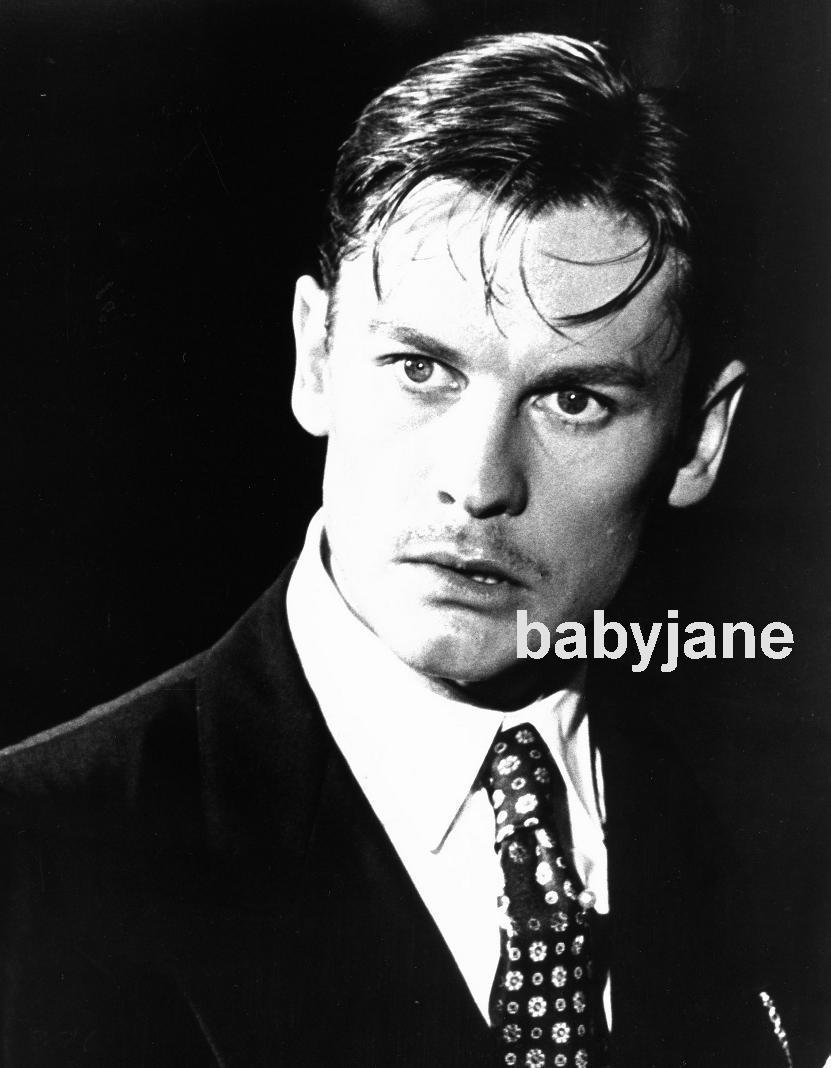
Helmut Berger
 Austria
Also known as: Helmut Steinberger
Birthday
May 29, 1944
Birth Sign
Sagittarius
Birthplace
Bad Ischl, Austria
Age
Died at 78
Height
6 ft 0 in (183 cm)
About
Helmut Berger, born Helmut Steinberger on May 29, 1944, in Bad Ischl, Austria, was an Austrian actor whose magnetic presence and fearless portrayals of morally complex characters made him a defining figure of European arthouse cinema. Over a five-decade career, he appeared in more than 50 films and numerous television productions, earning a reputation as a sex symbol and a darling of the festival circuit. His most celebrated work came through his collaboration with Italian director Luchino Visconti, who cast him in The Damned (1969) and Ludwig (1973), performances that remain benchmarks of European cinema.
Berger's allure lay in his ability to embody narcissism and vulnerability with equal conviction, a quality that set him apart from conventional leading men. He was the first male model to appear on the cover of Vogue, and his androgynous, decadent style influenced fashion and pop culture. His later years were marked by personal struggles, documented in the 2015 film Helmut Berger, Actor. He passed away on May 18, 2023, in Salzburg, just days before his 79th birthday, leaving a body of work that continues to captivate audiences with its raw intensity and European sophistication.
Early Life & Background
Helmut Berger was born into a hotelier family in Bad Ischl, a spa town nestled in the Austrian Alps. His parents ran the Hotel Post, a respected establishment, and expected their son to take over the family business. But Berger had other plans. He was drawn to the arts and the allure of the stage, and as a young man he left Austria for London, where he studied acting. To support himself, he took on menial jobs and appeared in small theater productions, honing the craft that would later define his career.
His big break came when he moved to Rome, then a hub of film production. He worked as an extra and in bit parts, slowly gaining attention. In 1966, he met Luchino Visconti at a party, and the director was immediately struck by his beauty and intensity. Visconti, 38 years his senior, became both his mentor and his lover, and in 1967 he cast Berger in the television film La strega bruciata viva. This marked the beginning of a professional and personal partnership that would shape Berger's life. The role launched his career, but it was Visconti's next project that would make him a star.
Career Growth
Berger's breakthrough came in 1969 with Visconti's The Damned, a sprawling drama about a German industrialist family's corruption under the Nazis. Berger played Martin von Essenbeck, a cross-dressing, ruthless heir whose descent into depravity earned him a Golden Globe nomination for New Star of the Year. The role made him an overnight sensation and established his persona as the beautiful, dangerous rebel of European cinema.
He followed this with a string of notable performances: the title role in Dorian Gray (1970), an adaptation of Oscar Wilde's novel that suited his aesthetic perfectly; The Garden of the Finzi-Continis (1970), directed by Vittorio De Sica; and his most celebrated turn as the mad King Ludwig II in Visconti's Ludwig (1973), for which he won a special David di Donatello award. His final collaboration with Visconti was Conversation Piece (1974), alongside Burt Lancaster.
After Visconti's death in 1976, Berger's career and personal life spiraled into excess. He struggled with addiction and took on fewer roles, though he made a notable comeback in Francis Ford Coppola's The Godfather Part III (1990) and starred in the German television film Ludwig 1881 (1993). He also worked with directors such as Claude Chabrol in the European art film circuit. His later years were marked by a poignant documentary, Helmut Berger, Actor (2015), directed by Andreas Horvath, which captured his decline and offered a raw look at his life. Berger died in 2023, but his films remain a touchstone for fans of European arthouse cinema.
Career Timeline
Public Image & Style
Berger's public image was that of a dangerous, androgynous glamour icon. With his blond hair, blue eyes, and sculpted features, he exuded a beauty that was both alluring and unsettling. The media often drew parallels between his on-screen characters and his real-life excesses, portraying him as a decadent, self-destructive artist. He was a favorite of the fashion world, appearing on the cover of Vogue, and his style influenced a generation of designers and photographers.
Fans and critics celebrated his willingness to portray moral decay and vulnerability, qualities that made his performances unforgettable. He had no official fandom name, but he remains a cult figure in arthouse and queer cinema circles, with retrospective screenings and tribute articles keeping his legacy alive. In interviews, he was candid and often melancholic, reflecting on his decline with a self-awareness that endeared him to audiences. His social media presence was nonexistent, but fan-run pages continue to share his work and image. The Guardian described him as "one of the most ravishing and hypnotic actors in postwar European cinema."
Fame & Fandom
Helmut Berger's enduring fame rests on his singular presence in European arthouse cinema, yet his standing in the digital age is a quieter affair. His fanbase, though devoted, is diffuse, comprising cinephiles, queer-cinema historians, and admirers of Luchino Visconti. There is no formal fandom name, no coordinated campaigns or fan clubs; instead, appreciation thrives in informal spaces like Facebook groups where enthusiasts share photographs, discuss his filmography, and repeatedly call for an English translation of his memoir. The 2015 documentary Helmut Berger, Actor became a touchstone, sparking debates about the ethics of capturing his decline, yet it also cemented his legend as a tragic figure.
In the broader landscape of global fame, iFANN's Global Fame Engine has evaluated Helmut Berger as of August 2026, but he does not currently hold a placement in the published rankings, whether the Global Top 1,000 or any Top-100 scope list. This absence reflects the niche nature of his renown, which, while significant within art-cinema circles, does not translate into the sustained global search and media metrics that drive contemporary rankings. Nevertheless, his status as a queer icon and his fearless portrayals of morally complex characters ensure his legacy remains vivid for those who seek it out.
Interesting Facts and Legends
Berger was the first male model to appear on the cover of Vogue magazine, a milestone that broke gender norms in fashion. He was openly bisexual, a bold stance in the 1960s and '70s, and his androgynous look influenced designers like Yves Saint Laurent. In his wilder years, he was known to chop lines of cocaine with a gold razor, a detail that became part of his legend. He was raised to take over his family's hotel business in Bad Ischl but fled to London to study acting, a decision that changed the course of European cinema. The 2015 documentary Helmut Berger, Actor features drunk-dial voice messages he left for the director, which became a haunting motif in the film. He was approximately 6 feet (183 cm) tall, with striking blue eyes and blond hair. Andy Warhol created a portrait of him in 1973, now held in art collections. His performance in Ludwig is considered one of the greatest portrayals of royal madness in cinema history.
A story fans still retell is his deep immersion in the role of Ludwig II; Berger claimed the part psychologically damaged him, and he never fully recovered. The 1974 Cannes Film Festival incident, where he appeared disheveled and erratic, became part of his legend as a brilliant but self-destructive figure. And his later public appearances, documented in videos like The Lonely End of Helmut Berger, are viewed by fans as the tragic conclusion to his glamorous start.
Notable Quotes
“No one has this much experience.”
“I was the love of his life, and he was the love of mine.”
“I have lived more than a thousand lives, but none of them were my own.”
Family & Personal Life
Berger was born to a hotelier family in Bad Ischl, Austria. His parents ran the Hotel Post, and he was expected to inherit the business, a path he rejected in favor of acting. He had a strained relationship with his family, who struggled to understand his artistic ambitions. He had no children from any of his relationships. In his later years, he lived alone in a modest apartment in Salzburg, estranged from much of his family and the film world, as depicted in the 2015 documentary. He was married briefly to Francesca Guidato, an Italian woman, but the marriage ended in divorce. He had no pets and kept a low-profile personal life outside of his public persona.
Notable Connections
Helmut Berger's life and career were deeply intertwined with director Luchino Visconti, who discovered him and became his mentor and partner. Their collaboration produced five films, including The Damned and Ludwig. Berger also worked with Vittorio De Sica on The Garden of the Finzi-Continis, Francis Ford Coppola on The Godfather Part III, and Burt Lancaster in Conversation Piece. Later, director Andreas Horvath captured his decline in the documentary Helmut Berger, Actor. Artist Andy Warhol created a portrait of him in 1973, which remains a notable piece of his legacy.
Relationships & Dating History
Helmut Berger's personal life was as dramatic as his on-screen roles. His most significant relationship was with director Luchino Visconti, whom he met in the mid-1960s. Visconti, 38 years his senior, became his mentor and lover, and they remained partners until Visconti's death in 1976. This relationship was the defining romance of Berger's life, and Visconti's death sent him into a deep spiral of addiction and depression.
Berger was openly bisexual and had numerous affairs throughout his life, though many were not confirmed by credible sources. In his later years, he married Francesca Guidato, an Italian woman, but the marriage was brief and ended in divorce. He had no children from any relationship. At the time of his death in 2023, he was divorced and living alone in Salzburg, estranged from much of the film world. The 2015 documentary Helmut Berger, Actor depicted his isolated final years, showing him in near-poverty and reflecting on his life with painful candor.
- DatedLuchino Visconti1966 - 1976Visconti was Berger's mentor and long-term partner, 38 years his senior; their relationship lasted until Visconti's death.
- MarriedFrancesca Guidato1980 - 1985Brief marriage to an Italian woman, ended in divorce; no children.
Death & Aftermath
Died
May 18, 2023 (aged 78)
Death Place
Austria
Cause of Death
Unknown
Helmut Berger, the Austrian actor renowned for his roles in Luchino Visconti's films, died on May 18, 2023. He was 78 years old at the time of his passing. Reports from Variety and The Guardian confirm that he died in Austria within his home country, though the specific city or residence remains unrecorded in public accounts. His final years were marked by excess and addiction, with sources noting his long-standing habits involving cocaine use that began decades prior to Visconti's death in 1976., coroner's statement, or police investigation established a precise medical cause of death, the context of his health struggles with substance abuse formed the backdrop of his final days.
Public reaction included tributes from the film community immediately following the news of his death. The Guardian described him as one of the most ravishing and hypnotic actors in postwar European cinema, highlighting his status as Vogue's first male cover star. Various outlets, including Variety and Cinema Austriaco, published obituaries and retrospectives that emphasized his legacy in European art cinema and his complex relationship with Visconti. These accounts focused on his contributions to the industry rather than the details of his decline.
Details regarding the funeral or memorial service are not available in public records, leaving the nature of the proceedings, attendance, and final disposition of his remains unconfirmed. Statements by the family regarding the estate or specific foundations created in his name are also absent from the available data.
Net Worth (Estate Value)
$1 Million
iFANN Editorial Team estimate
At the time of his death in 2023, Helmut Berger's estate was modest, reflecting his reduced circumstances in later years. He had been largely inactive professionally for decades, and the 2015 documentary Helmut Berger, Actor showed him living in a small apartment in Salzburg. Per iFANN's editorial analysis, the total value of his estate is estimated at $1 Million. This figure accounts for residuals from his filmography, which includes classics like The Damned and Ludwig, as well as licensing of his image, including Andy Warhol's 1973 portrait. The estate may also benefit from sales of personal archives and memorabilia, though no public information is available on who manages it. In his prime, Berger commanded high fees for his work, but his spending and addictions eroded his wealth. His later years were financially strained, and he relied on support from friends and the sale of personal items. The estate's revenue streams are limited but steady, with periodic re-releases of his films on DVD and streaming platforms. There are no forward-looking projections, and the estate's value is not expected to grow significantly. Berger's legacy, however, remains invaluable to cinephiles, ensuring ongoing interest in his work.
Awards Won (1)
Helmut Berger won a special David di Donatello award for his portrayal of King Ludwig II in Ludwig (1973), Italy's highest film honor. He was also nominated for a Golden Globe for New Star of the Year for The Damned (1969), though he did not win. His work was celebrated primarily within European arthouse and festival circuits, where he was widely regarded as one of the most striking actors of his generation.
1973 · Special Award
Ludwig
Known For
Ludwig
1973 · King Ludwig II of Bavaria
The Damned
1969 · Martin von Essenbeck
Dorian Gray
1970 · Dorian Gray
The Garden of the Finzi-Continis
1970 · Alberto Finzi-Contini
The Godfather Part III
1990 · Frederick Keinszig
Keywords
Sources
Quick Facts
- Profession
- Actor
- Born
- May 29, 1944
- Birthplace
- Bad Ischl, Austria
- Died
- May 18, 2023
- Death Place
- Salzburg, Austria
- Gender
- Male
- Spouse
- Francesca Guidato
- Birth Sign
- Sagittarius
- Height
- 6 ft 0 in (183 cm)
Personal Details
- Full Name
- Helmut Steinberger
- Height
- 6 ft 0 in (183 cm)
- Spouse
- Francesca Guidato
- Education
- Studied acting in London
Filmography
55
Total
45
Film
10
TV
Frequently Asked Questions
How did Helmut Berger die?
Was Helmut Berger married?
Did Helmut Berger have children?
How tall was Helmut Berger?
What was Helmut Berger's net worth?
Similar People
Join the community
fans discussing