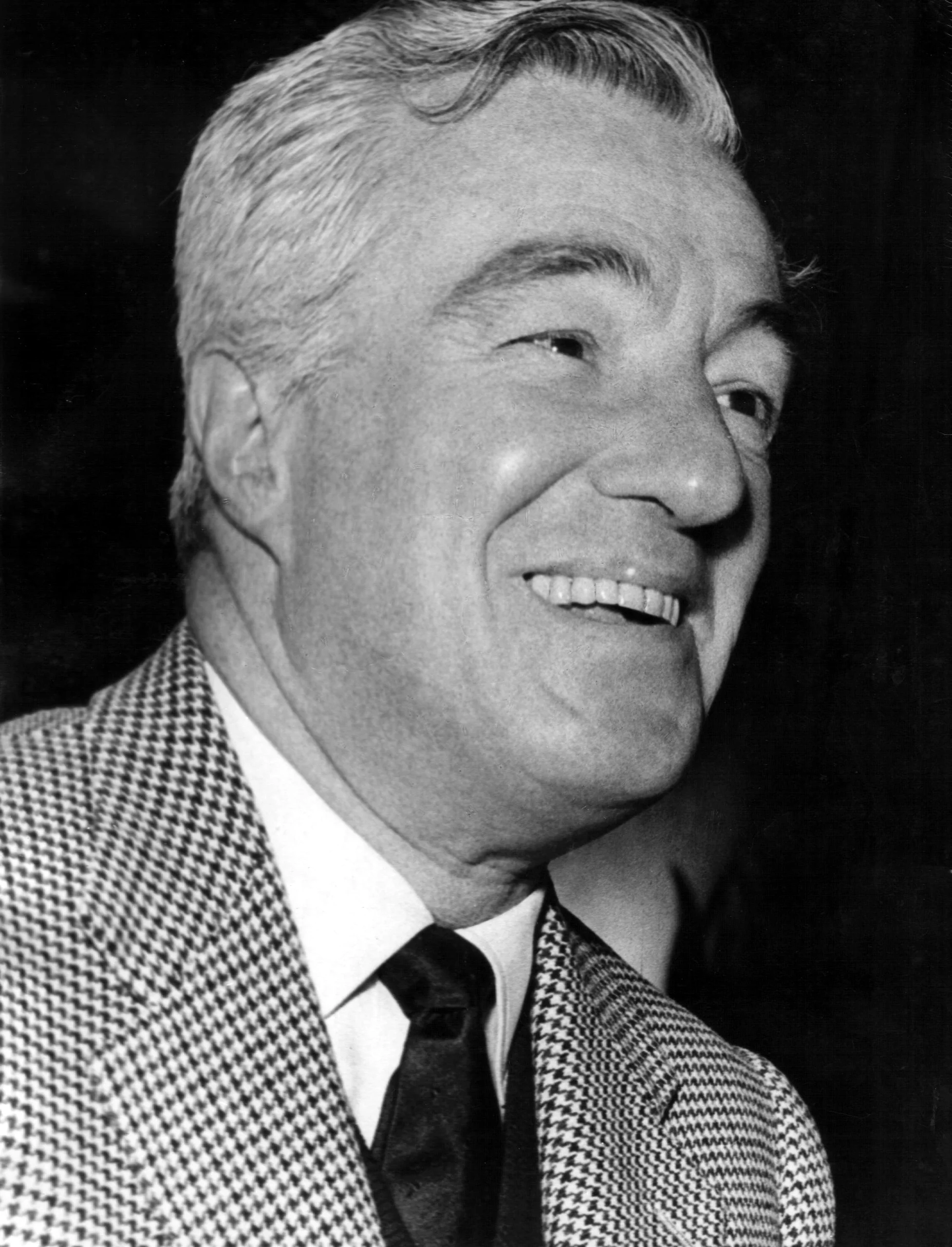
Vittorio De Sica
 Italy
Italyfilm director•screenwriter•stage actor
Birthday
July 7, 1901
Birth Sign
Cancer
Birthplace
Sora, Italy
Age
Died at 73
About
Vittorio De Sica was an Italian film director and actor, a central figure in the Italian neorealist movement. His films like Bicycle Thieves and Umberto D. are celebrated for their humanist portrayal of ordinary people's struggles. As an actor, he was a matinee idol in the 1930s and later earned an Academy Award nomination. His work earned four Oscars, including two honorary awards and two for Best Foreign Language Film. Today, his legacy remains a touchstone for filmmakers worldwide.
Early Life & Background
Vittorio De Sica was born in Sora, a small town in central Italy, to Umberto De Sica, a bank clerk, and Maria, a homemaker. The family moved to Naples when he was young, and later to Rome. Financial struggles marked his childhood; he left school early to help support the family. His first job was as a clerk in a lawyer's office, but he was drawn to the stage. He joined a theater company in the 1920s, where he honed his craft as a comic actor. His film debut came in 1929, but he found fame in the 1930s as a charming romantic lead in light comedies known as "white telephone" films. This popularity laid the groundwork for his later directorial ambitions.
Career Growth
De Sica's directorial breakthrough came with Shoeshine (1946), a raw story of street children in post-war Rome that earned an honorary Academy Award. He followed it with Bicycle Thieves (1948), a landmark of neorealism that won another honorary Oscar and is often ranked among the greatest films ever made. Umberto D. (1952) continued his focus on the elderly and impoverished. In the 1960s, he shifted to lighter fare but still found Oscar success: Yesterday, Today and Tomorrow (1963) and The Garden of the Finzi-Continis (1970) both won Best Foreign Language Film. As an actor, he received a Best Supporting Actor nomination for A Farewell to Arms (1957). He continued acting and directing until his death in 1974.
Career Timeline
Public Image & Style
De Sica was known for his elegant, sophisticated demeanor on screen and off. In his early acting days, he was a heartthrob, often photographed in tailored suits with a cigarette in hand. As a director, he was seen as a sensitive, compassionate artist who drew authentic performances from non-professional actors. Critics admired his ability to blend social realism with subtle humor. Fans connected with his deep empathy for the common person. His public persona was that of a gentleman artist, respected across the industry.
Fame & Fandom
Vittorio De Sica cultivated a legacy defined by the quiet dignity of his subjects rather than the clamor of celebrity worship. While he began as a matinee idol in the 1930s, his enduring influence stems from his pivot to Italian Neorealism, where he directed films that resonated with war-torn societies through their unflinching portrayal of ordinary struggles. Engagement with his work today is sustained primarily by film scholars, critics, and cinephiles who view his output as essential study material rather than pop culture ephemera. Recent institutional efforts, such as the 2025 restoration of Shoeshine by The Criterion Collection and the 2026 release of documentaries like Vittorio De Sica: Staging Life at Cannes Classics, reflect a community dedicated to academic preservation and artistic appreciation. There are no recorded fan rituals, organized chart campaigns, or formal fandom names associated with him; the audience remains a diffuse group of admirers united by a shared reverence for his humanist cinema. A notable piece of critical folklore even suggests a controversial stance from Jean-Luc Godard, who once labeled De Sica's style deplorable, framing the director's success as a detrimental precedent for the art form. This counter-narrative underscores the complex mythology surrounding a man whose radical attention to daily life sparked both profound empathy and sharp criticism. Despite these debates, his status as a central figure in Neorealism remains undisputed decades after his death in 1974. In August 2026, iFANN evaluated his global standing and found that Vittorio De Sica currently holds no placement in the published rankings, including the Global Top 1,000 or any Top-100 scope list.
Interesting Facts and Legends
De Sica was an avid soccer fan who supported S.S. Lazio and maintained a passion for card games, often playing poker with friends between takes on set. His close associates referred to him simply as "Vitto," a nickname that belied his deep-seated insecurity regarding his lack of formal education. He frequently felt compelled to prove his worth as a director, noting that his origins as a lightweight actor required constant validation. Beyond personal anecdotes, the cultural mythology surrounding him highlights his transformation from a popular stage performer into the leading voice of a cinematic movement. A central legend involves his early career in over 100 films, where he brought charm and brightness to the screen before World War II. The defining moment of his legacy is widely retold as his post-war pivot toward Neorealism, driven by a desire to depict the harsh realities of Italy. Specific accounts describe audiences being emotionally devastated by Shoeshine, a devastating tale of innocence lost that resonated deeply with a society recovering from conflict. Similarly, scenes in Two Women are legendary for their darkness, representing the peak of his ability to evoke profound empathy without resorting to melodrama. These stories illustrate how his work transcended entertainment to become a historical document of human suffering.
Notable Quotes
“I have a great faith in the human being. I believe that the human being is basically good.”
“The most important thing in cinema is the human being.”
“I am not a director who imposes his style. I try to find the style that fits the story.”
“Neorealism is not a style, it is a need to tell the truth.”
Family & Personal Life
De Sica married actress Giuditta Rissone in 1937; they had a daughter, Emi, before divorcing in 1954. He then married Spanish actress María Mercader in 1959, with whom he had two sons: Christian De Sica, a successful actor and comedian, and Manuel De Sica, a composer and conductor. The family lived in Rome and Paris. His son Christian often spoke of his father's warmth and dedication to family, despite his demanding career.
Notable Connections
De Sica's most frequent collaborator was screenwriter Cesare Zavattini, who co-wrote his greatest neorealist works. He also worked closely with cinematographer Carlo Montuori on Bicycle Thieves. As an actor, he appeared alongside Sophia Loren in several films, including Yesterday, Today and Tomorrow, directed by De Sica himself.
Relationships & Dating History
De Sica's first significant relationship was with actress Giuditta Rissone, whom he married in 1937. They had a daughter, Emi, but the marriage ended in divorce in 1954. He then began a relationship with Spanish actress María Mercader, whom he married in 1959. They had two sons, Christian and Manuel, and remained together until De Sica's death in 1974. His marriage to Mercader was a stable partnership that supported his later career.
- MarriedGiuditta Rissone1937 - 1954Married actress Giuditta Rissone; had a daughter Emi; divorced in 1954.
- MarriedMaría Mercader1959 - 1974Married Spanish actress María Mercader; had two sons Christian and Manuel; remained together until his death.
Death & Aftermath
Died
November 13, 1974 (aged 73)
Death Place
Unknown
Cause of Death
Unknown
Net Worth (Estate Value)
Vittorio De Sica's estate has generated ongoing revenue through film royalties, television broadcasts, and home video sales. His classic films, particularly Bicycle Thieves, remain in distribution worldwide. The estate is managed by his sons Christian and Manuel. Posthumous earnings include licensing fees for restorations and documentaries. As of 2026, his estate's value is estimated at $5 million, primarily from enduring film rights and periodic special screenings.
Awards Won (4)
Vittorio De Sica won four Academy Awards: two honorary Oscars for Shoeshine (1947) and Bicycle Thieves (1949), and two Best Foreign Language Film Oscars for Yesterday, Today and Tomorrow (1964) and The Garden of the Finzi-Continis (1971). He also received an Academy Award nomination for Best Supporting Actor for A Farewell to Arms (1957). His films have been honored at festivals worldwide.
1971 · Best Foreign Language Film
The Garden of the Finzi-Continis
1964 · Best Foreign Language Film
Yesterday, Today and Tomorrow
1949 · Honorary Award
Bicycle Thieves
1947 · Honorary Award
Shoeshine
Known For
Bicycle Thieves
1948 · Director
Umberto D.
1952 · Director
Shoeshine
1946 · Director
Yesterday, Today and Tomorrow
1963 · Director
The Garden of the Finzi-Continis
1970 · Director
A Farewell to Arms
1957 · Actor
Keywords
Quick Facts
- Profession
- film director, screenwriter, stage actor
- Born
- +1901-07-07
- Birthplace
- Sora
- Died
- +1974-11-13
- Death Place
- Neuilly-sur-Seine
- Gender
- Male
- Spouse
- Giuditta Rissone, María Mercader
- Birth Sign
- Cancer
Personal Details
- Full Name
- Vittorio Domenico Stanislao Gaetano Sorano De Sica
- Spouse
- Giuditta Rissone (1937–1954, divorced), María Mercader (1959–1974, his death)
- Children
- Christian De Sica, Manuel De Sica, Emi De Sica
Frequently Asked Questions
Who is Vittorio De Sica?
What is Vittorio De Sica's net worth in 2026?
Is Vittorio De Sica still alive?
What is Vittorio De Sica best known for?
How did Vittorio De Sica die?
Similar People

Join the community
fans discussing