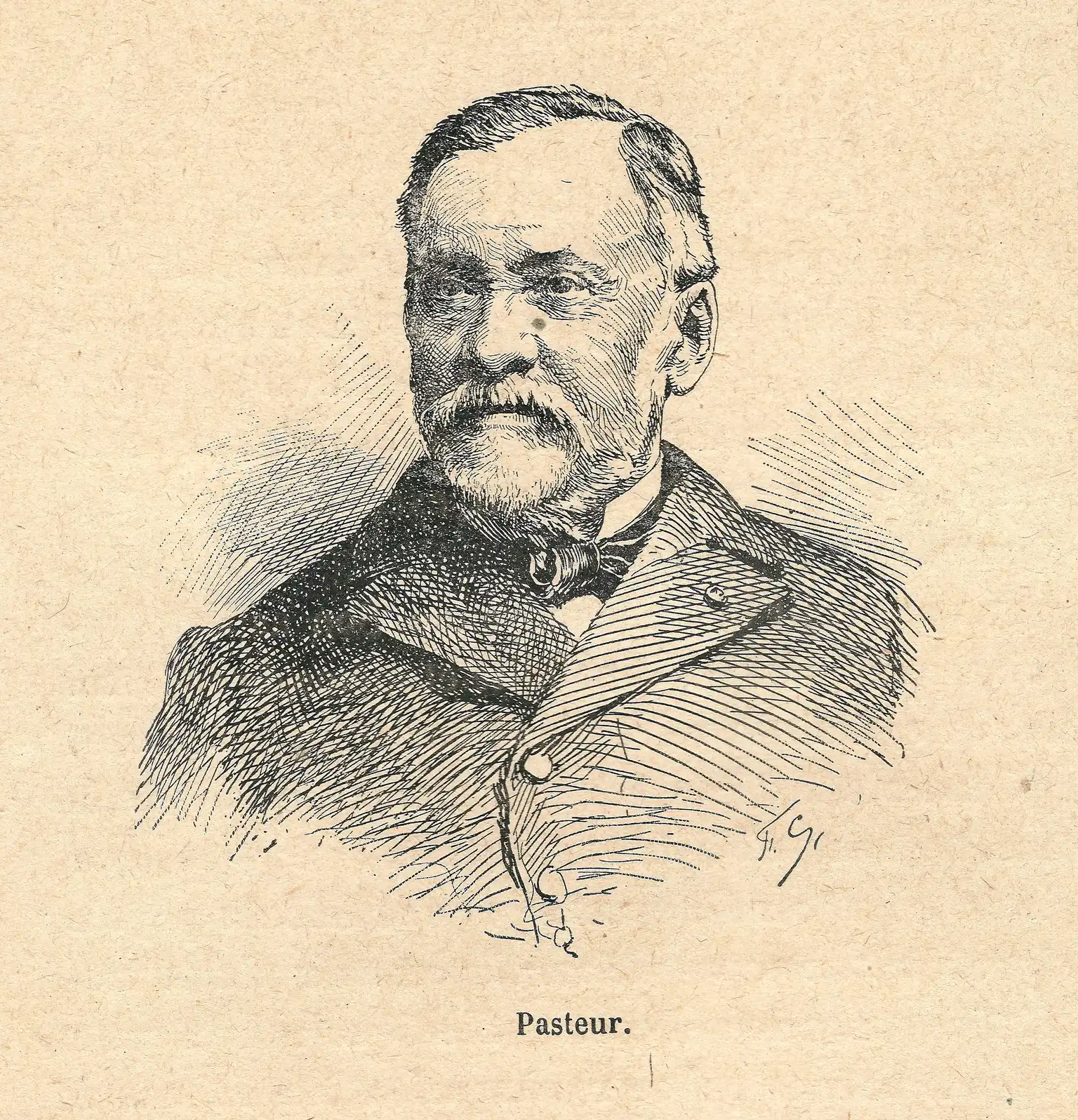
Louis Pasteur
 France
microbiologist•chemist•university teacher
Also known as: Father of Bacteriology, Father of Microbiology
Birthday
December 27, 1822
Birth Sign
Sagittarius
Birthplace
Dole, Jura, France
Age
Died at 72
Height
5 ft 5 in (1.65 m)
About
Louis Pasteur (1822–1895) was a French chemist, pharmacist, and microbiologist whose discoveries laid the foundations for modern bacteriology, immunology, and public health. Widely regarded as the "father of bacteriology" and the "father of microbiology," he revolutionized medicine by proving that specific microorganisms cause specific diseases. His legacy endures through the Pasteur Institute, which he founded in 1887, and processes like pasteurization that continue to save millions of lives annually. In 1999, Time magazine named him one of the 100 Most Important People of the 20th Century, often citing him as the second most influential scientist in history after Isaac Newton regarding medical progress.
Pasteur's work transformed clinical practice despite him never practicing medicine as a doctor. He disproved the doctrine of spontaneous generation with his famous swan-neck flask experiments and established the germ theory of disease. The process of heating liquids to kill harmful bacteria, now known as pasteurization, bears his name and remains a standard method for preserving food safety globally. His philosophy, "Chance favors the prepared mind," encapsulates his rigorous approach to research, which has inspired generations of scientists worldwide.
Early Life & Background
Born on December 27, 1822, in Dole, Jura, France, into a family of tanners, Louis Pasteur showed an early aptitude for art rather than science. As a child, he spent hours creating charcoal sketches of neighbors and local figures, displaying a talent for portraiture that would later serve him well in scientific illustration, though he lacked formal artistic training beyond this interest. Despite his artistic leanings, he pursued chemistry at the École Normale Supérieure in Paris, graduating in 1847. Before achieving international acclaim, he worked as a professor of physics at the Dijon Lycée and later at the University of Strasbourg, where he conducted groundbreaking research on crystallography and optical activity.
His pivotal moment arrived in 1848 while studying tartaric acid crystals. Pasteur discovered molecular asymmetry (chirality), demonstrating that certain crystals rotated polarized light in opposite directions. This finding founded the field of stereochemistry and earned him significant recognition before he shifted his focus from pure chemistry to the biological mysteries of fermentation and disease. He was described as slender and frail, standing approximately 1.65 meters (5 feet 5 inches) tall, traits that defined his physical presence during these formative years.
Career Growth
Pasteur's career transitioned from chemistry to biology through a series of groundbreaking achievements. In 1854, he was appointed Dean of the Faculty of Sciences at Lille, where he began studying fermentation, proving it was caused by living microorganisms rather than spontaneous chemical reactions. In 1857, he published findings on lactic acid fermentation, linking specific microbes to chemical changes. By 1861, he won the Alhumbert Prize (2,500 francs) for disproving spontaneous generation using his famous swan-neck flask experiments. In 1863, he developed the process of heating wine to kill bacteria without ruining the taste, later named pasteurization.
The late 1870s and 1880s marked his most famous medical breakthroughs. Between 1865 and 1866, he saved the French silk industry by identifying and eradicating the parasitic cause of pébrine disease. In 1879, he created the first vaccine for chicken cholera by attenuating bacteria. A public anthrax vaccine trial in 1881 at Pouilly-le-Fort demonstrated its efficacy to a skeptical press. In 1885, he successfully treated Joseph Meister, a boy bitten by a rabid dog, marking the first successful human vaccination against rabies. He founded the Pasteur Institute in 1887 to train physicians and conduct research, serving as its director until his death in 1895. He also received the Copley Medal in 1877 and numerous honorary degrees from Harvard, Oxford, and Cambridge.
Career Timeline
Public Image & Style
Pasteur is portrayed as the quintessential dedicated scientist of the 19th century, meticulous, driven, and sometimes controversial. Media portraits depict him as a humble man motivated by a moral imperative to save lives, though historical reassessment notes he practiced deception to overcome rivals. His image is permanently associated with the microscope, the laboratory, and the concept of germs. In modern times, he is seen as a humanitarian hero whose work directly prevented countless deaths. He is celebrated as a national hero in France, with his name appearing on streets, schools, and institutions throughout the country. In August 2026, the Monnaie de Paris launched a commemorative coin featuring his portrait, highlighting his enduring cultural impact and status as a global icon of science.
Fame & Fandom (iFAMOUS Rankings)
While there is no organized pop-culture fandom in the traditional sense, Pasteur maintains a dedicated following among students, scientists, and historians. Fans celebrate his birthday on December 27 and the anniversaries of his major discoveries. Educational campaigns frequently use his name to promote hygiene and vaccination awareness. Schools and universities worldwide host lectures and events on Pasteur Day to honor his contributions to science. The Pasteur Institute maintains active social media accounts on Twitter/X, Facebook, and Instagram, with follower counts exceeding hundreds of thousands globally. In January 2026, publications highlighted Pasteur's role in the first registered public vaccine trials, drawing parallels to modern COVID-19 vaccine development, keeping his relevance alive in contemporary discourse.
Interesting Facts and Legends
Pasteur was an accomplished amateur artist in his youth, creating detailed charcoal drawings of his hometown before turning to science. Contrary to popular belief, he was never a medical doctor; he was a chemist who revolutionized medicine. Despite the process being named after him, Pasteur did not originally advocate for milk pasteurization; it was adopted later by others to prevent bovine tuberculosis. Historical analysis of his notebooks suggests he may have used deception or selective reporting to overcome rivals like Robert Koch. The rabies vaccine was derived from dried spinal cords of infected rabbits, a method that seems archaic today but was revolutionary then. Additionally, a middle school named after him in Orangevale, California, was the site of an arson incident in July 2026, unrelated to Pasteur himself. His quote, "True friends have to get angry with each other from time to time," reflects his view on intellectual debate.
Notable Quotes
“Chance favors the prepared mind.”
“True friends have to get angry with each other from time to time.”
“Life is a germ.”
Family & Personal Life
He married Marie Laurent, the daughter of the rector of the University of Strasbourg, in 1849. The couple had five children together: Jean-Baptiste (born 1851), Marie-Louise (born 1854), Cécile (born 1856), Jeanne (born 1858), and Guillaume (born 1860). Two of his daughters, Marie-Louise (died 1864) and Cécile (died 1866), died young in their teens, likely due to typhoid fever or similar infections. These losses deeply affected Pasteur and reinforced his commitment to fighting infectious diseases. Marie remained his partner until his death in 1895 and managed aspects of his legacy until her own passing in 1910. The family lived in various locations including Strasbourg and Paris, where Pasteur conducted much of his later work.
Notable Connections
Relationships & Dating History
Louis Pasteur was married only once. He met Marie Laurent, the daughter of the rector of the University of Strasbourg, in 1849. They were married on May 29, 1849. There are no records of other romantic relationships, divorces, or engagements prior to or after his marriage to Marie. Marie Pasteur remained his partner until his death in 1895; she survived him and managed aspects of his legacy until her own passing in 1910. At the time of his death, he was widowed. His primary collaborators included Émile Roux at the Pasteur Institute, and his relationship with rival Robert Koch was marked by intense professional competition. His son, Jean-Baptiste Pasteur, carried on the family name, while his daughter Jeanne and son Guillaume survived into adulthood alongside the surviving brothers.
- MarriedMarie Laurent1849 - 1895They had five children together; two daughters died young.
Death & Aftermath
Died
September 28, 1895 (aged 72)
Death Place
Villeneuve-l'Étang, France
Cause of Death
Complications from cerebral hemorrhage
Louis Pasteur spent his final years in the quiet commune of Villeneuve-l'Étang, a retreat near Paris where he sought recovery from the severe stroke that had struck him in March 1894. The paralysis left him partially confined to his home, yet his mind remained sharp enough to maintain scientific correspondence and receive visitors during that long decline. He passed away on September 28, 1895, at the age of 72, ending a life defined by the relentless pursuit of understanding infectious disease. Official records attribute his death to complications arising from cerebral hemorrhage, a conclusion drawn from the observations of his attending physicians and family rather than a formal coroner's inquest or legal proceeding.
The scientific community and the French government united immediately in mourning, with President Félix Faure representing the state at his funeral on October 2, 1895. This grand state affair took place at the Église Saint-Roch in Paris, attended by members of the French Academy of Sciences, the cabinet, and foreign representatives who praised his role in saving countless lives. Following the service, Pasteur was interred in a crypt within the courtyard of the Institut Pasteur in Paris, a location specifically designated for him and other distinguished scientists associated with the institute.
His legacy has since been solidified through numerous honors, including the 2026 commemorative coin launched by the Monnaie de Paris featuring his portrait alongside a microscope. The institute continues to operate as a premier biomedical research center, receiving multiple Nobel Prizes for work conducted there, while his personal artifacts and instruments remain preserved in the Pasteur Museum under the Maison des Illustres scheme.
Net Worth (Estate Value)
$0
iFANN Editorial Team estimate
As Louis Pasteur passed away in 1895, he holds no personal net worth. However, the institution he founded, the Pasteur Institute, continues to generate significant revenue and hold substantial assets. The institute operates as a non-profit organization with an annual budget exceeding €300 million (approx. $330 million USD), supported by government grants, private donations, pharmaceutical licensing, and research contracts. While Pasteur himself refused to patent pasteurization for personal profit, the institute's ongoing work generates immense economic value globally. The estate's financial trajectory remains robust, with the organization managing intellectual property and licensing deals that sustain its mission of biomedical research. Income sources include government grants, private donations, pharmaceutical licensing (including vaccines), and research contracts, ensuring the institute's continued dominance in the biotech sector.
Awards Won (3)
Pasteur received the Alhumbert Prize from the French Academy of Sciences in 1862 for disproving spontaneous generation. He was awarded the prestigious Copley Medal by the Royal Society of London in 1877. He was appointed Knight of the Legion of Honour, France's highest order of merit. He received numerous honorary doctorates from universities across Europe and the United States, including Harvard, Oxford, and Cambridge.
1862 · Science
Disproving spontaneous generation
1877 · Science
General contributions to science
Known For
Vaccination Principles
1885 · Scientific Discovery
Pasteurization
1863 · Process Development
Germ Theory
1861 · Theoretical Foundation
Keywords
Sources
Quick Facts
- Profession
- microbiologist, chemist, university teacher
- Born
- December 27, 1822
- Birthplace
- Dole, Jura, France
- Died
- September 28, 1895
- Death Place
- Saint-Cloud, France
- Gender
- Male
- Spouse
- Marie Pasteur
- Birth Sign
- Sagittarius
Personal Details
- Full Name
- Louis Pasteur
- Height
- 5 ft 5 in (1.65 m)
- Spouse
- Marie Laurent
- Children
- Jean-Baptiste, Marie-Louise, Cécile, Jeanne, Guillaume
- Education
- École Normale Supérieure
Frequently Asked Questions
What is Louis Pasteur best known for?
Did Louis Pasteur discover penicillin?
How many children did Louis Pasteur have?
What is the Pasteur Institute?
Why is the process called pasteurization?
Similar People
Join the community
fans discussing