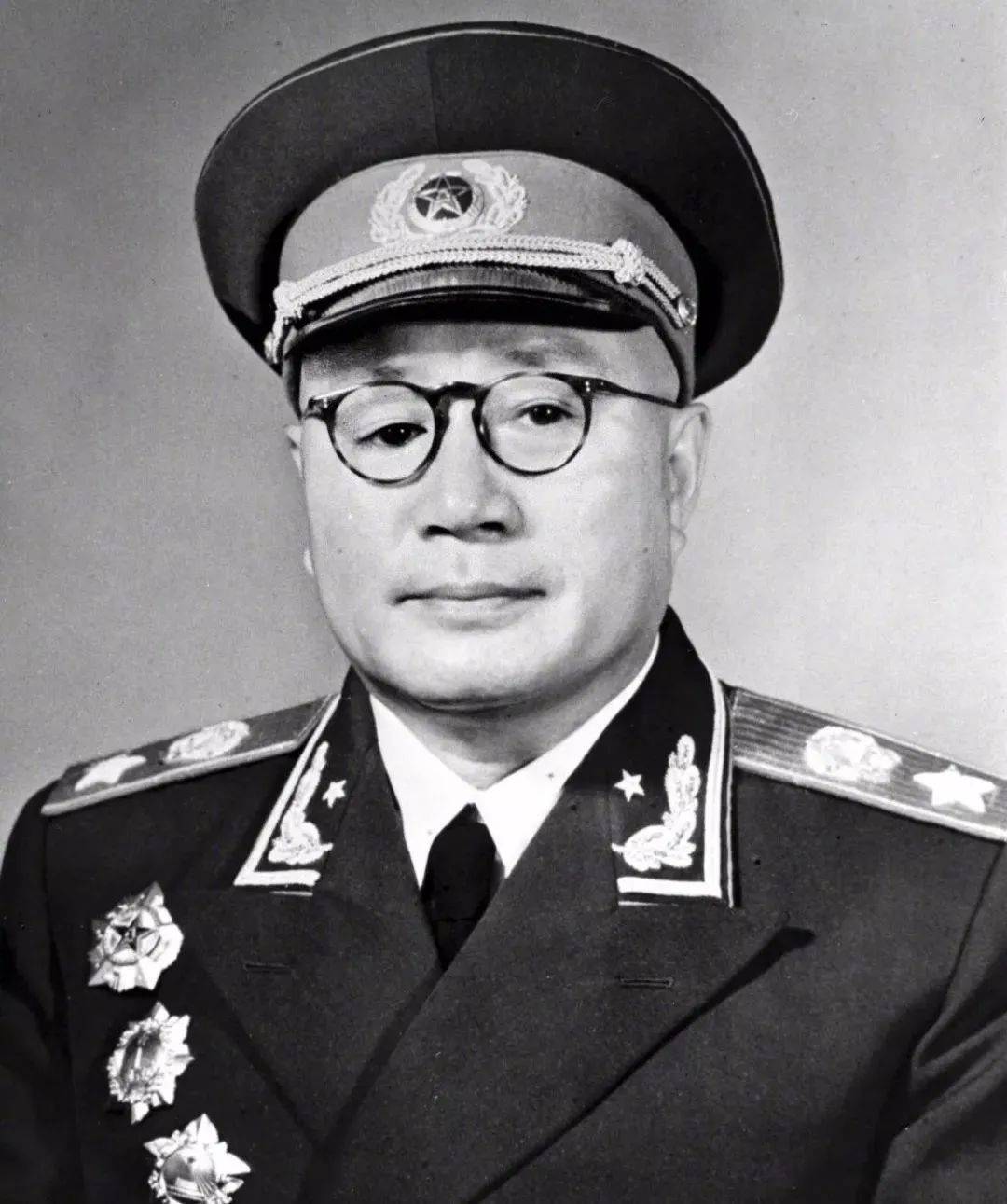
Liu Bocheng
 China
Chinamilitary officer•revolutionary•Marshal of the People's Republic of China
Also known as: Liu Mingzhao, The One-eyed Dragon, The Kutuzov of China
Birthday
December 4, 1892
Birth Sign
Sagittarius
Birthplace
Kaizhou District, Sichuan, China
Age
Died at 93
About
Liu Bocheng was a Chinese military officer, revolutionary, and one of the ten Marshals of the People's Republic of China. He is widely regarded as one of the most brilliant strategists in modern Chinese military history, known for his tactical genius and his role in founding the People's Liberation Army. His career spanned over seven decades, from the 1911 Revolution to the establishment of the People's Republic, and his theories continue to influence Chinese military thought.
Liu's reputation as "The One-eyed Dragon" came from losing his right eye in battle, a wound that never slowed him. He was also called "The Kutuzov of China," a nod to the Russian general known for strategic patience. Within the Communist Party, he was praised as "a great intellectual and a great strategist," a tribute delivered by Deng Xiaoping at his memorial. His legacy endures through military academies, historical commemorations, and the reverence of the Chinese people.
Early Life & Background
Liu Bocheng was born Liu Mingzhao on December 4, 1892, in Kaizhou District, eastern Sichuan Province, into a poor farming family. His father, a tenant farmer, scraped together enough to give him a traditional Confucian education, which instilled in him a lifelong love of learning. At age 19, he enrolled in a military school, graduating with distinction just as the 1911 Revolution erupted.
He joined the revolutionary forces that overthrew the Qing dynasty, quickly rising through the ranks of various warlord armies. During a skirmish in 1916, a bullet struck his right eye, and he lost it permanently. The wound earned him the nickname "The One-eyed Dragon," and he later wore a prosthetic eye. Despite the injury, he continued to fight, and his tactical brilliance became evident in numerous battles.
In the 1920s, Liu's growing reputation caught the attention of the Communist Party. He was sent to the Soviet Union for formal military education at the Frunze Military Academy, where he studied modern warfare and theory. This training, combined with his battlefield experience, would shape his approach to strategy for the rest of his career. By 1927, he was ready to commit fully to the Communist cause, joining the Nanchang Uprising that year.
Career Growth
Liu Bocheng's breakthrough came with the Nanchang Uprising of 1927, a foundational event for the Communist military. During the Long March (1934–1935), he served as Chief of Staff of the Red Army, playing a critical role in the arduous retreat that saved the Communist forces from annihilation. His leadership during this period cemented his reputation as a master of maneuver warfare.
In the Second Sino-Japanese War, Liu commanded the 129th Division of the Eighth Route Army, where he developed guerrilla tactics that harassed Japanese forces and preserved his own troops. After the war, he and political commissar Deng Xiaoping formed the famous "Liu-Deng Army." In 1947, they led a bold offensive across the Yellow River, a move that helped turn the tide of the Chinese Civil War against the Nationalists. By midsummer, their forces were pushing toward the Yangtze, contributing to the eventual Communist victory in 1949.
After the founding of the People's Republic, Liu served as the first president of the PLA Military Academy, where he codified his military theories and trained a generation of officers. In 1955, he was conferred the rank of Marshal, one of only ten individuals to receive this highest honor. He continued to serve in advisory roles until his death in 1986, leaving a legacy of strategic thought that remains influential today.
Career Timeline
Public Image & Style
Liu Bocheng's public image is that of a sagacious, scholarly soldier. He was known for his calm demeanor and analytical mind, often studying maps for hours before making a decision. His nickname "The One-eyed Dragon" conveyed both his fearsome reputation and his resilience, while "The Kutuzov of China" highlighted his strategic patience.
Within the Party, he was respected as a thinker, not just a fighter. Deng Xiaoping, his long-time collaborator, called him "a great intellectual and a great strategist." His legacy is honored through official state media, historical documentaries, and educational materials. He is also featured in "red tourism" routes in Chongqing, where his former residence and battle sites attract visitors. In popular culture, he appears as a character in the video game "World Conqueror 4," introducing him to a new generation.
Fame & Fandom (iFAMOUS Rankings)
Liu Bocheng stands as a monumental figure in military history, yet his presence in the modern global celebrity landscape operates on a different frequency than contemporary icons. As of August 2026, the iFANN Global Fame Engine has evaluated this historical strategist, but he does not currently hold a placement in the published rankings for the Global Top 1,000 or any Top-100 scope list. This absence from the numerical charts reflects his status as a deceased state leader rather than an active pop culture subject; while his name commands immense respect within China and among military historians, he lacks the real-time engagement metrics required for a current global ranking. The audience surrounding Liu Bocheng is defined by reverence for historical legacy rather than the fervent, organized fandoms seen with living celebrities. There is no formal collective name for his supporters, nor are there fan campaigns, birthday billboards, or interactive rituals that characterize modern stardom. References to him in popular culture remain confined to specific historical dramatizations and strategy games like World Conqueror 4, where he appears as a character rather than a star driving a grassroots movement. His legend persists through state-sanctioned education, museum displays, and media adaptations such as the 2012 TV mini-series Marshal Liu Bocheng, which serve to transmit his strategic genius to new generations without the noise of a commercial fanbase.
Interesting Facts and Legends
Liu Bocheng carried a prosthetic right eye, a detail that only heightened his formidable image as a commander who never let physical limitations hinder his tactical brilliance. An avid student of military history, he frequently quoted Sun Tzu and applied the maxim 'Know your enemy and know yourself' with rigorous precision during campaign planning. Despite holding the highest ranks, he maintained a modest lifestyle, often sharing meals with his troops and keeping detailed diaries that later became invaluable historical records. He was also a skilled calligrapher, honing this art during his traditional education years. In retirement, he found peace tending a small garden at his Beijing residence. Beyond these personal habits, legends of his life have taken root in Chinese cultural mythology. He is officially recognized as the 'half' of the 'Three and A Half' top strategists of the Communist Party, a title acknowledging his acumen alongside Lin Biao and Su Yu. Stories of his monocular vision during the War of Resistance against Japan endure as symbols of resilience, depicting how he directed complex maneuvers despite losing sight in his right eye. Another pivotal moment cemented his iconic status during the 1949 Yangtze River crossing, where his leadership proved decisive in the Communist victory over the Nationalists. These verified events, blended with stories of his scholarly demeanor, ensure his reputation as a sagacious soldier remains vibrant decades after his passing.
Notable Quotes
“Know your enemy and know yourself, and you will not be imperiled in a hundred battles.”
“A commander must be calm and resolute; hesitation is the enemy of victory.”
“The art of war is the art of deception.”
“I have lost an eye, but I have never lost my vision for China's future.”
Family & Personal Life
Liu Bocheng was married to Wang Ronghua, a fellow revolutionary who joined the Red Army at age 14. Their relationship began during the Long March, when, five years after joining the army, she fell in love with and married the Red Army Chief of Staff. Wang Ronghua remained a steadfast companion throughout Liu's career, and she is listed as his spouse in biographical records.
The couple had several children, though details about them are scarce in public sources. Liu's family life was marked by the demands of war and revolution, but he was known to be devoted to his wife and children. His son, Liu Taihang, was named after the Taihang Mountains, where the 129th Division operated, reflecting the deep connection between his family and his military service.
Notable Connections
Liu Bocheng is most closely associated with Deng Xiaoping, his political commissar and collaborator in the "Liu-Deng Army." Their partnership was instrumental in the Communist victory in the Chinese Civil War. He is also remembered alongside the other nine Marshals of the PLA, including Lin Biao and Su Yu, with whom he was grouped as the "Three and A Half" Strategists. His wife, Wang Ronghua, was a revolutionary in her own right.
Relationships & Dating History
Liu Bocheng's public dating history is limited to his marriage to Wang Ronghua. They met during the Long March, where she served as a nurse and joined the Red Army at age 14. Five years after joining, she fell in love with Liu, who was then Chief of Staff. They married during the march, a partnership that lasted until his death in 1986.
No other confirmed romantic relationships are reported in available sources. Wang Ronghua remained his companion throughout his career, and she was at his side when he died. As of 2026, Liu Bocheng is deceased, and Wang Ronghua is no longer alive as well.
- MarriedWang Ronghua1935 - 1986Met during the Long March; married and remained together until Liu's death.
Death & Aftermath
Died
October 7, 1986 (aged 93)
Death Place
Beijing, China
Cause of Death
Natural causes and age-related complications
Liu Bocheng passed away on October 7, 1986, in Beijing at the age of ninety-three. The official record attributes his death to natural causes stemming from advanced age and long-standing health issues, specifically complications arising from a severe eye injury sustained during the First Revolutionary Civil War that cost him his right eye. He suffered from chronic heart and respiratory conditions throughout his later years before his peaceful end in a state-run hospital. The Central Committee of the Communist Party of China issued a communique the following day, praising his contributions as a key strategist of the Long March and his leadership against Japanese forces. A memorial meeting was held at the Great Hall of the People attended by top leaders including General Secretary Zhao Ziyang and Premier Li Peng, while thousands of citizens and PLA personnel gathered to pay their respects without any legal controversy or dispute surrounding the event.
State honors were conducted for the funeral where his body was cremated and his ashes scattered according to his wishes, though a formal service featured speeches emphasizing his legacy as a half-eye general. In the decades since, landmarks like the Liu Bocheng Memorial Hall in Xuyong County and displays in the August 1st Nanchang Uprising Museum have served as ongoing memorials for visitors to view artifacts related to his career. Posthumous recognition includes the 1996 film Qing nian liu bo cheng and the 2012 TV mini-series Marshal Liu Bocheng, which highlighted his strategic genius alongside his enduring partnership with Deng Xiaoping.
Net Worth (Estate Value)
$0
iFANN Editorial Team estimate
Per iFANN's editorial analysis, Liu Bocheng's net worth is estimated at $0. As a military officer and revolutionary who lived and died within a communist state, he did not accumulate personal wealth, and no estate value or posthumous earnings are reported. His financial status serves as a non-metric for his enduring legacy, which rests entirely on his military contributions and strategic theories. Although he received a state salary as a Marshal, his lifestyle remained consistently modest throughout his seven-decade career. He engaged in no business ventures or endorsements, and upon his death, his estate was managed by the state with personal effects preserved in museums. His intellectual property, including his writings and theories, remains in the public domain, contributing to Chinese military education rather than generating private income.
Awards Won (1)
Liu Bocheng's highest honor was being named a Marshal of the People's Republic of China in 1955, one of only ten individuals to receive this distinction. He was also recognized as one of the "Three and A Half" Strategists of China, a testament to his strategic genius. His legacy is commemorated through numerous memorials and state honors.
1955 · Military Honor
Service to the People's Liberation Army
Known For
Marshal of the People's Republic of China
1955 · Marshal
Liu-Deng Army
1947 · Commander
PLA Military Academy
1956 · President
Keywords
Sources
Quick Facts
- Profession
- military officer, revolutionary, Marshal
- Born
- December 4, 1892
- Birthplace
- Kaizhou District, Sichuan, China
- Died
- October 7, 1986
- Death Place
- Beijing, China
- Gender
- Male
- Spouse
- Wang Ronghua
- Birth Sign
- Sagittarius
Personal Details
- Full Name
- Liu Mingzhao
- Spouse
- Wang Ronghua
Frequently Asked Questions
Why was Liu Bocheng called the 'half' of the 'Three and A Half' Strategists?
How did Liu Bocheng lose his eye?
Who was Liu Bocheng's wife?
When did Liu Bocheng die?
What was Liu Bocheng's rank?
Similar People
Join the community
fans discussing