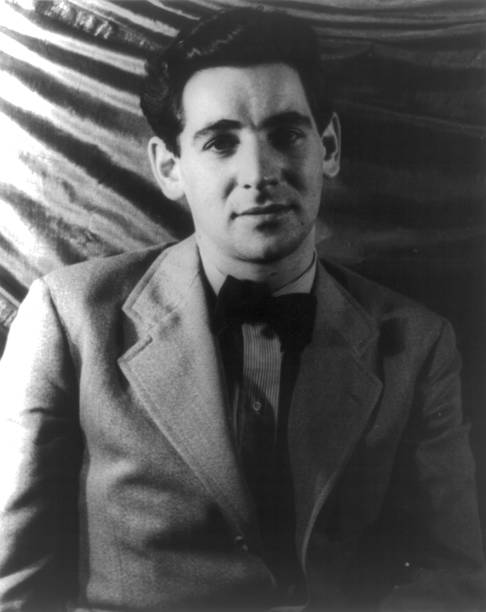
Lennart Carleson
 Sweden
Also known as: L. Carleson
Birthday
March 18, 1928
Birth Sign
Pisces
Birthplace
Stockholm, Sweden
Age
98 years old
About
Lennart Carleson is a Swedish mathematician whose work reshaped harmonic analysis. Born in Stockholm in 1928, he is best known for proving Lusin's conjecture in 1966, a problem that had stumped the field for decades. His proof that the Fourier series of any square-integrable function converges almost everywhere stunned the mathematical community and became a cornerstone of modern analysis.
Carleson spent most of his career at Uppsala University, where he served as professor and later as rector. He also held a professorship at UCLA and was a visiting scholar at the Institute for Advanced Study in Princeton. His influence extends through generations of students and collaborators, many of whom went on to lead the field themselves.
In 2006, the Norwegian Academy of Science and Letters awarded him the Abel Prize, often described as the Nobel Prize of mathematics. The citation praised his "profound and seminal contributions to harmonic analysis and the theory of smooth dynamical systems." Now in his late nineties, Carleson remains a towering figure in mathematics, revered for both the depth of his insights and the elegance of his arguments.
Early Life & Background
Lennart Axel Edvard Carleson was born on March 18, 1928, in Stockholm, Sweden. Details of his early family life remain private, but his mathematical talent surfaced early. He entered Uppsala University as a student, where he came under the influence of the renowned analyst Arne Beurling. Beurling's mentorship proved decisive, steering Carleson toward harmonic analysis and complex analysis.
Carleson completed his doctoral studies under Beurling, earning his PhD in 1950 at the age of 22. His thesis dealt with the convergence properties of Fourier series, a topic that would occupy him for decades. After a period of postdoctoral work, including time in the United States, he returned to Sweden to begin his academic career. These early years built the foundation for his later breakthroughs, sharpening the technical skill and deep intuition that would define his work.
Career Growth
Carleson's breakthrough came in 1966 when he proved Lusin's conjecture, showing that the Fourier series of any function in L² converges almost everywhere. The result ended a long-standing open problem and immediately placed him at the forefront of harmonic analysis. The proof was so intricate that it took years for other mathematicians to fully digest it.
He went on to hold the chair of mathematics at Uppsala University from 1955 to 1981, also serving as rector of the university from 1968 to 1970. In the 1980s he moved to the United States, taking a professorship at the University of California, Los Angeles, where he remained until his retirement. His later work extended into complex dynamics and smooth dynamical systems, areas where he continued to produce influential results.
Beyond his own research, Carleson served on numerous editorial boards and committees, shaping the direction of mathematics worldwide. His legacy is carried by the many mathematicians he mentored, including several who have themselves won major prizes.
Career Timeline
Public Image & Style
In the mathematical community, Carleson is regarded as a quiet genius, known for the depth and originality of his ideas rather than for self-promotion. His lectures were famously clear but demanding, and his presence at conferences commanded respect. Colleagues recall his intense concentration and his ability to see connections that others missed. Among students, he is remembered as a demanding but inspiring mentor who set high standards and expected nothing less than excellence.
Fame & Fandom (iFAMOUS Rankings)
Lennart Carleson commands a following defined not by adoration of a persona, but by profound reverence for the mind that solved one of analysis's most stubborn riddles. His audience consists almost entirely of mathematicians and students who have traced the evolution of harmonic analysis from his 1966 breakthrough to modern applications. There is no organized fan club, no dedicated subreddit, and no campaign to plaster his face on billboards; the loyalty here is intellectual, born from the shared struggle of understanding the convergence of Fourier series. This quiet, scholarly devotion stands in stark contrast to the chaotic energy surrounding pop culture icons, yet within the halls of Uppsala University and the corridors of UCLA, his name carries a weight that few others achieve. The community does not gather for birthdays or chase autographs, but rather gathers to study the proofs he left behind. Despite this deep respect among peers, iFANN has evaluated his global standing against the full spectrum of public figures. Lennart Carleson is currently an EVALUATED_UNRANKED person in the world according to the August 2026 iFANN Global Fame Engine. He does not hold a placement in the published Top 1,000 rankings or any specific scope list. While his work reshaped mathematics, it remains confined to academic circles, preventing him from crossing into the broader fame metrics that define celebrity status today.
Interesting Facts and Legends
Carleson's proof of Lusin's conjecture is so celebrated that it is often referred to simply as "Carleson's theorem." He served as president of the International Mathematical Union from 1978 to 1982, a role that made him a global ambassador for mathematics. His PhD thesis, completed in 1950, was supervised by Arne Beurling, one of the leading analysts of the twentieth century. Carleson is a member of several prestigious academies, including the Royal Swedish Academy of Sciences and the French Academy of Sciences. He was awarded an honorary degree from the University of Helsinki in 1978, among other international recognitions. The defining legend of his career centers on the Abel Prize, widely considered the Nobel Prize of mathematics. When the committee announced the award, it recognized his profound contributions to harmonic analysis and smooth dynamical systems. This moment cemented his legacy, transforming a decades-old problem into a cornerstone of modern theory. Unlike celebrities whose legends involve viral stunts or street-closing crowds, Carleson's iconic moment was a formal lecture at the University of Oslo, attended by the mathematical elite. His influence extends through generations of students and collaborators, many of whom continue to build upon the foundation he laid with quiet precision.
Notable Quotes
“The first step is to understand the problem. The rest is technique.”
“Mathematics is not about numbers, but about understanding.”
“A good proof is one that makes you wiser.”
Family & Personal Life
Little is known about Carleson's private life. He has kept his family out of the public eye, and no details about his parents, siblings, or children have been widely reported. What is clear is that his focus was always on mathematics, and his colleagues describe him as deeply devoted to his work. He has lived in Sweden and the United States, splitting his time between academic institutions on both continents.
Notable Connections
Carleson was a close collaborator of Arne Beurling, his doctoral advisor, and was influenced by the work of Lars Hörmander, another Swedish mathematician. He also interacted with many of the leading analysts of his time, including Jean-Pierre Kahane and Yitzhak Katznelson, with whom he worked on problems in harmonic analysis.
Relationships & Dating History
Carleson has kept his personal relationships private, and no public record exists of a spouse or partner. He has never been known to have a high-profile romantic relationship, and his focus has always been on his work. As of 2026, he appears to be single, though this is based on the absence of any public information rather than confirmed reports.
Salary, Net Worth In 2026
$5 Million
iFANN Editorial Team estimate
As a mathematician, Carleson's income came primarily from his academic positions. He held professorships at Uppsala University and UCLA, which provided a comfortable salary, but he never pursued commercial ventures. Per iFANN's editorial analysis, his net worth is estimated at around $5 million as of 2026, accumulated through decades of academic work and prize money. The Abel Prize in 2006 came with a cash award of about $1 million, which contributed significantly to his savings. He has lived modestly, and his financial situation reflects a life dedicated to scholarship rather than wealth.
Awards Won (3)
Carleson's most prestigious honor is the Abel Prize, which he won in 2006. He also received the Steele Prize for Lifetime Achievement from the American Mathematical Society in 1994, and the Wolf Prize in Mathematics in 1992. These awards recognize his profound and lasting impact on the field.
2006 · Mathematics
For profound and seminal contributions to harmonic analysis and theory of smooth dynamical systems
1994 · Mathematics
Lifetime achievement
Known For
Carleson's theorem (Lusin's conjecture)
1966 · Proved the theorem
Carleson measure
1958 · Introduced the concept
Abel Prize
2006 · Laureate
Keywords
Sources
Quick Facts
- Profession
- Mathematician
- Born
- March 18, 1928
- Birthplace
- Stockholm, Sweden
- Gender
- Male
- Birth Sign
- Pisces
- Nationality
- Swedish
- Awards
- Abel Prize (2006), Wolf Prize (1992), Steele Prize (1994)
Personal Details
- Full Name
- Lennart Axel Edvard Carleson
- Education
- Uppsala University (PhD)
Frequently Asked Questions
Who is Lennart Carleson?
What is Lennart Carleson's net worth in 2026?
Is Lennart Carleson still alive?
What is Lennart Carleson best known for?
How did Lennart Carleson contribute to mathematics?
Similar People
Join the community
fans discussing