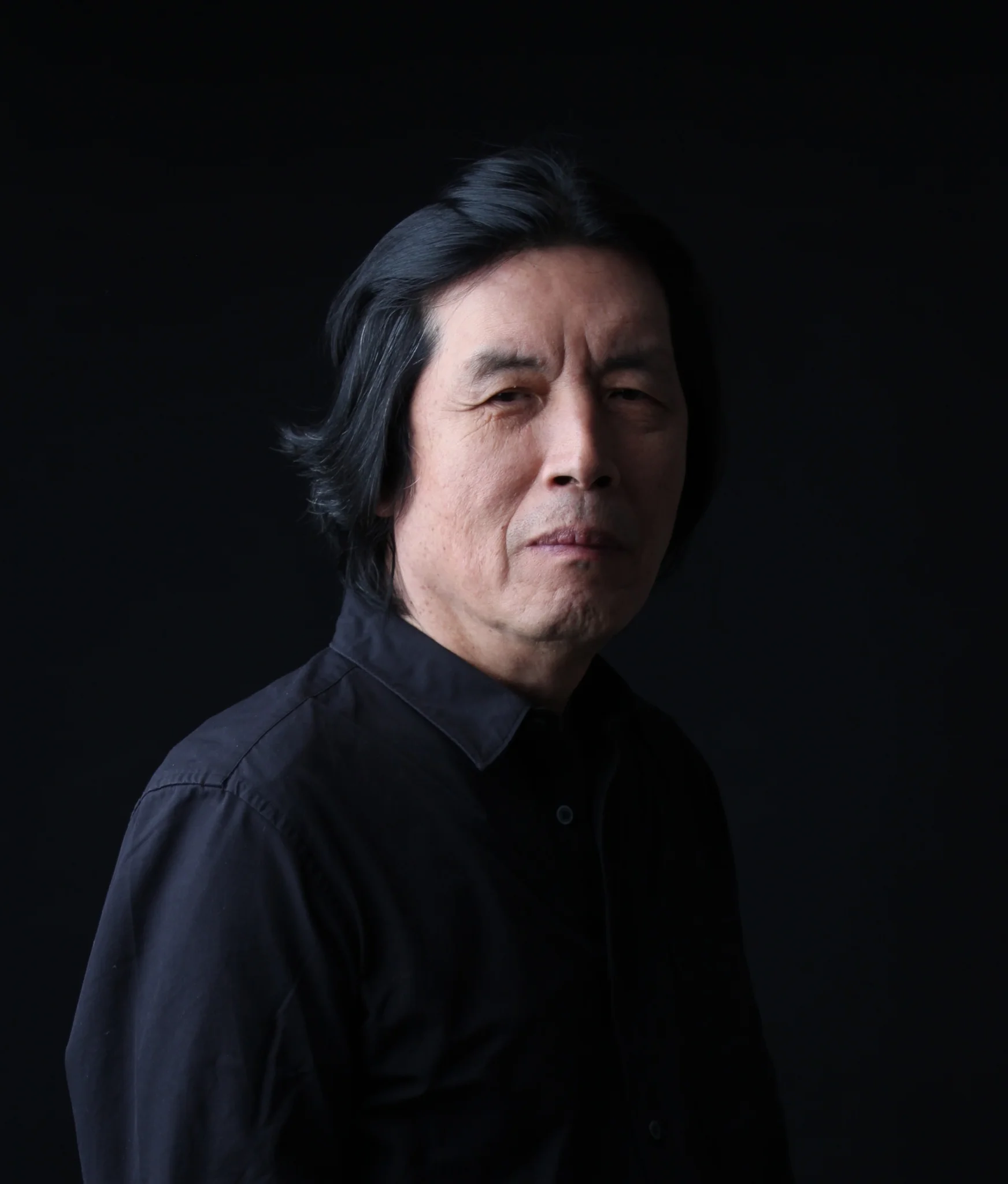
Lee Chang-dong
 South Korea
film director•screenwriter•writer
Birthday
July 4, 1954
Birth Sign
Cancer
Birthplace
Daegu, South Korea
Age
72 years old
About
Lee Chang-dong is a South Korean film director, screenwriter, and novelist, widely regarded as one of the most significant auteurs in modern cinema. Born July 4, 1954 in Daegu, he came to filmmaking late, after a career as a high school teacher and award-winning novelist. His films are known for their literary depth, moral complexity, and compassionate focus on society's outsiders. Over nearly three decades, Lee has directed only six feature films, each a meticulously crafted work that probes grief, alienation, and the search for meaning.
Lee's international breakthrough came with Oasis (2002), which won the Silver Lion for Best Director at Venice. Secret Sunshine (2007) earned Jeon Do-yeon the Best Actress prize at Cannes, and Poetry (2010) won Best Screenplay at the same festival. His most recent film, Burning (2018), became the first Korean film to reach the Oscars' final shortlist for Best Foreign Language Film. Beyond cinema, Lee served as South Korea's Minister of Culture and Tourism from 2003 to 2004. He has received lifetime achievement honors from the Asian Film Awards and the Malaysia International Film Festival. Critics and cinephiles treasure his spare, intense style, and his influence on Korean independent cinema is profound.
Early Life & Background
Lee Chang-dong grew up in Daegu, a conservative city in North Gyeongsang Province. His father's leftist leanings made stable work hard to find, so his mother carried the family's financial burden. The household had aristocratic roots, but that nobility had faded long before Lee was born. His older brother, an actor in Daegu's theater scene, sparked Lee's early interest in drama and writing. For Lee, writing became an escape from a difficult home life and a way to express private thoughts.
He studied Korean Literature at Kyungpook National University, graduating in 1981. During university, he spent most of his time in the theater, writing and directing plays. After graduation, he taught Korean at a high school in a mountain village. His first novel, Chonri, won the Donga Ilbo newspaper prize in 1983, giving him literary recognition. He moved to Seoul, teaching at Sinil High School while continuing to write. He published two more critically successful novels, Soji and Nokcheon. Lee had no formal film training when director Park Kwang-su asked him to co-write the script for To the Starry Island in 1993. Lee negotiated an assistant director role in the deal. On the first day of shooting, the original first AD didn't show up, so Lee was promoted on the spot. That moment launched his film career.
Career Growth
Lee Chang-dong's debut feature, Green Fish (1997), was a Korean noir that brought immediate acclaim. He followed with Peppermint Candy (1999), a reverse-chronological story that became his signature style and a sharp critique of Korea's military dictatorship. Oasis (2002) won the Silver Lion for Best Director at Venice and the Fipresci Prize, marking his international breakthrough. Then came an unexpected detour: from 2003 to 2004, Lee served as South Korea's Minister of Culture and Tourism under President Roh Moo-hyun.
Returning to filmmaking, he directed Secret Sunshine (2007), which won Best Feature Film at the Asia Pacific Screen Awards and earned Jeon Do-yeon the Best Actress award at Cannes. Poetry (2010) won Best Screenplay at Cannes and the APSA for Achievement in Directing. He also produced A Brand New Life (2009) and The World of Us (2016), both winning APSA awards in children's categories. Burning (2018), based on a Haruki Murakami short story, became his biggest critical success. It won the Fipresci Prize at Cannes, Best Foreign Language Film from the Los Angeles and Toronto Film Critics Associations, and became the first Korean film to make the Oscar shortlist for Best Foreign Language Film. Lee's production company, Pinehouse Films, continues to develop projects. As of 2026, he has not announced a new film since Burning.
Career Timeline
Public Image & Style
Lee Chang-dong is regarded as an auteur's auteur, one of the principal architects of director-driven Korean independent cinema. Critics praise his spare, literary intensity and his unflinching gaze at trauma, class, and moral ambiguity. His films are more treasured by cinephiles and festival juries than by mass audiences, and he has no official fandom name. In public, Lee presents as a serious, reserved artist. He rarely gives interviews and does not maintain social media accounts. Fans connect with his work through its deep empathy for outsiders and its patient, novelistic rhythm. His reputation as a perfectionist who takes years between projects only adds to his mystique. He was awarded the Legion of Honour – Knight by France in 2006.
Fame & Fandom (iFAMOUS Rankings)
Lee Chang-dong's connection to his audience is defined by a quiet, intellectual reverence rather than the organized fervor seen in pop culture. Unlike idols with named fanbases who coordinate streaming campaigns or subway advertisements, Lee's supporters are primarily cinephiles, critics, and festival attendees who engage deeply with the themes of trauma and memory in his work. There is no official fandom name; fans simply refer to him as "Director Lee" or by his full name, gathering for Q&A sessions at major festivals like Cannes and Venice to discuss his films. The community celebrates his scarcity of output, viewing his eight-year gaps between projects not as absence but as a reflection of his obsessive dedication to craft.
In August 2026, the iFANN Global Fame Engine evaluated this figure and determined that he does not currently hold a placement in the published rankings. This status reflects a reality where his influence is profound yet niche, existing outside the metrics that drive global celebrity charts. While he lacks a numerical rank, his standing among industry peers was cemented when he received the TIFF Tribute Award alongside global icons like Penélope Cruz and Isabelle Huppert, followed by the MIFFest Lifetime Achievement Honor later that same year.
The legend surrounding Lee Chang-dong is built on stories of artistic perfectionism rather than viral moments or crowd-shutting events. Fans retell accounts of his slow production pace and the intense psychological debates sparked by the ambiguous ending of *Burning*. His recent return with *Possible Love*, featuring music by Jung Jaeil, continues this legacy of meticulous, high-stakes filmmaking that prioritizes depth over commercial appeal.
Interesting Facts and Legends
Before entering the film industry at age 39, Lee Chang-dong had no formal training and worked as a high school teacher while winning awards for his novels, including the Donga Ilbo newspaper prize for *Chonri*. He entered filmmaking through a serendipitous moment when the original first assistant director failed to appear on set, forcing him to step into the role. His family possessed aristocratic ancestry that had declined by the time of his birth, and his older brother, a theater actor, significantly influenced his early passion for drama. Over more than two decades, he has directed only six feature films, each taking years to develop.
A widely retold story among fans highlights his extreme selectivity, often citing the eight-year gap before his upcoming film *Possible Love* as proof of his refusal to compromise quality for quantity. This reputation for slow cinema became a defining part of his mythology, especially after he received the MIFFest Lifetime Achievement Honor in 2026, where he remarked, "Thanks to Cinema, I Feel Connected to Something Much Bigger." While there are no verified incidents of fans fainting or streets shutting down, the cultural discourse around his film *Burning*, based on Haruki Murakami's short story *Barn Burning*, remains a central pillar of his legendary status.
Notable Quotes
“I don't make films to deliver messages. I make films to ask questions.”
“Cinema is a way of looking at the world, not a way of explaining it.”
“The most important thing in a film is the character's inner world.”
“I think art should be uncomfortable. It should make you think.”
Family & Personal Life
Lee Chang-dong's older brother was an actor in Daegu's theater scene and sparked Lee's early interest in drama. His sibling, Lee Joon-dong, is also involved in film production as a producing partner on Burning and other projects. Lee's parents were lower middle-class with left-leaning politics; his father's sympathies made stable employment difficult, so his mother supported the family. The family had aristocratic ancestry that had long since declined. Lee keeps his personal life intensely private and has not publicly disclosed a spouse or children. He lives in South Korea and rarely discusses his household in interviews.
Notable Connections
Park Kwang-su brought Lee into filmmaking, collaborating on To the Starry Island and A Single Spark. Lee Joon-dong, Lee's brother, is his producing partner on Burning and other projects. Actress Jeon Do-yeon starred in Secret Sunshine, winning Best Actress at Cannes. Actors Steven Yeun and Yoo Ah-in starred in Burning. Moon So-ri starred in Oasis.
Relationships & Dating History
Lee Chang-dong is intensely private about his personal life. No credible public records document any dating history, marriages, divorces, or relationships. He has never publicly confirmed a spouse or partner. As of 2026, his relationship status remains unknown, and he is not known to be married, divorced, or in a publicly acknowledged relationship.
Salary, Net Worth In 2026
$5 Million
iFANN Editorial Team estimate
iFANN currently estimates Lee Chang-dong's net worth at $5 Million. This figure reflects income derived primarily from directing and screenwriting fees across six feature films over three decades, along with producer credits through his company Pinehouse Films. Additional revenue streams include royalties from his published novels and a government salary earned during his tenure as Minister of Culture and Tourism. Unlike commercial filmmakers whose art-house productions generate modest box office returns, Lee supplements his earnings through speaking engagements and festival appearances. His net worth has remained stable, consistent with his infrequent directing schedule and lack of pursuit for commercial projects.
Awards Won (66)
Lee Chang-dong has won the Silver Lion for Best Director at Venice for Oasis, Best Screenplay at Cannes for Poetry, and multiple Asia Pacific Screen Awards including Best Feature Film for Secret Sunshine and Achievement in Directing for Poetry. Burning won Best Foreign Language Film from the Los Angeles and Toronto Film Critics Associations. He has received lifetime achievement honors from the Asian Film Awards and MIFFest.
2018 · Fipresci International Critics' Prize
Burning
2018 · FIPRESCI Prize
Burning
2010 · Best Screenplay
Poetry
2007 · Best Actress
Secret Sunshine
2018 · Palme d'Or
Burning
Known For
Burning
2018 · Director, Screenwriter, Producer
Poetry
2010 · Director, Screenwriter
Secret Sunshine
2007 · Director, Screenwriter
Oasis
2002 · Director, Screenwriter
Peppermint Candy
1999 · Director, Screenwriter
Green Fish
1997 · Director, Screenwriter
Keywords
Sources
Quick Facts
- Profession
- film director, screenwriter, writer
- Born
- +1954-07-04
- Birthplace
- Daegu
- Gender
- Male
- Birth Sign
- Cancer
- Education
- Kyungpook National University
Personal Details
- Education
- Kyungpook National University (Korean Literature)
Filmography
6
Total
6
Film
0
TV
Frequently Asked Questions
How many films has Lee Chang-dong directed?
What is Lee Chang-dong's net worth in 2026?
Is Lee Chang-dong married?
What awards did Lee Chang-dong win at Cannes?
Was Lee Chang-dong a government minister?
Join the community
fans discussing