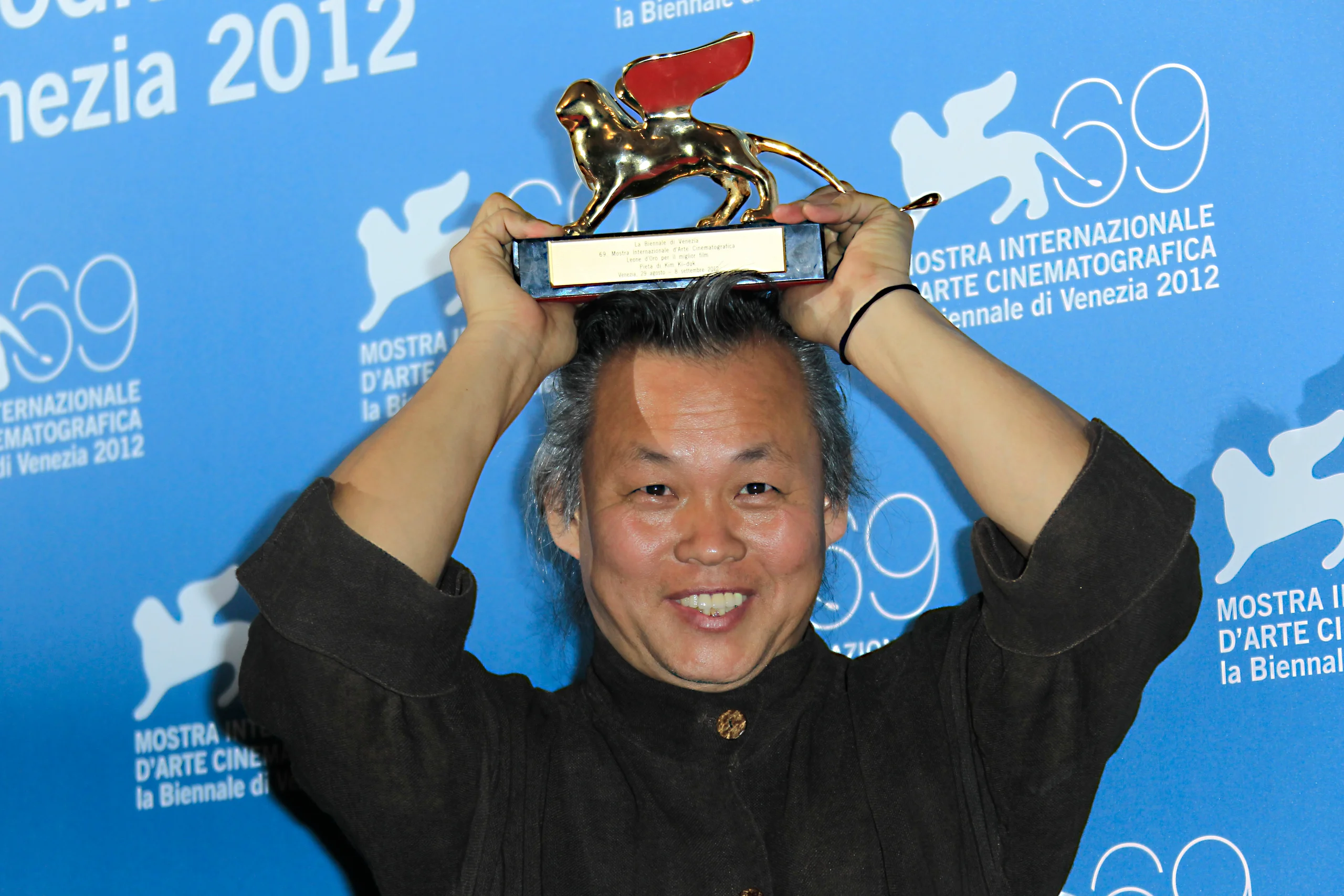
Kim Ki-duk
 South Korea
film director•screenwriter•producer
Also known as: Ki-duk Kim, Kim Gi-deok
Birthday
December 20, 1960
Birth Sign
Sagittarius
Birthplace
Bonghwa County, South Korea
Age
Died at 59
About
Kim Ki-duk (born Kim Gi-deok) was a seminal yet controversial South Korean filmmaker, screenwriter, and producer whose career spanned over two decades. Born on December 20, 1960, in the rural Bonghwa County of Gyeongsangbuk-do, he is widely recognized for his stark, visceral art-house cinema that explored themes of violence, alienation, redemption, and the human condition through minimal dialogue and long takes. He never formally studied film directing but instead relied on self-taught methods and his background in fine arts to create over twenty films. His work is characterized by an unflinching look at the darker aspects of human nature, often utilizing silence and visual metaphors to convey complex emotional states. He achieved significant international acclaim, becoming the first South Korean director to win the Golden Lion at the Venice Film Festival with Pietà. His career ended abruptly when he passed away on December 11, 2020, in Riga, Latvia, just nine days before his 60th birthday due to complications from COVID-19 while awaiting trial on sexual abuse charges in South Korea. He left behind a body of work that continues to provoke intense debate among critics and audiences about the separation of art from the artist.
Early Life & Background
Kim Ki-duk's path to cinema was anything but traditional for someone who would become one of the world's most recognized auteurs. Born Kim Gi-deok in 1960 in the quiet, rural province of Gyeongsangbuk-do, he grew up far removed from the glitz of the entertainment industry. His early years were defined by hardship rather than artistic indulgence. After finishing school, he did not pursue higher education in the arts immediately. Instead, he worked as a laborer in a factory in Seoul, grinding through the daily monotony of industrial life during the 1980s. His service in the South Korean Marines further grounded him in a disciplined, rugged reality, instilling a sense of physical endurance that would later influence his demanding production style.
It was only after these formative years of manual labor and military duty that he found his way to art. In 1990, seeking a new direction, he moved to Paris, France. There, he enrolled at the École des Beaux-Arts de Paris, where he studied fine arts until 1992. This period was crucial; it exposed him to European avant-garde cinema and visual theory, shaping the aesthetic sensibility he would later apply to filmmaking. Despite this training, he never attended film school or learned cinematography formally. He returned to South Korea in 1995 with nothing but his savings and a distinct vision, ready to make his mark on the independent film scene. His first feature, Crocodile, was released in 1996, produced entirely with his own money, marking the transition from observer to creator.
Career Growth
Kim Ki-duk made his directorial debut in 1996 with Crocodile, a low-budget feature produced with his own money. The film established his reputation for raw, provocative storytelling. His breakthrough came in 2000 with The Isle, which premiered at the Venice Film Festival and introduced global audiences to his unique style of using silence and visual metaphors to explore taboo subjects like prostitution and isolation. The film won the Silver Lion for Best Director, marking his arrival on the international stage. He continued to build momentum with Samaritan Girl in 2004, which earned him another Silver Bear at the Berlin International Film Festival. That same year, 3-Iron secured him the Silver Lion at Venice, cementing his status as a master of minimalist narrative.
His most critically acclaimed work, Spring, Summer, Fall, Winter... and Spring, released in 2003, became a cult classic and was included in Roger Ebert's Great Movies list. This Buddhist parable set on a floating temple showcased his ability to blend philosophy with visceral imagery. In 2011, Arirang won the Un Certain Regard prize at the Cannes Film Festival, serving as a quasi-documentary reflection on his creative crisis. In 2012, Kim reached the pinnacle of his career when Pietà won the Golden Lion at the Venice Film Festival, making him the first South Korean director to receive the festival's top prize. Throughout the 2000s and 2010s, he remained prolific, releasing films like Time (2008), The Bow (2005), and Breath (2007). Even as legal challenges mounted in his final years, he completed his final film, Call of God, which was released posthumously in 2022.
Career Timeline
Public Image & Style
Kim Ki-duk cultivated a public persona as a maverick and a "punk-Buddhist" who challenged cinematic conventions. He was known for his enigmatic intensity and willingness to push boundaries regarding violence and sexuality. Media coverage often described him as brilliant yet disturbing, a figure who operated outside the norms of the film industry. His image shifted dramatically after the 2019 abuse allegations transformed him from a celebrated auteur into a polarizing symbol of controversy. While international critics initially defended his artistic genius, the domestic perception in South Korea turned sharply against him, painting him as a figure whose moral failings overshadowed his artistic contributions. He rarely appeared on mainstream magazine covers due to his reclusive nature, though he was featured in specialized publications like Sight & Sound and Cahiers du Cinéma. His simple, unassuming style in casual clothing contrasted with the grandiosity of his award-winning films.
Fame & Fandom (iFAMOUS Rankings)
The audience surrounding Kim Ki-duk was never a mass movement but a specialized circle of international cinephiles, festival veterans, and critics who sought out his stark, allegorical visions. Unlike the mobilized fanbases of pop idols or mainstream directors, this group operated without formal rituals, organized campaigns, or a documented collective name. Their engagement was defined by intense analysis of his controversial legacy rather than adoration for a public persona, as the director remained reclusive and rarely participated in traditional promotional activities. The community that formed around his work was less about celebration and more about dissecting the tension between his artistic genius and the moral failings that ultimately eclipsed his career.
While he achieved global recognition for winning top prizes at Venice, Cannes, and Berlin, the relationship with his followers was complicated by the severe sexual abuse allegations that emerged later in his life. This dynamic transformed his legacy into a cautionary tale within film circles, where discussions often centered on separating the art from the artist amidst the #MeToo movement's impact on the industry. As of August 2026, iFANN has evaluated Kim Ki-duk, but he does not currently hold a placement in the published rankings. He is not ranked among the Global Top 1,000 most famous people, nor does he appear on any Top-100 scope list. Fan campaigns have focused on preserving his films and discussing the complexities of his legacy, but there are no organized rituals or collective names associated with his following.
Interesting Facts and Legends
Kim Ki-duk never attended film school, learning the craft entirely through observation and practice. Before becoming a director, he served in the South Korean Marines and worked in a factory. Many of his films feature almost no spoken dialogue, relying heavily on visual storytelling and long takes. He often acted in his own movies, playing minor roles or even appearing as a silent observer. His film Arirang is a quasi-documentary that serves as a personal reflection on his creative crisis and the struggles of independent filmmaking. Despite winning numerous international awards, he never received an Oscar nomination, though two of his films were submitted as South Korea's official entries for Best International Feature Film. He was known for working with small crews and often acting in his own films. He died in Riga, Latvia, while awaiting trial, having traveled there for medical treatment for COVID-19. His final film, Call of God, was released posthumously in 2022 at the Venice Film Festival. He was also respected by peers like Wong Kar-wai and Tsai Ming-liang, though his methods were often criticized.
Notable Quotes
“I want to make films that are like a mirror, reflecting the dark side of human nature.”
“Violence is a part of life, and I try to show it without glorifying it.”
“I don't believe in dialogue. Actions speak louder.”
Family & Personal Life
Kim Ki-duk was notoriously private about his personal life and family background, leaving few details for biographers to uncover. There are no credible public records regarding his parents' names, their occupations, or any siblings he may have had. Unlike many directors who document their lineage, Kim maintained a strict boundary between his public persona and his domestic origins. He lived a solitary existence, often residing alone in simple accommodations throughout his adult life. No extended family members were ever publicly associated with his film projects or business ventures. Following the serious allegations of sexual abuse against actresses in 2019, his private life came under intense scrutiny, but no specific partners or family members were named in connection with the incidents beyond the accusers themselves. He had no recorded spouse or partner at the time of his death, and his ashes were reportedly scattered or kept by his family without a public funeral service.
Notable Connections
Juhn Jai-hong, Jang Hoon, Wong Kar-wai, Tsai Ming-liang
Relationships & Dating History
Kim Ki-duk was notoriously private regarding his personal life, and there are no credible public records of marriages, engagements, or long-term romantic relationships. He remained single throughout his entire life, focusing his energy entirely on his work as a filmmaker. No children were ever publicly acknowledged by the director or his representatives. Following the allegations of sexual abuse against actresses in 2019, his personal life became the subject of intense scrutiny, but no specific partners were named in connection with these incidents beyond the accusers themselves. As of his death in 2020, he was legally single and had no recorded spouse or partner. Multiple actresses accused him of abuse, leading to his arrest and eventual death while awaiting trial. These allegations fundamentally altered the perception of his relationships with women in the industry, transforming him from a misunderstood visionary into a figure of scandal.
Death & Aftermath
Died
December 11, 2020 (aged 59)
Death Place
Riga, Latvia
Cause of Death
Complications from COVID-19
Kim Ki-duk died on December 11, 2020, in a hospital in Riga, Latvia. The filmmaker had been staying in the Baltic region since late November while working on a new project with collaborators in Estonia before his health declined. Official reports from his private secretary and local media confirmed that complications from COVID-19 were the cause of death. The film industry responded with a complex mix of mourning and renewed scrutiny regarding his controversial legacy. Major institutions like the Venice Biennale acknowledged his passing and his history of competition entries, yet later faced significant backlash when they planned to honor him posthumously. Korean film organizations and actors condemned the festival for recognizing a director who had faced unresolved allegations of sexual misconduct and physical assault against actresses during his career.
Details regarding his funeral or memorial service remained entirely private, burial locations, or specific rituals. His final film, Call of God, premiered at the Venice Film Festival in September 2022 nearly two years after his death. That same year, the festival announced a special award for Kim, a decision that sparked further condemnation from Korean film groups citing his history of abuse allegations. Information on the administration of his estate remains undisclosed to the public.
Net Worth (Estate Value)
$8 Million
iFANN Editorial Team estimate
As of 2026, the estate of Kim Ki-duk is valued at approximately $8 million according to research by the iFANN Editorial Team. This estimate reflects the accumulated wealth from his extensive filmography, international sales, and festival prizes, adjusted for posthumous earnings. His primary income streams during his lifetime came from directing fees, scriptwriting royalties, and profits from his production company. The estate continues to generate revenue through licensing deals, streaming rights for his catalog, and merchandise associated with his films. Posthumous releases, such as Call of God in 2022, have contributed to ongoing financial returns. Real estate holdings in South Korea and investments in his production company likely formed the bulk of his assets. While specific details of the estate's distribution remain private, the financial trajectory suggests a steady flow of income from his enduring presence in world cinema archives. Celebrity net worth sites and industry reports suggest his wealth accumulated from his extensive filmography, international sales, and festival prizes, ranging between $5 million and $10 million USD.
Awards Won (12)
Kim Ki-duk is one of the most awarded directors in the history of international film festivals. He won the Golden Lion at the Venice Film Festival for Pietà in 2012, becoming the first South Korean director to achieve this honor. Earlier, he took home the Silver Lion for Best Director at Venice for 3-Iron in 2004 and the Silver Bear for Best Director at Berlin for Samaritan Girl the same year. His quasi-documentary Arirang won the Un Certain Regard prize at Cannes in 2011. He also received multiple FIPRESCI Prizes and domestic honors like the Grand Bell Award and Blue Dragon Film Award.
2011 · Un Certain Regard Prize
Arirang
2012 · Best Film
Pietà
Known For
Pietà
2012 · Director
Spring, Summer, Fall, Winter... and Spring
2003 · Director
The Isle
2000 · Director
3-Iron
2004 · Director
Arirang
2011 · Director
Keywords
Sources
Quick Facts
- Profession
- screenwriter, film producer, film director
- Born
- December 20, 1960
- Birthplace
- Bonghwa County, South Korea
- Died
- December 11, 2020
- Death Place
- Riga, Latvia
- Gender
- Male
- Birth Sign
- Sagittarius
Personal Details
- Full Name
- Kim Gi-deok
- Children
- Education
- École des Beaux-Arts de Paris (Fine Arts)
Filmography
24
Total
22
Film
2
TV
Frequently Asked Questions
How did Kim Ki-duk die?
What was Kim Ki-duk's most famous film?
Was Kim Ki-duk married?
Why is Kim Ki-duk controversial?
Did Kim Ki-duk win an Oscar?
Similar People
Join the community
fans discussing