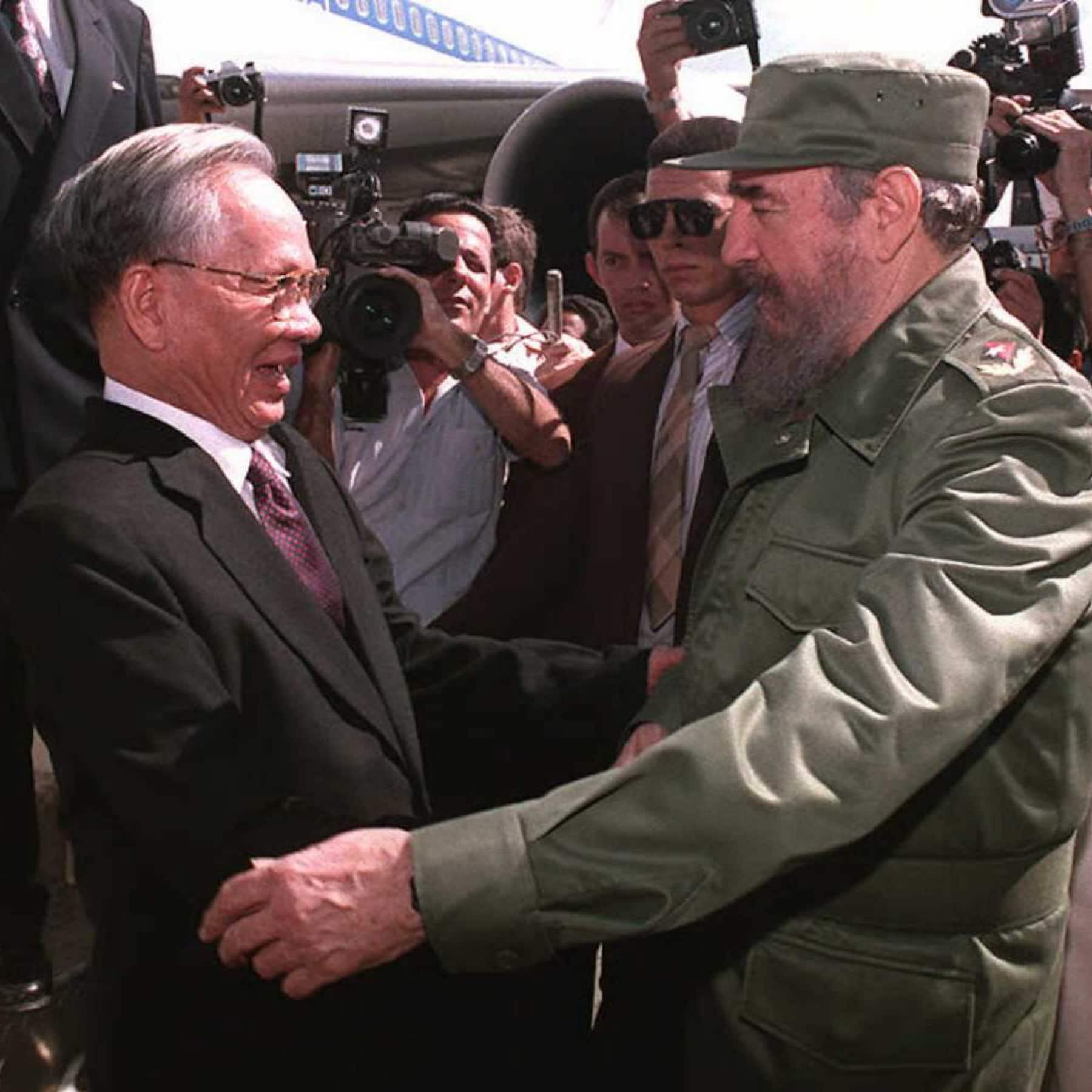
Le Duc Anh
 Vietnam
Also known as: Lê Đức Anh
Birthday
December 1, 1920
Birth Sign
Sagittarius
Birthplace
Huế, Vietnam
Age
Died at 98
About
Lê Đức Anh was a Vietnamese politician and general who served as the fifth President of Vietnam from 1992 to 1997. Born in Huế on December 1, 1920, he rose through the ranks of the military to become a key figure in the country's wars against France and the United States, and later commanded Vietnamese forces in Cambodia during the 1980s. His presidency marked a period of diplomatic opening, including the normalization of ties with the United States and Vietnam's entry into ASEAN.
Anh was known as a conservative who favored strict Communist Party control over domestic policies, yet he pursued pragmatic foreign relations. He passed away on April 22, 2019, in Hanoi, at the age of 98, leaving behind a legacy as a soldier and statesman who helped shape modern Vietnam.
Early Life & Background
Lê Đức Anh's early life was shaped by French colonial rule. Born in the imperial city of Huế, he studied engineering before turning to the anti-French resistance. A childhood bout with smallpox left him blind in one eye, a condition that did not deter him from a life of service.
In his youth, he joined the revolutionary movement, initially serving as a battalion-level official rather than a commissioned officer. His organizational skills and dedication quickly became apparent, and he rose through the ranks. By 1962, he had reached the army general staff as head of operations, a testament to his strategic acumen.
His early career was marked by a series of assignments across Vietnam, from the north to the south, as the country descended into war. These formative years instilled in him a deep commitment to the Communist cause and prepared him for the leadership roles that lay ahead.
Career Growth
Lê Đức Anh's military career reached its zenith in May 1975 when he marched through Saigon leading a victory parade, celebrating the reunification of Vietnam after decades of conflict. He had been an architect of the Vietnamese offensive against Democratic Kampuchea in Cambodia, and throughout the 1980s he commanded Vietnamese forces there.
With the Doi Moi economic reforms of 1986, Anh shifted from military command to civil administration. In 1992, he became the fifth President of Vietnam. His presidency was notable for diplomatic breakthroughs: he was the first Vietnamese head of state after unification to visit the United States, and he, along with Prime Minister Võ Văn Kiệt, influenced President Bill Clinton's decision to ease economic restrictions. Under his watch, Vietnam officially joined ASEAN on July 28, 1995. He also strengthened ties with China, Japan, Korea, and France. His term ended on September 23, 1997, when he was succeeded by Trần Đức Lương.
Career Timeline
Public Image & Style
Lê Đức Anh is remembered as a decisive military leader and a pragmatic politician. His public image is that of a stern, disciplined general who transitioned into a statesman, guiding Vietnam through a period of international re-engagement. He was seen as a conservative within the party, but his willingness to normalize ties with the United States and join ASEAN showed a practical side.
In Vietnam, he is respected as a war hero and a key figure in the country's modern history. Internationally, he is recognized for his role in the Cambodian conflict and his presidency during a pivotal era. His legacy is that of a man who served his country in both war and peace.
Fame & Fandom (iFAMOUS Rankings)
The stern gaze of a general who once commanded the liberation of Cambodia still commands attention decades later. Lê Đức Anh remains a towering figure in Vietnamese history, recognized globally as the 44th most famous person in Vietnam and the 56th most famous person from Vietnam. His influence extends beyond borders, ranking him the 50th most famous person in Southeast Asia, according to the iFANN Global Fame Rankings. These placements reflect a legacy built on military strategy and diplomatic pragmatism rather than pop culture stardom. While he lacks a formal fan club or organized campaigns typical of entertainers, his name evokes deep respect among those who study modern Asian geopolitics. The absence of a specific fandom name underscores his role as a statesman rather than an idol; support for him flows through official state channels and historical reverence rather than social media trends or merchandise sales. There are no subway ads bearing his face or birthday billboards lighting up Hanoi streets. Instead, his audience consists of historians, political analysts, and citizens honoring a leader who guided Vietnam through its transition from war to global engagement. The rankings capture this enduring stature, measuring his presence across media coverage and cultural memory without relying on fleeting viral moments. He is remembered not for dancing on stage but for signing treaties that opened a closed nation to the world.
Interesting Facts and Legends
Lê Đức Anh's childhood battle with smallpox left him blind in one eye, a physical mark he rarely discussed publicly. Before joining the anti-French resistance, he studied engineering, a background that instilled a pragmatic approach to solving complex problems during his long career. As the first Vietnamese head of state to visit the United States after unification, his trip played a pivotal role in thawing relations between the two former enemies. Despite his conservative stance favoring tight party control over domestic policies, he was instrumental in securing Vietnam's entry into ASEAN through economic diplomacy. Historically, he is legendary for commanding Vietnamese forces in Cambodia during the 1980s, leading the invasion that ousted the Khmer Rouge regime under Pol Pot. This military achievement stands as his primary claim to fame alongside his tenure as Chief of the General Staff and Minister of Defense, where he led the army through the post-war transition and Đổi Mới reforms. His presidency from 1992 to 1997 marked a unique blend of hardline communism domestically and pragmatic foreign relations internationally. Upon his death at age 98, Vietnam held a state funeral attended by foreign dignitaries, cementing his status as a national hero whose legacy is managed by the government rather than fans.
Family & Personal Life
Details about Lê Đức Anh's family are scarce. He was born in Huế, but little is known about his parents or siblings. His personal life remained private, and he rarely spoke publicly about his family. He was married, but his wife's name and details are not widely documented. He had children, but again, specifics are not publicly available.
His devotion to his country often took precedence over personal matters, and he spent much of his life in military service and political office. His family life was kept out of the public eye, and he passed away in Hanoi in 2019, survived by his family.
Notable Connections
Lê Đức Anh worked closely with Prime Minister Võ Văn Kiệt, with whom he visited the United States and influenced President Bill Clinton's decision to ease economic restrictions on Vietnam. He was succeeded by Trần Đức Lương as President. His military career was intertwined with that of General Võ Nguyên Giáp, though they served in different capacities. He also interacted with international leaders such as China's leaders and ASEAN officials during his presidency.
Relationships & Dating History
Little is known about Lê Đức Anh's personal relationships. He was married, but his wife's name and the details of their relationship are not widely published. He kept his personal life private, and there are no public records of other relationships. At the time of his death, he was a widower, his wife having predeceased him.
Death & Aftermath
Died
April 22, 2019 (aged 98)
Death Place
Hanoi
Cause of Death
Natural causes associated with advanced age
The Vietnamese government declared two days of official mourning from April 23 to 24, 2019, followed by a state funeral that drew the nation's highest-ranking officials to the National Funeral Hall in Hanoi. General Secretary Nguyen Phu Trong and Prime Minister Nguyen Xuan Phuc led the tributes for Le Duc Anh, a figure whose life had been defined by decades of revolutionary service rather than personal celebrity. The ceremony marked a formal end to a career that spanned the wars against France and the United States before transitioning into the diplomatic opening of the 1990s.
Anh passed away at approximately 8:10 p.m. local time on April 22, 2019, inside his residence on Hoang Dieu Street in Hanoi. At 98 years old, he succumbed to natural causes associated with advanced age and illness, a conclusion confirmed by the state-run Vietnam Government Portal. Medical details regarding his final days remained private, consistent with the protocol for high-profile figures in Vietnam, though reports described his passing as peaceful after a long life. Tributes poured in from domestic and international sources immediately following the announcement. Prime Minister Nguyen Xuan Phac published an article in Nhan Dan newspaper praising Anh as an excellent leader with great virtue who maintained close bonds with the people.
International obituaries highlighted his dual legacy as the architect of the offensive that ousted Pol Pot's Khmer Rouge regime in Cambodia and as a key driver behind the normalization of relations with former adversaries like China and the United States. The reaction remained strictly confined to official state commemorations, reflecting the gravity of his position as the fifth President of Vietnam.
Net Worth (Estate Value)
$3 Million
iFANN Editorial Team estimate
As a military officer and later president of Vietnam, Lê Đức Anh's personal wealth was never a matter of public record. His income would have stemmed from government salaries and military pensions throughout his distinguished service. After his death in 2019, his estate likely consists of property and personal assets held within the country. Given the lack of public financial disclosures regarding state officials, per iFANN's editorial analysis, his net worth is estimated to be $3 Million. This figure considers the modest salaries typical of Vietnamese officials and the absence of major business ventures or private commercial enterprises. The estimate reflects the reality that high-ranking leaders in his era operated without the transparent wealth accumulation seen in modern corporate sectors.
Awards & Accolades
Known For
President of Vietnam
1992-1997 · President
Commander of Vietnamese forces in Cambodia
1980s · General
Keywords
Sources
Quick Facts
- Profession
- politician, military personnel
- Born
- December 1, 1920
- Birthplace
- Huế, Vietnam
- Died
- April 22, 2019
- Death Place
- Hanoi, Vietnam
- Gender
- Male
- Birth Sign
- Sagittarius
- Nationality
- Vietnamese
- Presidency
- 1992-1997
Personal Details
- Full Name
- Lê Đức Anh
- Education
- Studied engineering
Frequently Asked Questions
Who was Le Duc Anh?
When was Le Duc Anh born and when did he die?
What were Le Duc Anh's major achievements as President?
What was Le Duc Anh's role in the Vietnam War?
What was Le Duc Anh's military background?
Similar People
Join the community
fans discussing