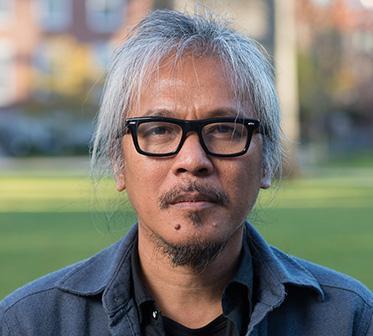
Lav Diaz
 Philippines
Filmmaker•film editor•film producer•former film critic
Also known as: Lavrente Indico Diaz
Birthday
December 30, 1958
Birth Sign
Capricorn
Birthplace
Datu Paglas, Maguindanao, Philippines
Age
67 years old
Height
5 ft 7 in (170 cm)
About
Lav Diaz is a Filipino filmmaker, editor, and producer. He is a leading figure in slow cinema, renowned for his extraordinarily long, black-and-white narrative films that grapple with the political and historical trauma of the Philippines. His work is characterized by static long takes, minimalist dialogue, and a meditative, immersive style. Diaz's international breakthrough came with Norte, the End of History (2013), selected for Cannes Un Certain Regard. He has since won top prizes at major festivals, including the Golden Lion at Venice for The Woman Who Left (2016) and the Golden Leopard at Locarno for From What Is Before (2014). His films are celebrated for their uncompromising artistic vision, but they remain niche in commercial terms, sustained by international film funds and a devoted cinephile audience.
As of 2026, Diaz continues to make films and teach masterclasses worldwide. He is regarded as one of the most important living filmmakers in Southeast Asia, often compared to Andrei Tarkovsky for his philosophical and temporal approach to cinema. He is frequently described as having a gaunt, ascetic appearance, often dressed in black. Diaz is known for stating, \"I am not interested in making films that are easy to digest. I want to make films that confront the audience with time, with history, with the weight of the world.\""
Early Life & Background
Lavrente Indico Diaz was born on December 30, 1958, in Datu Paglas, Maguindanao, on the island of Mindanao, Philippines. He grew up as the youngest of five children in a poor farming family, an upbringing that profoundly shaped his perspective. During the tumultuous Martial Law era under Ferdinand Marcos, his family faced displacement, an experience that left an indelible mark on his worldview and would later resonate deeply in his cinematic narratives. From an early age, Diaz cultivated a fervent love for literature and film, immersing himself in extensive reading and seeking out any movies accessible in his rural environment. A pivotal turning point in his artistic development was his exposure to the works of visionary filmmakers Andrei Tarkovsky and Theo Angelopoulos, whose meditative styles significantly inspired what would become his distinctive slow-cinema aesthetic.
Seeking new opportunities, Diaz eventually moved to Manila. There, he supported himself by working as a prolific film critic, contributing hundreds of reviews to prominent newspapers such as the Manila Standard and Malaya. This rigorous engagement with cinema not only provided his livelihood but also sharpened his understanding of narrative structures, film history, and critical analysis. Concurrently, he attended the University of the Philippines, though he ultimately did not complete a degree. His journey into filmmaking culminated in his directorial debut in 1999 with Serafin Geronimo: Ang Kriminal ng Baryo Concepcion. This low-budget crime drama, shot on 16mm film with minimal resources, showcased his early interest in exploring social conditions and the human experience. While an important first step, it was the projects that followed that would truly begin to define his now-renowned stylistic approach.
Career Growth
In 2001, Diaz released Batang West Side, a five-hour-and-seventeen-minute epic that won Best Picture at the Gawad Urian Awards. He followed this with Evolution of a Filipino Family (2004), which runs 10 hours and 47 minutes, making it one of the longest narrative films ever made. These early works established his signature slow-cinema approach.
International recognition came in 2007 when Death in the Land of Encantos won the Orizzonti Prize at the Venice Film Festival. He repeated that win the next year with Melancholia. In 2010, he received the Prince Claus Award. His 2013 film Norte, the End of History premiered at Cannes in the Un Certain Regard section, marking his global breakthrough. The following year, From What Is Before won the Golden Leopard at Locarno. In 2016, Diaz achieved his greatest honor when The Woman Who Left won the Golden Lion at Venice, the highest prize ever awarded to a Filipino film. That same year, A Lullaby to the Sorrowful Mystery won the Alfred Bauer Prize at Berlin.
Diaz has received lifetime achievement awards from FAMAS (2018) and Gawad Urian (2021). His latest film, Magellan (2025), was submitted for Academy Award consideration. He continues to work on new projects and remains a vocal critic of the Philippine political establishment. Frequent collaborators include actor Sid Lucero, cinematographer Alberto Moreau, and producer Paul Soriano. As of 2026, Diaz is in post-production on a new feature film, rumored to be a historical epic set in the early 20th century Philippines.
Career Timeline
Public Image & Style
Lav Diaz is known as the "Filipino Tarkovsky" for his slow, meditative cinema. His signature style includes black-and-white photography, static long takes, and minimalist dialogue. He is perceived by media and fans as an uncompromising, ascetic artist who prioritizes artistic integrity over commercial success. His fanbase consists of highly cine-literate audiences, often called "Diaz devotees," who participate in marathon screenings and online discussions on platforms like Letterboxd and Mubi. Diaz has no social media presence, which adds to his mystique. He is also a vocal political activist, regularly criticizing the Philippine government. He has faced online harassment and threats for his political stances. His films have been included in the Sight & Sound Greatest Films of All Time polls, and he has been featured on covers of Film Comment and Variety.
Fame & Fandom
In the shadow of global blockbusters, Lav Diaz stands as a singular monument to endurance and historical reckoning. His work demands a surrender of time that few other directors can command, creating a cult of cinephiles who treat his screenings as pilgrimages rather than entertainment. This unique position in the cultural landscape is quantified by his standing among the world's most recognized figures. According to the iFANN Global Fame Rankings, he holds the distinction of being the 54th most famous person from Philippines, a placement that has remained steady through recent cycles. The reach of this recognition extends beyond national borders. His audience is often described as "Diaz devotees" but does not operate under a formalized banner or organized club structure. Unlike pop stars with fan clubs, these supporters are scattered across film festivals, academic circles, and digital forums like Letterboxd, united by a shared appreciation for slow cinema rather than a specific brand identity. They endure marathon viewings of films exceeding four hours, viewing the physical act of watching as a form of political and spiritual participation. There are no red-carpet appearances or viral marketing campaigns; instead, the fandom manifests in intense post-screening debates and online discussions about the trauma depicted on screen. This lack of a formal name underscores the exclusivity of the experience, it is a private pact between the artist and the viewer, cemented by the belief that his uncompromising vision is necessary to tell the truth of the Philippines.
Interesting Facts and Legends
Lav Diaz never uses a script, writing stories and dialogue entirely in his head before shooting each scene in a single continuous take. He composes the scores for his films and plays guitar while editing all his own work. Since 2007, every film he has made is shot in black-and-white. His movie Evolution of a Filipino Family stands as one of the longest narrative films ever created. Before directing, he earned a reputation for writing harsh film reviews. Online harassment has followed him for his political views, particularly regarding his criticism of the Duterte administration's drug war. The slow cinema movement defines his approach not as an aesthetic choice but as a necessity to let images breathe through trauma.
The lore surrounding Diaz centers on his mastery of extreme runtime lengths that challenge audience endurance. Critics and fans often recount screenings where his seven-hour epics test the limits of patience, turning the viewing experience into a ritual of endurance rather than passive consumption. This reputation cemented his status as a titan of independent cinema who pushes the boundaries of cinematic time. A recent milestone in this legacy was the reception of his 2026 film Magellan at the 83rd Venice Film Festival. The epic confrontation of conquest as apocalypse featured Gael García Bernal and drew widespread acclaim for its magnetic performance and unique historical framing.
Notable Quotes
“I am not interested in making films that are easy to digest. I want to make films that confront the audience with time, with history, with the weight of the world.”
“The slow cinema is not a choice. It is a necessity. You cannot talk about the trauma of a people in a fast, edited way. You must let the image breathe.”
“I am a Filipino filmmaker. My country is my only subject. Its pain, its beauty, its struggle.”
Family & Personal Life
Diaz was born into a poor farming family in Datu Paglas, Maguindanao. He is the youngest of five children. His father was a farmer and his mother a housewife. The family was displaced during the Martial Law era, an event that deeply influenced his filmmaking. Diaz is intensely private about his personal life and has never publicly discussed having a spouse, partner, or children. He lives a simple, monastic lifestyle dedicated to his art.
Notable Connections
Lav Diaz frequently collaborates with actor Sid Lucero, who starred in Norte, the End of History and The Woman Who Left. His longtime cinematographer is Alberto Moreau, and Diaz himself edits and composes the music for his films. He has also worked with producer Wouter Barendrecht on Norte.
Relationships & Dating History
Lav Diaz has never publicly discussed any romantic relationships. There are no credible reports of marriages, partnerships, or dating history in any reliable source. He has no known children. As of 2026, he is presumed to be single and has no reported current partner. His private nature extends to his personal life, and he has stated in interviews that he lives a simple, monastic life dedicated to his work.
Salary, Net Worth In 2026
$1 Million
iFANN Editorial Team estimate
Updated for 2026, research by the iFANN Editorial Team puts Lav Diaz's net worth at $1 Million. This modest figure reflects the non-commercial nature of his work, which prioritizes artistic integrity over mass-market appeal. His primary income streams derive from international film grants and subsidies provided by organizations such as the Hubert Bals Fund, Global Film Initiative, ARTE France, and NHK. Prize money from major festival victories, including the Golden Lion at Venice and the Golden Leopard at Locarno, supplements these funds. Diaz also generates revenue by teaching masterclasses at prestigious institutions like Harvard and NYU. Streaming revenue from platforms like Mubi and Netflix remains minimal given the niche appeal of his films. He maintains no endorsement deals, real estate holdings, or commercial ventures. His financial standing has remained relatively stable over the years, as his projects are funded individually rather than through large studio backing.
Awards Won (23)
Lav Diaz has won major international film festival prizes, including the Golden Lion at Venice for The Woman Who Left (2016) and the Golden Leopard at Locarno for From What Is Before (2014). He has also received the Alfred Bauer Prize at Berlin and two Orizzonti Prizes at Venice. In the Philippines, he has won multiple Gawad Urian Best Picture awards and lifetime achievement honors from FAMAS and Gawad Urian.
2002 · Golden Iris (Best Film)
Batang West Side
2002 · Best Asian Feature Film
Batang West Side
2006 · Special Jury Award
Heremias (Book One: Legend of the Lizard Princess)
Known For
The Woman Who Left
2016 · Director, writer, editor, composer
From What Is Before
2014 · Director, writer, editor, composer
Norte, the End of History
2013 · Director, writer, editor, composer
Evolution of a Filipino Family
2004 · Director, writer, editor, composer
Batang West Side
2001 · Director, writer, editor
Keywords
Quick Facts
Personal Details
- Full Name
- Lavrente Indico Diaz
- Height
- 5 ft 7 in (170 cm)
- Education
- Attended the University of the Philippines (no degree)
Filmography
25
Total
20
Film
0
TV
Frequently Asked Questions
Is Lav Diaz married?
How long is Lav Diaz's longest film?
What is Lav Diaz's net worth in 2026?
Why does Lav Diaz make such long films?
What is Lav Diaz's age in 2026?
Similar People
Join the community
fans discussing