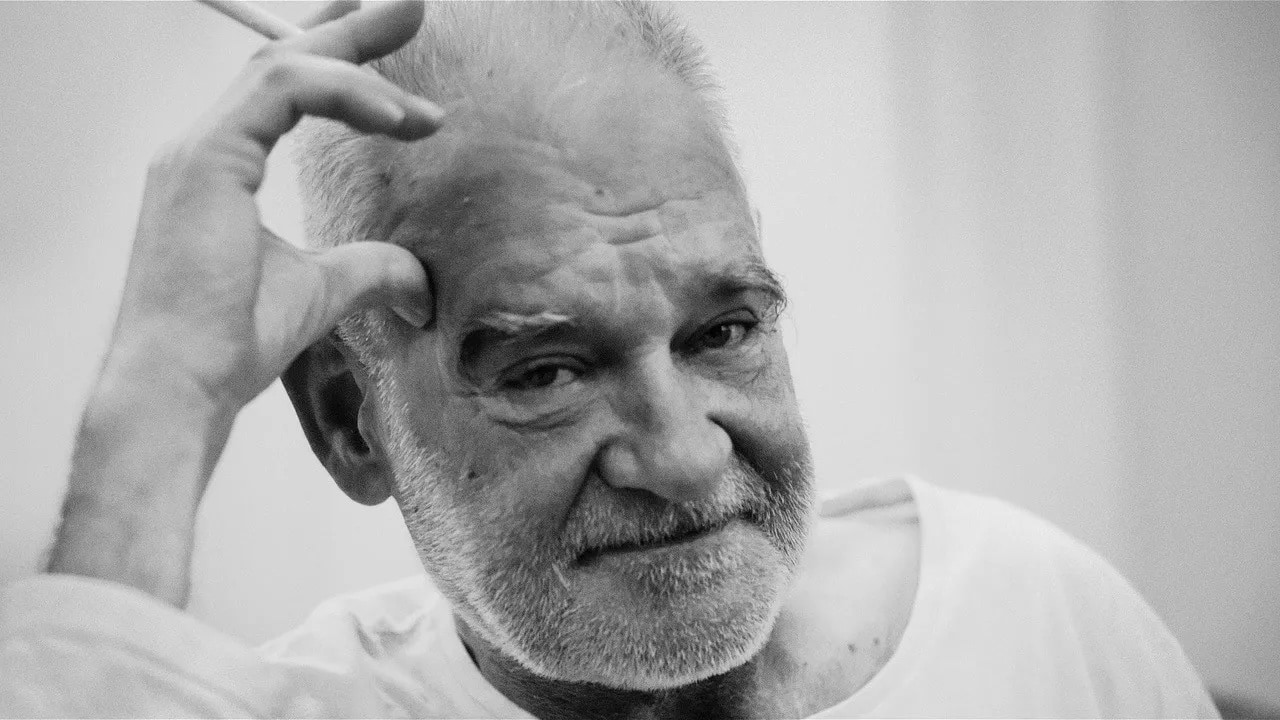
Béla Tarr
 Hungary
Film director•screenwriter•producer
Birthday
July 21, 1955
Birth Sign
Cancer
Birthplace
Pécs, Hungary
Age
Died at 70
Height
5 ft 9 in (175 cm)
About
Béla Tarr was a Hungarian film director, screenwriter, and producer whose stark black-and-white visuals and extended long takes redefined cinematic storytelling. Over a career spanning more than three decades, he made 10 feature films and several shorts, becoming a central figure in slow cinema. His 1994 epic Sátántangó, a seven-and-a-half-hour meditation on despair and decay, regularly appears on scholarly lists of the greatest films ever made. Tarr died on January 6, 2026 at age 70.
After retiring from features, Tarr turned to education and multimedia projects. He also received numerous lifetime achievement awards, including from the Rotterdam, Jerusalem, Locarno, and European Film Academy. A major retrospective of his work is planned for the 2026 Cannes Film Festival, and the Criterion Collection announced a complete box set for late 2026.
Tarr worked with a tight-knit creative team. Editor Ágnes Hranitzky became his co-director from Werckmeister Harmonies onward. From Damnation, novelist László Krasznahorkai co-wrote scripts, composer Mihály Víg scored the films and acted in Sátántangó, and cinematographer Gábor Medvigy shot several works. Later, Fred Kelemen lensed The Man from London and The Turin Horse. Regular actors included János Derzsi, Erika Bók, and Mihály Kormos.
Early Life & Background
Béla Tarr was born on July 21, 1955, in Pécs, Hungary, to a Romani father and a Hungarian mother. His father worked as a set designer for the Hungarian film industry, which gave Tarr early exposure to filmmaking. The family moved to Budapest when Tarr was a child, and he grew up in a working-class neighborhood. His childhood was marked by financial struggle and exposure to the harsh realities of Hungarian society under communist rule. His father's work on film sets allowed Tarr to visit studios, where he became fascinated with the mechanics of moviemaking.
At age 16, he began making amateur films with a Super 8 camera. His first short film, Hotel Magnezit (1978), was a documentary about a homeless shelter that caught the attention of Hungarian television. Tarr attended the University of Theatre and Film Arts in Budapest but was expelled after three semesters for making a film that authorities deemed politically problematic. He never completed a formal film degree, instead learning his craft through practical experience and self-education. The pivotal moment came when he raised funds from friends and family to make his first feature, Family Nest (1979), a raw cinéma vérité portrait of a working-class family. The film was shot in just 10 days on a budget of $15,000 and was initially banned by Hungarian censors for its bleak depiction of society.
Career Growth
Family Nest (1979) premiered and won the Grand Prize at the Hungarian Film Festival, establishing Tarr as a social realist. He followed with The Outsider (1981) and The Prefab People (1981), continuing his focus on alienated workers. Almanac of Fall (1984) marked a stylistic shift toward more stylized, theatrical compositions and longer takes.
Damnation (1988) premiered at the Berlin International Film Festival, winning the Caligari Film Award. This film introduced his signature style: black-and-white cinematography, extremely long takes (some lasting 11 minutes), and collaboration with novelist László Krasznahorkai. Sátántangó (1994) premiered at Berlin, a seven-and-a-half-hour epic shot in 39 long takes over two years. It won the Grand Prize at the Hungarian Film Week and another Caligari Film Award. In 2012, Sight & Sound ranked it #36 on its Greatest Films of All Time list; in 2022 it rose to #24.
Werckmeister Harmonies (2000) premiered at Berlin, with Ágnes Hranitzky credited as co-director for the first time. It won the Prize of the Ecumenical Jury and several Hungarian Film Week awards. Tarr received the Kossuth Prize, Hungary's highest cultural award, in 2004. The Man from London (2007) competed for the Palme d'Or at Cannes, receiving mixed reviews but winning Best Director at the Hungarian Film Week. His final feature, The Turin Horse (2011), premiered at Berlin and won the Silver Bear Grand Jury Prize, the FIPRESCI Prize, and the Prize of the Ecumenical Jury. Tarr announced that this would be his last feature film.
In 2013, Tarr founded film.factory in Sarajevo, an international film school accepting only eight students per year, all tuition-free, in partnership with the University of Sarajevo. He served as its director until 2016. His multimedia exhibition Till the End of the World (2017) at the Eye Filmmuseum in Amsterdam attracted over 40,000 visitors. For the Wiener Festwochen in 2019, he created Missing People, a performance involving 250 homeless Viennese. At the time of his death in 2026, Tarr had been working on a new feature film titled The Man Who Fell from the Sky, which remained uncompleted. His estate, managed by Ágnes Hranitzky, announced that the film would not be finished or released in any form.
Career Timeline
Public Image & Style
Béla Tarr is the definitive figure of slow cinema. His films are characterized by black-and-white cinematography, extremely long takes often lasting 10-15 minutes, minimal dialogue, bleak existential themes, rain-swept landscapes, decaying industrial settings, and a hypnotic, rhythmic editing style. His camera work is famous for slow, deliberate tracking shots that follow characters in real time.
Media portrayals consistently cast Tarr as a "genius of gloom" and a "master of melancholy." Critics describe his work as difficult but rewarding. He is considered one of the most important directors in world cinema, though his films have limited commercial appeal. Tarr had no official social media presence; he was famously offline, once stating, "I have no interest in the internet. Cinema is about being present in a room with others." Fans, often called slow cinema enthusiasts, organize marathon screenings of Sátántangó with intermissions and travel to Hungary to visit filming locations. Online communities on Reddit's r/TrueFilm and Letterboxd actively discuss his work. Tarr appeared on notable magazine covers, including Film Comment (2011), Sight & Sound (2012), Filmkultura (2013), and Cahiers du Cinéma (2018).
Fame & Fandom (iFAMOUS Rankings)
When Béla Tarr died in January 2026, the tributes poured in from every corner of the arthouse world, but the global fame engine that tracks such things had already taken note. As of August 2026, iFANN's Global Fame Engine has evaluated Tarr's standing, yet he does not currently hold a placement in the published rankings, neither in the Global Top 1,000 nor in any Top-100 scope list. That absence is itself a kind of tribute: Tarr's fame was never the loud, chart-topping kind. It was the slow-burn renown of a cult director who became, in the words of the Harvard Film Archive, 'the ultimate auteurist's auteur.' His audience is a loosely affiliated international community of cinephiles, academics, and critics, no formal fandom name exists, and none is needed. They gather not in online campaigns but in repertory theaters and festival retrospectives, where his marathon films are screened in full, a ritual that demands hours of patience. The Sarajevo Film Festival's 'Béla Tarr in...' tribute, launched in August 2026, showcased films by his former students, turning the fandom into a living legacy. Tarr's fame is measured not in rankings but in the endurance of his seven-and-a-half-hour Sátántangó, a film that functions as a test of commitment among his devotees. He refused commercial compromise, and his fans love him for it. He is not on the list; he is the list's shadow, a presence felt in every frame of slow cinema that followed.
Interesting Facts and Legends
Tarr's Sátántangó runs exactly 7 hours and 30 minutes, matching a full working day in Hungary at the time, and contains only 39 shots, an average shot length of over 11 minutes. He famously required actors to rehearse for weeks before shooting a single take; for The Turin Horse, rehearsals lasted 8 weeks. A chain smoker, Tarr often went through 3–4 packs of cigarettes per day during shoots. His father was Romani, but Tarr rarely discussed it, once saying, 'I don't want to be the Romani filmmaker. I am a filmmaker.' The opening shot of The Turin Horse, a 6-minute static view of a horse being hitched to a cart, was the most difficult he ever directed because the horse kept moving. He declined a Hollywood offer in the 1990s, preferring to 'make a bad film my way than a good film someone else's way.' He directed one music video, 'The End of the World' for Kispál és a Borz in 1995. A devoted reader of Nietzsche and Heidegger, his films are steeped in their philosophy. He held honorary doctorates from Budapest, Pécs, and Sarajevo, and was an Honorary Citizen of Budapest (2012) and a Commander's Cross recipient (2013). A legend fans still retell: The Turin Horse was inspired by Nietzsche's real-life breakdown in Turin in 1889, when he embraced a beaten horse, Tarr's film imagines the horse's next six days, a final statement that proved to be his last feature.
Notable Quotes
“I don't make films for the audience. I make films for myself. If the audience comes, that's good. If not, that's also good.”
“The world is a terrible place. My films are not about hope. They are about the dignity of despair.”
“When you make a film, you are not telling a story. You are creating a world. And in that world, time is the most important thing.”
“I have made 10 films. That is enough. I have said everything I wanted to say.”
“The Turin Horse is about the end of the world. Not the end of the world as a spectacle, but the end of the world as a slow, quiet, inevitable process.”
“Cinema is dead. Long live cinema.”
“I don't believe in God. But I believe in the camera.”
Family & Personal Life
Tarr's father was a set designer for the Hungarian film industry, and his mother was a Hungarian homemaker. He had one sibling, a younger brother, but little is known about him. Tarr was married to Ágnes Hranitzky, his longtime editor and co-director, from the 1980s until his death. The couple had no children. Hranitzky managed his estate after his death. Tarr owned a home in Budapest valued at approximately €400,000. He had no pets.
Notable Connections
Béla Tarr collaborated closely with novelist László Krasznahorkai, who co-wrote scripts from Damnation onward. His wife Ágnes Hranitzky served as editor and co-director from Werckmeister Harmonies. Composer Mihály Víg scored all films from Damnation and acted in Sátántangó. Cinematographers included Gábor Medvigy for several films and Fred Kelemen for later works. Regular actors included János Derzsi, Erika Bók, and Mihály Kormos.
Relationships & Dating History
Béla Tarr's personal life was remarkably shielded from public scrutiny. He was married to Ágnes Hranitzky, his longtime editor and co-director, from the 1980s until his death in 2026. Hranitzky edited Tarr's films starting with Family Nest (1979) and became his co-director from Werckmeister Harmonies (2000). Their professional and personal partnership was famously close-knit; Tarr once said, "She is the one who makes my films possible." The couple had no children. No credible sources report any other romantic relationships, marriages, divorces, or high-profile flings. As of 2026, Tarr was widowed, survived by Hranitzky.
- MarriedÁgnes Hranitzky1980 - 2026CurrentHranitzky was Tarr's editor and co-director; they had no children.
Death & Aftermath
Died
January 6, 2026 (aged 70)
Death Place
Unknown
Cause of Death
Unknown
Béla Tarr, the acclaimed Hungarian film director and screenwriter, died on January 6, 2026, at the age of 70. Born on July 21, 1955, in Pécs, Hungary, he passed away after a long illness that had kept him from public view. The New Yorker noted that he died following a prolonged sickness.
The film community and international media reacted swiftly to Tarr's passing with tributes from peers and major institutions. On January 8, 2026, Academy Award-winning director László Nemes published a tribute in The Guardian, describing Tarr as an "ideal, impossible mentor" and reflecting on his unrelenting quest for cinematic perfection. Major outlets including The New York Times, The Associated Press, and IndieWire ran obituaries on January 6 and 7, 2026, characterizing him as a titan of slow-moving cinema and praising films like Sátántangó and The Turin Horse. The Criterion Collection issued a post titled "Lamentation and Laughter" on January 9, 2026, honoring his legacy, while ArtReview published "An Ode To Béla Tarr" shortly after his death.
Significant posthumous tributes were organized later in 2026 to commemorate his work. The Sarajevo Film Festival unveiled a dedicated program celebrating his legacy in August 2026, specifically highlighting a selection for former students of his film school. This program served as a primary public commemoration during the festival season. Following his death, Tarr's estate has been commemorated through curated retrospectives and ongoing critical re-evaluation of his work, including interviews with his collaborators and retrospectives by institutions like the Harvard Film Archive.
Net Worth (Estate Value)
$6 Million
iFANN Editorial Team estimate
iFANN currently estimates Béla Tarr's estate at $6 million. Tarr's wealth was modest by Hollywood standards, built on small directing fees and a lifetime of arthouse dedication. The Turin Horse had a budget of €500,000, with his fee estimated at €50,000; earlier films operated on even tighter budgets. He drew a salary as director of film.factory in Sarajevo, funded through grants and university partnerships. His multimedia exhibition Till the End of the World grossed around €480,000 from 40,000 visitors at roughly €12 per ticket. Lectures at universities and festivals earned him €5,000 to €10,000 each. Royalties from his films continue to flow, with Sátántangó still selling on DVD, Blu-ray, and streaming platforms like the Criterion Channel and MUBI. After his death, new 4K restorations (2023–2025) and licensing for retrospectives have boosted estate earnings. The estate, managed by Ágnes Hranitzky, is projected to earn €200,000 to €300,000 annually. Tarr owned a home in Budapest valued at approximately €400,000. His wealth reflected his commitment to cinema as art, not commerce.
Awards Won (15)
Béla Tarr won numerous awards for his films. He received the Caligari Film Award at the Berlin International Film Festival for both Damnation (1988) and Sátántangó (1994). The Turin Horse (2011) won the Silver Bear Grand Jury Prize at Berlin, along with the FIPRESCI Prize and the Prize of the Ecumenical Jury. He also won multiple Hungarian Film Week awards for Best Director and Best Film. In 2004, he received the Kossuth Prize, Hungary's highest cultural award, and in 2021, the European Film Academy Lifetime Achievement Award.
2004 · Cultural Award
Lifetime achievement
2021 · Lifetime Achievement
Lifetime achievement
Known For
Sátántangó
1994 · Director, co-writer
Werckmeister Harmonies
2000 · Director, co-writer
The Turin Horse
2011 · Director, co-writer
Damnation
1988 · Director, writer
The Man from London
2007 · Director, co-writer
Keywords
Quick Facts
- Profession
- Film director, screenwriter, producer
- Born
- July 21, 1955
- Birthplace
- Pécs, Hungary
- Died
- January 6, 2026
- Death Place
- Budapest, Hungary
- Gender
- Male
- Height
- 5 ft 9 in (175 cm)
- Spouse
- Ágnes Hranitzky
- Children
- None
- Education
- University of Theatre and Film Arts, Budapest (expelled)
Personal Details
- Full Name
- Béla Tarr
- Height
- 5 ft 9 in (175 cm)
- Spouse
- Ágnes Hranitzky
- Education
- University of Theatre and Film Arts, Budapest (expelled after three semesters)
Filmography
10
Total
10
Film
0
TV
Frequently Asked Questions
How old was Béla Tarr when he died?
What is Béla Tarr's net worth in 2026?
Is Béla Tarr still making films in 2026?
What is Béla Tarr best known for?
Who was Béla Tarr married to?
Similar People
Join the community
fans discussing