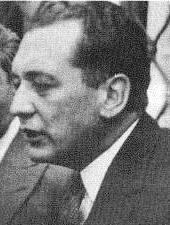
Laureano Gómez
 Colombia
journalist•civil engineer•diplomat
Birthday
+1889-02-20
Birth Sign
Sagittarius
Birthplace
Bogotá
Age
Died at 76
About
Born in Bogotá in 1889, Laureano Gómez Castro began his career as a civil engineer before becoming a prominent journalist and diplomat. He later entered politics, eventually serving as President of Colombia from 1950 to 1953. Throughout his life, Gómez was known for his sharp intellect and commanding presence. His political career was marked by a strong affiliation with the Conservative Party, where he was a leading voice for three decades leading up to his presidency. Many considered him one of the most skilled orators ever to speak in the Colombian Congress. His government, however, faced significant challenges, and his time in office was ultimately interrupted. Poor health forced him to hand over presidential duties to Roberto Urdaneta Arbeláez in November 1951. When Gómez attempted to reclaim the presidency in June 1953, he was removed from power by a military coup orchestrated by Gustavo Rojas Pinilla. Gómez's legacy is complex. While recognized for his oratorical talents and engineering background, he remains a divisive figure due to his admiration for authoritarian systems and the strong-arm nature of his administration. He passed away in 1965 at the age of 76.
Fame & Fandom
The enduring presence of Laureano Gómez in Colombian history is defined not by a modern fanbase with rituals or chants, but by the intense, polarized political legacy he left behind. Unlike contemporary icons who cultivate organized fandoms, his supporters were constituents bound by party allegiance and ideological conviction rather than entertainment-driven devotion. His reputation as a formidable orator and a radical conservative leader created a following that was deeply engaged yet strictly political, lacking the formal structures of fan clubs or social media campaigns seen today. The public reaction to his era remains a defining chapter, marked less by adoration and more by the complex historical narrative of his rise and subsequent ousting. While no specific fandom name exists for his admirers, the collective memory of his tenure during *La Violencia* keeps his story alive within political discourse. According to the August 2026 evaluation by iFANN's Global Fame Engine, Laureano Gómez is currently evaluated but does not hold a placement in the published rankings, meaning he is not listed among the Global Top 1,000 or any Top-100 scope list. This absence from the current fame charts reflects his status as a historical figure rather than an active cultural celebrity. The engine confirms that while his impact on mid-20th-century Colombia was profound, it has not translated into a quantifiable global fame ranking in the contemporary landscape.
Interesting Facts and Legends
Born in Bogotá in 1889, Gómez began his career as a civil engineer before transitioning into journalism and diplomacy, eventually rising to become President of Colombia from 1950 to 1953. He was widely regarded as one of the most skilled orators in the history of the Colombian Congress, known for a commanding presence that could fill a hall. His presidency ended abruptly when he was forced into exile following a coup in 1953, a moment historically documented as a time of public rejoicing rather than mourning. A massive crowd of 30,000 people gathered on Seventh Avenue in Bogotá to cheer for his successor, signaling a collective relief from his rule. Historical accounts often describe this event as the end of a "horrible night" for many Colombians. Gómez remained an ideologue of the extreme right and opposed women's suffrage throughout his life, traits that cemented his controversial place in national memory. He died in 1965 at the age of 76, leaving behind a complex legacy that continues to be studied by historians and political scientists alike.
Death & Aftermath
Died
+1965-07-13 (aged 76)
Death Place
Bogotá
Cause of Death
Reported natural causes related to old age
Laureano Eleuterio Gómez Castro, the Colombian journalist, civil engineer, diplomat, and former President of Colombia (1950, 1953), died on July 13, 1965, at the age of 76. He was born on February 20, 1889, in Bogotá. The reported cause of death is generally cited as natural causes related to old age and declining health. His final days were spent in relative obscurity following his political exile; he had been forced out of power in 1953 by a military coup led by General Gustavo Rojas Pinilla and lived in various countries, including Mexico and Venezuela, before returning to Colombia later in life. There are no records of a significant last public appearance preceding his death, as he had largely withdrawn from active politics for over a decade prior to his passing.
His passing was treated as a natural event, and no disputed accounts or unconfirmed theories regarding the circumstances of his death have surfaced in historical documentation. Public reaction to his death was marked by the complex legacy he left behind as a polarizing figure in Colombian history. As a leader of the Conservative Party and a proponent of authoritarian measures during his presidency, reactions were likely divided between his supporters, who viewed him as a defender of traditional values, and his detractors, who remembered his rule as a period of intense political violence known as "La Violencia." However, specific details regarding organized tributes, fan vigils, moments of silence, or memorial murals immediately following his death in 1965 are not present in the provided search results.
Unlike figures who die under dramatic or controversial circumstances, Gómez's death did not trigger immediate chart surges, streaming spikes, or widespread public gatherings reported in the available data. The funeral or memorial services for Laureano Gómez were conducted, but specific dates, locations, and attendee lists for the ceremony are not detailed in the current search results. Historical context suggests that given his status as a former head of state and a prominent political figure, his burial would have been a formal affair, likely taking place in Bogotá, the city of his birth and where he served most of his career. However, the absence of specific reports on the funeral proceedings means that details such as whether the service was public or private, notable attendees beyond standard government officials, or specific performances cannot be confirmed from the provided sources.
In terms of posthumous recognition, Laureano Gómez's legacy remains a subject of historical study rather than widespread celebration through modern commercial releases or awards. There are no reports of new films, books, or albums released specifically commemorating his death in the immediate aftermath or recent decades in the provided text. It is important to note that while other members of the Gómez family, such as Álvaro Gómez Hurtado, met violent ends in later decades (specifically his assassination in 1995), these events are distinct from Laureano Gómez's natural death in 1965.
Awards & Accolades
Keywords
Quick Facts
- Profession
- journalist, civil engineer, diplomat
- Born
- +1889-02-20
- Birthplace
- Bogotá
- Died
- +1965-07-13
- Death Place
- Bogotá
- Gender
- Male
- Spouse
- María Hurtado de Gómez
- Birth Sign
- Sagittarius
Personal Details
- Spouse
- María Hurtado de Gómez
Join the community
fans discussing