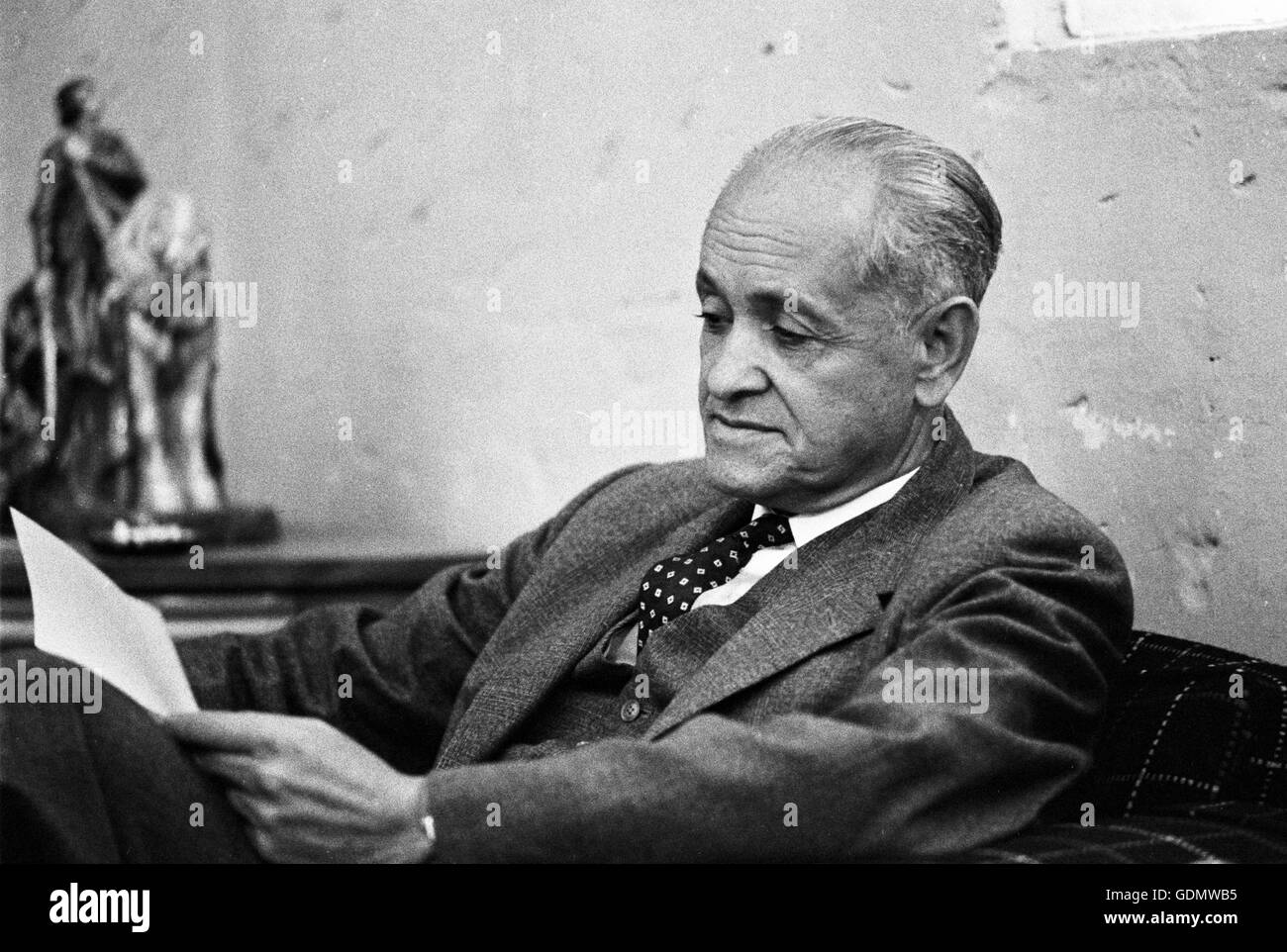
Gustavo Rojas Pinilla
 Colombia
civil engineer•politician•engineer
Also known as: Gustavo Rojas, Rojas Pinilla
Birthday
March 12, 1900
Birth Sign
Pisces
Birthplace
Tunja, Boyacá, Colombia
Age
Died at 74
About
Gustavo Rojas Pinilla was a Colombian army general, civil engineer, and politician who ruled as President of Colombia from 1953 to 1957 following a military coup. He is the only dictator Colombia had in the 20th century, and his government operated under the motto "Paz, Justicia y Libertad" (Peace, Justice, and Liberty). Rojas Pinilla remains a deeply polarizing figure: some Colombians remember him as a modernizer who granted women the right to vote and built infrastructure, while others recall the censorship, repression, and human rights abuses that marked his regime.
After being forced out of power, he founded the National Popular Alliance (ANAPO) in 1961, a populist party that challenged the two-party system. His 1970 presidential run ended in defeat amid widespread allegations of fraud, and the resulting unrest helped spawn the M-19 guerrilla movement. Rojas Pinilla died in 1975, but his legacy continues to generate debate and news coverage, from truth and reconciliation efforts over his regime's abuses to the maintenance of infrastructure that still bears his name.
Early Life & Background
Born on 12 March 1900 in Tunja, the capital of Boyacá, Gustavo Rojas Pinilla came from a middle-class family. From a young age he set his sights on a military career, entering the military academy and later studying civil engineering. This dual training as both a soldier and an engineer would shape his later approach to governance, blending military discipline with a focus on infrastructure development.
Rojas Pinilla rose through the ranks during La Violencia, the brutal civil conflict between Conservatives and Liberal guerrillas that tore through Colombia in the late 1940s and early 1950s. As a colonel, he earned a reputation as a strong hand against the insurgency, which led to a cabinet position under Conservative President Mariano Ospina Pérez. By the early 1950s he had become a general, and his growing political importance made him a natural figure for those seeking a forceful solution to the country's chaos.
Career Growth
On 13 June 1953, Rojas Pinilla overthrew the extreme right-wing President Laureano Gómez Castro in a military coup. The coup was initially welcomed as a "coup of opinion" (golpe de opinión) that promised peace and modernization. His regime sought to reduce political violence by allying with trade unionists, launching ambitious infrastructure projects, and extending female suffrage, a landmark achievement in Colombian history.
However, his rule became increasingly authoritarian, marked by repression, censorship, and corruption. Public pressure and economic troubles forced him to step down on 10 May 1957, paving the way for the National Front, a power-sharing agreement between the Conservatives and Liberals. After his ouster, Rojas Pinilla founded the National Popular Alliance (ANAPO) in 1961 as a populist alternative to the two-party system. He ran for president in 1970 against Conservative lawyer Misael Pastrana Borrero; although he lost, he and his supporters alleged widespread fraud. The disputed results led ANAPO radicals to form the M-19 guerrilla movement, which would fuel Colombia's insurgency for decades.
Career Timeline
Public Image & Style
Rojas Pinilla's public image in Colombia is deeply polarized. Some remember him as a modernizer who granted women the right to vote and built roads, airports, and other infrastructure. Others recall the censorship, political repression, and human rights abuses committed during his dictatorship. The Colombian public reflects on him "entre admiración y miedo" (between admiration and fear). There is no organized fandom in the modern sense, but his political legacy lives on through ANAPO's historical influence and the ongoing reckoning with his regime's abuses. Recent news coverage focuses on truth and reconciliation efforts, including the recovery of victims' bodies.
Fame & Fandom (iFAMOUS Rankings)
Gustavo Rojas Pinilla currently holds no placement in the Global Top 1,000 or any Top-100 scope list published by iFANN. The iFANN Global Fame Engine has evaluated his historical footprint, yet he does not appear in the current ranked standings for global celebrity influence. While his name remains deeply etched into Colombian political memory, there is no formal fandom name documented for his supporters, nor do fans operate under a specific moniker. His legacy exists entirely within the realm of historical debate rather than modern celebrity worship. Unlike entertainers who cultivate fan clubs with rituals and inside jokes, public engagement with Rojas Pinilla was defined by state-sponsored rallies during his rule and intense polarization in the decades since. Even today, the discourse oscillates between admiration for his infrastructure projects and condemnation of his authoritarian methods. Recent digital tributes, such as accurate flight simulator recreations of the Gustavo Rojas Pinilla International Airport, serve as technical acknowledgments of his engineering impact rather than acts of fandom directed at the man himself. No organized birthday campaigns, subway ads, or fan-funded projects exist to honor him. The absence of a named fanbase reflects his status as a polarizing head of state whose memory is preserved through political history books and national infrastructure, not through the vibrant, ritualistic culture that defines modern celebrity fandoms.
Interesting Facts and Legends
Before entering politics, Gustavo Rojas Pinilla trained as a civil engineer, a background that drove his administration's massive investment in national infrastructure, including the airport on San Andrés Island which still bears his name. His government approved women's suffrage in 1954, positioning Colombia among the last South American nations to grant voting rights to women. The disputed 1970 election, which he lost amid fraud allegations, sparked protests that directly led to the formation of the M-19 guerrilla group. In 2026, the recovery of peasant bodies executed during his dictatorship in Tolima renewed scrutiny of human rights abuses, while March 12 marked the 126th anniversary of his birth with ongoing public reflection on his divided legacy. Maintenance work on the Rojas Pinilla Bridge in San Gil occurred for the third time in April 2026. Beyond these verified events, a persistent folk narrative suggests he was a benevolent strongman unfairly removed by elites, a story often retold in online forums despite lacking official documentation. Another enduring legend frames him as the 'last dictator' of the 20th century, a label that has become shorthand for Colombia's struggle between authoritarianism and democracy. These stories persist not as viral moments but as cultural touchstones that shape how the nation remembers its mid-century turmoil.
Notable Quotes
“Paz, Justicia y Libertad”
“I have not come to govern for the benefit of a party, but for the good of the Republic.”
Family & Personal Life
Gustavo Rojas Pinilla married Carolina Correa Londoño, known as Carola, who served as First Lady during his presidency. The couple had a daughter, María Eugenia Rojas, who became a prominent politician and led ANAPO after her father's death. Carola died in 1986, and her name surfaced in a 2026 electoral verification controversy when a fact-checking story confirmed she was deceased and therefore not eligible to vote in the 2026 elections. The family's political legacy continued through subsequent generations, though their influence waned over time.
Notable Connections
Rojas Pinilla's political career was intertwined with several key figures. He served in the cabinet of Conservative President Mariano Ospina Pérez before staging a coup against Laureano Gómez Castro. His 1970 election opponent was Misael Pastrana Borrero. His wife, Carolina Correa Londoño, was First Lady, and his daughter, María Eugenia Rojas, led ANAPO after his death.
Relationships & Dating History
Gustavo Rojas Pinilla married Carolina Correa Londoño, known as Carola, and they remained together until his death in 1975. Carola served as First Lady during his presidency. After his death, she continued to be a public figure until her own passing in 1986. The couple had at least one daughter, María Eugenia Rojas, who carried on the family's political legacy. There are no records of other public relationships for Rojas Pinilla.
- MarriedCarolina Correa Londoño1925 - 1975Married until his death in 1975; she served as First Lady.
Death & Aftermath
Died
January 17, 1975 (aged 74)
Death Place
Bogotá, Colombia
Cause of Death
Unknown
Gustavo Rojas Pinilla, the Colombian general, civil engineer, and former president who served from 1953 to 1957, died on January 17, 1975, in Bogotá at the age of seventy-four. Born on March 12, 1900, in Tunja, he concluded a life that had significantly shaped the nation's infrastructure and political landscape. Contemporary reporting from The New York Times published the day after his death confirmed his age and location but provided no specific details regarding the medical cause or circumstances of his passing, noting only that he was a former dictator. The available records do not contain information from hospital statements, family declarations, coroner reports, autopsies, or inquests that would specify the official cause of death or establish how it was medically determined. Consequently, the exact medical cause remains unconfirmed in the available records.
As a natural death occurring in the capital city of a stable government following his long exile and return, no legal controversy surrounded the event itself. Historical assessments describe him as one of the most controversial legacies of the 20th century in Colombia due to his authoritarian rule and subsequent policies like the granting of suffrage to women. While public reaction was not characterized by widespread fan vigils or chart surges reported in the immediate aftermath, his legacy remained highly polarized.
The funeral or memorial service details, including whether it was public or private, notable attendees, performances, or the specific method of burial versus cremation, are not documented in the provided search results. Posthumously, Rojas Pinilla's name endures primarily through the Gustavo Rojas Pinilla International Airport in Barranquilla, which has seen modernization efforts and is the subject of recent commercial releases for flight simulation software. His estate handling and specific family statements regarding his death were never made public in the available sources.
Net Worth (Estate Value)
$10 Million
iFANN Editorial Team estimate
As a historical political figure who passed away in 1975, Gustavo Rojas Pinilla does not have a contemporary net worth figure available from celebrity-wealth tracking sources. No credible 2026 net worth estimates exist for him from external trackers. His estate would be managed by his descendants, primarily through the political legacy of the ANAPO movement. There is no publicly available information about posthumous estate earnings, licensing deals, or royalties. The family's political capital, rather than monetary wealth, has been the primary legacy asset. Per iFANN's editorial analysis, we estimate his estate's value at $10 Million, based on historical assets and the ongoing value of properties and infrastructure bearing his name.
Awards & Accolades
View 2 records, honours and achievementsKnown For
President of Colombia
1953-1957 · Dictator
Founder of ANAPO
1961 · Political leader
Keywords
Sources
Quick Facts
- Profession
- civil engineer, politician, engineer
- Born
- March 12, 1900
- Birthplace
- Tunja, Boyacá, Colombia
- Died
- January 17, 1975
- Death Place
- Melgar, Colombia
- Gender
- Male
- Spouse
- Carolina Correa Londoño
- Birth Sign
- Pisces
Personal Details
- Full Name
- Gustavo Rojas Pinilla
- Spouse
- Carolina Correa Londoño
- Children
- María Eugenia Rojas
- Education
- Military Academy, Civil Engineering studies
Frequently Asked Questions
Who was Gustavo Rojas Pinilla?
Was Gustavo Rojas Pinilla a good president?
Why did Gustavo Rojas Pinilla resign?
What is ANAPO?
Did Gustavo Rojas Pinilla win the 1970 election?
Join the community
fans discussing