

 Greece
About
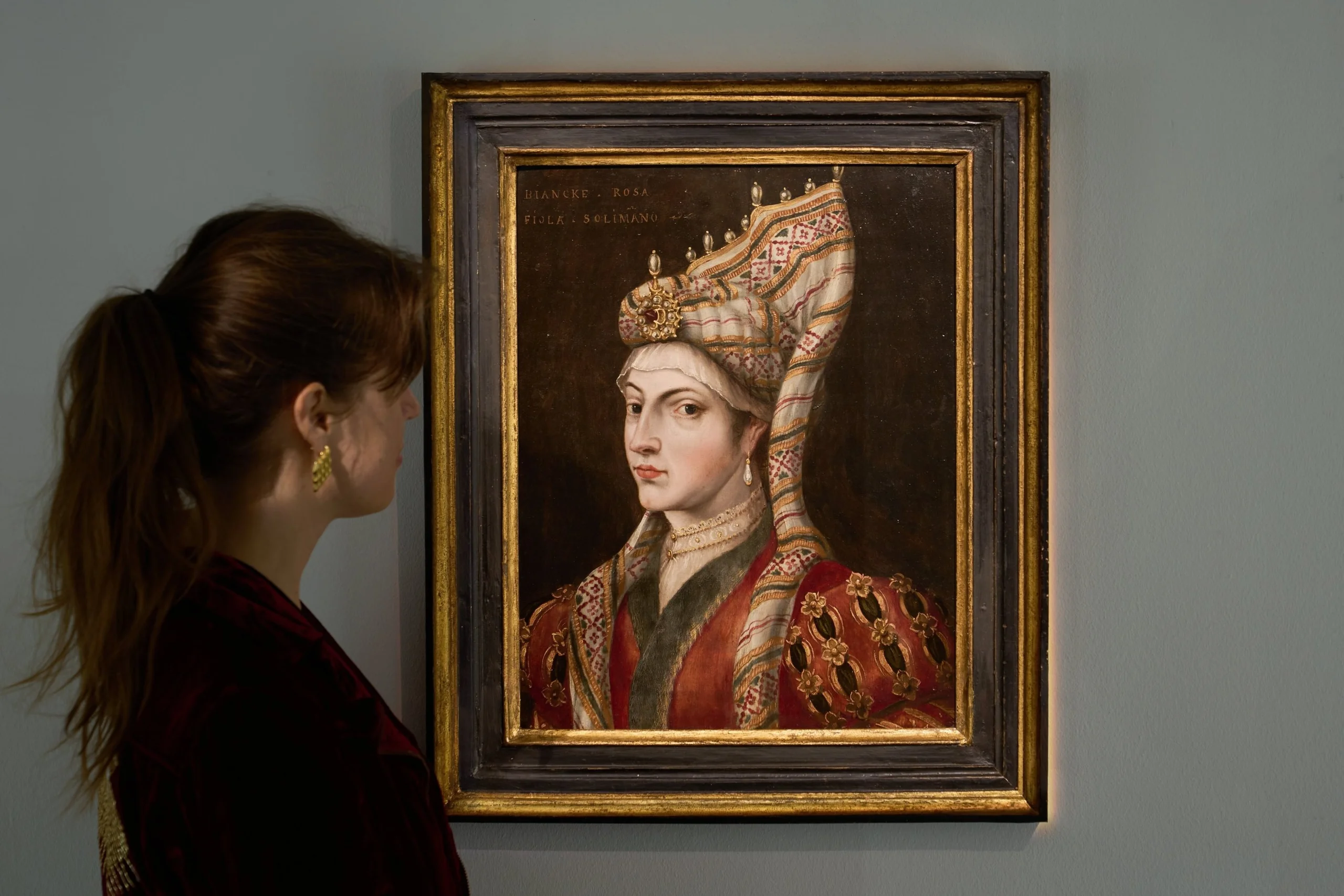
Born Mahpeyker on the Greek island of Tinos around 1589, Kösem Sultan rose from slavery to become one of the most formidable figures in Ottoman history. She served as the legal wife of Sultan Ahmed I and later guided the empire through three distinct periods of regency. Her influence stemmed from her position as the mother of Murad IV and Ibrahim, and grandmother of Mehmed IV. This family tree placed her at the center of imperial succession during an era known as the Sultanate of Women. She held significant sway over state affairs while navigating the treacherous waters of court politics.
Kösem first assumed control when her son Murad IV was too young to rule, managing the state from 1623 to 1632. After a brief interlude, she returned to power in 1640 to guide the erratic Ibrahim until 1648. Her final tenure began in 1648 following the deposition of Ibrahim and lasted until her death in 1651. During these years, she shaped domestic policies and foreign relations with remarkable precision. In 1645, she pushed for a naval campaign against Venetian-held Crete, which ultimately failed and triggered a blockade of the Dardanelles. The subsequent Battle of Focchies in 1649 highlighted the military struggles that plagued her administration alongside financial crises affecting merchants across the realm.
Historians remain divided on her legacy. Some argue her decisions accelerated the decline of the empire, while others view her actions as desperate measures to prevent dynastic collapse. Her popularity among common citizens contrasted with the intense rivalry she faced within the ruling elite. Political alliances formed through her daughters' marriages to key statesmen helped stabilize her position. Upon her assassination on September 2, 1651, she received posthumous titles reflecting her complex role, including Vālide-i Maḳtūle, or murdered mother. Her life ended abruptly after decades of wielding authority behind the throne.
Early Life & Background
Mahpeyker was born on the Greek island of Tinos around 1589, likely into a Christian family during a period of frequent raids in the Aegean region. Historical records offer little detail about her biological parents or early childhood before she was captured and brought to the Ottoman court as a slave. Her capture was part of the devshirme system or similar practices where young people from conquered territories were taken to serve the empire. Once inside the palace, she entered the rigorous training program designed to mold slaves into capable administrators and consorts.
Within the confines of the Topkapi Palace harem, Mahpeyker mastered multiple languages including Turkish, Persian, and Arabic, while studying Islamic theology and the complex etiquette required of high-ranking women. Her intelligence and striking beauty quickly distinguished her among the concubines. In 1603, she caught the attention of Prince Ahmed, who would soon ascend the throne as Sultan Ahmed I. She became his favorite and eventually his legal wife after he became sultan, marking the beginning of her rise from a captive to a central figure in the empire.
Her early years in the palace were defined by the constant struggle for survival and advancement within the harem hierarchy. She bore several children to Ahmed I, including future sultans Murad IV and Ibrahim, which secured her status and provided the foundation for her future political power. The transition from a slave girl to the mother of sultans set the stage for her eventual dominance over the Ottoman state machinery.
Career Growth
Kösem's career was defined by her strategic navigation of court politics and her role as a mother to future sultans. Following Ahmed I's death in 1617, she navigated a turbulent transition where her son Osman II was deposed and killed, and her brother-in-law Mustafa I briefly ruled. When Murad IV ascended the throne at age 11 in 1623, Kösem served as his regent. She stabilized the empire, curbed the power of the Janissaries, and managed foreign relations, earning the title Valide Sultan. This first regency lasted until 1632 when Murad IV came of age and assumed full control.
After Murad IV's death in 1640, Kösem returned to power as regent for her son Ibrahim, who suffered from mental instability. She acted as a stabilizing force for him until his deposition in 1648. Her final and most critical regency began in 1648 when she became the sole regent for her grandson Mehmed IV. She attempted to manage the empire's financial crises and military struggles, including the ongoing war against Venice over Crete. Her leadership during these decades kept the dynasty intact despite internal strife and external threats.
Her political acumen allowed her to survive multiple coup attempts and navigate the treacherous waters of the Ottoman court. She built alliances with key viziers and maintained a network of spies and informants. Her ability to balance maternal love with ruthless political ambition made her a formidable opponent and a respected leader. Her reign effectively ended only with her assassination in 1651, marking the conclusion of the most powerful woman's rule in Ottoman history.
Career Timeline
Public Image & Style
Kösem Sultan is portrayed as a fierce, intelligent, and ruthless strategist who balanced maternal love with political ambition. Modern media often depicts her as a proto-feminist icon who wielded power in a male-dominated world. Her public image is that of a strong-willed woman who refused to be sidelined by gender norms. She was known for her sharp wit and ability to manipulate court politics to her advantage. Her style of governance was characterized by pragmatism and a willingness to make difficult decisions to preserve the empire.
Fame & Fandom (iFAMOUS Rankings)
iFANN has not yet collected fame data for this person. While there is no formal fandom name documented in iFANN data, she has a massive following among fans of historical dramas, particularly those of the Magnificent Century franchise. Fans often refer to themselves as viewers of "Kosem" or "Magnificent Century." The series introduced her story to a global audience, leading to comparisons with other historical dramas like House of the Dragon in 2026. The show has been sold internationally and boosted Turkish cultural exports significantly since its release.
Interesting Facts and Legends
Her birth name, Mahpeyker, translates to "Moon-Face" or "Face of the Moon," reflecting her renowned beauty. She is often cited as the only woman in Ottoman history to hold the title of Regent for more than two decades combined. The architectural legacy she left behind includes the New Mosque (Yeni Cami), one of the largest mosques in Istanbul, which stands as a testament to her wealth and influence. Recent news in 2026 noted comparisons between scenes in House of the Dragon and Magnificent Century: Kosem, highlighting the enduring relevance of her dramatic narrative. A story fans still retell involves her ability to outmaneuver the Grand Vizier Kara Murat Pasha, who eventually participated in her downfall.
Family & Personal Life
Kösem was married to Sultan Ahmed I, and their union produced several children who would shape the future of the empire. Her sons Murad IV and Ibrahim both became sultans, while her daughter Ayşe Sultan married important statesmen to secure political alliances. She was the grandmother of Mehmed IV, whose reign she also influenced heavily. Her household included numerous servants, eunuchs, and other members of the harem staff. She lived in the Topkapi Palace, the heart of Ottoman power, where she raised her children and conducted state business. Her relationship with her granddaughter-in-law Turhan Sultan evolved from a working alliance into a deadly rivalry that ended with Kösem's assassination.
Notable Connections
Relationships & Dating History
Kösem Sultan's relationships were strictly dynastic and political. She was married to Sultan Ahmed I from approximately 1603 until his death in 1617. Their marriage produced multiple children, including future sultans Murad IV and Ibrahim. Following Ahmed's death, she did not remarry but remained a powerful figure as the mother of the sultans. Her most significant personal conflict was with Turhan Sultan, the mother of Mehmed IV. Their relationship evolved from a working alliance into a deadly rivalry over the regency, ending with Kösem's assassination ordered by Turhan. She was widowed in 1617 and held the status of Valide Sultan until her death.
- MarriedAhmed I1603 - 1617Legal wife and consort; mother of Murad IV and Ibrahim
- RivalryTurhan SultanUnknown - 1651Granddaughter-in-law; ordered Kösem's assassination in 1651
Death & Aftermath
Died
September 2, 1651 (aged 62)
Death Place
Istanbul, Ottoman Empire
Cause of Death
Assassination ordered by Turhan Sultan
On the morning of September 2, 1651, Kösem Sultan was found dead in her chambers within the Topkapi Palace. The order for her execution came from Turhan Sultan, the mother of the reigning sultan Mehmed IV, who feared that Kösem intended to depose her son in favor of another grandson, Suleiman. Assassins sent by Turhan's faction, reportedly including agents of Grand Vizier Kara Murat Pasha, strangled or stabbed the elderly matriarch. Her death marked the end of the "Sultanate of Women" era and shifted power dynamics within the Ottoman court permanently.
The public reaction was immediate shock and widespread mourning. Common citizens viewed Kösem as the "Mother of the Empire" and took to the streets weeping, seeing her death as a tragedy for the state rather than a political necessity. Despite ordering the killing, Turhan Sultan oversaw Kösem's burial in a grand state funeral attended by Sultan Mehmed IV, the Imperial Harem, and high-ranking officials. Kösem was interred in the New Mosque complex in Eminönü, a structure she had commissioned and funded during her lifetime. Her tomb remains a significant historical landmark today, standing as a testament to her immense influence and wealth. The event solidified Turhan's position as regent but ended decades of female-led governance.
Net Worth (Estate Value)
$0
iFANN Editorial Team estimate
As a historical figure deceased since 1651, Kösem Sultan does not have a modern net worth. Her wealth consisted of the vast resources of the Ottoman treasury under her control and the real estate she owned, including the land for the New Mosque. The value of her estate today is represented by the historical significance of the Yeni Cami complex and her mausoleum, which are major tourist attractions in Istanbul. No specific monetary valuation exists for her personal assets, as they were absorbed into the state upon her death. The economic impact of her reign is measured in terms of territorial control and trade influence rather than personal fortune.
Awards & Accolades
View 4 records, honours and achievementsKnown For
Magnificent Century: Kosem
2015 · Subject
Keywords
Sources
Quick Facts
- Profession
- regent, slave, writer
- Born
- 1589
- Birthplace
- Tinos
- Died
- September 2, 1651
- Death Place
- Istanbul
- Gender
- Female
- Spouse
- Ahmed I
Personal Details
- Full Name
- Mahpeyker Sultan
- Spouse
- Ahmed I
- Children
- Murad IV, Ibrahim, Ayşe Sultan, Fatma Sultan, Zeynep Sultan, Hatice Sultan
- Education
- Palace system education in Turkish, Persian, Arabic, Islamic theology, and harem etiquette
Filmography
1
Total
0
Film
1
TV
Frequently Asked Questions
Who was Kösem Sultan?
How did Kösem Sultan die?
What was Kösem Sultan's real name?
Did Kösem Sultan rule the Ottoman Empire?
Is there a TV show about Kösem Sultan?
Social Media
Similar People
Join the community
fans discussing