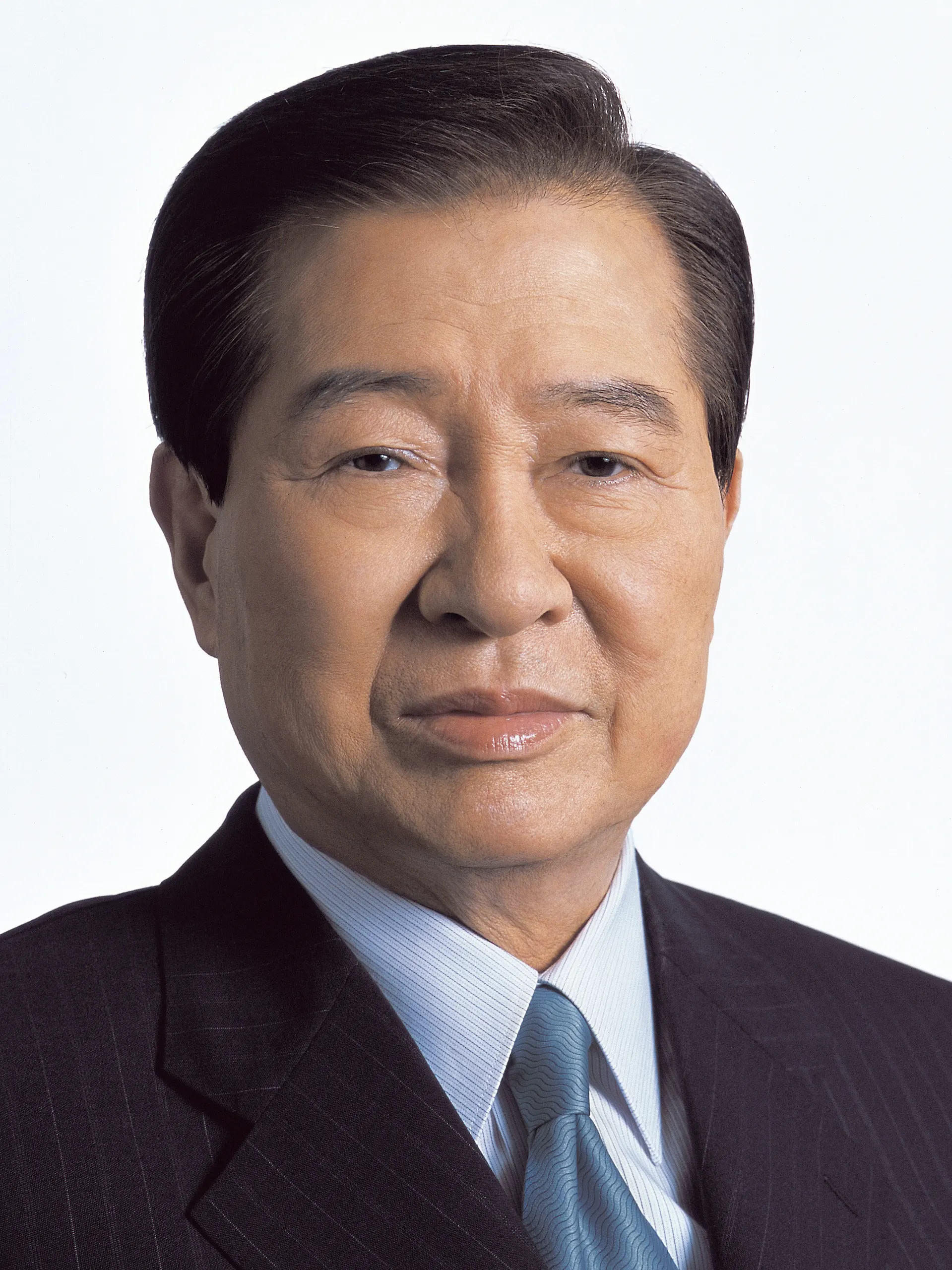
Kim Dae-jung
 South Korea
Also known as: DJ, Nelson Mandela of Asia
Birthday
January 6, 1924
Birth Sign
Capricorn
Birthplace
Hauido, South Korea
Age
Died at 85
About
Kim Dae-jung was a South Korean politician and human rights activist who served as the eighth president of South Korea from 1998 to 2003. He was the first opposition candidate to win the presidency, a feat he achieved in 1997 at the age of 74, making him the oldest president in Korean history at that time. Known as the "Nelson Mandela of Asia," he dedicated his life to democracy, human rights, and reconciliation on the Korean peninsula.
His presidency was defined by the Sunshine Policy, a strategy of engagement with North Korea that led to the first-ever inter-Korean summit in June 2000. That summit, held with leader Kim Jong Il, earned him the Nobel Peace Prize that same year, making him the first South Korean to receive the honor. He also steered South Korea through the 1997 Asian financial crisis, implementing reforms that stabilized and revitalized the economy.
Kim Dae-jung passed away on August 18, 2009, at the age of 85. His legacy as a champion of democracy and peace continues to inspire political movements and citizens across Asia and beyond.
Early Life & Background
Kim Dae-jung was born on January 6, 1924, in a small village on Hauido, an island off the southwestern coast of Korea. He grew up during the Japanese colonial period, which shaped his early awareness of political oppression. He attended Mokpo Commercial High School, where he excelled academically and developed an interest in journalism.
After graduation, Kim worked as a clerk for a Japanese-owned shipping company, but he soon turned to journalism. In 1945, he became the editor of the Mokpo Daily News, and later he purchased the company, running it as a platform for his political ideas. His editorial work drew attention to social injustices and helped him build a local reputation.
Kim entered politics in the 1950s, winning a seat in the National Assembly in 1961. However, his career was abruptly interrupted when a military coup led by Park Chung-hee dissolved the parliament. This event marked the beginning of a long and arduous struggle against authoritarian rule, which would dominate the rest of his life.
Career Growth
Kim Dae-jung's political career was a relentless pursuit of democracy. He ran for president three times before finally winning in 1997. His early campaigns were marked by fierce opposition from military dictatorships, leading to imprisonment, exile, and even a death sentence in 1980, from which he was saved by international intervention.
After spending years in exile in the United States, Kim returned to South Korea in 1985 and continued his fight. He ran for president in 1987 and 1992, losing both times, but his perseverance paid off in 1997 when he defeated Lee Hoi-chang in a narrow victory. His inauguration in February 1998 marked the first peaceful transfer of power from a ruling party to an opposition candidate in South Korean history.
As president, Kim focused on economic recovery and inter-Korean relations. His Sunshine Policy, which sought to engage North Korea through economic cooperation and humanitarian aid, culminated in the historic summit with Kim Jong Il in June 2000. That summit led to the first joint declaration between the two Koreas. For these efforts, Kim was awarded the Nobel Peace Prize in 2000. He also worked to strengthen ties with the United States, Japan, China, and Russia, and hosted the 2002 FIFA World Cup alongside Japan.
Career Timeline
Public Image & Style
Kim Dae-jung was widely regarded as a symbol of democratic resistance and human rights in South Korea. His personal courage, having faced imprisonment, exile, and assassination attempts, earned him immense respect both domestically and internationally. He was often compared to Nelson Mandela for his unwavering commitment to reconciliation and his ability to forgive his political enemies.
In the media, Kim was portrayed as a principled and persistent leader, though critics sometimes questioned the effectiveness of his Sunshine Policy. His warm, grandfatherly demeanor contrasted with his steely resolve, making him a beloved figure among supporters of democracy. After his death, his birthplace on Hauido became a pilgrimage site for politicians and activists seeking to connect with his legacy.
Fame & Fandom
Kim Dae-jung never cultivated a celebrity fanbase in the manner of entertainers, nor did he possess an organized following with specific rituals or a formal name. His public support was rooted in political allegiance and admiration for his role as a human rights champion rather than pop culture worship. The Democratic Party served as his primary vehicle, while his legacy endures through the collective memory of democracy activists who view him as a foundational figure. Despite this absence of fandom structures, his global stature remains substantial according to the iFANN Global Fame Rankings, which track influence across media coverage, search activity, and consumption signals worldwide. In August 2026, data confirms that he is the 25th most famous person in South Korea, a position holding steady from the previous cycle. He also holds the distinction of being the 86th most famous person from South Korea globally, maintaining his standing without fluctuation. Furthermore, regional assessments place him at the 48th most famous person in East Asia. These placements reflect a sustained historical resonance rather than transient viral attention. The rankings indicate that his prominence persists decades after his death, anchored by his Nobel Peace Prize and his survival of multiple assassination attempts. While no fan clubs gather to celebrate his birthday or display billboards, his image remains a staple in educational and political discourse, ensuring his continued visibility in global metrics.
Interesting Facts and Legends
Kim Dae-jung survived five assassination attempts during his long political career, including a harrowing 1973 incident where South Korean intelligence agents kidnapped him from a Tokyo hotel with plans to drown him at sea; he was rescued only by a last-minute intervention from U.S. officials. Throughout his life, he endured six years in prison and ten years under house arrest or exile, yet he remained a symbol of resistance against authoritarian rule. As the first South Korean president to receive the Nobel Peace Prize in 2000, he became the first Asian to win the award specifically for peace efforts. His wife, Lee Hui-ho, documented his struggles in notes written between 1976 and 1982, which were published as a book in May 2026. Both his Nobel medal and the bloodstained clothes of a 1987 pro-democracy protester have been designated as national heritage by the South Korean government. Historical accounts often recount his resilience as a defining legend, particularly his survival of a death sentence commuted to life imprisonment in 1979 before eventually leading the nation. His victory in the 1997 election marked a historic transition for South Korea, ending decades of military rule. Recent re-evaluations in 2025 and 2026 continue to highlight his impact, noting new publications about his prison years and the political influence of his family lineage, including his grandson's appointment as a political officer in 2026.
Notable Quotes
“I humbly pledge before you that, as the great heroes of history have taught us, as Alfred Nobel would expect of us, I shall give the rest of my life to human rights and peace.”
“We cannot overcome the pain of division without first acknowledging the past.”
“The path to democracy is never easy, but it is always worth fighting for.”
Family & Personal Life
Kim Dae-jung was married twice. His first wife, Cha Yong-ae, died in 1959. He later married Lee Hui-ho in 1962, who became a prominent women's rights activist and served as a member of the National Assembly. Lee was a steadfast companion throughout his political struggles, often visiting him in prison and advocating for his release.
The couple had three sons: Kim Hong-gul, Kim Hong-up, and Kim Hong-je. Kim Hong-gul followed his father into politics, serving as a member of the National Assembly. The family remained close-knit, with Lee Hui-ho continuing to preserve Kim's legacy after his death.
Notable Connections
Kim Dae-jung's political career intersected with many global leaders. He held a summit with North Korean leader Kim Jong Il in 2000, a historic meeting that paved the way for inter-Korean dialogue. He also worked closely with U.S. President Bill Clinton, who supported his engagement policy. Japanese Prime Minister Yoshiro Mori was another key counterpart, with whom Kim discussed regional security. Domestically, he was a mentor to many pro-democracy activists, including future politicians like Song Young-gil and Kim Min-seok, who have visited his birthplace to honor his legacy.
Relationships & Dating History
Kim Dae-jung's personal life was marked by two marriages. His first wife, Cha Yong-ae, passed away in 1959, leaving him with young children. In 1962, he married Lee Hui-ho, a fellow activist who became his lifelong partner. Lee was instrumental in supporting him through his years of imprisonment and exile, and she continued to champion his causes after his death.
Kim and Lee remained married for over four decades until his death in 2009. Their relationship was a model of partnership, with Lee often taking on public roles while Kim was incarcerated. Together, they raised three sons, all of whom pursued careers in politics or academia. At the time of his death, Kim was married to Lee Hui-ho.
- MarriedCha Yong-ae1945 - 1959First wife, died in 1959.
- MarriedLee Hui-ho1962 - 2009CurrentSecond wife, married until his death.
Death & Aftermath
Died
August 18, 2009 (aged 85)
Death Place
Seoul, South Korea
Cause of Death
Complications from pneumonia
Kim Dae-jung spent his final months in Seoul, admitted to Seoul National University Hospital for treatment of pneumonia that had worsened amid general frailty associated with advanced age. On Tuesday, August 18, 2009, the eighty-five-year-old former president passed away at the facility due to complications from the respiratory infection, a cause confirmed by hospital officials and family statements without dispute or further legal inquiry. The death drew immediate tributes from global institutions and leaders, including Amnesty International, which honored him as a human rights champion, while domestic reactions included moments of silence and surges in sales of his memoirs and documentaries across South Korea. A state funeral followed shortly after his passing, attended by high-ranking government officials, foreign dignitaries, and citizens, with then-President Lee Myung-bak delivering eulogies praising his contributions to democracy and reconciliation.
He was laid to rest at the Seoul National Cemetery, a burial that reflected his status as a central figure in the nation's democratization process. In the years since, his legacy has been maintained through the Kim Dae-jung Foundation, which promotes democracy and human rights, alongside scholarships bearing his name and regular visits by political figures to his grave site. His life story continues to be documented in films and books, ensuring his role in the Sunshine Policy and inter-Korean relations remains a subject of study and commemoration.
Net Worth (Estate Value)
$5 Million
iFANN Editorial Team estimate
The financial standing of Kim Dae-jung was modest for a head of state, reflecting a lifetime of prioritizing public service over personal accumulation. iFANN currently estimates his estate value at $5 Million as of 2026, a figure derived from his presidential pension, royalties from his extensive memoirs, and the appreciation of family properties. Following his passing in 2009, the estate has continued to generate income through the sales of his published works, though exact annual figures remain undisclosed. During his lifetime, his earnings stemmed primarily from his journalism career and political activities, supplemented by donations he made to various causes. He lived frugally and did not amass significant wealth, relying on his wife, Lee Hui-ho, to manage family finances. She continues to oversee the estate, which includes the family home in Seoul and his birthplace on Hauido, now preserved as a historical site. Per iFANN's editorial analysis, the enduring value of his intellectual property ensures the estate maintains its current valuation despite the passage of time since his death.
Awards Won (3)
Kim Dae-jung received the Nobel Peace Prize in 2000, the most prestigious recognition of his career. He was also honored with the Philadelphia Liberty Medal in 1999 and the Grand Cross of the Order of Merit of the Federal Republic of Germany in 2001. These awards recognized his tireless efforts for democracy and peace.
2000 · Peace
For his work for democracy and human rights in South Korea and East Asia, and for peace and reconciliation with North Korea
1999 · Liberty
In recognition of his lifelong commitment to human rights and democracy
Known For
President of South Korea
1998-2003 · 8th President
Nobel Peace Prize
2000 · Laureate
Sunshine Policy
1998-2003 · Architect
Keywords
Sources
Quick Facts
- Profession
- Politician, Journalist
- Born
- January 6, 1924
- Birthplace
- Hauido, South Korea
- Died
- August 18, 2009
- Death Place
- Severance Hospital, Seoul
- Gender
- Male
- Spouse
- Cha Yong-ae, Lee Hui-ho
- Birth Sign
- Capricorn
- Education
- Mokpo Commercial High School
- Children
- Kim Hong-gul, Kim Hong-up, Kim Hong-je
Personal Details
- Full Name
- Kim Dae-jung
- Spouse
- Lee Hui-ho
- Children
- Kim Hong-gul, Kim Hong-up, Kim Hong-je
- Education
- Mokpo Commercial High School
Frequently Asked Questions
Who was Kim Dae-jung?
What was Kim Dae-jung's most significant achievement?
What challenges did Kim Dae-jung face in his career?
When and why did Kim Dae-jung win the Nobel Peace Prize?
When did Kim Dae-jung die?
Similar People
Join the community
fans discussing