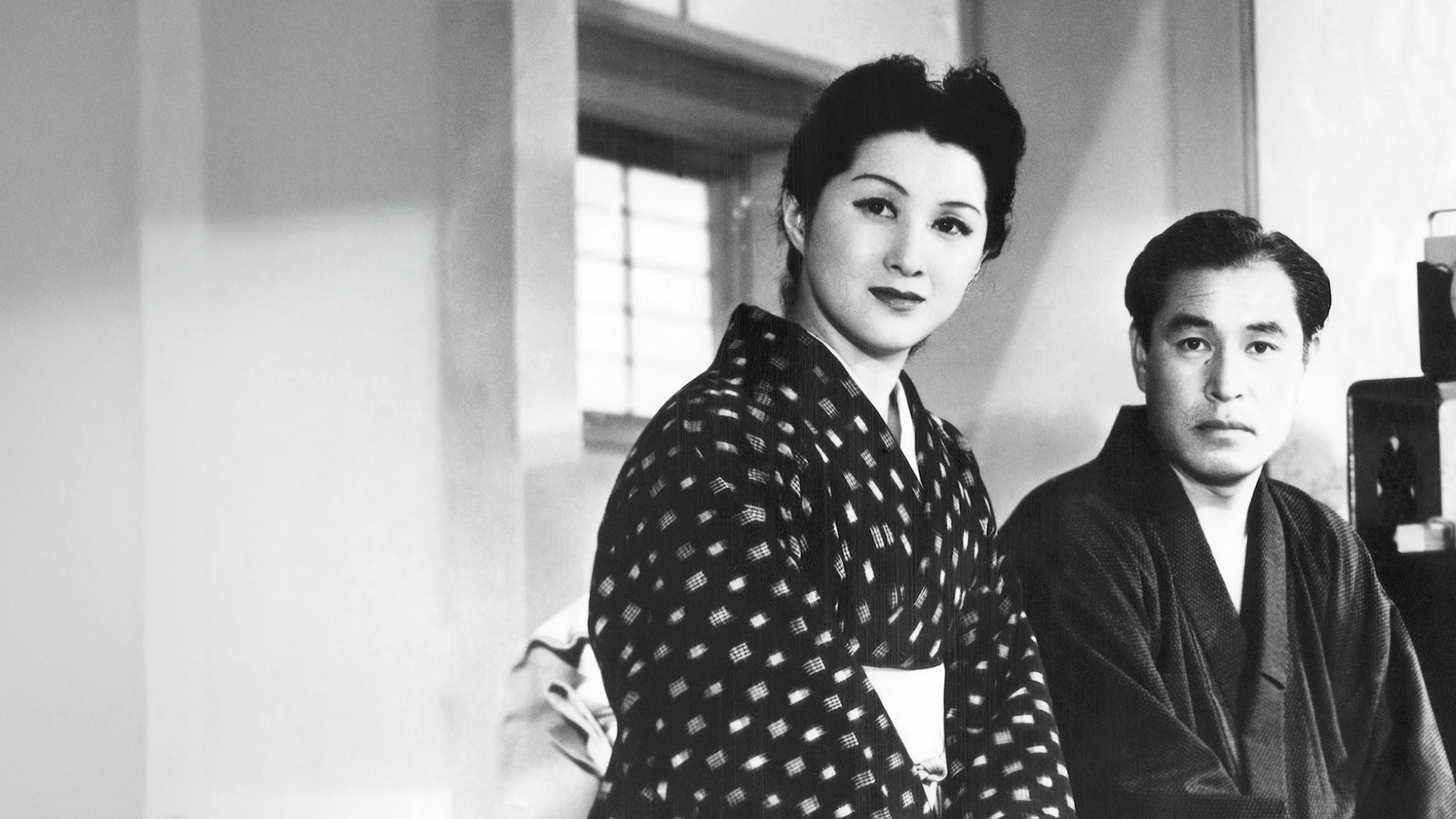
Keiko Tsushima
 Japan
Also known as: Naoko Mori, 津島恵子
Birthday
February 7, 1926
Birth Sign
Aquarius
Birthplace
Nagasaki Prefecture, Japan
Age
Died at 86
About
Keiko Tsushima was a Japanese actress whose screen career ran from the late 1940s into the early 2000s, and whose name still circulates because of one small, luminous role. Over five decades she appeared in more than 70 features, often cast as composed, intelligent women in both period and contemporary dramas. She worked with Yasujirō Ozu on The Flavor of Green Tea Over Rice and with Akira Kurosawa on Seven Samurai, then moved into television with the long-running series Sakura, becoming a familiar face in Japanese living rooms. Her most enduring credit is Shino, the farmer's daughter, in Seven Samurai (1954), a part that gave the film one of its few moments of tenderness and introduced her to audiences outside Japan.
Fans of classical Japanese cinema know her as a fixture of the postwar studio system, a performer who bridged the golden age of Shochiku and the rise of home entertainment. She crossed into international production with Sydney Pollack's The Yakuza (1974), starring Robert Mitchum, and kept taking character roles into the 1980s and 1990s. Her films remain in circulation, and her name survives in the credits of one of the most watched movies ever made.
Early Life & Background
She was born Naoko Mori on February 7, 1926, in Nagasaki Prefecture, the southern region of Japan whose islands include the Tsushima chain. One fan reference says she was born specifically on Tsushima Island, the source of her stage surname, though most databases list only the prefecture. The details of her childhood are thin in the record; what is clear is that she entered the Takarazuka Revue, the all-female musical theater troupe based in Hyogo, which served as a training ground for many Japanese actresses of her generation. There she learned stage discipline, movement and voice, skills that would later make her a favorite of directors who valued restraint.
She left the Revue and, in 1947, made her film debut at 21 with Shochiku, one of Japan's oldest studios. The timing placed her at the very start of the postwar Japanese film boom, when studios were rebuilding and audiences were hungry for new faces. Her legal name, Naoko Mori, stayed out of the publicity; from the beginning she worked as Keiko Tsushima, a name that would appear on more than 70 features. The transition from stage to screen was not instant stardom but steady work, the kind of apprenticeship that defined studio-era careers. By the early 1950s she had caught the attention of Yasujirō Ozu, who cast her in The Flavor of Green Tea Over Rice (1952), and two years later Kurosawa gave her the role that would outlast everything else.
Career Growth
The breakthrough came in 1954, when Akira Kurosawa cast her as Shino, the farmer's daughter, in Seven Samurai. It is a small part, but a pivotal one: Shino's quiet defiance gives the long, violent film one of its few moments of tenderness, and the role introduced Tsushima to international audiences. That same year she appeared in The Black Current, and she kept working steadily through the 1950s and 1960s, often at Shochiku, in both period dramas and contemporary stories. Credits from the period include Be Happy, These Two Lovers (1957).
Television brought a second wave of recognition. She starred in the long-running series Sakura and in Kimi ga Jinsei no Toki, becoming a familiar face in Japanese living rooms. In 1974 she crossed into international production with Sydney Pollack's The Yakuza, starring Robert Mitchum, and the following year appeared in Shiosai (The Sound of Waves). She continued to take character roles into the 1980s and 1990s, including The Demon Comes in Spring (1989), and made her final screen appearance in The Last Snow (2002). Her filmography runs to more than 70 features plus extensive television work.
Career Timeline
Public Image & Style
On screen Tsushima projected composure. Directors cast her as intelligent, self-possessed women, and she played them with a minimum of gesture, letting silence and a direct gaze carry the emotion. That restraint made her a natural fit for Ozu, whose camera lingers on faces, and for the quieter passages of Kurosawa's epics. Off screen she cultivated no persona at all. She gave few interviews, avoided the gossip columns, and let her filmography do the talking. In an era when studios manufactured stars, she was a working actress first, and the press treated her accordingly: respectfully, without much curiosity about her private life. That low profile has kept her image intact, a face from the golden age of Japanese cinema rather than a celebrity with a narrative.
Fame & Fandom (iFAMOUS Rankings)
iFANN has not yet gathered fame data for Keiko Tsushima, so no ranking is available. She is not on the September 2026 iFAMOUS Rankings flagship list. Her fame today rests on a single, endlessly revived film. Seven Samurai plays in repertory theaters, streams free on services like Pluto TV, and shows up on film-school syllabi, which means new viewers meet Shino every year, often without knowing the actress's name. The audience is cinephile-driven: Letterboxd users log her Ozu and Kurosawa titles, IMDb commenters debate the meaning of Shino's scene, and classic-film blogs run retrospectives. There is no fandom name, no organized fan club, no streaming campaigns. She predates modern fandom culture, and her fanbase is really a loose network of admirers of postwar Japanese cinema. What they share is not a fandom identity but a habit: they keep watching the films, and in doing so they keep her in the credits.
Interesting Facts and Legends
Her stage surname came from Tsushima Island in Nagasaki Prefecture, the place she is said by some fan sources to have been born. She shares her legal name, Naoko Mori, with a later British-Japanese actress, a coincidence that still trips up search engines and casual researchers. Off screen she was famously private; interviews are almost nonexistent, and she gave the press little beyond her film credits. A 2026 Instagram reel from a film club and a free streaming listing for Seven Samurai on Pluto TV show that her work keeps finding new viewers. The story fans tell most often is not a backstage anecdote but a scene: Shino turning away from the samurai, a small act of refusal that critics have read as the film's moral center. No verified tales of tantrums or glamour surround her; her legend is the work itself.
Family & Personal Life
In 1957, at the height of her studio years, Tsushima married Ichio Mori, then a director at Tokyo Broadcasting System. The match was described in Japanese media circles as a quiet power couple: she was a leading actress at Shochiku, he was rising in the new medium of television. The marriage lasted until her death in 2012, and no separation or divorce is documented. The couple had no children, at least none recorded in the sources available. She kept her personal life out of the press, and her husband's later years after her death are not documented. The family home was in Tokyo, where she died.
Notable Connections
Relationships & Dating History
Keiko Tsushima kept her private life almost entirely out of the public record. The one relationship documented in any detail is her marriage to Ichio Mori, a director at Tokyo Broadcasting System. They wed in 1957, when she was 31 and at the height of her studio career. The pairing was described as a quiet power couple in Japanese media circles, though neither gave interviews about it. The marriage lasted 55 years, until her death in 2012; no separation or divorce is recorded. No other romances, engagements, or rumored flings appear in credible sources. She was married to Mori at the time of her death.
- MarriedIchio Mori1957 - 2012A Tokyo Broadcasting System director; they married in 1957 and remained married until her death in 2012.
Death & Aftermath
Died
August 1, 2012 (aged 86)
Death Place
Chuo, Tokyo, Japan
Cause of Death
Cancer (reported as stomach cancer)
Keiko Tsushima died on August 1, 2012, at a hospital in Chuo, Tokyo. She was 86. The reported cause was cancer, given in later retrospectives as stomach cancer. The news did not arrive as a bulletin; it surfaced in film-industry obituaries and database entries, the kind of quiet notice that suited an actress who had spent her career letting the work speak.
No official medical statement or coroner's report was made public. Her final months were not disclosed, and any funeral arrangements stayed within the family. There was no investigation, no legal proceeding, no public inquest. The record simply closes with a date and a place.
Tributes came from cinephiles rather than from red carpets. Film sites and retrospectives ran appreciations that returned, almost without exception, to Shino in Seven Samurai and to her work for Yasujirō Ozu in The Flavor of Green Tea Over Rice. Younger viewers who knew her only as the farmer's daughter in Kurosawa's epic discovered, in those pieces, a performer with more than 70 features behind her. No posthumous releases, no foundation in her name, no star on a walk of fame followed. Her husband, Ichio Mori, a former Tokyo Broadcasting System director, survived her; his later life was not documented in the sources available.
What remains is the films. Seven Samurai continues to screen in repertory houses and on free streaming services, and each new restoration brings another round of viewers to her small, pivotal scene. For an actress who avoided the spotlight, that is a durable kind of afterlife.
Net Worth (Estate Value)
$1 Million
iFANN Editorial Team estimate
Keiko Tsushima left no publicly documented estate. She worked as a contract actress for Shochiku and other studios from the late 1940s through the 1970s, then moved into television, and she was never a brand or a business venture. Her earnings came from film salaries and, later, television appearances. The one asset that might have produced long-term royalties is Seven Samurai, which remains in constant circulation, but Japanese studio contracts of her era rarely gave performers a share of residuals, and no figures have ever been released. The iFANN Editorial Team's review of available records, which include aggregator pages that list her but publish no verifiable numbers, points to a modest estate, on the order of $1 million as of 2026. That figure is an editorial estimate, not a documented sum. She owned no production company, endorsed no products, and had no social media presence. Her financial legacy is inseparable from her artistic one: the films endure, but the money they generate flows mostly to the studios and rights holders.
Awards & Accolades
Known For
Seven Samurai
1954 · Shino
The Flavor of Green Tea Over Rice
1952 · Actress
Sakura
· Television series
Kimi ga Jinsei no Toki
· Television series
Keywords
Sources
Quick Facts
- Profession
- Actress
- Born
- February 7, 1926
- Birthplace
- Nagasaki Prefecture, Japan
- Died
- August 1, 2012
- Death Place
- Chuo, Tokyo, Japan
- Gender
- Female
- Birth Sign
- Aquarius
- Cause of Death
- Cancer (reported as stomach cancer)
- Spouse
- Ichio Mori (m. 1957; her death 2012)
- Years Active
- 1947–2002
Personal Details
- Full Name
- Naoko Mori
- Spouse
- Ichio Mori (m. 1957; her death 2012)
- Education
- Takarazuka Revue
Filmography
70
Total
70
Film
2
TV
Frequently Asked Questions
What is Keiko Tsushima best known for?
How did Keiko Tsushima die?
Was Keiko Tsushima married?
What was Keiko Tsushima's real name?
How many films did Keiko Tsushima appear in?
Similar People
Join the community
fans discussing