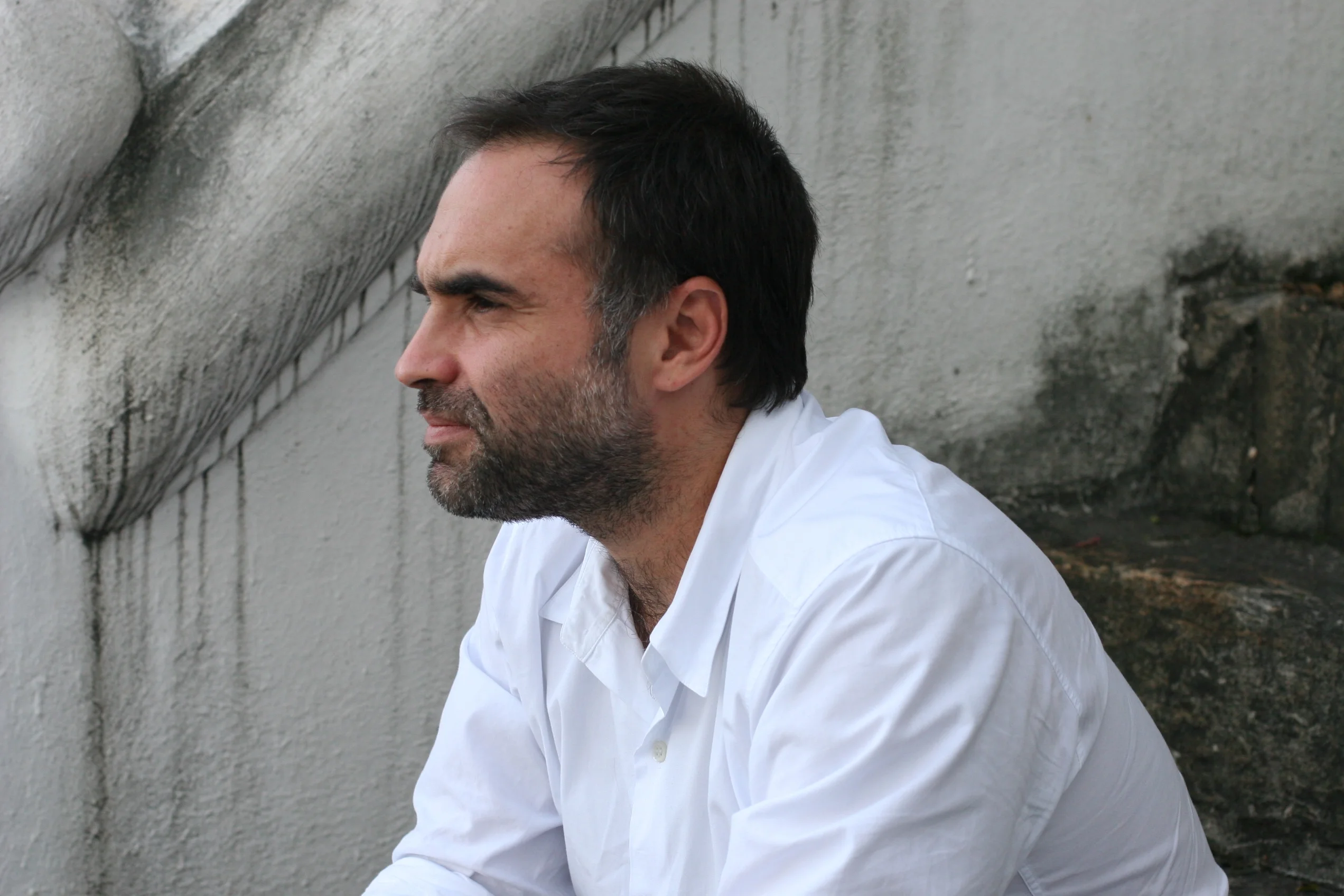
Karim Aïnouz
 Brazil
Birthday
January 17, 1966
Birth Sign
Capricorn
Birthplace
Fortaleza, Ceará, Brazil
Age
60 years old
About
Karim Aïnouz is a Brazilian filmmaker and visual artist whose work pulses with sensuality, social urgency, and an unflinching gaze on lives at the margins. Born in Fortaleza in 1966, he has directed over a dozen features, from the queer biopic Madame Satã (2002) to the Cannes-winning The Invisible Life of Eurídice Gusmão (2019), which collected more than fifty prizes worldwide. His 2023 English-language debut Firebrand, starring Jude Law and Alicia Vikander, marked his largest-scale production yet. Aïnouz's films, whether period drama, road movie, or documentary, share a tactile visual language and a deep curiosity about desire, displacement, and the stories history leaves out. He is a member of the Academy of Motion Picture Arts and Sciences and has exhibited video work at the Whitney Biennial, the São Paulo Biennial, and the Sharjah Biennial.
Early Life & Background
Aïnouz grew up in Fortaleza, a coastal city in northeastern Brazil, in a bicultural household: his mother was Brazilian, his father a Kabyle Algerian. That dual heritage would later anchor his semi-autobiographical documentary Mariner of the Mountains (2021). He first studied architecture at the University of Brasília, a training visible in the meticulous compositions of his films. But cinema pulled harder. He moved to New York and earned a master's degree in cinema studies from NYU, immersing himself in the city's Super-8 revival scene around Anthology Film Archives in the early 1990s.
His first short, O Preso (1992), was followed by the documentary Seams (1993). He worked as an editor and assistant director on other people's projects while developing his own voice. A Brazilian classmate told him about Madame Satã, a legendary queer performer from Rio's Lapa neighborhood, a Black, gay, ex-convict who adopted seven children and spent decades in prison. Aïnouz became obsessed with the idea of showing that man not as a myth but as a human being, "the superhero after he has taken his cape off." That obsession became his debut feature.
Career Growth
Madame Satã premiered at the Cannes Film Festival in 2002, in the Un Certain Regard section, and immediately established Aïnouz as a bold new voice. He followed it with Suely in the Sky (2006), which played at Venice, and co-directed the road film I Travel Because I Have to, I Come Back Because I Love You (2009), also at Venice. In 2011, The Silver Cliff screened at Cannes Directors' Fortnight. His 2014 drama Futuro Beach competed at the Berlin International Film Festival.
The breakthrough came in 2019 with The Invisible Life of Eurídice Gusmão, a period tragedy about two sisters in 1950s Rio. It won the top prize in Cannes' Un Certain Regard section and went on to collect more than 50 international awards, becoming Brazil's submission for the Academy Awards. Aïnouz shifted scale with Firebrand (2023), a Tudor thriller starring Jude Law and Alicia Vikander that premiered in competition at Cannes. Motel Destino followed in 2024, also in Cannes competition, and Rosebush Pruning premiered at a major festival in 2026.
Career Timeline
Public Image & Style
Aïnouz is consistently described as one of the most important voices in contemporary Brazilian and queer cinema. Critics highlight his visual lushness, his willingness to inhabit contradictions, and his focus on characters living at social edges. His films, whether set in 1950s Rio, a Berlin airport, or Tudor England, share a tactile, sensual aesthetic and a refusal to look away from desire and pain. He has no official fandom name or fan rituals; his audience is the international festival circuit and art-house crowd. On social media, he maintains a low-key, professional presence focused on his work rather than personal branding.
Fame & Fandom (iFAMOUS Rankings)
Karim Aïnouz commands a global audience of cinephiles and festival-goers who chase his tactile, sensual films rather than chasing him down red carpets. His viewership spans from the São Paulo Biennial to the Whitney, yet this dedicated following operates without a formal name or organized rituals. There are no fan clubs charting his movements or subway ads celebrating his birthday; the connection remains strictly through the work itself. iFANN has evaluated his standing in the cultural ecosystem as of August 2026. The Global Fame Engine determined that Karim Aïnouz is currently unranked in the published Global Top 1,000 lists. He does not hold a placement on any Top-100 scope list for specific categories. This absence of a numeric rank reflects his status as a revered auteur whose fame is measured in critical acclaim and artistic influence rather than mass-market celebrity metrics. While he lacks the viral stunts or pop-culture mythology that drive mainstream charts, his presence in high-level film discourse remains undeniable. His Instagram following hovers near 58,000, a standard count for an international filmmaker rather than a cult phenomenon. No fan-funded projects or charity drives exist under his banner. The legend of Karim Aïnouz is built entirely on screen: the lush visuals of Madame Satã, the Cannes-winning depth of The Invisible Life of Eurídice Gusmão, and the historical weight of Firebrand. These works have cemented his reputation among critics and scholars, but they have not generated the kind of frenzied public adulation that creates official fandoms. His audience is defined by their engagement with cinema history and queer narratives, not by collective idolization. The lack of a ranked position simply underscores that his impact flows through art houses and academic circles rather than trending feeds.
Interesting Facts and Legends
Karim Aïnouz studied architecture before turning to film, a background that informs the precise framing found throughout his career. His first feature drew inspiration from a story told to him by a Brazilian classmate while he was living in New York. Speaking several languages fluently, he has lived across multiple countries, including a semi-autobiographical journey into his Algerian heritage captured in the documentary Mariner of the Mountains. On his father's side, he traces his roots to Kabyle descent. He co-wrote Behind the Sun (2001) with Walter Salles, and his video installations have been exhibited at the Whitney Biennial, the São Paulo Biennial, and the Sharjah Biennial. Firebrand marked his debut in English-language cinema, featuring Jude Law and Alicia Vikander. Critics often describe his work through Ernst Bloch's concept of utopia as a critical longing. His films consistently explore desire and displacement at social margins, refusing to look away from pain. Despite his international success, there are no documented viral moments or legendary crowd reactions surrounding his public appearances. His legacy remains anchored in the quiet power of his storytelling rather than spectacle.
Notable Quotes
“I wanted to see the superhero after he has taken his cape off: how does he eat, how does he go through his life? The idea was to look at him as a common man.”
“Cinema is a way of dreaming collectively, of imagining other worlds and other possibilities.”
“I am not afraid of inhabiting contradictions. That is where life happens.”
“My films are about people who are trying to find a place in the world, even if that place doesn't exist yet.”
“The personal is political, but it is also sensual, messy, and full of desire.”
Family & Personal Life
Aïnouz was born to a Brazilian mother and an Algerian father. His mixed heritage has deeply influenced his filmmaking, especially the documentary Mariner of the Mountains, which explores his father's family in Algeria. He lives in Berlin, Germany. No information is publicly available about a spouse, partner, or children; Aïnouz keeps his personal life intensely private.
Notable Connections
Aïnouz has collaborated with some of the most prominent figures in Brazilian and international cinema. He co-wrote Behind the Sun (2001) with Walter Salles, one of Brazil's most acclaimed directors. For Firebrand (2023), he worked with stars Jude Law and Alicia Vikander. His frequent collaborators include cinematographer Hélène Louvart and producer Rodrigo Teixeira. He has also co-directed with Marcelo Gomes and Sérgio Machado.
Relationships & Dating History
Karim Aïnouz maintains a notably private personal life. No publicly documented relationships are confirmed through credible biographical sources, interviews, or media reports. He has not been linked to any partners in a manner verified by multiple reputable outlets. As of 2026, he is not publicly known to be married, engaged, or in a confirmed relationship, and he has no publicly known children. His public persona focuses entirely on his artistic work.
Salary, Net Worth In 2026
$10 Million
iFANN Editorial Team estimate
Per iFANN's editorial analysis, Karim Aïnouz's net worth stands at $10 Million as of 2026. This figure accounts for his decades-long tenure directing independent and international productions, where directors typically command fees ranging from low six figures to mid-six figures per project. His largest-scale production, Firebrand (2023), likely secured a higher compensation package due to its scale and star power. Additional revenue streams include his screenwriting credits, notably his collaboration on Behind the Sun (2001), and sales of his video installations held by prestigious institutions. Aïnouz also generates income through honoraria for teaching and lecturing engagements at Princeton University, MIT, and the Wexner Center for the Arts. The value of his portfolio has expanded steadily since the breakthrough success of The Invisible Life of Eurídice Gusmão (2019). That film won more than 50 prizes globally and significantly elevated his international profile, contributing directly to his current financial standing.
Awards Won (2)
Aïnouz's most significant win is the Un Certain Regard Prize at the 2019 Cannes Film Festival for The Invisible Life of Eurídice Gusmão, the section's top honor. The film went on to win more than 50 international prizes. His documentary Central Airport THF won the Amnesty International Film Prize at the 2018 Berlin International Film Festival. While he has not won Oscars or Golden Globes, his festival-circuit recognition places him among the most decorated Brazilian directors of his generation.
2019 · Un Certain Regard
The Invisible Life of Eurídice Gusmão
2018 · Amnesty International Film Prize
Central Airport THF
Known For
The Invisible Life of Eurídice Gusmão
2019 · Director, Writer
Madame Satã
2002 · Director, Writer
Firebrand
2023 · Director
Futuro Beach
2014 · Director
Motel Destino
2024 · Director
Keywords
Sources
Quick Facts
- Profession
- film director, screenwriter
- Born
- January 17, 1966
- Birthplace
- Fortaleza, Ceará, Brazil
- Gender
- Male
- Birth Sign
- Capricorn
- Education
- University of Brasília, New York University
- Net Worth
- $10 Million
- Relationship Status
- Single
Personal Details
- Full Name
- Karim Aïnouz
- Education
- University of Brasília (architecture), New York University (master's in cinema studies)
Filmography
24
Total
18
Film
1
TV
Frequently Asked Questions
Who is Karim Aïnouz?
What is Karim Aïnouz's net worth in 2026?
Is Karim Aïnouz married?
What is Karim Aïnouz best known for?
Has Karim Aïnouz won an Oscar?
Social Media
Similar People

Join the community
fans discussing