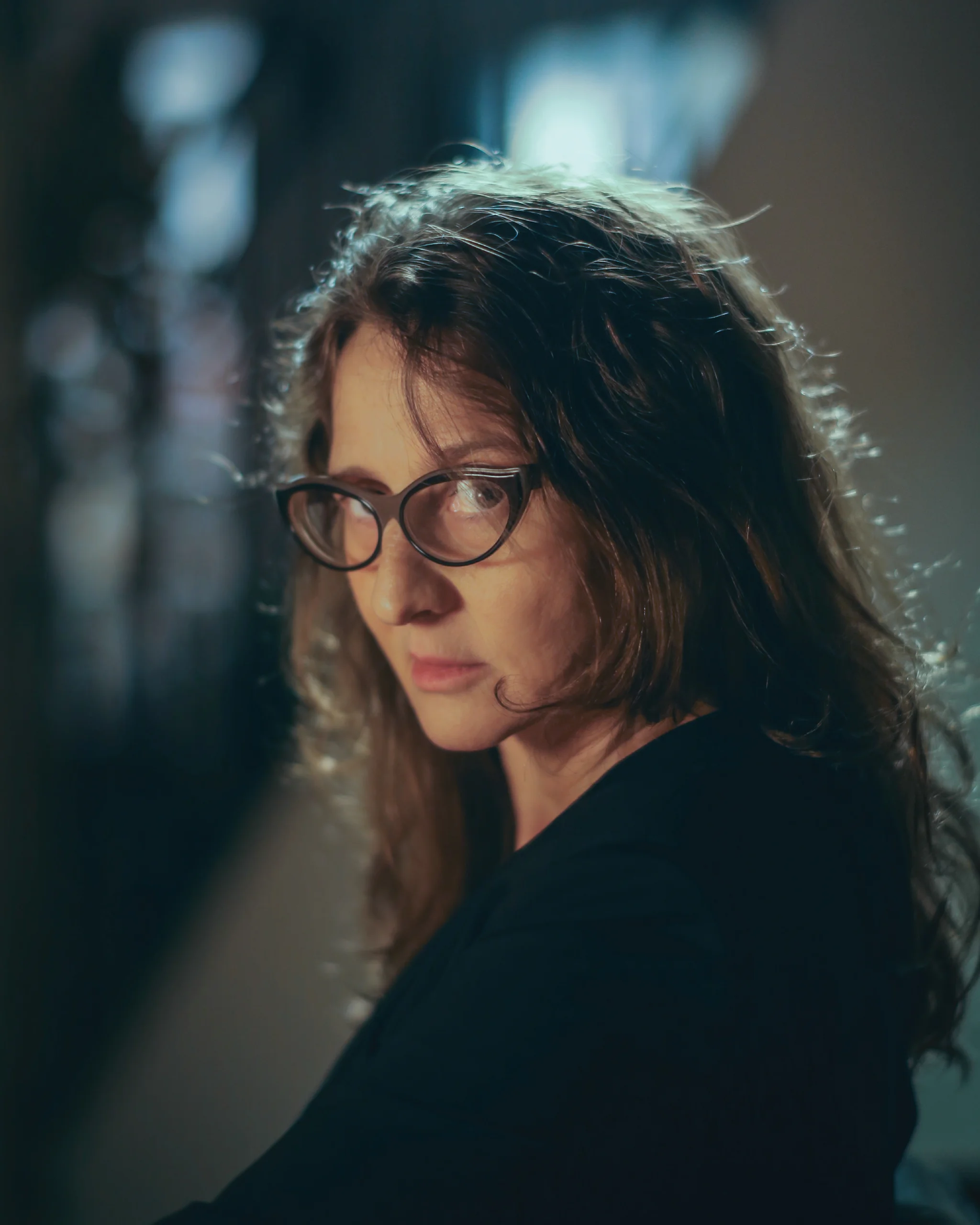
Lucrecia Martel
 Argentina
film director•screenwriter•film producer
Birthday
December 14, 1966
Birth Sign
Sagittarius
Birthplace
Salta, Argentina
Age
59 years old
About
Lucrecia Martel is an Argentine film director, screenwriter, and producer, widely celebrated as one of the most distinctive voices in contemporary world cinema. Born in Salta and based in Buenos Aires, she has built a career on sensory-rich, ambiguous storytelling that resists easy categorization. Her five feature films have premiered at Cannes, Venice, and Berlin, earning her a devoted following among cinephiles and critics alike. In 2015, film scholar Paul Julian Smith called her "arguably the most critically acclaimed auteur in Spanish-language art cinema outside Latin America," and Vogue named her "one of the greatest directors in the world right now" in 2018.
Martel's work is defined by its oblique approach to narrative, favoring atmosphere, sound, and texture over plot. She is a central figure of the New Argentine Cinema, and her influence on younger filmmakers continues to grow. As of 2026, she remains active, having recently released her first documentary, Our Land, to strong critical reception. Her films are dense, demanding, and deeply rewarding, and audiences connect with her uncompromising vision and her willingness to let stories breathe on their own terms.
Early Life & Background
Lucrecia Martel was born on December 14, 1966, in Salta, a provincial capital in northwestern Argentina. Growing up in this region, which would later shape the settings and moods of her films, she developed an early interest in storytelling and media. In an interview with Film Comment, she recalled that upon returning to her hometown, her primary ambition was to work in radio. That interest in sound and narrative would become a hallmark of her filmmaking, but her path to cinema began with formal training.
She moved to Buenos Aires to attend the National Film School (ENERC), where she developed her craft and began making short films. Her first short, Rey Muerto (1995), and her second, La Ciudad (1998), helped establish her reputation in the Argentine film scene. These early works already showed her fascination with social dynamics and the textures of everyday life, setting the stage for her feature debut.
Career Growth
Martel's debut feature, La Ciénaga (The Swamp), premiered in 2001 and was a critical sensation. Set in a decaying vacation home in provincial Salta, the film follows an indulgent bourgeois family over a sweltering summer. It became a cornerstone of the New Argentine Cinema, with film scholar David Oubiña calling it "one of the highest achievements" of that movement. The film won the Alfred Bauer Prize at the Berlin International Film Festival and earned Martel international recognition.
She followed with The Holy Girl (2004), an adolescent drama that premiered at Cannes and won the Prize of the Ecumenical Jury - Special Mention, and The Headless Woman (2008), a psychological thriller that drew widespread acclaim and won the Cinema Prize of the French Critics' Syndicate. After a long gap, she released Zama in 2017, a period drama based on Antonio Di Benedetto's novel, which premiered at Venice and won Best Director at the Mar del Plata International Film Festival. In 2026, she released her first documentary, Our Land, investigating a 2018 murder trial and colonialism in Argentina. The film screened at the 63rd New York Film Festival and received strong critical praise, with The New Yorker calling it a "blistering denunciation of colonialist oppression." She also received an honorary doctorate from Universidad Nacional de Rosario that year.
Career Timeline
Public Image & Style
Martel is regarded as a singular art-house auteur whose films resist easy categorization. Critics consistently praise her sensory-rich filmmaking, her use of sound and image over dialogue, and her willingness to leave narratives ambiguous. The Los Angeles Times describes her as "an art-house giant" who is "revered at home and abroad." Her work has been the subject of major retrospectives at the Berkeley Art Museum and Pacific Film Archive, Film at Lincoln Center, and the Criterion Collection. She is associated with the New Argentine Cinema movement and is considered a major influence on younger filmmakers. No official fandom name or organized fan culture has been documented, but her films have a devoted following among cinephiles.
Fame & Fandom (iFAMOUS Rankings)
Lucrecia Martel commands a following defined not by shouting crowds or viral hashtags, but by the hushed reverence of cinephiles and scholars who treat her seven-year silences as sacred intervals. Her audience exists primarily within the rarefied air of film festivals and academic institutions rather than on street corners or social media feeds. Unlike pop stars who spawn named tribes, Martel has no formal fanbase moniker; her supporters are simply those who wait for her next elusive feature with intense anticipation. The legend surrounding her career is built on the mythos of scarcity, the seismic debut of *The Headless Woman*, the long hiatus between *The Holy Girl* and *Zama*, and her recent 2026 documentary *Our Land*. These moments of artistic intensity have cemented her status as an auteur whose work is dissected in lecture halls from Berkeley to Buenos Aires. There are no documented fan campaigns funding subway ads or organized rituals celebrating her birthday. Instead, her legacy is carried by critics calling her one of the most compelling filmmakers of this century and scholars analyzing her refusal to conform to industry timelines. While she sparked discussion in 2026 with sharp commentary on Argentina's national identity, these interactions remain intellectual exchanges rather than folkloric spectacles of public hysteria. The iFANN Global Fame Engine has evaluated Lucrecia Martel extensively. She does not currently hold a placement in the published rankings. Consequently, she is not ranked among the top 1,000 most famous people globally nor featured in any scope-specific top-100 lists.
Interesting Facts and Legends
Lucrecia Martel directed an opera production at the Colón Theatre in Buenos Aires, a venue considered one of the world's most prestigious houses for classical music. Early in her career, she revealed to Film Comment that her primary ambition upon returning to her hometown was actually to work in radio, highlighting her foundational interest in sound design over visual spectacle. Though she took a meeting with Marvel Studios, no project ever materialized, leaving a curious footnote in the career of a staunchly independent art-house director. Her films are renowned for their oblique quality, often leaving narratives intentionally ambiguous to reflect the constructed nature of reality. A defining legend of her career involves the immense anticipation generated by her seven-year hiatus between *The Holy Girl* and *Zama*, which became a story of perfectionism and refusal to conform to standard industry schedules. In 2026, she promoted her documentary *Our Land*, described as a blistering denunciation of colonialist oppression, sparking debate with her statement that Argentina needs to end its fantasy of being a European country. This quote has since become a notable soundbite in contemporary film discourse.
Notable Quotes
“There are a lot of aspects of reality that we consider part of the natural order, when in reality they simply stem from constructed systems.”
“Argentina needs to end its fantasy of being a European country.”
“That was pure theater, saying that God was the owner of the land, of all the lands in the world, and that he had given them to the Spaniards.”
Family & Personal Life
Details about Martel's family are scarce, as she keeps her personal life private. She was born in Salta and later moved to Buenos Aires for her education, but she has not publicly discussed her parents or siblings. She has no known children, and no information is available about her current household or pets. Her films often explore family dynamics, but she has not drawn direct parallels to her own life in interviews.
Notable Connections
Martel's work has been championed by film scholars Paul Julian Smith and Haden Guest, both of whom have praised her as one of the most talented filmmakers working today. She adapted Antonio Di Benedetto's novel Zama for her 2017 film, and she discussed Our Land with Dennis Lim, the artistic director of the New York Film Festival. Her films have been featured in retrospectives at major institutions, including the Berkeley Art Museum and Pacific Film Archive and Film at Lincoln Center.
Relationships & Dating History
Lucrecia Martel has kept her personal life remarkably private, and no public information exists about her romantic relationships. She has never discussed a spouse or partner in interviews, and no credible media outlet has reported on her dating history. As of 2026, her relationship status remains unknown, and she appears to prefer keeping her personal life entirely out of the public eye.
Salary, Net Worth In 2026
$10 Million
iFANN Editorial Team estimate
Per iFANN's editorial analysis, Lucrecia Martel's net worth stands at $10 Million as of 2026. This valuation reflects her accumulated earnings from directing, screenwriting, and producing across her distinctive filmography, alongside her high-profile work directing opera at the Colón Theatre. Her films have secured international distribution and achieved successful runs at major global festivals, generating consistent revenue streams despite her avoidance of commercial blockbusters. Although she has never pursued major endorsement deals or mainstream commercial projects, her reputation as a leading voice in art-house cinema allows her to command significant fees for her unique contributions. The value of her portfolio has grown steadily as her earlier works continue to be screened, restored, and celebrated by new generations of viewers. As of 2026, the total sits at approximately $10 Million.
Awards Won (19)
Martel's films have earned numerous awards, particularly at major international festivals. Her debut La Ciénaga won the Alfred Bauer Prize at the Berlin International Film Festival and multiple Silver Condor Awards from the Argentine Film Critics Association. The Holy Girl received a special mention from the Ecumenical Jury at Cannes. The Headless Woman won the Cinema Prize of the French Critics' Syndicate and another Silver Condor. Zama earned her the Best Director award at the Mar del Plata International Film Festival.
2017 · Mar del Plata International Film Festival
Zama
2009 · Best Foreign Film
The Headless Woman
Known For
La Ciénaga
2001 · Director, Writer
The Holy Girl
2004 · Director, Writer
The Headless Woman
2008 · Director, Writer
Zama
2017 · Director, Writer
Our Land
2026 · Director
Keywords
Sources
Quick Facts
- Profession
- film director, screenwriter, film producer
- Born
- December 14, 1966
- Birthplace
- Salta, Argentina
- Gender
- Female
- Birth Sign
- Sagittarius
- Education
- National Film School (ENERC)
Personal Details
- Full Name
- Lucrecia Martel
- Education
- National Film School (ENERC), Buenos Aires
Filmography
12
Total
10
Film
2
TV
Frequently Asked Questions
Is Lucrecia Martel married?
What is Lucrecia Martel's net worth in 2026?
What is Lucrecia Martel's most famous film?
Does Lucrecia Martel have children?
What is Lucrecia Martel's latest film?
Join the community
fans discussing