 Spain
SpainAbout
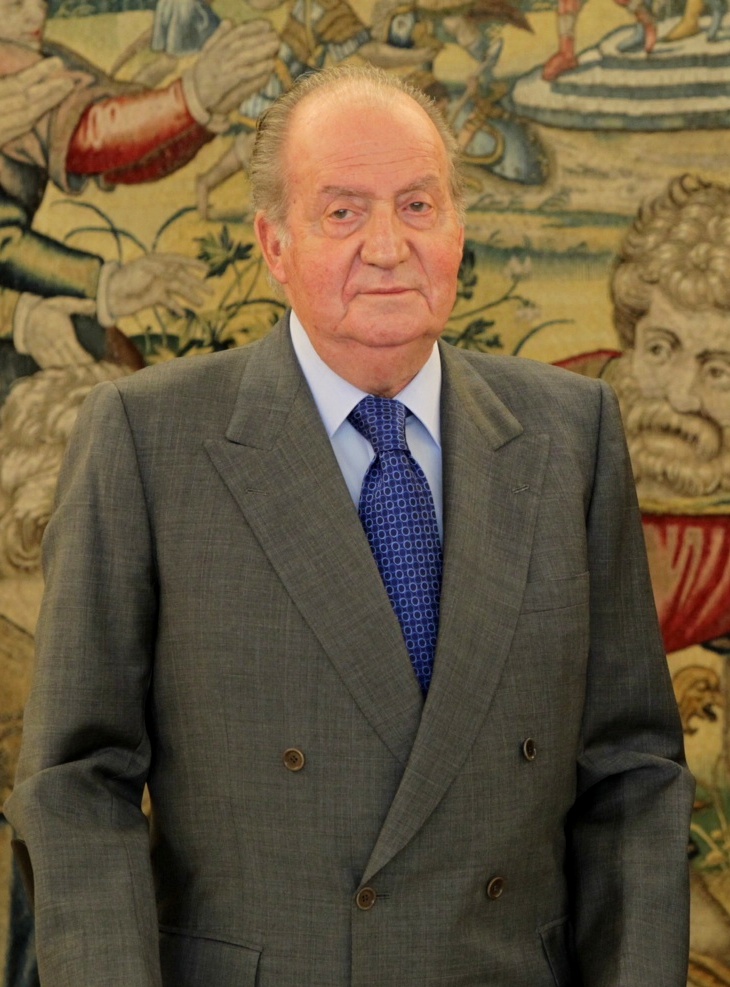
Juan Carlos I, born Juan Carlos Alfonso Víctor María de Borbón y Borbón-Dos Sicilias on January 5, 1938, in Rome, Italy, is a former King of Spain. He reigned from November 22, 1975, until his abdication on June 19, 2014. Though picked by dictator Francisco Franco as his successor, Juan Carlos surprised everyone by steering Spain toward democracy, dismantling the Francoist system he was expected to preserve. He is the son of Infante Juan, Count of Barcelona, and grandson of Alfonso XIII, the last king before the monarchy was abolished in 1931. Born into exile, Juan Carlos spent his early years in Italy before moving to Spain in 1947 to study. After finishing secondary school in 1955, he trained at the General Military Academy in Zaragoza, followed by the Naval Military Academy and the General Academy of the Air, and capped his education at the University of Madrid. In 1962, he married Princess Sophia of Greece and Denmark in Athens; the couple have three children: Elena, Cristina, and Felipe. With Franco's health failing from Parkinson's disease, Juan Carlos began acting as head of state in the summer of 1974, and when Franco died in November 1975, he became king. His reign saw the approval of the Spanish Constitution of 1978, which established a constitutional monarchy, and in 1981 he famously stood firm against a coup attempt aimed at restoring Francoist rule. By 2008, he was considered the most popular leader in Ibero-America. But his reputation suffered later, due to family scandals and a controversial elephant-hunting trip during Spain's financial crisis. In June 2014, he abdicated in favor of his son, Felipe VI. Since August 2020, he has lived in self-imposed exile over alleged business ties to Saudi Arabia. The New York Times estimated his fortune at around €1.8 billion in 2014.
Fame & Fandom
The relationship between Juan Carlos I and the public has never resembled a traditional fandom, lacking organized rituals, named collectives, or celebratory campaigns typical of pop culture icons. Instead, his standing with the Spanish populace is defined by political engagement, civic duty, and historical scrutiny rather than fan devotion. While he was once revered as the architect of democracy, the modern narrative has shifted toward his abdication, exile, and subsequent controversies, leaving no space for a formalized fanbase to rally around his name. Despite this absence of an official group, his cultural footprint remains vast enough to secure prominent positions in global metrics. According to the August 2026 iFANN Global Fame Rankings, he holds the position of the 22nd most famous person in Spain, a rank that has held steady since the previous cycle. His influence extends beyond national borders, placing him at the 53rd most famous person from Spain globally. Furthermore, within the broader European context, he is ranked as the 42nd most famous person in Europe. These placements reflect a complex legacy where historical achievement and personal disgrace coexist in the public consciousness, tracked through media coverage and consumption signals worldwide without the need for explicit methodological explanation.
Interesting Facts and Legends
Juan Carlos I, born in Rome on January 5, 1938, served as King of Spain from November 22, 1975, until his abdication on June 19, 2014. He was selected by dictator Francisco Franco as his successor but famously steered the nation toward democracy. A defining moment in his reign occurred during the 1981 coup attempt, known as 23-F, when he appeared on national television in full uniform to denounce the rebels and affirm Spain's commitment to democracy. This event remains a cornerstone of modern Spanish history, often cited as the decisive intervention that secured the country's democratic transition. Following his departure, folklore surrounding the monarch bifurcated into stories of scandal, including allegations of corruption and a widely ridiculed elephant hunting trip in Botswana. Recent developments in 2026 have added new chapters to this lore, documenting a secret visit to Mallorca and a rare joint public outing with his exiled wife, Queen Sofía. Additionally, a floating lanterns festival in Madrid was named after him, illuminating Juan Carlos I Park, while a Spanish Navy assault ship bearing his name continues to serve active duty.
Awards & Accolades
Keywords
Quick Facts
- Profession
- sovereign, monarch, aristocrat
- Born
- +1938-01-05
- Birthplace
- Rome
- Gender
- Male
- Spouse
- Queen Sofía of Spain
- Birth Sign
- Capricorn
Personal Details
- Spouse
- Queen Sofía of Spain
Join the community
fans discussing