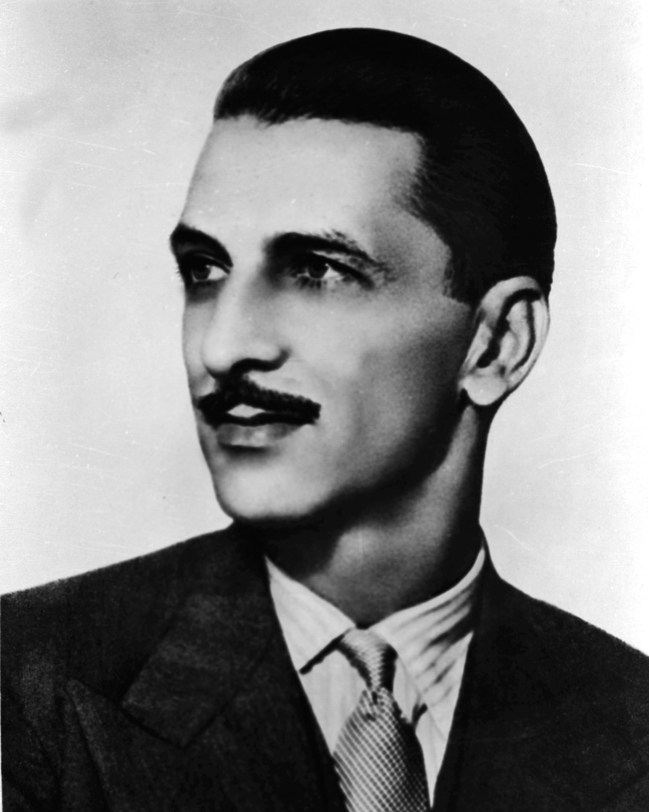
JRD Tata
 India
IndiaBirthday
+1904-07-29
Birth Sign
Sagittarius
Birthplace
Paris
Age
Died at 89
About
Jehangir Ratanji Dadabhoy Tata, known to most simply as JRD, was born in Paris on July 29, 1904. He grew up straddling two worlds, the son of an Indian businessman and a French mother. This dual heritage perhaps informed his expansive vision for India. JRD Tata became a pivotal figure in shaping the nation's industrial landscape, serving as the chairman of the Tata Group and Tata Sons from 1938 all the way until 1991. His long tenure at the helm saw the group grow significantly, expanding into numerous sectors. His entrepreneurial spirit led to the establishment of many foundational companies that remain vital to India's economy today. JRD Tata is particularly remembered for founding enterprises like Tata Consultancy Services, which revolutionized India's IT sector, and Tata Motors, a major automotive manufacturer. He also played a key role in the creation of Titan Industries, known for its watches and jewelry, and Tata Salt, a household staple. His early fascination with flight also led him to establish Tata Airlines, the precursor to today's Air India, making him a pioneer in Indian aviation. Throughout his life, JRD Tata received significant recognition for his contributions. France honored him with the Legion of Honour in 1982. India, recognizing his immense impact on its industrial development, bestowed upon him two of its highest civilian awards: the Padma Vibhushan in 1955 and the Bharat Ratna in 1992. He passed away on November 29, 1993, at the age of 89, leaving behind a legacy of innovation and nation-building.
Fame & Fandom
Jehangir Ratanji Dadabhoy Tata remains a figure of institutional reverence rather than celebrity adoration, with his legacy anchored in the foundational pillars of Indian industry and aviation. While his name is universally recognized across the subcontinent as a symbol of ethical enterprise, he does not currently hold a placement in the published Global Top 1,000 or any Top-100 scope list within the iFANN rankings. The iFANN Global Fame Engine has evaluated his profile but determined that no numeric rank applies to him at this time, reflecting a status where influence is measured by historical impact rather than current viral metrics. Unlike modern icons who cultivate organized fanbases with social media campaigns or fan-funded projects, JRD Tata never attracted a formal fandom with a specific moniker. His admirers do not operate under a collective title such as "Tataites," nor do they engage in grassroots rituals; instead, his memory is preserved through official corporate channels and state honors. Commemorative posts marking his birth and death anniversaries appear on the websites of entities like Tata Steel Ltd and the Tata Group, serving as the primary mode of interaction between the public and his legacy. The absence of a documented fandom name underscores the distinction between his stature as a statesman and industrialist versus that of a pop-culture phenomenon. There are no records of crowds disrupting events for his arrival or fans fainting in his wake, as his fame was exerted through policy, infrastructure, and an ethical example that shaped a nation's economic backbone.
Interesting Facts and Legends
JRD Tata holds the distinction of being the first person in India to obtain a private flying license, a verified event recorded on February 10, 1929. He piloted the inaugural commercial flight of Air India in 1932 from Karachi to Madras, carrying only a mail bag and a parrot named Parsi, an act that established the genesis of India's airline industry. A widely retold anecdote illustrates his meticulous nature regarding service quality: during a flight inspection, he personally fixed toilet rolls to ensure standards were met, highlighting his hands-on leadership style. In 1984, he engaged in a famous confrontation with senior bureaucrat P.N. Haksar regarding the inefficiencies of the License Raj, cementing his reputation as a bold defender of free enterprise against over-regulation. His philosophical approach to life is often summarized by the verified quote, "I do the best of what is available, and I'm happy," which serves as a model of contentment and ethical conduct. Furthermore, his tenure as Chairman of Tata Sons spanned over forty years, making him the longest-serving chairman in the group's history and representing a period of stability during India's post-independence era.
Death & Aftermath
Died
+1993-11-29 (aged 89)
Death Place
Mumbai, Maharashtra, India
Cause of Death
Natural causes due to old age
In the final years of his life, Jehangir Ratanji Dadabhoy Tata maintained a quiet presence in Mumbai while continuing to oversee the governance of the Tata Group and Air India until shortly before his passing. On November 29, 1993, he died at his residence in Mumbai at the age of eighty-nine following a period of declining health consistent with natural causes associated with old age. The event was peaceful and expected given his advanced age. Tributes poured in from government officials and peers who recognized him as the father of Indian civil aviation and a visionary leader whose integrity had shaped the nation's industrial base.
The Government of India honored his legacy by awarding him the Bharat Ratna in 1992, cementing his status as a national icon just one year prior to his death. His funeral was a private affair attended by close family members, senior executives of the Tata Group, and high-ranking government officials, adhering to traditional Parsi customs reflective of his Zoroastrian faith. Posthumously, his story has been preserved through documentaries and films such as Titan where actors like Naseeruddin Shah portrayed his restraint and stature.
Awards & Accolades
Keywords
Quick Facts
- Profession
- entrepreneur, aircraft pilot
- Born
- +1904-07-29
- Birthplace
- Paris
- Died
- +1993-11-29
- Death Place
- Geneva
- Gender
- Male
- Birth Sign
- Sagittarius
Join the community
fans discussing