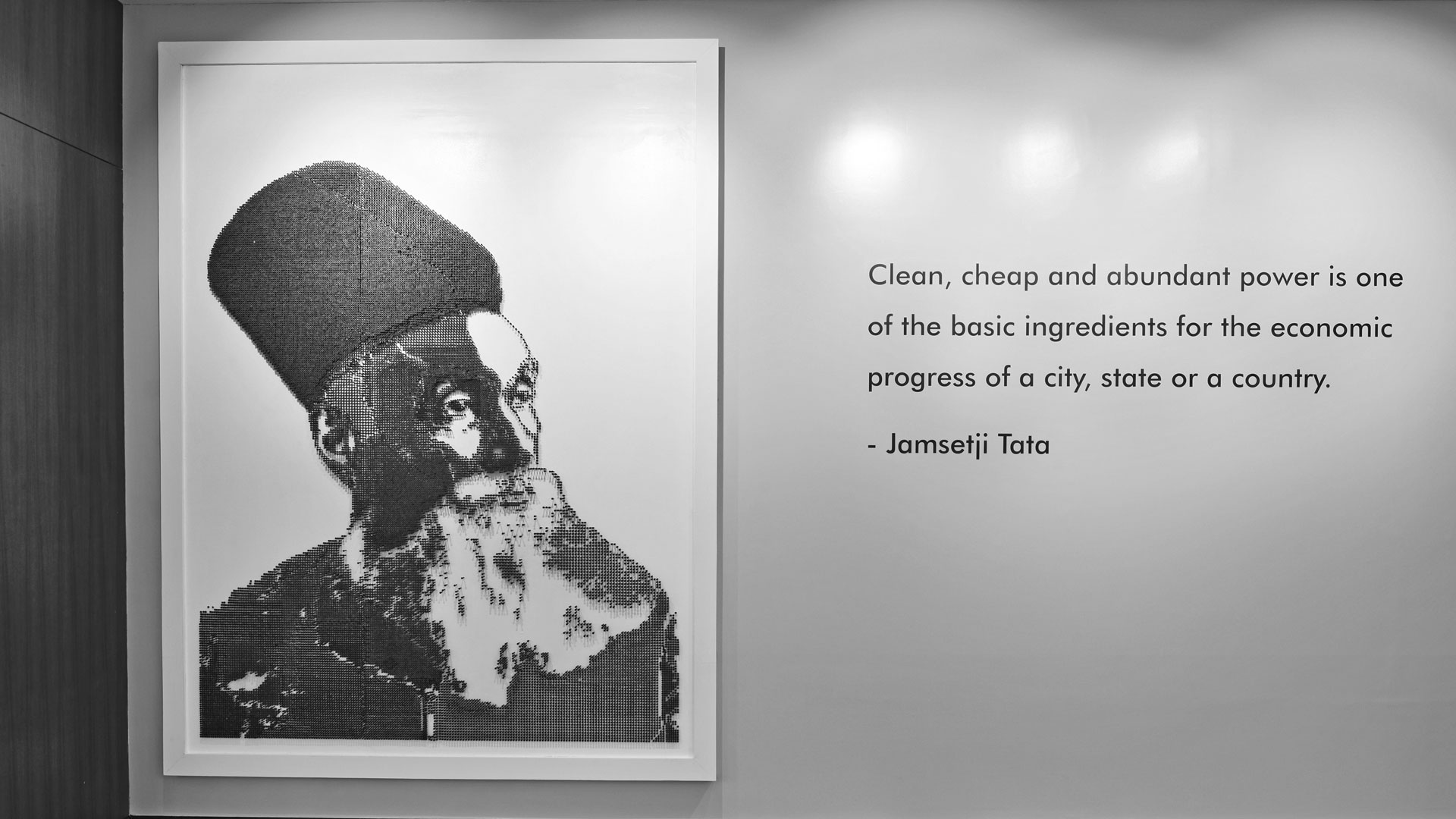
Jamsetji Tata
 India
IndiaAlso known as: J.N. Tata, Jamsetji Nusserwanji Tata
Birthday
March 3, 1839
Birth Sign
Pisces
Birthplace
Navsari, Gujarat, India
Age
Died at 65
About
Jamsetji Nusserwanji Tata was an Indian industrialist and philanthropist who founded the Tata Group, which grew to become India's largest conglomerate. Born into a Parsi family in Navsari, he abandoned his lineage's priestly traditions to enter commerce, eventually becoming one of Asia's first great industrialists. Jawaharlal Nehru later dubbed him the "One-Man Planning Commission" for his visionary role in shaping India's economic infrastructure.
His legacy is defined by bold ventures that transformed the nation's industrial landscape. He established the first successful cotton textile mill in India, opened the country's first luxury hotel powered by electricity, and laid the foundation for the Tata Iron and Steel Company. Beyond business, he dedicated his wealth to education and social welfare through the J.N. Tata Endowment and the creation of Jamshedpur, a model city built to house steel workers. He died in Germany in 1904 before seeing his steel plant fully operational, leaving behind a family empire managed by the Tata Trusts.
Early Life & Background
Jamsetji was born on March 3, 1839, in Navsari, a town in present-day Gujarat. His father, Nusserwanji Tata, had been the first in their family line to leave the traditional profession of priesthood to engage in trade and banking. Originally from Umarkhed in Maharashtra, Nusserwanji moved to Surat and then Bombay to build a trading firm. The household valued education but prioritized business acumen, so Jamsetji received a liberal upbringing.
He attended Elphinstone College in Bombay where he excelled academically. In 1857, he graduated with honors as a "Green Scholar," a distinction reserved for top-performing students. Despite this academic success, he joined his father's small trading and banking business at the age of twenty in 1859. This marked his entry into the commercial world, though he soon realized the limitations of simply moving goods without manufacturing them locally.
During extensive travels to China and Europe in the early 1860s, Jamsetji observed the rapid industrialization happening abroad. He noticed that while India possessed vast natural resources like iron ore and coal, it lacked the capacity to process these materials domestically. This realization sparked a shift in his thinking from simple trading to industrial development. By 1868, at age twenty-nine, he felt ready to branch out independently. He established his own trading firm, J.N. Tata & Co., initially focusing on cotton and other commodities. Shortly after, he purchased a bankrupt oil mill in Bombay and successfully converted it into a thriving cotton textile factory, proving his ability to revitalize failing enterprises.
Career Growth
After establishing his own firm in 1868, Jamsetji began a series of ambitious investments that laid the groundwork for modern Indian industry. In 1877, he founded the Empress Mill in Nagpur, which became India's first successful cotton textile mill and a model for the entire sector. He quickly diversified his interests beyond textiles, identifying the critical need for indigenous heavy industries like hydroelectric power and steel.
In 1892, he demonstrated his commitment to national development by founding the J.N. Tata Endowment for the Promotion of Higher Education. This endowment provided loans to Indian students for studies abroad, ensuring that future generations could access global knowledge. His most daring venture began in 1895 when he laid the foundation stone for the Tata Iron and Steel Company (TISCO). The project faced immense technical and financial hurdles, with many critics calling him mad for attempting to build a steel plant in a remote location with no existing infrastructure.
Despite these challenges, he persisted. In 1902, he opened the Taj Mahal Palace Hotel in Mumbai, the first luxury hotel in India and the first building in the country to be powered by electricity. This establishment challenged the colonial notion that such luxuries were reserved for the British. He also planned and developed the city of Jamshedpur to house the workers of his future steel plant. Although he died in 1904 before the steel plant became fully operational, his vision survived. TISCO began production in 1907 and eventually became Tata Steel, the first integrated steel plant in Asia.
Career Timeline
Public Image & Style
Jamsetji Tata is revered as a saint-like figure in India, portrayed as the ideal businessman-patriot-philanthropist. Media coverage consistently highlights his humility, foresight, and dedication to the nation's welfare. He is widely regarded as the "Father of Indian Industry." His public persona is defined by a deep sense of nationalism and a belief that industrial growth must go hand-in-hand with social responsibility.
Unlike many contemporaries who amassed wealth for personal gain, Jamsetji viewed his fortune as a trust for the nation. He declined a knighthood to remain an Indian nationalist, a decision that enhanced his reputation among the populace. His leadership style was characterized by hands-on management and a willingness to take calculated risks that others deemed too dangerous. The story of his persistence in building a steel plant against all odds has become a cultural touchstone for resilience and vision in India.
Fame & Fandom (iFAMOUS Rankings)
The public relationship with Jamsetji Tata differs fundamentally from the dynamic between modern entertainers and their followers. As a historical figure who passed in 1904, he commands no organized fanbase, formal collective noun, or grassroots movement characterized by rituals, social media campaigns, or interactive tributes. The reverence shown to him is institutional rather than fandom-driven, manifesting through the enduring operations of the Tata Group and the Tata Trusts. While digital platforms occasionally host commemorative posts on his birth anniversary, these acts represent official corporate homage or national gratitude for his role in industrializing India, not the participatory culture seen among living celebrities. His legacy rests on verified historical contributions, such as founding the first cotton textile mill and establishing the Taj Mahal Palace Hotel, which cemented his status as a visionary patriot rather than a pop culture icon. Despite this absence of a traditional fandom structure, his influence remains vast across the globe. iFANN has evaluated his standing within the international landscape, yet he does not currently hold a placement in the published Global Top 1,000 rankings or any scope list defined by the engine. Consequently, no specific ordinal rank can be assigned to his current fame level relative to other global figures. This lack of a numerical position reflects his classification as a historical statesman rather than a contemporary celebrity subject to fluctuating search metrics or consumption signals. The evaluation confirms that while his name carries immense weight in economic and philanthropic history, it does not translate into the quantifiable viral dominance required for inclusion in the current fame charts. The authority of his reputation stands apart from the mechanics of modern ranking systems, resting instead on the tangible assets and institutions he left behind.
Interesting Facts and Legends
One of the most famous stories about Jamsetji Tata involves his refusal of a knighthood from the British Viceroy. When offered the title, he reportedly replied that he could not accept it because he was an Indian and felt it was inappropriate to accept a British honor while India was under colonial rule. This act cemented his image as a patriot.
Another legendary moment occurred during the planning of the Taj Mahal Palace Hotel. In 1903, opening the hotel caused a sensation because it featured electric lights, elevators, and running water, amenities previously thought impossible in India outside of British compounds. It set a new standard for hospitality in Asia.
Jamsetji was known for his intense focus and humility. Descriptions from the era portray him as a man of average stature with a dignified bearing. He often visited his factories incognito to check on conditions firsthand. His vision extended far beyond profit; he sought to create self-reliant industries that would reduce India's dependence on British imports. The Tata Trusts, which manage a significant portion of the group's equity today, hold assets worth tens of billions of dollars and have donated over $102 billion over the last century, ranking as the largest philanthropic entity globally according to the Hurun Report.
Notable Quotes
“I want to see India rise again... I want to see her people happy and prosperous.”
“We must build our own factories, we must produce our own steel, we must make our own machinery.”
“If you want to do something great, you must be prepared to fail.”
“The future belongs to those who believe in the beauty of their dreams.”
Family & Personal Life
Jamsetji married Hirabai Daboo, also known as Bai Hirabai, in the 1860s. They met through family connections within the Parsi community, and their union brought together two prominent families. The couple had three children: Dorabji Tata, who succeeded him as chairman of the company; Ratanji Tata; and Missy Tata. There are no public records of prior romantic relationships or engagements, which was typical for the era and social standing of Parsi elites.
The family continued to expand the group and its philanthropic endeavors after his passing. The Tata Trusts, established to manage his charitable legacy, continue to fund education, healthcare, and rural development across India. The estate is currently managed by the Tata Trusts and the Tata Family Office, overseen by the Board of Trustees.
Notable Connections
Nusserwanji Tata (Father), Hirabai Daboo (Wife), Dorabji Tata (Son), Ratanji Tata (Son), J.R.D. Tata (Grandson), Ratan Tata (Great-grandson), N. Chandrasekaran (Current Chairman).
Relationships & Dating History
Jamsetji Tata was married to Hirabai Daboo, also known as Bai Hirabai. They met through family connections within the Parsi community, and their marriage was a union of two prominent families. They remained together until his death in 1904. There are no public records of prior romantic relationships or engagements, as was typical for the era and social standing of Parsi elites.
As Jamsetji Tata passed away in 1904, there is no current dating status. He was widowed posthumously, leaving behind a legacy managed by his descendants and the Tata Trusts. His sons Dorabji and Ratanji carried forward the business empire, continuing the family's tradition of leadership and philanthropy.
- MarriedHirabai Daboo1860 - 1904Married through family connections in the Parsi community until his death.
Death & Aftermath
Died
May 19, 1904 (aged 65)
Death Place
Baden-Baden, Germany
Cause of Death
reported myocardial infarction
Jamsetji Nusserwanji Tata died on May 19, 1904, at the age of 65 in a hotel room in Baden-Baden, Germany, while on a business trip to Europe. The official cause of death was recorded as a heart attack (myocardial infarction). Historical records indicate that he suffered from severe chest pain and collapsed shortly after dinner on May 18 or early May 19; he was found unconscious and died before medical aid could be administered effectively. The ruling was established through the immediate declaration by attending physicians and confirmed by his family, specifically his brother Maneckji Nusserwanji Tata, who traveled to Germany to handle the affairs. As a private citizen dying of natural causes in a foreign country, the matter was handled entirely by his family and the local German authorities.
The estate was managed immediately by his family, with his son J.R.D. Tata later inheriting the vision, though Jamsetji himself had not yet named a successor at the time of his death. Public reaction to his death was one of profound national mourning across India. Tributes poured in from Indian nationalists, British officials, and industrialists alike, recognizing him as the "Father of Indian Industrialization". His death marked a significant moment for the nascent Indian independence movement, as he was viewed not merely as a businessman but as a patriot who had dedicated his wealth to India's future. Institutions such as the Indian National Congress and various educational bodies honored his legacy, and his death spurred a renewed commitment to the projects he had envisioned, particularly the Tata Iron and Steel Company (TISCO) and the Indian Institute of Science.
The funeral arrangements were conducted privately but with high regard. Following his death in Baden-Baden, his body was embalmed and transported back to Bombay (now Mumbai), arriving in June 1904. A public memorial service was held in Bombay, attended by prominent figures including the Governor of Bombay and leaders of the Parsi community. He was cremated according to Parsi Zoroastrian rites at the Parsee Burial Ground in Byculla, Mumbai. The funeral procession was a significant event, reflecting the deep respect he commanded. Posthumously, Jamsetji Tata's legacy has been institutionalized extensively. The Tata Group continued to expand under his sons, Sir Dorabji Tata and Sir Ratanji Tata, fulfilling his dream of establishing TISCO, which began production in 1912, and the Indian Institute of Science (IISc), founded in 1909 using funds left in his will.
Numerous awards, scholarships, and foundations bear his name, including the Jamsetji Tata National Trust and the Jamsetji Tata Award for Excellence in Engineering. He has been inducted into various halls of fame globally and is frequently cited in books and films about Indian history, such as The Tata Story and various documentaries produced by the Tata Trusts. His estate was divided among his family members, with a significant portion designated for philanthropy, leading to the creation of the Tata Trusts, which manage billions in assets today for education, healthcare, and rural development. Statements by the family, particularly in the form of the Tata Trusts' annual reports, consistently emphasize his vision of "industrializing India for the benefit of the people."
Net Worth (Estate Value)
$102 Billion
iFANN Editorial Team estimate
Jamsetji Tata died in 1904, so his net worth is represented by the value of the estate he left behind. The Tata Trusts, which hold a significant portion of the group's equity, manage assets worth tens of billions of dollars today. The estate's value is derived from the dividends of the Tata Group companies, including Tata Steel, Tata Motors, and Tata Consultancy Services, as well as the operations of the Tata Trusts which fund education, healthcare, and rural development.
Research by the iFANN Editorial Team puts X's fortune at around $102 Billion. This figure reflects the cumulative donations made by the Tata Trusts over the last century, which the Hurun Report ranks as the highest in the world. The estate is managed by the Tata Trusts and the Tata Family Office, overseen by the current Chairman of Tata Sons. Recent news in 2026 highlights the sheer scale of the Tata Group, with the group being described as a "swadeshi" (indigenous) business powerhouse. The trust's donations have surpassed $100 billion, making it the largest philanthropic entity globally.
Awards & Accolades
View 6 records, honours and achievementsKnown For
Tata Group
1868 · Founder
Empress Mill
1877 · Founder
Taj Mahal Palace Hotel
1902 · Founder
Tata Iron and Steel Company
1895 · Founder
Keywords
Sources
Quick Facts
- Profession
- entrepreneur
- Born
- March 3, 1839
- Birthplace
- Navsari
- Died
- May 19, 1904
- Death Place
- Bad Nauheim
- Gender
- Male
- Spouse
- Hirabai Daboo
- Birth Sign
- Pisces
Personal Details
- Full Name
- Jamsetji Nusserwanji Tata
- Spouse
- Hirabai Daboo
- Children
- Dorabji Tata · Ratanji Tata · Missy Tata
- Education
- Elphinstone College
Frequently Asked Questions
Who founded the Tata Group?
Why did Jamsetji Tata decline a knighthood?
What is the Tata Trusts' total donation amount?
Where did Jamsetji Tata die?
Did Jamsetji Tata live to see his steel plant open?
Social Media
Join the community
fans discussing