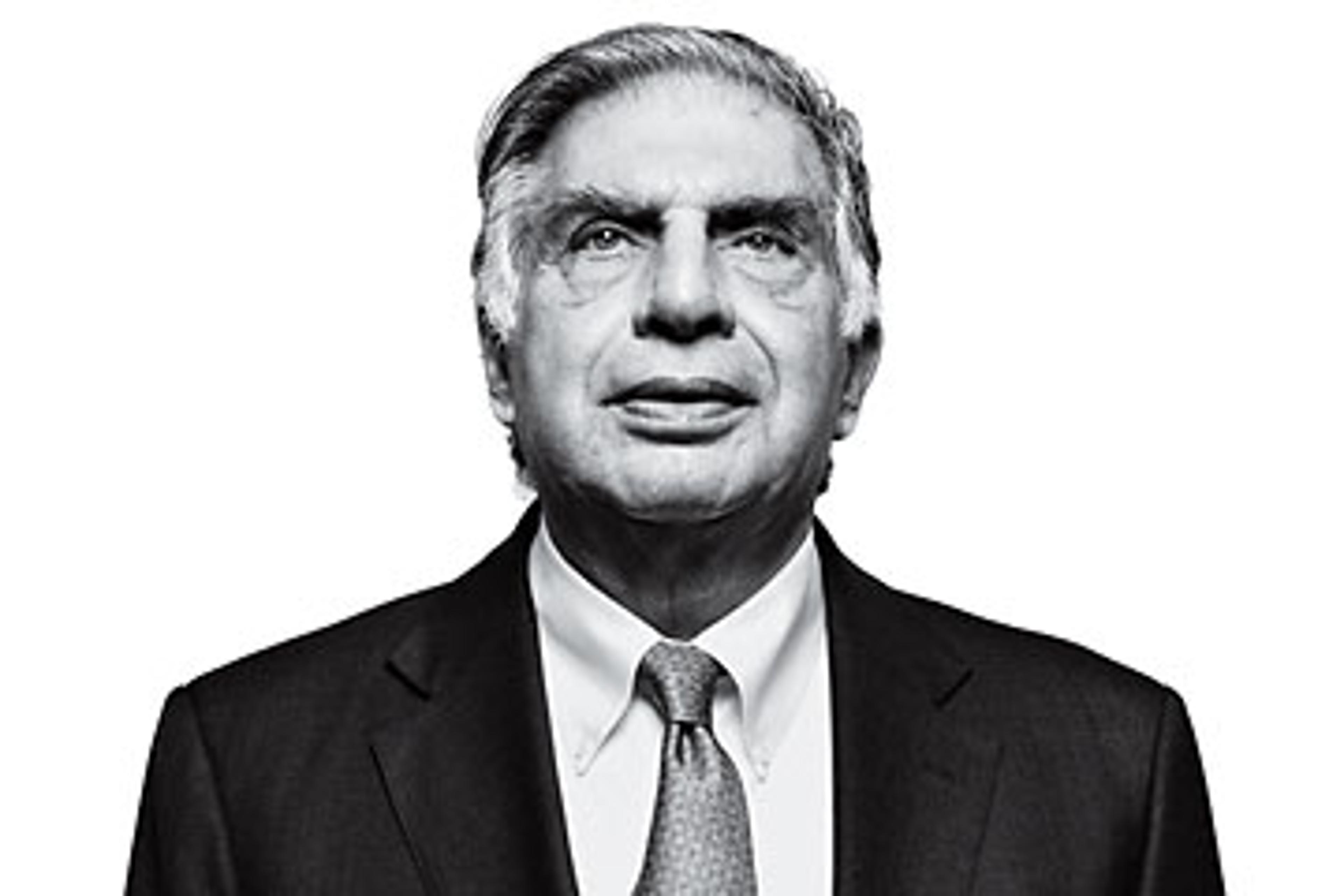
Ratan Tata
 India
entrepreneur•engineer•businessperson
Also known as: Ratan Naval Tata, Ratan Tata
Birthday
December 28, 1937
Birth Sign
Sagittarius
Birthplace
Bombay (now Mumbai), India
Age
Died at 86
About
Ratan Naval Tata was an Indian industrialist and philanthropist who transformed the Tata Group into a global powerhouse. Born on December 28, 1937, he served as the Chairman of Tata Sons from 1991 to 2012 and again briefly from 2016 to 2017. He died on October 9, 2024, leaving behind a legacy of ethical leadership and nation-building. His career spanned over six decades, during which he oversaw massive expansions into automotive, hospitality, and technology sectors. He is widely recognized for acquiring Jaguar Land Rover and launching the Tata Nano project. Despite his immense influence, he remained known for his frugal lifestyle and dedication to philanthropy through the Tata Trusts. He received the Padma Bhushan in 2000 and the Padma Vibhushan in 2008, alongside a CBE from the British government. Named one of Time magazine's 100 Most Influential People, he was inducted into the Automotive Hall of Fame. His vision extended beyond business to include over 40 startup investments via RNT Capital Advisors, fostering innovation across India.
Early Life & Background
Ratan Naval Tata was born on December 28, 1937, in Bombay (now Mumbai) to Naval Tata and Sonoo Commissariat. His early life was marked by tragedy when both parents died while he was still young. Following their deaths, he was raised primarily by his grandmother, Lady Navajbai Tata, who instilled in him the values of humility and social responsibility that would define his later life. He attended the Cathedral and John Connon School in Mumbai before studying art at the J.J. School of Art. Seeking further education abroad, he moved to the United States to study architecture at Cornell University. Although he did not complete his degree, this period exposed him to Western design principles and engineering concepts. Before fully joining the family business, he worked briefly as a freelance designer and architect, creating furniture and interior designs that showcased his aesthetic sensibility. In 1962, he officially joined the Tata Group, starting his career on the shop floor of Tata Steel. This hands-on experience allowed him to understand the intricacies of manufacturing and operations firsthand, grounding his future leadership decisions in practical reality. He also took charge of various ventures like Tata Tea in the 1970s before ascending to the top.
Career Growth
Tata's rise within the Tata Group began in earnest after his initial years on the shop floor. He took charge of various ventures, including Tata Tea and Tetley, before ascending to the position of Chairman of Tata Sons in 1991. His tenure as chairman marked a transformative era for the conglomerate, characterized by aggressive globalization. In 2000, he led the acquisition of Tetley Tea, marking the first major international purchase by an Indian company and signaling India's entry into the global tea market. His most audacious move came in 2008 when he acquired Jaguar Land Rover from Ford for $2.3 billion during the global financial crisis. This deal not only saved the British luxury brands from collapse but also established Tata Motors as a significant global player in the automotive sector. He also launched the Tata Nano project in 2004, aiming to create the world's cheapest car at ₹1 lakh ($2,000) to democratize mobility. Although production eventually ceased due to logistical and safety challenges, the vision remains a powerful symbol of his commitment to the common man. He stepped down as Chairman in 2012, succeeded by Cyrus Mistry, but returned as interim Chairman in 2016 following Mistry's controversial ouster. He handed over full control to N. Chandrasekaran in February 2017, remaining active as Chairman Emeritus until his death. He personally invested in over 40 startups through RNT Capital Advisors, demonstrating a forward-thinking approach to fostering innovation in India.
Career Timeline
Public Image & Style
Ratan Tata is portrayed as the 'gentle giant' of Indian business. His signature style included simple attire, often a white kurta-pyjama or a casual shirt and trousers, paired with a warm, approachable demeanor. Media portrays him as a moral leader who prioritized ethics over profit, earning him the title of 'Father Figure' of Indian industry. His public image was built on a foundation of humility and integrity, contrasting sharply with the ostentatious lifestyles of some other tycoons. He was known for his quiet dignity and ability to connect with people from all walks of life, making him a beloved figure across the country. He was frequently described as a 'nation builder' by Prime Minister Narendra Modi and global CEOs. His reputation was cemented by his refusal to own a private jet and his preference for driving a simple Mercedes-Benz. This grounded persona made him a unique figure in the corporate world, where he was respected not just for wealth but for his moral compass and accessibility to workers on factory floors.
Fame & Fandom (iFAMOUS Rankings)
According to the iFANN Global Fame Rankings, Ratan Tata is currently the 99th most famous person in India and the 94th most famous person from India as of the September 2026 rankings. There is no formal fandom name like 'Tata-Stans.' Instead, his supporters refer to themselves as admirers or followers of his legacy. The fanbase is characterized by deep reverence rather than organized campaigns. Public devotion manifested in candlelight vigils and visits to Tata offices after his death. His influence transcends typical celebrity fandom, rooted in national pride and respect for his contributions to society. The world recognizes him not for viral moments, but for the quiet dignity of a man who lived in the same house until his death and turned a domestic conglomerate into a global powerhouse. His legacy continues to inspire new generations of entrepreneurs and leaders who emulate his ethical standards and visionary thinking in the face of modern corporate challenges.
Interesting Facts and Legends
Ratan Tata famously refused to own a private jet, preferring commercial flights or chartered aircraft only when necessary. He drove a simple Mercedes-Benz for years, a choice that became emblematic of his grounded nature. He lived in the same house in Mumbai inherited from his mother throughout his entire adult life, refusing to move to a larger mansion despite offers. Another lesser-known fact is his deep involvement in humanitarian crises; he personally oversaw relief efforts for the 2004 Tsunami and various earthquakes without waiting for government approval. He also invested in over 40 startups through RNT Capital Advisors, demonstrating a forward-thinking approach to fostering innovation in India. His hands-on leadership style meant he often visited factory floors unannounced, interacting directly with workers to solve problems. These actions cemented his reputation as a leader who prioritized ethics over profit. The Tata Nano was originally conceived to replace scooters for families, not just cars, aiming to provide safe transport for the poor. He received honorary doctorates from prestigious institutions including Harvard University and the University of Cambridge.
Notable Quotes
“I've often felt that the Indian tiger has not been unleashed.”
“The early Rockefellers made their wealth from being in certain businesses and remained personally very wealthy.”
“A founder who is in for the short run, or has no...”
Family & Personal Life
Ratan Tata had a half-brother, Noel Tata, who later became the Chairman of the Tata Trusts. Unlike many public figures, he never married and had no children, dedicating his life entirely to his work and philanthropy. His 'family' was largely considered to be the Tata Group itself and the millions of lives touched by his charitable works. He lived in the same house in Mumbai inherited from his mother until his death, a fact often cited as evidence of his lack of attachment to material excess. His grandmother, Lady Navajbai Tata, played a pivotal role in shaping his character after his parents' early deaths. He maintained a minimal social media presence, with an Instagram account (@ratantata) having 10 million followers serving as a digital archive of his life. His X handle (@rntata2000) remained active for official announcements. These personal choices reflected a life where professional duty and familial bonds to the group superseded traditional domestic structures.
Notable Connections
Noel Tata, N. Chandrasekaran, Cyrus Mistry, Mehli Mistry, Venu Srinivasan
Relationships & Dating History
Ratan Tata was known for his extreme privacy regarding his personal life. Unlike many public figures, he never married and had no children. Throughout his life, he remained single, dedicating himself entirely to his work and philanthropy. There are no credible reports or documented romantic relationships, engagements, or marriages in his biography. He lived in the same house in Mumbai inherited from his mother throughout his entire adult life, a fact often cited as evidence of his grounded nature and lack of attachment to material excess. As of his death in 2024, he was single, having never entered into a marital union. His 'family' was largely considered to be the Tata Group itself and the millions of lives touched by his charitable works. He maintained close professional ties with associates like Mehli Mistry and Venu Srinivasan, but these were strictly business-related. His solitude was a conscious choice that allowed him to focus completely on his responsibilities to the nation and the corporation.
Death & Aftermath
Died
October 9, 2024 (aged 86)
Death Place
Mumbai, Maharashtra, India
Cause of Death
Natural causes associated with old age
On October 9, 2024, Ratan Tata passed away in Mumbai at the age of 86. The official statement from the Tata Group confirmed his death but did not provide a specific medical cause beyond natural complications related to his advanced age. His passing was met with an immediate and profound silence across India's corporate landscape, followed by a wave of tributes from world leaders including Prime Minister Narendra Modi, who hailed him as a nation builder. The global business community also paused to acknowledge a figure whose leadership style had defined ethical industrialism for decades. The aftermath of his death was marked by private ceremonies rather than grand public spectacles, reflecting his lifelong preference for humility. While no large-scale public memorial was organized, candlelight vigils spontaneously appeared outside Tata offices and homes where admirers gathered to pay their respects. The stock market experienced a brief dip before stabilizing, signaling investor confidence in the group's continuity under new leadership. However, the most significant impact emerged in the governance sphere. His absence left a moral vacuum that soon manifested in the intense boardroom battles of 2026 between the Tata Trusts and the Tata Sons board. These disputes over the listing of Tata Sons and the control of assets highlighted how deeply his personal values were woven into the organization's fabric. Reports of resignations from key trustees, including Mehli Mistry stepping down from the Tata Medical Centre Trust in September 2026, and legal challenges regarding his estate, valued at over Rs 10,000 crore, underscored the complexity of preserving his legacy without his guiding hand. The conflict, dubbed 'L'Affaire Tata,' saw proposals to merge Tata Energy and Services with Tata Sons, sparking intense debate and litigation. Legal experts noted that the situation could reshape the future of India's largest conglomerate, with questions remaining over the distribution of his inherited shares in Tata Sons.
Net Worth (Estate Value)
$1.5 Billion
iFANN Editorial Team estimate
iFANN Editorial Team research estimates Ratan Tata's net worth at approximately $1.5 billion to $2 billion as of 2026. This figure reflects his personal assets and stakes in listed companies, though exact numbers vary due to the private nature of his holdings and the complexities of the Tata Trusts structure. Estimates from Forbes India and Economic Times suggest his personal wealth is modest compared to his influence, largely because he donated the majority of his inheritance and salary to the Tata Trusts. His wealth sources primarily derived from his long-term salary as Chairman, dividends from Tata Group companies, and personal investments via RNT Capital Advisors. He famously lived frugally, avoiding luxury real estate and high-end consumption. Following his death, his estate is valued at over Rs 10,000 crore ($1.2 billion), with the bulk of his shareholding in Tata Sons subject to probate and potential disputes regarding its distribution between his heirs and the Tata Trusts. The estate management has become a focal point of ongoing governance battles within the group.
Awards Won (5)
Ratan Tata received numerous accolades for his contributions to business, engineering, and philanthropy. He was awarded the Padma Bhushan in 2000 and the Padma Vibhushan in 2008, two of India's highest civilian honors. He also received the Commander of the Order of the British Empire (CBE) in 2008 for services to the UK-India relationship. Additionally, he was named one of Time magazine's 100 Most Influential People in the World and inducted into the Automotive Hall of Fame for his role in the acquisition and revitalization of Jaguar Land Rover.
2000 · Civilian Award
Distinguished service in trade and industry
2008 · Civilian Award
Exceptional contribution to the nation
Known For
Jaguar Land Rover Acquisition
2008 · Chairman of Tata Sons
Tata Nano Launch
2008 · Chairman of Tata Sons
Tetley Acquisition
2000 · Chairman of Tata Sons
Keywords
Sources
Quick Facts
- Profession
- entrepreneur, engineer, businessperson
- Born
- December 28, 1937
- Birthplace
- Mumbai
- Died
- October 9, 2024
- Death Place
- Mumbai
- Gender
- Male
- Birth Sign
- Sagittarius
Personal Details
- Full Name
- Ratan Naval Tata
- Children
- Education
- Cornell University (Architecture)
Frequently Asked Questions
How did Ratan Tata die?
Was Ratan Tata married?
What is Ratan Tata's net worth?
Why is there a controversy at Tata Sons in 2026?
Did Ratan Tata own a private jet?
Social Media
Similar People
Join the community
fans discussing