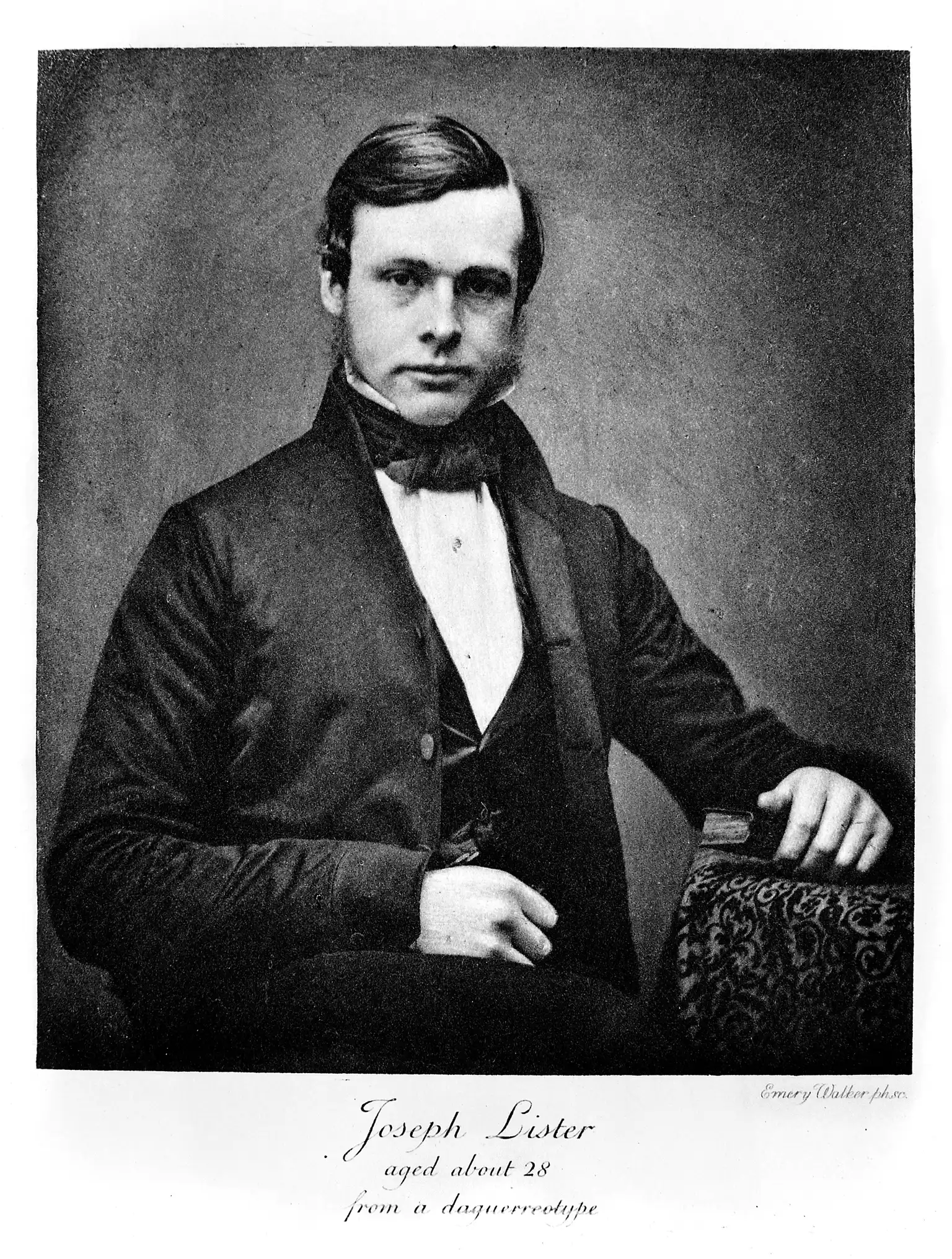
Joseph Lister
 United Kingdom
surgeon•university teacher•politician
Also known as: Baron Lister, Joseph Lister, 1st Baron Lister, Father of Modern Surgery
Birthday
April 5, 1827
Birth Sign
Aries
Birthplace
Upton House, Newham, Essex, England
Age
Died at 84
About
Joseph Lister was an English surgeon whose name became inseparable from the fight against infection. He trained in London and Edinburgh, and by the 1860s he was working at the Glasgow Royal Infirmary, where post-operative sepsis killed a staggering number of patients. Lister was not a naturally gifted operator, but he was a relentless observer and experimenter. Reading Louis Pasteur's work on fermentation, he became convinced that wound putrefaction was caused by germs carried in the air and on hands and instruments. That idea, simple as it sounds now, was radical in an era when surgeons wore blood-caked coats as a badge of experience.
His response was carbolic acid. Lister began using it in 1865 to sterilise instruments, sutures, dressings, and even the air around the wound, and the results were striking: infection rates fell and patients survived operations that had previously been death sentences. He published his findings in The Lancet in 1867, and the antiseptic principle spread across Europe and America. Lister also studied inflammation and tissue perfusion in wound healing, used microscopes to analyse specimens, and devised practical strategies to improve survival after surgery. In 1877 he moved to King's College Hospital in London, where he continued to refine his methods and train a generation of surgeons.
Recognition came steadily. He was made a baronet in 1883 and raised to the peerage as Baron Lister in 1897, and he served as president of the Royal Society from 1895 to 1900. Queen Victoria appointed him Sergeant Surgeon in 1900. Lister died on 10 February 1912 at Walmer in Kent, at 84. His legacy is easy to state without embellishment: he showed that germs cause wound infection, and in doing so he made surgery survivable. The word listerine, the antiseptic mouthwash, borrowed his name, and the title father of modern surgery has stuck because it is accurate.
Early Life & Background
Joseph Lister was born on 5 April 1827 at Upton House in Newham, Essex, the fourth of seven children of Joseph Jackson Lister, a prosperous wine merchant and amateur microscopist, and Isabella Harris. His father's work on achromatic lenses and his microscope hobby gave the young Lister early exposure to microscopy, a formative interest he carried into his research. He was raised a Quaker, which barred him from Oxford and Cambridge; instead he studied at University College London, graduating with a BA in 1847 and entering UCL medical school, where he took his MB in 1852 and became a Fellow of the Royal College of Surgeons the same year.
He then went to Edinburgh as house surgeon to James Syme, the eminent surgeon, a pivotal move that shaped both his career and his personal life. Elected Fellow of the Royal Society in 1860 at age 33, he was appointed Regius Professor of Surgery at Glasgow University and surgeon at Glasgow Royal Infirmary the same year. It was there, in the mid-1860s, that he began the experiments that would change surgery forever.
Career Growth
Lister's breakthrough came in 1865, after reading Pasteur's germ-fermentation work. He began treating compound fractures and wounds with carbolic acid, and the results were dramatic: infection rates fell and patients survived operations that had previously been death sentences. He published "On the Antiseptic Principle in the Practice of Surgery" in The Lancet in 1867, and the antiseptic principle spread across Europe and America. The iconic carbolic-acid spray was, per Pitt (2012), only one part of an evolving antiseptic method.
He returned to Edinburgh as Professor of Clinical Surgery in 1869, then moved to King's College London as Professor of Clinical Surgery from 1877 to 1893. He was created a baronet in 1883, served as President of the Royal Society from 1895 to 1900, and was created Baron Lister of Lyme Regis in 1897. In 1900 he was appointed Sergeant Surgeon to Queen Victoria. He retired to Walmer, where he died in 1912.
Career Timeline
Public Image & Style
Lister's public image was that of the sober, relentless scientist-surgeon. He was not a flashy operator; contemporaries described him as modest and methodical, and his authority came from experiment and evidence rather than charisma. The carbolic spray became the visual symbol of his method, and his name became shorthand for cleanliness in surgery. In later life he was the establishment figure: baronet, peer, president of the Royal Society, Sergeant Surgeon to the Queen. The popular association with Listerine mouthwash is a modern quirk of branding, not something he cultivated.
Fame & Fandom (iFAMOUS Rankings)
iFANN has not yet collected fame data for Joseph Lister, so no rank is available. He does not appear on the September 2026 iFAMOUS Rankings flagship list. His fanbase has no formal name, but medical historians and students of surgery still retell the Glasgow ward story and the carbolic spray as the moment surgery became survivable.
Interesting Facts and Legends
Lister's father, Joseph Jackson Lister, was a wine merchant who also designed achromatic lenses for microscopes, and the young Joseph grew up peering through his father's instruments. Lister was a modest operator but a relentless experimenter, a combination that made his antiseptic work possible. The popular folklore that he invented Listerine is false: the mouthwash was named after him by Lambert Pharmacal decades later, and he earned nothing from it. A story fans of medical history still retell is the 1865–67 Glasgow wards where sepsis deaths fell dramatically after carbolic dressings, and the carbolic spray became a visual icon of antisepsis. He was raised a Quaker, which barred him from Oxford and Cambridge and sent him to University College London instead.
Family & Personal Life
Lister was the fourth of seven children of Joseph Jackson Lister, a prosperous wine merchant and amateur microscopist, and Isabella Harris. He was raised a Quaker. In 1856 he married Agnes Syme, daughter of his mentor James Syme; the marriage was long and close, with Agnes acting as his collaborator, keeping notes and assisting his experiments. They had no children. Agnes died in 1893, and Lister was said to be devastated; he never remarried. He lived at Walmer House in Kent in retirement, where he died in 1912.
Notable Connections
Relationships & Dating History
Lister married Agnes Syme in 1856, the daughter of his mentor James Syme. They met in Edinburgh when he joined Syme's practice. The marriage was long and close, with Agnes acting as his collaborator, keeping notes and assisting his experiments. They had no children. She died in 1893, and Lister was said to be devastated; he never remarried. He was widowed at his own death in 1912, predeceased by his wife in 1893.
- MarriedAgnes Syme1856 - 1893Daughter of his mentor James Syme; she acted as his collaborator and died in 1893.
Death & Aftermath
Died
February 10, 1912 (aged 84)
Death Place
Walmer, Kent, England
Cause of Death
Natural causes after a short illness
Lister died on 10 February 1912 at Walmer House, his country home near Deal in Kent, after a short illness. He was 84. His attending physicians reported the cause as natural, and the news carried through the British press and the medical journals within days.
Tributes came from the institutions that had shaped his career: King's College Hospital and King's College London, where he had been professor of clinical surgery from 1877 to 1893, and the Royal College of Surgeons. Colleagues credited him with turning surgery from a gamble into a survivable treatment by applying Pasteur's germ theory to the operating theatre. The funeral was private, and he was buried at West Hampstead Cemetery in London.
His name outlived him in the Lister Institute of Preventive Medicine, founded in 1891 and renamed in his honour, and in the Lister Medal awarded by the Royal College of Surgeons. Lambert Pharmacal later borrowed the name for Listerine mouthwash, a product he had nothing to do with and from which he earned nothing. He had been created Baron Lister of Lyme Regis in 1897, and his estate passed to his family. No modern estate valuation exists.
Awards Won (5)
Lister was elected Fellow of the Royal Society in 1860, created a baronet in 1883, and raised to the peerage as Baron Lister of Lyme Regis in 1897. He served as President of the Royal Society from 1895 to 1900 and was appointed Sergeant Surgeon to Queen Victoria in 1900. He received honorary degrees and foreign orders, including the Prussian Pour le Mérite for Sciences and Arts.
1860 · Fellowship
1883 · Honour
Known For
Antiseptic surgery
1867 · Pioneer
On the Antiseptic Principle in the Practice of Surgery
1867 · Author
Carbolic acid spray
1865 · Developer
Keywords
Sources
Quick Facts
- Profession
- surgeon, university teacher, politician
- Born
- April 5, 1827
- Birthplace
- Upton House, Newham
- Died
- February 10, 1912
- Death Place
- Walmer, Kent
- Gender
- Male
- Spouse
- Agnes Syme
- Birth Sign
- Aries
Personal Details
- Full Name
- Joseph Lister, 1st Baron Lister
- Spouse
- Agnes Syme
- Children
- None
- Education
- University College London (BA 1847, MB 1852); Fellow of the Royal College of Surgeons, 1852
Frequently Asked Questions
What was Joseph Lister most famous for?
Did Joseph Lister invent Listerine?
How did Lister discover antisepsis?
When did Joseph Lister die and how old was he?
Where did Joseph Lister study medicine?
Similar People
Join the community
fans discussing