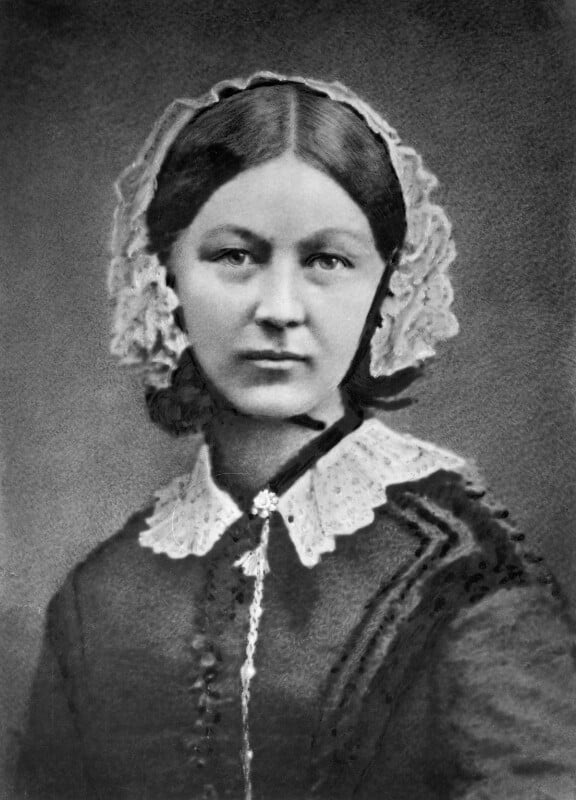
Florence Nightingale
 Italy
ItalyAlso known as: Lady with the Lamp, Founder of Modern Nursing
Birthday
May 12, 1820
Birth Sign
Taurus
Birthplace
Florence, Italy
Age
Died at 90
Height
5 ft 4 in (163 cm)
About
Florence Nightingale was an English social reformer, statistician, and the founder of modern nursing, remembered as one of the most influential women of the Victorian age. She rose to fame during the Crimean War, when she led a team of nurses caring for wounded British soldiers in appalling conditions. By insisting on sanitation, ventilation, clean water, and proper hygiene, she helped dramatically reduce the death rate from infection and disease, and her nightly rounds among the patients earned her the enduring nickname the Lady with the Lamp. Her significance, however, reaches well beyond that wartime legend. Nightingale was a pioneering thinker who used careful data collection and statistics to argue for public-health reform, becoming an early innovator in the visual presentation of information and a respected statistician in her own right. After the war she established a professional training school for nurses, transforming nursing from a lowly, disreputable occupation into a skilled and respected vocation for women, and she wrote influential works that shaped hospital design and care for generations. Though she spent much of her later life in ill health, she continued to advise on health policy. Honored across the world, Florence Nightingale is celebrated as the founder of her profession and a trailblazer in public health and statistics.
Early Life & Background
Florence Nightingale grew up at her family's estates, Lea Hurst in Derbyshire and Embley Park in Hampshire. Her father, a Unitarian and a liberal thinker, provided her with a rigorous classical education, teaching her mathematics, history, philosophy, and several modern languages including Italian, French, German, Greek, and Latin. From a young age, she was intensely interested in social issues and felt a divine calling to serve the sick and poor, which she recorded in her diary as a call from God in February 1837. She defied her family's expectations that she marry a suitable gentleman, instead insisting on training as a nurse, a profession then considered disreputable for a woman of her class. She visited hospitals across Europe, including the Lutheran religious community at Kaiserswerth, Germany, where she received three months of nursing training in 1851. A pivotal moment came in 1853 when she became the Superintendent of the Institution for the Care of Sick Gentlewomen in Distressed Circumstances in London, proving her administrative and nursing skills.
Career Growth
Nightingale's breakthrough came during the Crimean War (1853–1856). In October 1854, after reports of horrific conditions for wounded British soldiers, Secretary at War Sidney Herbert asked her to lead a party of 38 nurses to the British military hospital at Scutari (modern-day Üsküdar, Turkey). She arrived in November 1854 to find the hospital overflowing, filthy, and lacking basic supplies and sanitation. She and her team organized the wards, cleaned the facilities, procured supplies, and established laundries and kitchens. Her insistence on hygiene and sanitation dramatically reduced the hospital's mortality rate from 42% to 2% in just six months. Her nightly rounds checking on the wounded soldiers earned her the enduring nickname The Lady with the Lamp.
After the war, in 1860, she founded the Nightingale Training School for Nurses at St. Thomas' Hospital in London, the first secular nursing school in the world, which professionalized nursing. She also became a pioneering statistician, using coxcombs (polar area diagrams) to visually demonstrate that most soldier deaths were from preventable diseases, not battle wounds. Her 1858 report, Notes on Matters Affecting the Health, Efficiency, and Hospital Administration of the British Army, led to the establishment of the Royal Commission on the Health of the Army. She published over 200 books, reports, and pamphlets, including the seminal 1859 book Notes on Nursing: What It Is and What It Is Not, which remains a classic text.
Career Timeline
Public Image & Style
The Lady with the Lamp image of a calm, compassionate woman in a dark dress and white cap, carrying a lamp, was heavily romanticized and sanitized by Victorian media. Modern scholarship emphasizes her as a tough, demanding, data-driven reformer and a brilliant administrator. International Nurses Day is celebrated on her birthday, May 12. The Nightingale Pledge is recited at nursing graduations in the US and Canada. Her official social media accounts, run by the Florence Nightingale Foundation and Museum, maintain a respectful, educational, and inspirational tone.
Fame & Fandom (iFAMOUS Rankings)
Florence Nightingale commands a global presence that transcends the metrics typically applied to living entertainers, anchored instead by her foundational role in modern medicine and enduring status as a Victorian icon. As of August 2026, iFANN has evaluated her profile within its comprehensive database; however, she currently holds no placement in the published Global Top 1,000 or any Top-100 scope list. The absence of a specific rank reflects her unique position as a historical figure whose fame is institutional rather than competitive within contemporary pop culture charts. Her admirers do not coalesce around a formal fandom name, nor do they operate organized digital communities or fan clubs. Instead, her legacy is sustained through professional nursing associations, academic institutions, and charitable foundations that uphold her principles. Commemorative rituals replace fan campaigns; the annual service at Westminster Abbey and the global observance of International Nurses Day on May 12 serve as structured tributes attended by dignitaries and students alike. Recent archival acquisitions, such as the collection of roughly 350 items secured by Texas Woman's University in May 2026, further demonstrate that interest in her life remains robust within scholarly and medical circles. While there are no billboard displays or subway advertisements driven by a fanbase, her influence permeates the profession she helped create, ensuring her name remains synonymous with nursing excellence without the need for active promotion.
Interesting Facts and Legends
Florence Nightingale was a pioneering statistician and became the first female member of the Royal Statistical Society in 1858. She invented the polar area diagram, also known as the coxcomb, to visualize mortality data effectively. Fluent in six languages including English, French, German, Italian, Greek, and Latin, she utilized her linguistic skills for extensive correspondence. For much of her life, she adhered to a vegetarian diet. She owned a pet owl named Athena, which she reportedly rescued from the Parthenon in Athens. Nightingale suffered from Crimean fever, likely brucellosis, leaving her bedridden for the final 40 years of her life, yet she continued to work prolifically from her bedside. In 1907, she became the first woman to receive the Order of Merit. Legends surrounding her career often focus on the title "The Lady with the Lamp," an image derived from reports of soldiers seeing her walking the wards at night with a lamp during the Crimean War. While historians debate the exact frequency of these rounds, the story remains a defining visual symbol of her compassion. Another enduring narrative involves her use of data visualization to force medical reform; she presented bold rose-shaped charts to the British government to prove that most soldier deaths resulted from preventable diseases rather than battle wounds. This documented application of science successfully drove sweeping changes in military hygiene. Her essay Cassandra, written in 1852, argued for women's personal freedom and is now frequently cited as a foundational feminist text.
Notable Quotes
“I attribute my success to this: I never gave or took any excuse.”
“The very first requirement in a hospital is that it should do the sick no harm.”
“How very little can be done under the spirit of fear.”
“Were there none who were discontented with what they have, the world would never reach anything better.”
“I think one's feelings waste themselves in words; they ought all to be distilled into actions which bring results.”
Family & Personal Life
Florence Nightingale was born to a wealthy and well-connected British family. Her father, William Edward Nightingale, was a wealthy landowner and a Unitarian. Her mother, Frances Fanny Smith, came from a prominent abolitionist family. She had one older sister, Frances Parthenope, who was named after the ancient name for Naples. The family lived at Lea Hurst in Derbyshire and Embley Park in Hampshire. Nightingale never married and had no children. She had a pet owl named Athena, which she rescued from the Parthenon in Athens and kept as a companion.
Notable Connections
Nightingale worked closely with Sidney Herbert, the Secretary at War who appointed her to lead the nurses to the Crimea. She maintained a close friendship with Queen Victoria, who consulted her on military and health reforms. She collaborated with pioneering statistician William Farr on data analysis. Sanitation expert Dr. John Sutherland worked with her on army and Indian health reforms. Mary Clarke (Mohl), a close friend and intellectual confidante, ran a Parisian salon.
Relationships & Dating History
Florence Nightingale had no public romantic relationships, marriages, or long-term partnerships. She was famously dedicated to her vocation and actively rejected several marriage proposals from wealthy, eligible suitors because she believed marriage would prevent her from pursuing her calling to nursing and reform. The most well-documented proposal was from Richard Monckton Milnes (later Lord Houghton), a poet and politician. She knew him for years and considered his proposal seriously, but after a long internal struggle, she rejected him in 1851, writing in her diary that he was intellectually superior but that her moral, active nature required a different path. She never had any known romantic partners after this. She dedicated her life entirely to her work and her faith. As of her death in 1910, she was never married and had no known romantic partners.
- RumouredRichard Monckton Milnes1840 - 1851Proposed marriage; she rejected him in 1851 to pursue her calling.
Death & Aftermath
Died
August 13, 1910 (aged 90)
Death Place
London, England, United Kingdom
Cause of Death
Complications from brucellosis (Malta fever)
Florence Nightingale spent her final decades in seclusion at her London residence, bedridden by a chronic condition that had plagued her health since the Crimean War and effectively ended her public appearances after the mid-1890s. The passing of the national icon prompted immediate tributes from institutions and officials globally, marking the end of an era for British social reform while her books saw renewed distribution. A major state funeral followed on August 17, 1910, at St. Peter's Church in East Wellow, where Queen Alexandra and high-ranking military officials joined thousands of mourners lining the route to pay their respects before her burial in the church cemetery. Posthumous recognition continued through the establishment of the Florence Nightingale Medal by the International Committee of the Red Cross in 1912 and the enduring presence of hospitals and nursing schools bearing her name, while her sister Parthenope managed her papers and assets to ensure her works remained accessible to future generations.
Net Worth (Estate Value)
Florence Nightingale was not a commercial figure. She was a wealthy woman from a landowning family. Her father left her a substantial inheritance, which included an annual allowance of £500 (equivalent to roughly £70,000 today). She used her personal wealth to fund the Nightingale School and other reforms. She never earned a salary for her work. Upon her death in 1910, her estate was valued for probate at £36,849 (approximately £4.6 million today). Her legacy is managed by the Florence Nightingale Museum and the Florence Nightingale Foundation, a registered charity (UK charity number 229820). Revenue for the estate comes from museum ticket sales, licensing of her image and name, royalties from her published works, and donations. As of 2022, the foundation reported total income of approximately £1.8 million.
Awards Won (2)
Florence Nightingale was awarded the Royal Red Cross (RRC) by Queen Victoria in 1883 for her service in the Crimean War. In 1907, she became the first woman to receive the Order of Merit (OM) from King Edward VII. The International Committee of the Red Cross established the Florence Nightingale Medal in 1912, the highest international distinction for a nurse.
1907 · Civilian honor
Lifetime service
1883 · Military nursing
Crimean War service
Known For
Crimean War nursing at Scutari
1854 · Lead nurse and reformer
Notes on Nursing: What It Is and What It Is Not
1859 · Author
Nightingale Training School for Nurses
1860 · Founder
Statistical reforms in military health
1858 · Statistician and advocate
Keywords
Quick Facts
- Profession
- nurse, statistician, writer
- Born
- +1820-05-12
- Birthplace
- Florence
- Died
- +1910-08-13
- Death Place
- London
- Gender
- Female
- Birth Sign
- Taurus
Personal Details
- Full Name
- Florence Nightingale
- Height
- 5 ft 4 in (163 cm)
- Education
- Homeschooled by father; nursing training at Kaiserswerth, Germany (1851)
Frequently Asked Questions
Why is Florence Nightingale called the Lady with the Lamp?
How did Florence Nightingale change nursing?
Did Florence Nightingale ever get married?
What did Florence Nightingale die of?
What was Florence Nightingale's net worth?
Social Media
Similar People
Join the community
fans discussing