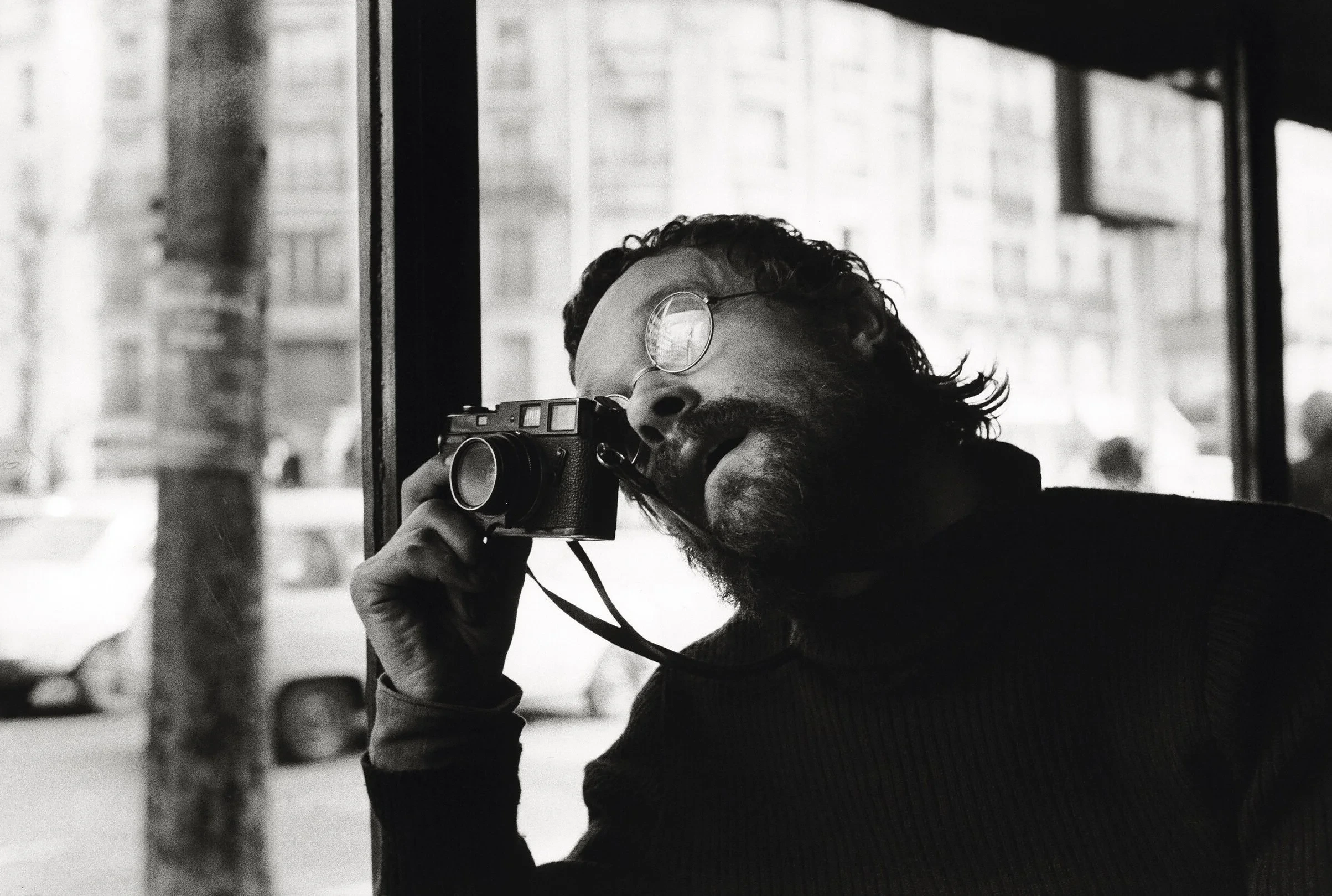
Josef Koudelka
 Czechia
Also known as: Joseph Koudelka
Birthday
January 10, 1938
Birth Sign
Capricorn
Birthplace
Boskovice, Moravia, Czechoslovakia
Age
88 years old
About
Josef Koudelka is a Czech-French photographer whose stark black-and-white images have defined documentary photography for over half a century. He was born on January 10, 1938, in Boskovice, Moravia, then part of Czechoslovakia. Koudelka is a member of the prestigious Magnum Photos agency and has won the Prix Nadar, the Grand Prix National de la Photographie, the Grand Prix Henri Cartier-Bresson, and the Hasselblad Foundation International Award. His work has been exhibited at the Museum of Modern Art in New York, the Hayward Gallery in London, and the Palais de Tokyo in Paris.
Today Koudelka remains active, with a major exhibition, "Ruins," opening at the Prague Museum of Decorative Arts in late 2025 and running into 2026, alongside the publication of his fifty years of notebooks by Aperture. His photographs are valued for their raw emotional power and historical significance, and he is regarded as one of the great humanist photographers of the 20th century.
Early Life & Background
Koudelka grew up in Moravia during a time of profound political upheaval, experiencing the dissolution of the Czechoslovak state and the rise of communist rule. He trained as an aeronautical engineer and worked in Prague and Bratislava in the late 1950s and into the 1960s. While engineering paid the bills, photography was his true calling. He began by shooting stage productions for theater companies, a practice that honed his eye for composition and light.
In the early 1960s, he turned his camera toward the Roma people of Czechoslovakia. Using an Exacta camera with a 25-millimeter Flektogon f4 lens, he photographed their lives indoors, often at a shutter speed of 1/30th of a second. This project, which would become his first major publication, Gypsies, was born out of a deep empathy for a marginalized community. By 1967, his Roma photographs were exhibited, bringing him his first taste of public recognition.
Career Growth
The Soviet invasion of Prague in August 1968 changed everything. Koudelka photographed the invasion and its aftermath under the pseudonym "Josef K." to protect himself from the communist regime. His images were smuggled out of Czechoslovakia and published internationally by Magnum Photos, bringing him immediate worldwide attention.
In 1970, he left Czechoslovakia for political asylum and joined Magnum Photos, becoming stateless for nearly two decades. His first major book, Gypsies, was published in 1975. Over the following decades, he won the Prix Nadar in 1978, the Grand Prix National de la Photographie in 1989, the Grand Prix Henri Cartier-Bresson in 1991, and the Hasselblad Foundation International Award in 1992.
In his later career, Koudelka turned to panoramic landscapes, documenting the impact of human activity on the environment. His ongoing project Wall examines the Israeli West Bank barrier. He also produced Industry, a series on industrial landscapes, and worked on the documentary Shooting Holy Land. In 2026, the Prague Museum of Decorative Arts hosted his exhibition "Ruins," and Aperture published Josef Koudelka: A Vagabond's Breviary, a collection of fifty years of his notebooks.
Career Timeline
Public Image & Style
Koudelka is known for his raw, gritty black-and-white photography that captures both hope and despair. His style is singular and evocative, blending documentary realism with a poetic sensibility. He is often described as a "vagabond" photographer, living a nomadic life dedicated entirely to his craft. His work has been praised for its profound human emotion and historical significance, and he is considered one of the great representatives of humanistic photography.
Fame & Fandom (iFAMOUS Rankings)
Josef Koudelka commands a global audience defined by reverence rather than adoration, drawing viewers from the rarefied circles of art institutions and dedicated photography enthusiasts. His influence permeates museums like the Museum of Modern Art and galleries worldwide, yet he remains absent from the commercial celebrity charts that track pop culture dominance. iFANN has evaluated his profile, but he currently holds no placement in the published Global Top 1,000 rankings or any scope-based list. The absence of a numerical rank reflects his status as a reclusive master whose fame is measured in critical acclaim and historical impact rather than viral metrics or mass-market consumption. There is no formal fandom name attached to his legacy; the community surrounding his work consists of photographers, historians, and critics who study his technique and philosophy rather than an organized group engaging in celebrity worship. Unlike modern icons who generate fan rituals or birthday campaigns, Koudelka's public interaction is strictly through his exhibitions and publications. His audience engages with his life story, the flight from Prague in 1968 and his years as a stateless wanderer, as part of the artistic narrative rather than as a celebrity spectacle. This lack of a branded fanbase underscores the singular nature of his career, where the work speaks louder than the personality.
Interesting Facts and Legends
Before dedicating himself to photography, Josef Koudelka trained as an aeronautical engineer. He spent seventeen years as a stateless person before finally becoming a French citizen in 1987. His early photographs of the Roma people were captured using an Exacta camera paired with a 25-millimeter Flektogon f4 lens, often at a shutter speed of just 1/30th of a second. Koudelka has described his existence as one of perpetual exile, famously stating that home does not exist. In 2026, his personal diaries were published and described by curator Tomáš Pospěch as a "cookbook" of classic photography. A defining story of his life centers on his flight from Czechoslovakia during the Soviet-led invasion of Prague in 1968. After documenting the occupation while it unfolded, he defected to France in 1970, leaving behind his family and citizenship to join Magnum Photos. This act symbolizes the ultimate commitment to artistic truth over safety. Another pillar of his lore involves his deep affinity for the Roma community, whom he photographed extensively after sharing their experience of marginalization. He travels the world carrying little more than a camera and film, a discipline that has become a touchstone for aspiring photographers. These verified biographical events form the mythology of a man whose life story is as compelling as his imagery.
Notable Quotes
“Home doesn't exist.”
“Ruins are not the past, but the future.”
“When I was in Prague, I photographed the Gypsies with an Exacta camera and a 25-millimeter Flektogon f4 lens. I shot inside mostly at a 30th of a second.”
Family & Personal Life
Details about Koudelka's family are scarce, as he has kept his personal life intensely private. He grew up in Moravia during a turbulent period in Czechoslovak history, but little is known about his parents or siblings. He has spent most of his life traveling with minimal possessions, and no information is available about a spouse or children.
Notable Connections
Relationships & Dating History
Publicly available information about Koudelka's romantic relationships is extremely limited. He has maintained a highly private personal life, with his public identity centered almost entirely on his photographic work. As of 2026, there is no publicly reported information about a current partner, and he is not documented as being married, divorced, or widowed in the available sources. His relationship status should be characterized as private and undisclosed.
Salary, Net Worth In 2026
$10 Million
iFANN Editorial Team estimate
iFANN currently estimates Josef Koudelka's net worth at $10 Million as of 2026. His financial standing derives primarily from gallery sales, book publications, and major exhibitions. His catalog includes significant volumes such as Gypsies (1975), Exiles, Wall, and Industry. In 2026, Aperture released his diaries, adding another layer to his published works. Koudelka's photographs are held in major institutions around the globe, and his prints command substantial prices at auction houses.
Awards Won (4)
Koudelka has won several of photography's most prestigious honors. He received the Prix Nadar in 1978, the Grand Prix National de la Photographie in 1989, the Grand Prix Henri Cartier-Bresson in 1991, and the Hasselblad Foundation International Award in 1992.
1992 · Photography
Body of work
1991 · Photography
Body of work
Known For
Gypsies
1975 · Photographer
Exiles
1988 · Photographer
Wall
2013 · Photographer
Industry
2017 · Photographer
Keywords
Sources
Quick Facts
- Profession
- photographer, photojournalist
- Born
- January 10, 1938
- Birthplace
- Boskovice, Moravia, Czechoslovakia
- Gender
- Male
- Birth Sign
- Capricorn
- Nationality
- Czech-French
Personal Details
- Education
- Aeronautical engineering
Frequently Asked Questions
What is Josef Koudelka famous for?
Is Josef Koudelka still alive?
What camera does Josef Koudelka use?
Where does Josef Koudelka live?
What awards has Josef Koudelka won?
Social Media
Similar People
Join the community
fans discussing