Sebastião Salgado
 Brazil
Also known as: Sebastião Ribeiro Salgado, Sebasuchan Sarugado, Sebastiao Salgado, Sebastio Salgado
Birthday
February 8, 1944
Birth Sign
Aquarius
Birthplace
Aimorés, Brazil
Age
Died at 81
Height
6 ft 0 in (183 cm)
About
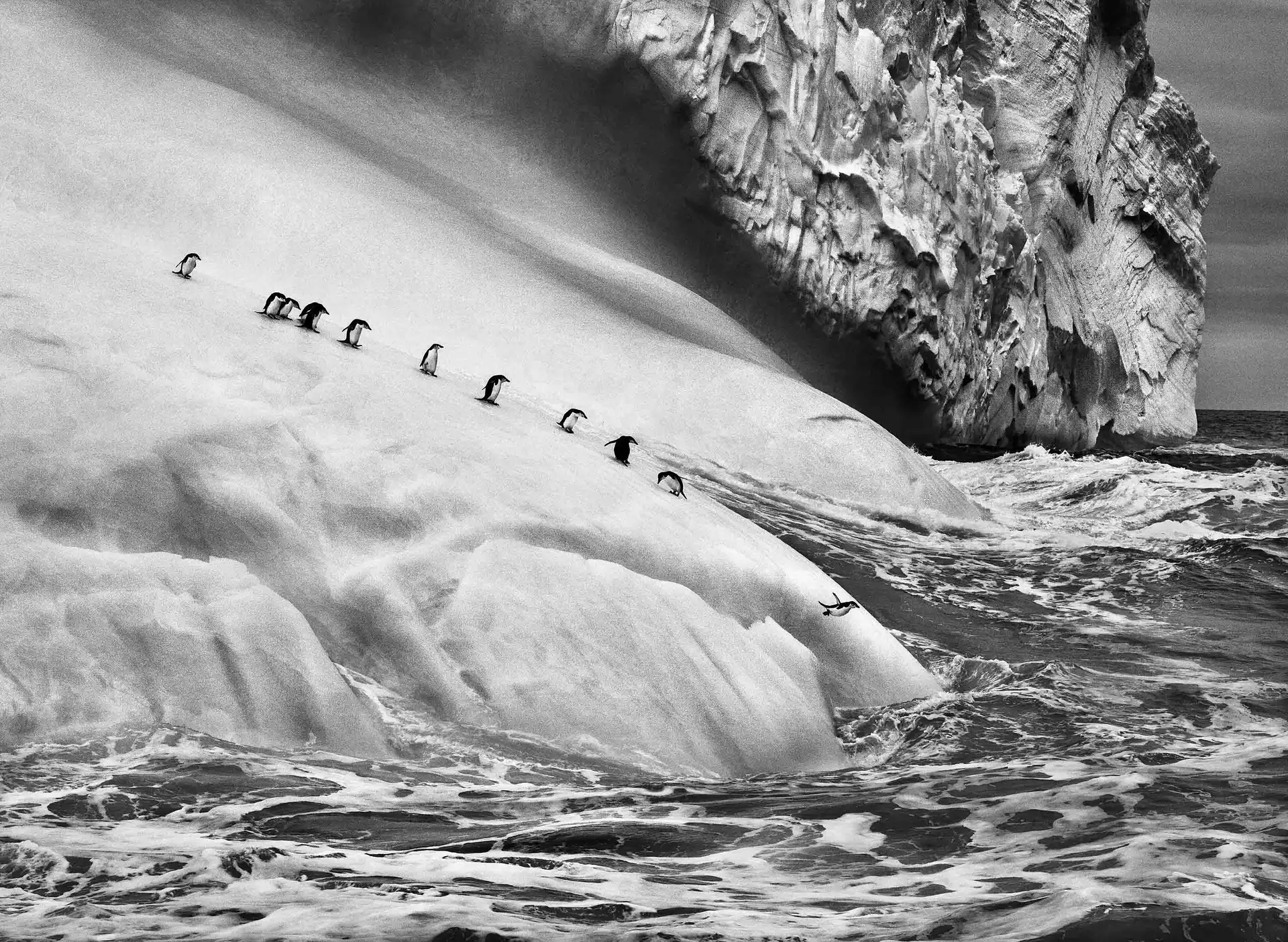
Sebastião Salgado was a preeminent Brazilian social documentary photographer whose career redefined the visual documentation of human suffering, labor, and the natural world. Born in Aimorés, Minas Gerais, he initially pursued economics before pivoting to photography in the early 1970s. His work is characterized by monumental black-and-white images that imbue subjects with dignity, ranging from the brutal conditions of gold miners in Serra Pelada to the displacement of refugees during the Rwandan genocide. He served as a UNICEF Goodwill Ambassador and held membership in the Académie des Beaux-Arts at the Institut de France. Salgado passed away on May 23, 2025, in Neuilly-sur-Seine, France, at the age of 81 due to leukemia.
His photographic output spans over four decades, covering more than 120 countries. Salgado's most famous works include Workers: An Archaeology of the Industrial Age and Migrations: Humanity in Danger, which documented manual laborers and displaced people across the globe. Alongside his wife Lélia Wanick Salgado, he founded the Araça Environmental Institute and launched the Genesis project, planting over 2.7 million native trees to restore a barren cattle ranch into a thriving rainforest sanctuary. This shift from documenting destruction to active restoration marked a pivotal chapter in his life and artistic evolution.
Early Life & Background
Sebastião Salgado was born on February 8, 1944, in Aimorés, a small town in the state of Minas Gerais, Brazil. He grew up on a coffee farm, an upbringing that instilled in him a deep connection to the land, which would later define his environmental activism. In his youth, he showed no immediate inclination toward art; instead, he followed a path of academic rigor. He attended the Federal University of Rio de Janeiro, where he earned a degree in economics. During his university years, he also studied music and played the piano, developing an appreciation for rhythm and structure that some critics argue influenced the composition of his photographs.
His first steps toward photography were accidental yet transformative. In 1973, while traveling through Europe with his family, he began taking photos of the landscapes and people he encountered. Encouraged by friends and recognizing a unique perspective, he decided to abandon his economic career. He moved to Paris to study French literature but quickly realized his true calling lay behind the camera. By 1974, he had joined Magnum Photos, the prestigious cooperative agency of photographers, marking his official entry into professional photojournalism. Before this breakthrough, he worked briefly as an economist for the World Bank, a role he left to pursue full-time photography.
Career Growth
Salgado's career evolved from standard photojournalism to long-term, immersive documentary projects that spanned decades. After joining Magnum Photos in 1974, he covered conflicts and humanitarian crises globally, including the Biafran famine and the civil war in El Salvador. These early assignments established his reputation for capturing the raw reality of conflict zones. The defining moment of his career occurred in 1986 when he entered the massive open-pit gold mine at Serra Pelada in Brazil. Spending months documenting miners climbing ladders made of vines and mud under brutal conditions, he produced a series that became one of the most famous photojournalistic documents of the 20th century. This project directly led him to leave the fast-paced world of news photography to focus on long-term books.
In 1993, he published Workers: An Archaeology of the Industrial Age, a five-year project traveling to 30 countries to document manual laborers. The book showcased the dignity of labor across the globe, from steel mills in Russia to textile factories in India. Following this, he embarked on Migrations: Humanity in Danger and Exodus (1994–1999), documenting the displacement of millions of people during the refugee crisis in Rwanda, Somalia, and Chechnya. These works were exhibited worldwide and sparked intense public discourse on human rights. In 1998, disheartened by ecological devastation, Salgado and his wife purchased a 600-hectare cattle ranch in Brazil. They initiated the Genesis Project, planting 2.7 million native trees by hand to transform the barren land into a forest sanctuary. Salgado continued to produce major exhibitions, including Gold (focusing on the Sierra Nevada region), Africa (2011), and Americas (2014). His work remained commercially successful, with prints sold at major auction houses like Christie's and Sotheby's.
Career Timeline
Public Image & Style
Salgado's public persona is defined by his monumental black-and-white aesthetic, which treats subjects with classical sculpture-like grandeur. He is known for his intense dedication to long-term projects, often spending years immersed in the lives of his subjects. His presence in the media is characterized by a quiet dignity and a strong commitment to humanitarian causes. Unlike many celebrity photographers, he rarely seeks the spotlight for himself, preferring to let his images speak. His fashion sense is understated, reflecting his focus on the subject matter rather than personal style. He is widely respected for his integrity and his refusal to compromise his vision for commercial gain.
Fame & Fandom (iFAMOUS Rankings)
Sebastião Salgado never held a placement in the iFANN Global Top 1,000 or any Top-100 scope list as of October 2026. The iFANN Global Fame Engine evaluated his legacy but found no current ranking for this visionary photographer. While he lacks a formal fandom name like those attached to pop icons, his following remains deeply distinct among art collectors, museum-goers, and environmentalists who have followed his work for decades. His audience does not gather for birthday billboards or chart pushes; instead, they engage through the profound impact of his visual documentation on global consciousness. This community has sustained a quiet reverence for his output, particularly after his passing in May 2025, when exhibitions in Paris and Italy drew crowds seeking to witness the human stories he captured. The response to his death was characterized by tributes rather than fan campaigns, with social media followers commemorating what would have been his 82nd birthday and auction houses hosting events titled "A Life's Voyage." Salgado interacted with this devoted group almost exclusively through his photography books and large-scale touring exhibitions, which brought the raw realities of human existence to audiences worldwide. His influence is measured not by streaming numbers but by the tangible shift in how society perceives refugees, laborers, and the natural world. The Genesis Project, where he transformed barren land into a thriving forest sanctuary, stands as his most significant gift to this audience, demonstrating that art can inspire direct action.
Interesting Facts and Legends
Before becoming a photographer, Salgado was a serious pianist and studied music theory. He holds a degree in economics from the Federal University of Rio de Janeiro and worked as an economist for the World Bank for a brief period before quitting to pursue photography full-time. He survived a severe case of malaria in 2010, which he believed contributed to his later leukemia diagnosis. He personally planted thousands of trees in the Araça forest, often working alongside local communities. A story fans still retell involves his heroic endurance; despite developing leukemia after contracting malaria in 2010, he refused to stop working, continuing to capture the dignity of marginalized people until his death. His distinctive black-and-white style imbues his subjects with a profound sense of dignity and resilience, even in the face of immense hardship.
Notable Quotes
“Photography is a way of feeling, of touching, of loving. What you have caught on film is captured forever... It remembers little things, long after you have forgotten everything.”
“I am not a journalist. I am a storyteller.”
“The forest is the only thing that can save us.”
Family & Personal Life
Sebastião Salgado was married to Lélia Wanick Salgado (née Lélia Wanick) from 1976 until his death in 2025. Their relationship was both personal and professional, serving as the backbone of his later career. Lélia, who had a background in economics and management, became Salgado's manager, business partner, and co-founder of the Araça Environmental Institute. She managed the logistics of his expeditions and the commercial aspects of his work, allowing him to focus entirely on photography. Together, they raised two children: daughter Juliana Salgado and son José Sebastião Salgado Neto. There are no records of prior marriages or romantic relationships before Lélia; she was his sole lifelong partner. The couple met in Paris in the mid-1970s, and their shared vision for environmental conservation brought them closer than ever.
Notable Connections
Relationships & Dating History
Sebastião Salgado was married to Lélia Wanick Salgado (née Lélia Wanick) from 1976 until his death in 2025. Their relationship was both personal and professional, serving as the backbone of his later career. The couple met in Paris in the mid-1970s. Lélia, who had a background in economics and management, became Salgado's manager, business partner, and co-founder of the Araça Environmental Institute. She managed the logistics of his expeditions and the commercial aspects of his work, allowing him to focus entirely on photography. Together, they raised two children: daughter Juliana Salgado and son José Sebastião Salgado Neto. There are no records of prior marriages or romantic relationships before Lélia; she was his sole lifelong partner. As of his death in 2025, Salgado was widowed. No new relationships were reported posthumously.
- MarriedLélia Wanick Salgado1976 - 2025Met in Paris; she became his manager and co-founder of the Araça Environmental Institute.
Death & Aftermath
Died
May 23, 2025 (aged 81)
Death Place
Neuilly-sur-Seine, France
Cause of Death
Leukemia
On May 23, 2025, Sebastião Salgado passed away in Neuilly-sur-Seine, France, at the age of 81. The cause of death was leukemia, a condition that developed following a severe bout of malaria he contracted in 2010 while working in Africa. In the weeks leading up to his death, he had been preparing for a final public engagement in London, though colleagues noted his health issues were not immediately critical enough to suggest such an abrupt end. His passing was described as a huge surprise by those close to him, particularly given his resilience and continued work until very recently.
The global art community responded with immediate tributes rather than fan vigils. Exhibitions dedicated to his work were extended or created specifically to honor him, including a free photo exhibition at Paris City Hall that ran longer than planned. Major institutions like Peter Fetterman Gallery and Sundaram Tagore continued to manage sales of his prints, while posthumous projects were announced. A major exhibition titled Extinction: Renewal, Art of a Living Planet was scheduled for September 2026 at the Eden Project, and another retrospective opened in Bassano, Italy, in June 2026. El País published his final thoughts in September 2025, reflecting on his philosophy regarding nature and humanity.
No public funeral was held, with family arrangements kept private. The Araça Environmental Institute, co-founded by Salgado and his wife Lélia Wanick Salgado, continues to operate and maintain the forest sanctuary they created. Revenue from the estate, managed by the institute and his widow, funds ongoing conservation efforts. The legacy of his images remains active in museums worldwide, with auction houses hosting events titled "A Life's Voyage" to celebrate his contributions to visual storytelling.
Net Worth (Estate Value)
$50 Million
iFANN Editorial Team estimate
iFANN currently estimates Sebastião Salgado's estate value at approximately $50 million as of 2026. Following his death in May 2025, the estate's worth is derived from a combination of unsold print sales, book royalties, and the assets of the Araça Environmental Institute. Source analysis indicates that limited edition prints sell between $15,000 and $50,000 each, with demand increasing posthumously. Book royalties from best-selling titles like Workers and Genesis provide continuous revenue. Exhibition fees for touring retrospectives, such as Salgado: A Human Odyssey, contribute significantly to the estate's income. The estate is managed by his widow, Lélia Wanick Salgado, and the Araça Environmental Institute, with revenue funding ongoing conservation efforts at the forest sanctuary. Recent auction trends show a 15% increase in demand for his work, particularly prints from the Serra Pelada and Genesis series.
Awards Won (10)
Sebastião Salgado received numerous accolades throughout his career, including the W. Eugene Smith Memorial Fund Grant in 1982, membership in the Académie des Beaux-Arts in 2000, and the Princess of Asturias Awards for Communication in 2001. He was awarded the Polaris Prize in 2002, an Honorary Doctorate from the University of São Paulo in 2004, and the Commandeur de la Légion d'honneur in 2006. In 2010, he received the UNESCO Peace Medal, followed by the National Humanities Medal in 2013. He was honored with the Royal Photographic Society Honorary Fellowship in 2015 and the MacArthur Fellowship in 2016. In 2019, he shared the Prince of Asturias Award for Concord with his wife Lélia for the Genesis Project.
1982 · Photojournalism
Ethiopian Famine Coverage
2000 · Membership
Académie des Beaux-Arts
Known For
Workers: An Archaeology of the Industrial Age
1993 · Photographer
Migrations: Humanity in Danger
1999 · Photographer
Genesis
2013 · Photographer
Serra Pelada
1986 · Photographer
Keywords
Sources
Quick Facts
- Profession
- photojournalist, photographer
- Born
- February 8, 1944
- Birthplace
- Aimorés, Brazil
- Died
- May 23, 2025
- Death Place
- Neuilly-sur-Seine, France
- Gender
- Male
- Spouse
- Lélia Wanick Salgado
- Birth Sign
- Aquarius
Personal Details
- Full Name
- Sebastião Ribeiro Salgado Júnior
- Height
- 6 ft 0 in (183 cm)
- Spouse
- Lélia Wanick Salgado
- Children
- Juliana Salgado · José Sebastião Salgado Neto
- Education
- Federal University of Rio de Janeiro (Economics degree)
Frequently Asked Questions
What caused Sebastião Salgado's death?
Who was Sebastião Salgado married to?
What is the Genesis Project?
How much is Sebastião Salgado's net worth?
What is Sebastião Salgado's most famous photograph?
Social Media
Similar People
Join the community
fans discussing