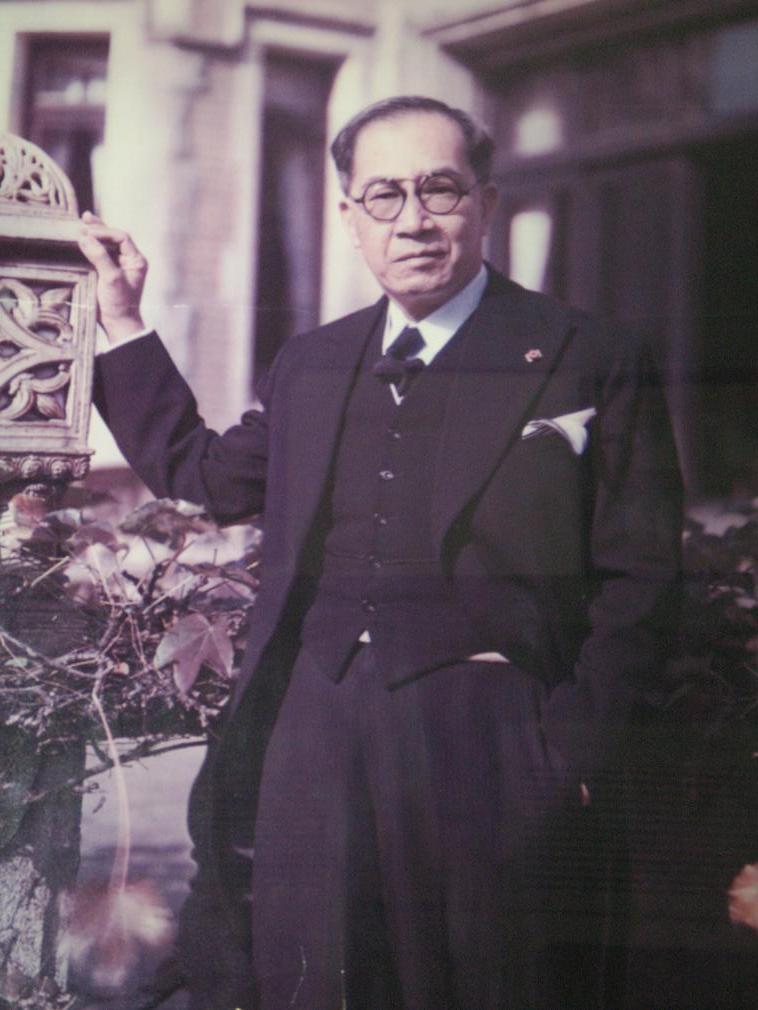
José Paciano Laurel
 Philippines
Birthday
+1891-03-09
Birth Sign
Pisces
Birthplace
Tanauan
Age
Died at 68
About
José Paciano Laurel y García (March 9, 1891 – November 6, 1959) was a Filipino politician, lawyer, and judge from Tanauan, Batangas. He served as president of the Second Philippine Republic from 1943 to 1945, a Japanese-sponsored government during World War II, and later became a senator and a key negotiator of the Laurel–Langley Agreement.
Fame & Fandom
José Paciano Laurel commands a legacy defined not by the adulation of a modern celebrity cult, but by the intense, enduring scrutiny of historians and political scholars who grapple with his complex role during World War II. Unlike entertainers who rely on fan clubs or viral moments, his audience consists of those studying the nuances of Philippine sovereignty and collaborationism. There is no formal name for this group, nor are there organized campaigns or rituals; instead, remembrance occurs through academic discourse and official government commemorations rather than street-side billboards or fan-driven hashtags. The narrative surrounding him remains a subject of fierce debate, preserved in archives and educational materials rather than in pop-culture folklore. Despite the somber nature of his historical footprint, his visibility remains significant within global databases tracking public attention across media coverage, search trends, and consumption signals worldwide. His standing reflects a steady presence in discussions regarding 20th-century Southeast Asian politics. According to the latest iFANN Global Fame Rankings, José Paciano Laurel holds a distinct position among historical figures. He is currently the 62nd most famous person in Philippines, a slight dip from the 61st spot in the previous cycle. Simultaneously, he ranks as the 49th most famous person from Philippines, maintaining his exact standing from the prior assessment. These placements underscore his continued relevance in national memory despite the passage of decades since his death.
Interesting Facts and Legends
José Paciano Laurel was born in Tanauan, Batangas, and served as the president of the Second Philippine Republic, a Japanese-sponsored government that existed from 1943 to 1945. Following the war, he successfully negotiated the Laurel–Langley Agreement, which helped restore economic ties between the Philippines and the United States. A central story often retold in historical circles involves his attempt to balance national sovereignty with the realities of military occupation during the Japanese invasion. While some view his actions as a patriotic sacrifice to save lives, others label them as collaborationism, creating a legacy of controversy that fuels ongoing academic study. His inauguration as president in 1943 stands as a defining moment in this narrative, marking the height of his political power under foreign rule. After the war, he faced trial but was eventually acquitted, allowing him to return to public service as a senator. The Presidential Car Museum and various news outlets have occasionally marked his birth anniversary on March 9, though these events lack the fervor of fan gatherings. No records exist of extraordinary crowd reactions or viral incidents associated with his personal appearances, as his influence remained firmly rooted in the political sphere rather than popular entertainment.
Death & Aftermath
Died
+1959-11-06 (aged 68)
Death Place
Manila
Cause of Death
Unknown
José Paciano Laurel passed away in Manila on November 6, 1959, at the age of sixty-eight. Consequently, there are no confirmed facts regarding the medical circumstances of his last days, nor are there any disputed accounts found in current data.
Public reaction to his death included commemorative activities focused on his legacy rather than immediate mass vigils typical of contemporary celebrity deaths. Tributes were primarily institutional, with government bodies and historical organizations acknowledging his role as a former president. Historical consensus places his resting place within the Philippines, though specific cemetery details remain unrecorded in the provided synthesis. The funeral arrangements are not detailed in the sources, leaving the nature of the service and exact burial location undocumented.
Posthumously, José P. Laurel's legacy has been preserved through various means including the establishment of scholarships and the naming of educational institutions like Jose P. Laurel High School. Statues dedicated to him have been maintained and cleaned by volunteers and educational institutions, with commemorative photos released by the Philippine News Agency for anniversaries. He has been honored in documentaries and films such as the trailer for "EL PRESIDENTE," which highlights his status as the third president of the Republic. The Laurel family remains politically active in the Philippines, with descendants like Francisco Tiu Laurel Jr. serving in high government office, indicating that the family continues to hold significant social and political influence.
Awards & Accolades
Keywords
Quick Facts
- Profession
- politician, judge
- Born
- +1891-03-09
- Birthplace
- Tanauan
- Died
- +1959-11-06
- Death Place
- Manila
- Gender
- Male
- Spouse
- Pacencia Laurel
- Birth Sign
- Pisces
Personal Details
- Spouse
- Pacencia Laurel
Join the community
fans discussing