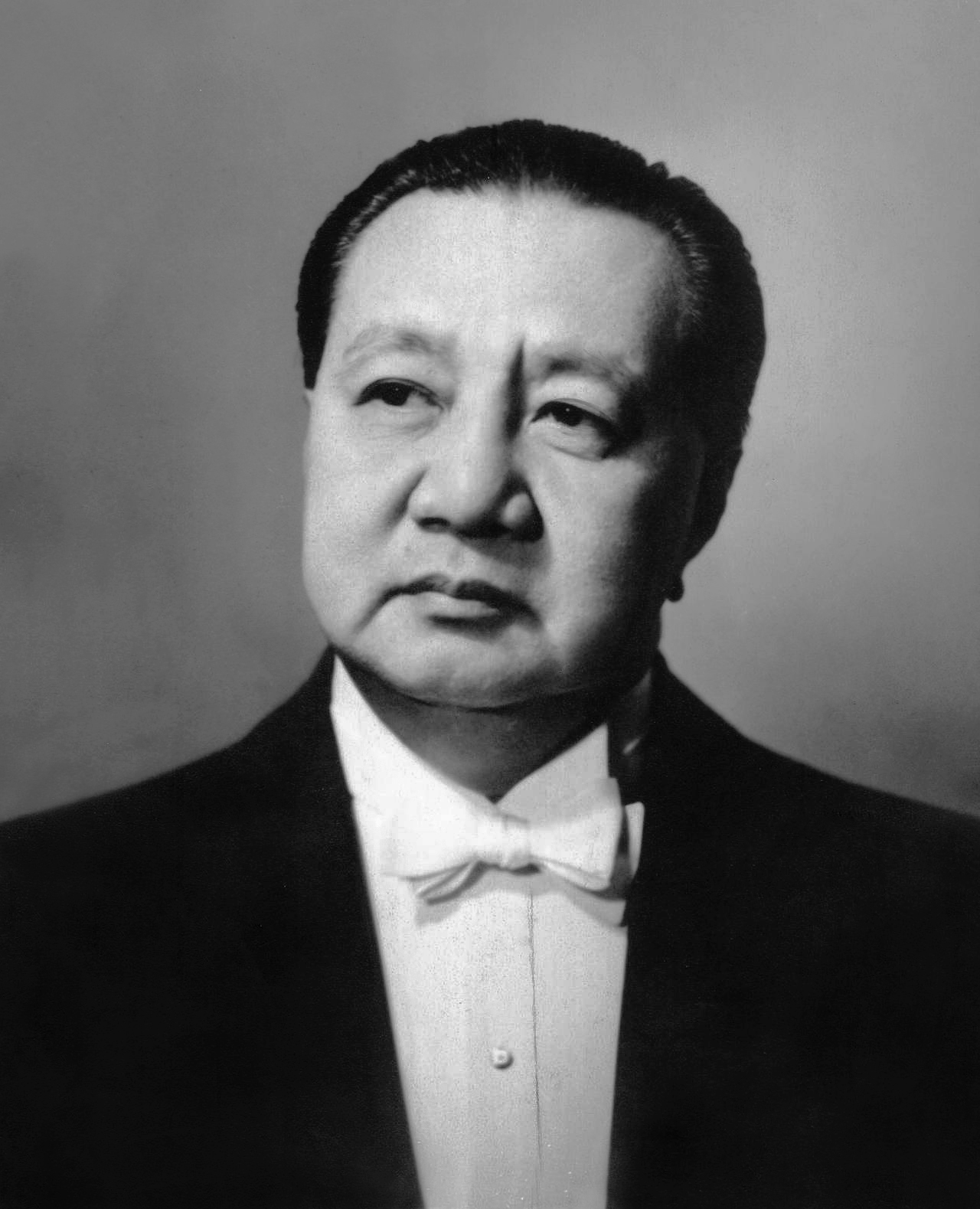
Elpidio Quirino
 Philippines
Birthday
+1890-11-16
Birth Sign
Scorpio
Birthplace
Vigan
Age
Died at 65
About
Elpidio Rivera Quirino, born on November 16, 1890, in Vigan, was a Filipino lawyer, diplomat, and politician who rose to become the sixth president of the Philippines. He served from 1948 to 1953, taking over the highest office after the sudden death of Manuel Roxas, under whom he had been vice president since 1946. Quirino's path to the presidency was paved by a long career in public service, starting as a representative for Ilocos Sur's first district from 1919 to 1922, then as a senator from 1925 to 1935. In 1934, he joined the Philippine Independence Commission that traveled to Washington, D.C., and helped secure the Tydings–McDuffie Act, which set the stage for Philippine independence. A year later, he was elected to the 1935 Constitutional Convention, where he contributed to drafting the charter for the Philippine Commonwealth. Under President Manuel L. Quezon, Quirino served as secretary of the interior and finance, gaining valuable executive experience. After World War II, Quirino won the vice presidency in the April 1946 election, becoming the last vice president of the Commonwealth and the first of the Third Republic. When Roxas died in 1948, Quirino assumed the presidency and then won a full term in 1949 under the Liberal Party, defeating former president José P. Laurel and fellow Liberalista José Avelino. His administration faced significant challenges, particularly the Hukbalahap insurgency, which terrorized towns and barrios across the countryside. Quirino's efforts to quell the rebellion included both military action and offers of amnesty, but the conflict dragged on. In 1953, he ran for re-election but lost decisively to Ramon Magsaysay. Quirino passed away on February 29, 1956, at the age of 65, leaving behind a legacy of rebuilding a war-torn nation and navigating the early years of Philippine independence.
Fame & Fandom
Elpidio Quirino remains a figure of enduring historical weight, currently standing as the 86th most famous person in Philippines, a slight dip from his previous position at number 84. His stature among those born in the archipelago is equally secure, holding steady at the 56th most famous person from Philippines. These placements within the iFANN Global Fame Rankings reflect a legacy that persists across generations, tracking how global attention to his life and presidency continues to resonate. While modern celebrity culture often revolves around fleeting trends, Quirino's fame is rooted in the stability of his political impact. Unlike contemporary icons who might boast an organized collective with a specific moniker, Quirino's admirers do not form a formal fandom with a distinct name. There are no fan clubs, birthday billboards, or ritualistic gatherings dedicated to him in the way one might see for a pop star or athlete. Instead, his audience consists of students, historians, and citizens who engage with his story as part of their national narrative. The absence of a branded fanbase does not diminish his significance; rather, it underscores that he is remembered as a statesman whose influence is woven into the fabric of Philippine history rather than driven by commercial popularity.
Interesting Facts and Legends
Elpidio Quirino remains a figure of deep historical interest, remembered for his long public service that began in 1919 and culminated in the presidency. His legacy is defined by complex moments of statecraft and personal resilience. One widely retold story involves his decision to pardon Japanese collaborators after World War II, an act he called an "Act of Faith" despite the occupation costing him his wife and three children. He reportedly stated he believed in the goodness of man, prioritizing national healing over personal vengeance. Another enduring narrative concerns his compassion toward White Russian refugees stranded on Tubabao Island, a local legend in Eastern Samar that highlights his humanitarian side beyond domestic politics. On the critical side, political folklore persists regarding allegations of extravagance, including stories about a "golden orinola" and a P5,000 bed, which critics used to symbolize a disconnect from the common people. He also made formal records establishing the Philippines' claim to the Spratly Islands, cementing his role in maritime lore. Fans who study his life often recall his simple preferences for ukoy and pinakbet as charming details that humanize the statesman. While he does not have a modern organized fanbase with a specific name, his reputation endures through academic discourse and state-sponsored memorials. According to iFANN Global Fame Rankings, he stands as the 86th most famous person in Philippines (holding steady from the previous cycle) and the 57th most famous person from Philippines (down from 56th last cycle).
Death & Aftermath
Died
+1956-02-29 (aged 65)
Death Place
Quezon City, Philippines
Cause of Death
Heart attack (myocardial infarction)
The presidential household announced the passing of Elpidio Quirino on February 29, 1956, confirming the death occurred at his private residence in Quezon City. The sixth President of the Philippines had retired from office three years earlier after losing the 1953 election to Ramon Magsaysay and spent those final years in quiet seclusion following a long career. Contemporary accounts describe the event as sudden, with no prolonged illness or hospitalization recorded prior to his demise at age sixty-five. While widely reported as a heart attack, the exact pathological details remain based on family statements rather than a public forensic inquest or coroner's ruling.
Public reaction centered on national mourning and formal state tributes befitting a former head of state, marked by moments of silence and the presence of high-ranking government officials. His funeral was a significant state event held shortly after his death, attended by then-President Ramon Magsaysay himself. Quirino received the highest honor of burial at the Libingan ng mga Bayani in Taguig, Metro Manila, a site reserved for distinguished military personnel and national heroes, cementing his status within the nation's pantheon. In the decades since, his legacy has been honored through various dedications that reflect his diplomatic efforts and statesmanship.
A memorial monument was unveiled in Tokyo's Hibiya Park in 2016 to commemorate his role in post-war reconciliation with Japan. More recently, a monument honoring his visionary leadership was dedicated at the Kiyoshi Osawa Compound within the New Bilibid Reservation Area in December 2024. His institutional contributions, particularly founding the Central Bank of the Philippines, continue to be recognized, while his personal compassion toward former enemies remains a subject of remembrance shared by family members like his granddaughter Cory Quirino.
Awards & Accolades
Keywords
Quick Facts
- Profession
- diplomat, lawyer, politician
- Born
- +1890-11-16
- Birthplace
- Vigan
- Died
- +1956-02-29
- Death Place
- Quezon City
- Gender
- Male
- Spouse
- Alicia Syquia-Quirino
- Birth Sign
- Scorpio
Personal Details
- Spouse
- Alicia Syquia-Quirino
Join the community
fans discussing