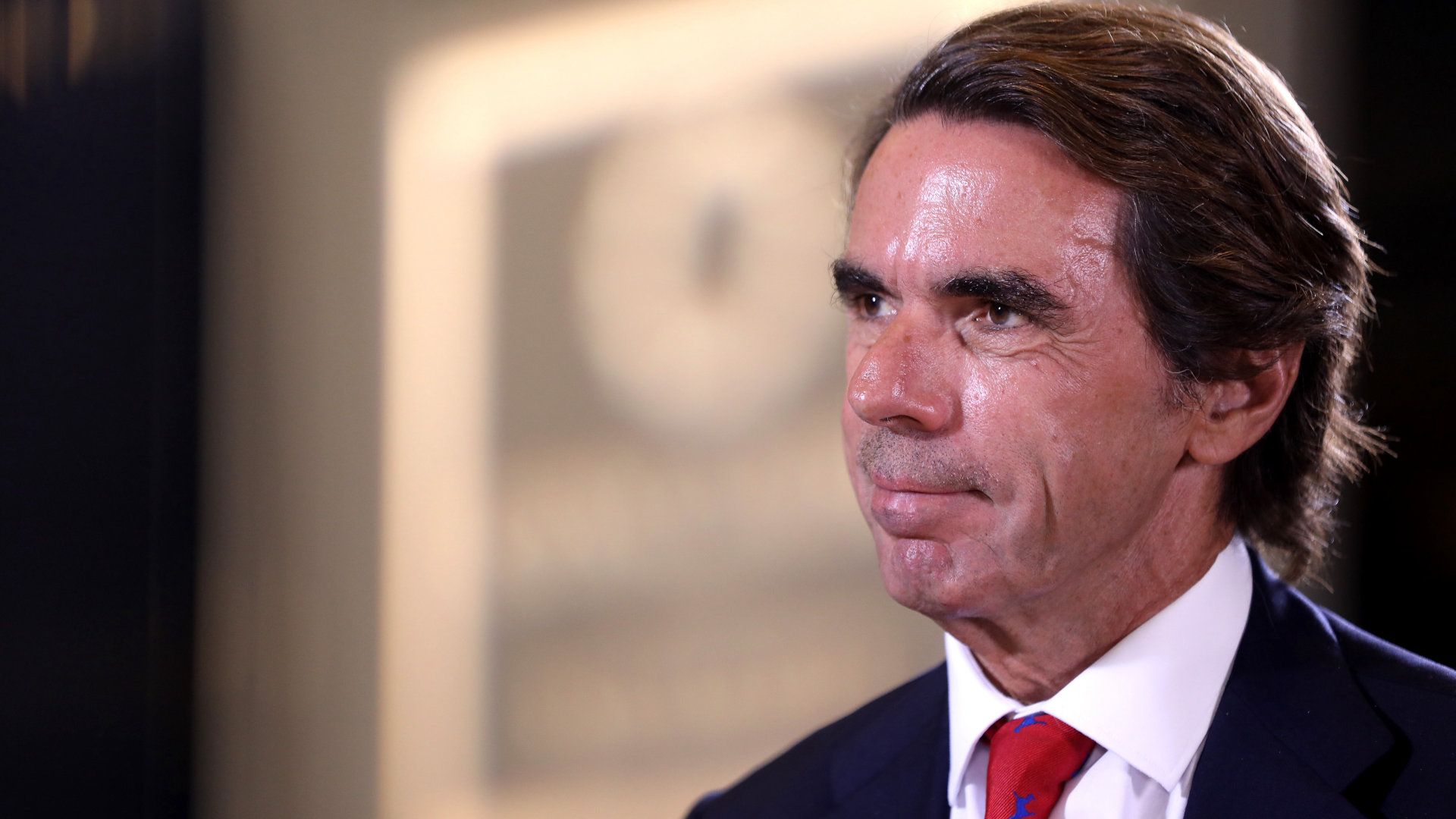
José María Aznar
 Spain
Spainpolitician•businessperson•inspector
Also known as: José María Alfredo Aznar López
Birthday
February 25, 1953
Birth Sign
Sagittarius
Birthplace
Madrid, Spain
Age
73 years old
Height
5 ft 10 in (1.78 m)
About
José María Aznar López is a Spanish lawyer and politician who served as the Prime Minister of Spain from 1996 to 2004. He led the conservative People's Party through two consecutive terms, overseeing significant economic reforms that modernized the country's infrastructure and facilitated its entry into the Eurozone. His tenure remains one of the most transformative periods in modern Spanish history, characterized by aggressive deregulation and privatization.
Beyond his time in government, Aznar has maintained a prominent role as a public intellectual and corporate board member. He frequently appears at international summits to discuss global tourism and European policy. As of 2026, he continues to offer sharp commentary on national sovereignty and migration issues, often drawing criticism for his staunch conservative stance on border security.
Early Life & Background
Born in Madrid on February 25, 1953, José María Aznar grew up in a family with deep roots in the Francoist regime; both his father and grandfather held positions within the fascist government of General Francisco Franco. This background shaped his early political identity before he eventually shifted toward conservative democracy. He studied law at the Complutense University of Madrid, where he began his career as an Inspector of the Finances of the State. His political awakening started during his university years when he joined a dissident Falangist student organization, marking the beginning of a lifelong engagement with right-wing politics.
Aznar entered the mainstream political arena in 1979 by joining the Alianza Popular party, which later evolved into the People's Party. Before rising to national prominence, he built a reputation for administrative efficiency while serving as the President of the Junta of Castile and León from 1987 to 1993. His leadership in this regional role established him as a key figure capable of implementing economic reforms. In 1993, he became the Leader of the Opposition in the Congress of Deputies. A defining moment occurred in 1995 when he survived an assassination attempt by the Basque separatist group ETA while leaving a speech in Vitoria-Gasteiz. The bullet struck his leg, yet he continued his campaign, a display of resilience that solidified his image as a tough leader ready to face danger.
Career Growth
The pinnacle of Aznar's career arrived in 1996 when he won the general election to become the fourth Prime Minister of Spain during the democratic transition. He secured re-election in 2000, serving two full terms until 2004. His premiership was defined by aggressive economic liberalization, deregulation, and privatization, which transformed Spain's economy from a period of paralysis to one of robust growth. Under his leadership, Spain successfully met the criteria to join the Eurozone in 1999, integrating fully into the European monetary union.
His second term was marked by a close alliance with U.S. President George W. Bush and the controversial decision to support the United States' invasion of Iraq in 2003 without explicit UN Security Council authorization. This move precipitated massive protests in Spain, including the largest demonstration in the country's history at that time. Although the March 11, 2004, train bombings were initially attributed to Basque separatists, the subsequent electoral defeat of the People's Party was widely attributed to public backlash over the war and the handling of the attacks. Following his departure from office, Aznar remained active as a speaker and columnist, serving on the boards of major corporations like Telefónica and BBVA.
Career Timeline
Public Image & Style
Aznar is viewed as a polarizing figure in Spanish politics. Supporters regard him as a decisive leader who modernized Spain and strengthened transatlantic ties, while critics view him as a divisive figure whose foreign policy decisions caused deep social rifts. His recent comments on migration and sovereignty reinforce his image as an unyielding conservative statesman. He is known for his formal suits and serious demeanor, projecting an aura of authority that commands attention in international forums.
Fame & Fandom (iFAMOUS Rankings)
José María Aznar commands a sphere of influence defined by political ideology rather than the cultural fervor typical of entertainment figures. His audience consists strictly of partisan adherents to the People's Party and supporters of his conservative policies, lacking any organized fanbase with formal names, rituals, or dedicated campaigns. There are no documented instances of fan-funded projects, birthday billboards, or viral interactions that characterize celebrity fandoms; his legacy is anchored in policy decisions and diplomatic stances rather than crowd-shutdowns or mythical anecdotes. While he remains a polarizing figure known for his vocal criticism of current leadership and controversial commentary on international affairs, these actions reinforce his image as an unyielding statesman without generating folklore in the traditional sense. The iFANN Global Fame Engine has evaluated his standing, confirming that José María Aznar is currently not ranked within the Global Top 1,000 or any Top-100 scope list. This absence of placement reflects his status as a former head of government whose prominence has transitioned from active political power to historical significance, distinguishing him from contemporaries who maintain active chart positions through ongoing media consumption signals. The evaluation confirms that while his name carries weight in specific political circles, it does not currently generate the volume of global engagement required for a published ranking. Consequently, the data indicates he holds no numeric position in the current iFANN hierarchy, marking a clear distinction between his historical impact and present-day fame metrics.
Interesting Facts and Legends
Aznar is one of the few world leaders to survive an assassination attempt by ETA and continue his political career unscathed. His decision to support the Iraq War led to the largest protest in Spanish history, with millions taking to the streets in February 2003. In August 2026, he traveled to Ceuta to address a migration crisis, where he famously declared that "National sovereignty does not have holidays." His father and grandfather both worked in the government of the fascist regime of General Francisco Franco, a fact that shaped his early political identity and eventual shift toward conservative democracy.
Notable Quotes
“National sovereignty does not have holidays.”
“The future of Ceuta marks that of Spain.”
“You are not going to touch Ceuta or Melilla.”
“Spain's Migration Invasion Wasn't Normal.”
Family & Personal Life
José María Aznar is married to Ana Botella, a former mayor of Madrid and president of the Spanish Olympic Committee. They wed in 1990 after meeting through mutual acquaintances in the political sphere. The couple has no children together. Aznar lives in Madrid and maintains a private life despite his high profile. His wife has been a constant presence throughout his political career, supporting his various initiatives and public appearances.
Notable Connections
Ana Botella, George W. Bush, Pedro Sánchez, Nick Adams.
Relationships & Dating History
José María Aznar has maintained a single long-term partnership throughout his adult life. He married Ana Botella in 1990 after meeting through mutual acquaintances in the political sphere. The couple shares a deep commitment to their shared values and public service. They have been married since 1990 and remain together as of 2026. There are no publicly documented romantic relationships prior to this marriage that meet the criteria for high-profile flings or engagements. Their union is the sole recognized long-term partnership. The couple has no children together. Aznar's status as of 2026 is married.
- MarriedAna Botella1990 - presentCurrentMet through mutual acquaintances in politics; no children together.
Salary, Net Worth In 2026
$30 Million
iFANN Editorial Team estimate
iFANN currently estimates José María Aznar's net worth at approximately $30 million. This figure is derived from his tenure as Prime Minister, lucrative corporate directorships, and fees from speaking engagements. Unlike entertainers, Aznar does not have a complex estate managed through posthumous releases, as he is alive. Estimates suggest his wealth stems primarily from his corporate roles at major firms like Telefónica and BBVA, along with real estate holdings in Madrid and Castile and León. Conservative analyses place his fortune between $15 million and $25 million, but the iFANN Editorial Team's analysis of his earnings, ventures and assets points to roughly $30 million given his continued high-profile activity in 2026.
Awards & Accolades
View 3 records, honours and achievementsKnown For
Prime Minister of Spain
1996 · Political Office
People's Party Leader
1993 · Political Leadership
WTTC Global Summit Speaker
2026 · Public Speaking
Keywords
Sources
Quick Facts
- Profession
- politician, businessperson, inspector
- Born
- February 25, 1953
- Birthplace
- Madrid
- Gender
- Male
- Spouse
- Ana Botella
- Birth Sign
- Sagittarius
Personal Details
- Full Name
- José María Aznar López
- Height
- 5 ft 10 in (1.78 m)
- Spouse
- Ana Botella
- Children
- Education
- Complutense University of Madrid
Frequently Asked Questions
Who is José María Aznar?
Is José María Aznar still alive?
Why did José María Aznar leave office?
What is José María Aznar's current activity?
Does José María Aznar have children?
Similar People
Join the community
fans discussing