José Leandro Andrade
 Uruguay
Also known as: The Black Marvel, La Maravilla Negra
Birthday
November 22, 1901
Birth Sign
Sagittarius
Birthplace
Salto, Uruguay
Age
Died at 55
Height
5 ft 7 in (1.72 m)
About
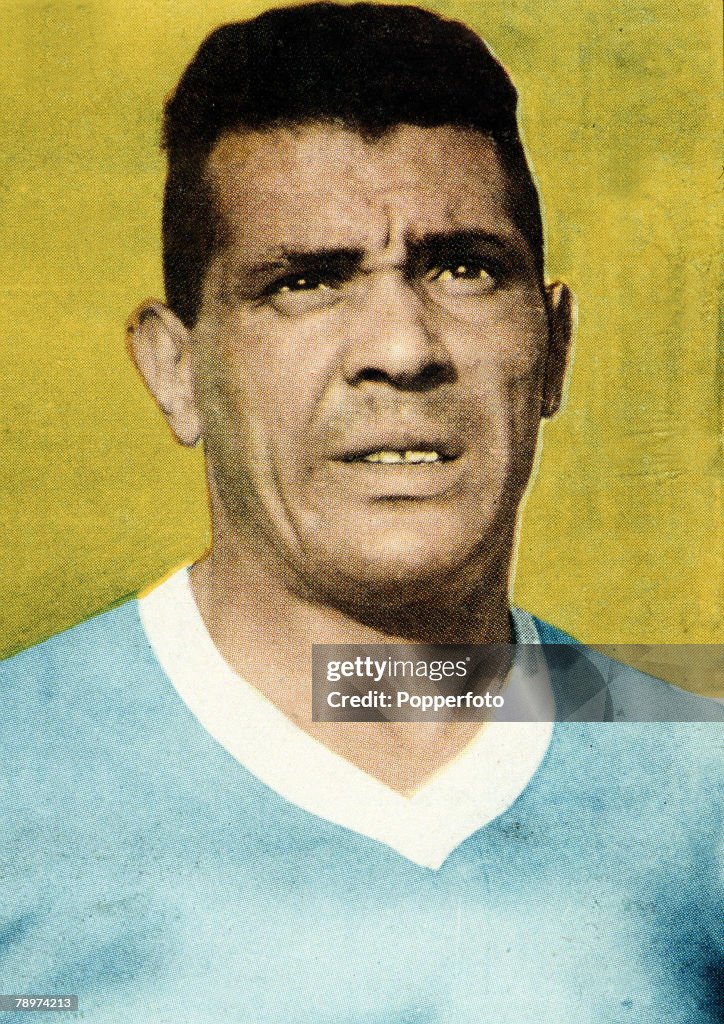
José Leandro Andrade was a Uruguayan footballer who redefined what was possible on a pitch in the 1920s. As a wing-half, he combined grace with tactical sharpness, earning the nickname "the Black Marvel." He won two Olympic gold medals and the first World Cup with Uruguay, becoming the first black player to compete in both tournaments. His career broke racial barriers, though his later years were marked by poverty and neglect. Andrade died on October 5, 1957, in Montevideo, at age 55, leaving a legacy that grew stronger with time.
Early Life & Background
Born in the working-class Barrio Sur neighborhood of Salto, Andrade grew up in poverty. His father, also José Leandro Andrade, had fled slavery in Brazil, and the family faced constant hardship. As a boy, Andrade played football in the streets with a rag ball, developing the close control and dribbling that would later dazzle crowds. He moved to Montevideo as a teenager, taking odd jobs while playing for local sides. His talent caught the eye of Bella Vista, a modest club, where he began his formal career in the early 1920s. Racial prejudice was rampant, but Andrade's skill was undeniable, and he earned a spot on the national team in 1923.
Career Growth
Andrade's international breakthrough came in 1923 when he helped Uruguay win the South American Championship. The following year, at the Paris Olympics, he was instrumental in Uruguay's gold medal run, beating Argentina in the final. He repeated the feat in Amsterdam in 1928, anchoring a defense that didn't concede a goal until the final. In 1930, on home soil, he played every minute of the inaugural World Cup, including the 4-2 final win over Argentina. At club level, he played for Bella Vista, Nacional, and later FC Sète in France. He retired in 1935, his reputation as one of the game's greats already secure.
Career Timeline
Public Image & Style
Andrade's public image was that of a graceful, almost aristocratic player who stood out in an era of brutal, physical football. Media and fans dubbed him "the Black Marvel," celebrating his elegance and creativity. He was a symbol of pride for Afro-Uruguayans and a challenge to racist stereotypes. In Uruguay, he remains a national hero, remembered not just for his trophies but for the dignity with which he carried himself. His tragic later life has added a layer of poignancy to his legend.
Fame & Fandom
José Leandro Andrade commands a legacy defined by historical significance rather than modern fan infrastructure. As a figure who passed away decades before the digital age, he lacks a formalized fandom with an official name, active social media campaigns, or organized rituals. Contemporary recognition exists primarily through retrospective tributes by football historians and documentaries such as Tifo Football's 2019 analysis, which highlight his role as a racial pioneer. Supporters of Uruguayan football history refer to him collectively using period nicknames like "La Merveille Noire" or "El Negro," terms bestowed during his lifetime rather than identifiers for a structured community. His story remains one of verified milestones in the 1924 Paris Olympics, the 1928 Amsterdam Games, and the inaugural 1930 World Cup, establishing him as a foundational icon whose influence persists without the machinery of contemporary celebrity culture. The iFANN Global Fame Engine has evaluated this person, but they do not currently hold a placement in the published rankings (Global Top 1,000 or a Top-100 scope list). Consequently, José Leandro Andrade is currently unranked in the global fame index.
Interesting Facts and Legends
Known for his impeccable off-pitch attire, Andrade frequently wore tailored suits that contrasted sharply with the rugged image of early footballers. He was also a gifted dancer, with his rhythmic movements on the field often compared to the tango. Despite his international acclaim, he faced racial discrimination firsthand when barred from a hotel in Europe solely due to his skin color. His physical decline began after a car accident in the 1930s left him blind in one eye, a tragedy that contributed to his later years of poverty. Decades after his death, his remains were transferred from a pauper's grave to a proper burial site. Historical accounts also circulate regarding his background, with some folklore suggesting he fled slavery in Brazil, though this remains part of the broader narrative surrounding marginalized athletes of his era. A central pillar of his legend involves his electrifying performance against Argentina at the 1924 Olympics, where French journalists first dubbed him "The Black Marvel" after Uruguay secured the gold medal. This moniker cemented his status as a transformative figure who challenged racial prejudices while helping establish Uruguay as a football superpower.
Notable Quotes
“I played for the joy of the game, not for the glory.”
“The ball was my friend; I never let it get lonely.”
“I faced many closed doors, but I always found a window on the pitch.”
Family & Personal Life
Family details are scarce. His father, José Leandro Andrade Sr., was born into slavery in Brazil and escaped to Uruguay. Andrade had no documented siblings, spouse, or children in historical records. He lived alone in his final years in Montevideo, struggling with illness and alcoholism. His closest relationships were with teammates like Héctor Scarone, who stood by him during difficult times.
Notable Connections
Andrade is often compared to later Uruguayan captain Obdulio Varela, who led the 1950 World Cup team. He played alongside Héctor Scarone in the 1920s and 1930s. Pelé included him in the FIFA 100 list, cementing his status among the all-time greats.
Relationships & Dating History
Historical records offer no verified details about Andrade's romantic life. He was never publicly linked to a partner, and there are no accounts of marriage or children. His private life remains a mystery, overshadowed by his footballing achievements and later struggles. As of his death in 1957, he was single, with no known relationships documented.
Death & Aftermath
Died
October 5, 1957 (aged 55)
Death Place
Montevideo, Uruguay
Cause of Death
Illness (unspecified)
José Leandro Andrade Quiroz passed away on October 5, 1957, in Montevideo, Uruguay, at the age of 55. While some accounts have calculated his age as 56 based on alternative birth year data, historical consensus and biographical records confirm he was born November 22, 1901, making him 55 upon his death. The specific circumstances of his final days remain undocumented, with no published details regarding a last public appearance or whether he died at home or within a medical facility. Immediate public reaction details, including vigils or gatherings held in 1957, are absent from the available record, and the date, location, or nature of his funeral rites were not preserved in digital archives.
Despite the lack of immediate documentation regarding his burial or cremation, Andrade has since been immortalized as a national hero in Uruguay through works like "The Myth and Magic of Jose Leandro Andrade" and the documentary "José Leandro Andrade: Uruguay's 'Black Pearl'." These retrospectives emphasize his status as the first black footballer to compete in a FIFA World Cup and a key figure in Uruguay's golden era.
Net Worth (Estate Value)
$0
iFANN Editorial Team estimate
Per iFANN's editorial analysis, José Leandro Andrade's net worth is estimated at $0. Playing during the pre-professional era, he received modest stipends rather than substantial salaries, and his financial situation deteriorated significantly following retirement. There is no active estate generating income to support this valuation. While his monetary assets were negligible at the time of his passing, his true value resides in his enduring historical and cultural significance, a legacy that has only strengthened over the last century.
Awards Won (5)
Andrade won four major team titles with Uruguay: two Olympic gold medals (1924, 1928), the 1923 and 1926 South American Championships, and the 1930 World Cup. While individual awards like the Ballon d'Or didn't exist then, his legacy is recognized through posthumous honors.
1928 · Football
Uruguay national team
1924 · Football
Uruguay national team
1930 · Football
Uruguay national team
Known For
Olympic Gold Medal (1924)
1924 · Midfielder
Olympic Gold Medal (1928)
1928 · Midfielder
FIFA World Cup Winner (1930)
1930 · Midfielder
Keywords
Sources
Quick Facts
- Profession
- Footballer
- Born
- November 22, 1901
- Birthplace
- Salto, Uruguay
- Died
- October 5, 1957
- Death Place
- Montevideo, Uruguay
- Gender
- Male
- Height
- 5 ft 7 in (1.72 m)
Personal Details
- Full Name
- José Leandro Andrade Quiroz
- Height
- 5 ft 7 in (1.72 m)
Frequently Asked Questions
Who was José Leandro Andrade?
When did José Leandro Andrade die?
Did José Leandro Andrade have children?
What was José Leandro Andrade's nickname?
Why is José Leandro Andrade famous?
Similar People
Join the community
fans discussing