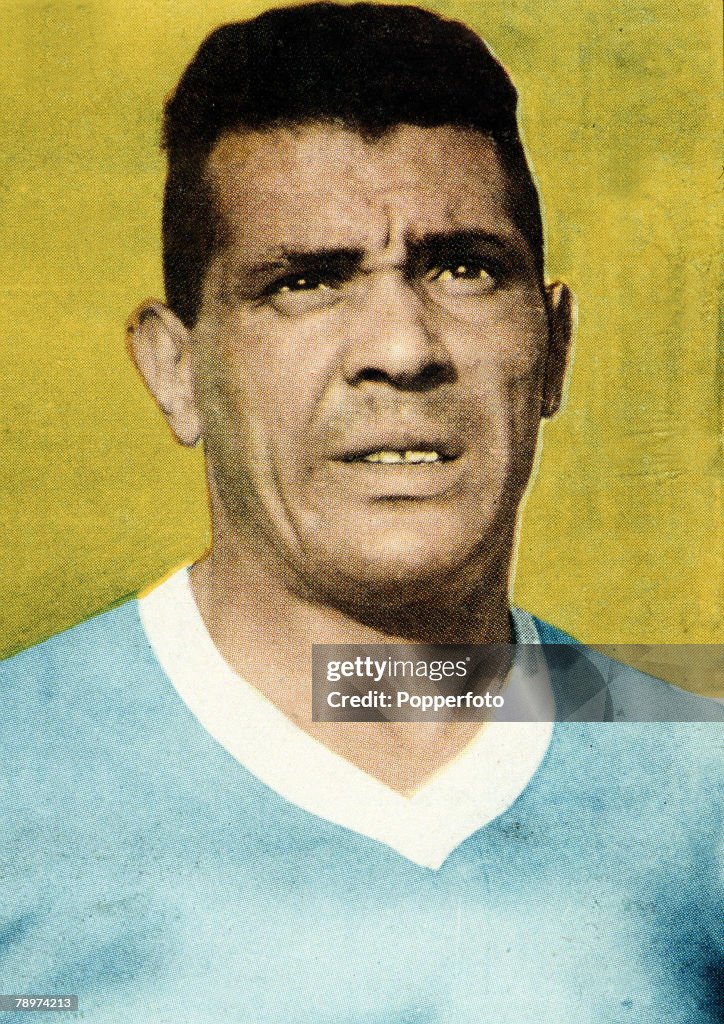
Obdulio Varela
 Uruguay
association football player•association football coach
Also known as: El Negro Jefe, Obdulio Jacinto Muiños Varela
Birthday
September 20, 1917
Birth Sign
Virgo
Birthplace
Montevideo, Uruguay
Age
Died at 78
Height
5 ft 10 in (1.78 m)
About
Obdulio Jacinto Muiños Varela was a Uruguayan footballer and manager, widely remembered as the captain who led Uruguay to a stunning victory over Brazil in the 1950 FIFA World Cup final at the Maracanã Stadium. Known as "El Negro Jefe" (The Black Chief), Varela was a holding midfielder whose fierce leadership and tactical intelligence defined an era. He played for Montevideo Wanderers and Peñarol, winning multiple Uruguayan league titles. His legacy is that of a folk hero in Uruguay, symbolizing defiance against overwhelming odds. Varela died on August 2, 1996, at age 78.
Early Life & Background
Varela grew up in the working-class neighborhood of La Teja in Montevideo. His father abandoned the family early, leaving his mother to work as a domestic servant. The family was poor, and Varela left school after primary grades to sell newspapers and later work in a meatpacking plant. He played street football barefoot with rag balls, developing a tough, competitive edge. At 19, he joined amateur club Deportivo Juventud, where his raw talent caught the eye of Montevideo Wanderers scouts. He signed with Wanderers in 1938, making his professional debut and beginning his transformation into a disciplined defensive midfielder under coach Emilio Servetti.
Career Growth
Varela won his first Uruguayan league title with Montevideo Wanderers in 1942, adding another in 1944. He transferred to Peñarol in 1945 and won the league again in 1949. His crowning moment came in 1950 as captain of Uruguay in the World Cup in Brazil. In the final, Uruguay trailed 1-0 at halftime. Varela rallied his teammates, famously saying the game hadn't started yet. Uruguay came back to win 2-1 in front of over 200,000 Brazilian fans, an event known as the Maracanazo. He played in the 1954 World Cup, finishing fourth. Varela retired in 1955 and later managed Peñarol, Nacional, and the Uruguay national team.
Career Timeline
Public Image & Style
Varela is portrayed as a folk hero in Uruguay, a symbol of resilience against impossible odds. In Brazil, he is remembered as the villain who shattered a nation's dream. His intense stare and booming voice made him an intimidating presence. Fan accounts post nostalgic content on social media, and every July 16, Uruguayan fans celebrate Maracanazo Day with gatherings at the Estadio Centenario.
Fame & Fandom
Obdulio Varela's legacy is not sustained by a modern, organized fandom of dedicated followers or fan clubs, but rather by the collective national identity of Uruguay itself. He is revered as a foundational myth where the entire nation acts as his fanbase, viewing him as the spiritual leader who defined their sporting soul. Unlike contemporary athletes who rely on social media movements or streaming campaigns, Varela's influence is expressed through enduring cultural memory and the annual Maracanazo Day celebrations that honor his defiance against overwhelming odds. There is no official name for his supporters; they are simply Uruguayan football fans who carry his spirit forward without formal rituals beyond these national gatherings. His story remains singular and monolithic, centered on the 1950 World Cup moment where he transformed a potential defeat into a historic triumph. Despite this profound historical impact, iFANN has evaluated Obdulio Varela and determined that he currently holds no placement in the published Global Top 1,000 rankings or any Top-100 scope list. The iFANN Global Fame Engine confirms this status as of August 2026, meaning he is not ranked among the world's most famous living or recently deceased figures in current metrics.
Interesting Facts and Legends
Varela was known for heavy smoking and drinking, habits he never concealed during his lifetime. He famously refused to wear the captain's armband in the traditional manner, sometimes holding it in his hand or tying it around his head instead. After the 1950 final, he walked alone through Rio drinking beer while taunting the mourning Brazilian fans. His mother passed away before the World Cup victory, an event he cited as his greatest regret throughout his life. He once stated he did not care about money and lived modestly until his death. Beyond these personal details, a legendary story persists regarding the 1950 halftime at the Maracanã Stadium. With Uruguay trailing, Varela aggressively tore the lost captain's armband from teammate Juan Schiaffino and placed it back on his own arm while shouting instructions to fight like dogs. This moment, often described as galvanizing the team with more soul, turned the match into a 2-1 victory and created what sports literature calls the loudest silence in football history. While the exact wording of his speech is debated, the image of the dark-skinned midfielder commanding respect remains a core piece of lore fans tell newcomers about the man who refused to let his team lose when the world expected them to.
Notable Quotes
“The game hasn't started yet. Let's go out and win this for our country.”
“I don't play for money. I play for the shirt.”
“The Maracanã was silent. I could hear my own heartbeat.”
“I was born poor, I lived poor, and I'll die poor. But I die happy because I gave my country the greatest joy.”
Family & Personal Life
Varela was born to a poor family; his father left early, and his mother worked as a domestic servant. He had several siblings. He married twice and had children from both marriages, though he kept family details private. His second wife predeceased him. He lived in Montevideo his entire life.
Notable Connections
Varela played alongside Juan Alberto Schiaffino and Alcides Ghiggia, who scored the goals in the 1950 final. His coach at Wanderers, Emilio Servetti, mentored him early. Uruguay manager Juan López led the team in 1950. Goalkeeper Roque Máspoli was a key teammate.
Relationships & Dating History
Varela married twice. His first marriage, in the late 1930s or early 1940s, ended in divorce. He remarried in the 1950s and remained with his second wife until her death. He had children from both marriages. Varela kept his personal life extremely private and was not known for any public romantic relationships outside his marriages.
- MarriedFirst wife (name unconfirmed)1939 - 1949Married in the late 1930s or early 1940s; ended in divorce after several years.
- MarriedSecond wife (name unconfirmed)1951 - 1990Married in the 1950s; remained together until her death; had children.
Death & Aftermath
Died
August 2, 1996 (aged 78)
Death Place
Montevideo, Uruguay
Cause of Death
Unknown
Obdulio Jacinto Muiños Varela passed away in Montevideo on August 2, 1996, at the age of 78. While official records confirm the date and location of his departure from this world, no public announcement or family statement ever detailed the specific medical cause, leaving the circumstances of his final days shrouded in the quiet dignity of natural decline rather than public spectacle. The reaction to his death reflected the deep reverence held for "El Negro Jefe," characterized by widespread institutional honor rather than documented mass gatherings or immediate memorials in the historical record. His legacy endured through the creation of the Premio José Nasazzi-Obdulio Varela, the highest accolade an athlete can receive in Uruguay, which later honored figures like Diego Godin with standing ovations in parliament. Although specific details regarding the funeral service, burial method, or private family statements remain absent from public archives, the naming of this prestigious award serves as a lasting reflection of his status as a national icon who silenced the Maracanã.
Net Worth (Estate Value)
$100,000
iFANN Editorial Team estimate
Per iFANN's editorial analysis, Obdulio Varela's estate is estimated at $100,000 as of 2026. During his playing career in the 1940s and 1950s, footballers earned modest salaries, and Varela never accumulated significant wealth. He lived simply and rejected commercial opportunities throughout his life. The estate generates small royalty payments from FIFA for use of his image in documentaries and video games like the FIFA series. His descendants manage the estate, which has no major revenue sources.
Awards Won (4)
Varela won the FIFA World Cup in 1950 as captain of Uruguay. He also won three Uruguayan Primera División titles: two with Montevideo Wanderers (1942, 1944) and one with Peñarol (1949). No individual awards existed during his playing era.
1950 · Winner
Uruguay national team
1949 · Champion
Peñarol
1944 · Champion
Montevideo Wanderers
1942 · Champion
Montevideo Wanderers
Known For
1950 FIFA World Cup
1950 · Captain of Uruguay
Maracanazo
1950 · Captain and holding midfielder
Uruguayan Primera División
1942 · Player for Montevideo Wanderers
Uruguayan Primera División
1944 · Player for Montevideo Wanderers
Uruguayan Primera División
1949 · Player for Peñarol
Keywords
Quick Facts
- Profession
- association football player, association football coach
- Born
- +1917-09-20
- Birthplace
- Montevideo
- Died
- +1996-08-02
- Death Place
- Montevideo
- Gender
- Male
- Birth Sign
- Virgo
Personal Details
- Full Name
- Obdulio Jacinto Muiños Varela
- Height
- 5 ft 10 in (1.78 m)
- Children
- Several children from two marriages
- Education
- Left primary school early to work
Frequently Asked Questions
How did Obdulio Varela die?
Why is Obdulio Varela famous?
What was Obdulio Varela's nickname?
Did Obdulio Varela have children?
What position did Obdulio Varela play?
Social Media
Similar People
Join the community
fans discussing