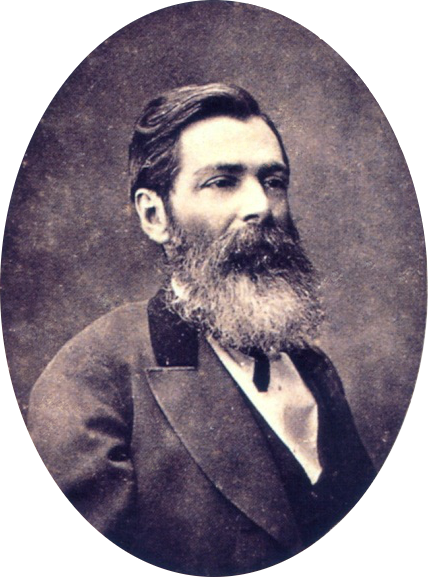
José de Alencar
 Brazil
Birthday
+1829-05-01
Birth Sign
Taurus
Birthplace
Fortaleza
Age
Died at 48
About
José Martiniano de Alencar was a Brazilian novelist, lawyer, politician, orator, and dramatist, born on May 1, 1829, in Fortaleza. A towering figure of 19th-century Romanticism, he is celebrated as one of the most influential Brazilian novelists of his era and a leading voice in the literary movement known as Indianism, which romanticized the indigenous peoples of Brazil. He sometimes published under the pen name Erasmo. Alencar was also the patron of the 23rd chair of the Brazilian Academy of Letters.
Fame & Fandom
The modern engagement with José de Alencar exists not as a grassroots movement of enthusiasts but as an institutional reverence maintained by scholars, students, and the Brazilian educational system. Unlike contemporary celebrities who cultivate dedicated fanbases with specific monikers or organized campaigns, the author's legacy is preserved through the Academia Brasileira de Letras and repeated adaptations of his novels into major television productions. There is no documented name for any fan community associated with him, nor are there rituals, social media groups, or viral initiatives that define a collective identity in the manner of pop culture fandoms. His influence remains a matter of national curriculum and academic study rather than popular activism. In August 2026, the iFANN Global Fame Engine evaluated the subject and determined that he holds no placement within the published rankings. He is currently not ranked among the Global Top 1,000 or any Top-100 scope list. This absence of a numeric score reflects his status as a historical figure whose fame operates on a different axis than the metrics used to rank living celebrities or recent public figures. While the data confirms he is not currently listed in the global hierarchy, his cultural footprint persists independently of these algorithmic assessments. The evaluation indicates that while he does not hold a specific ordinal position in the current database, his presence in Brazilian literature ensures his recognition remains distinct from the fluctuating trends of modern fame.
Interesting Facts and Legends
José Martiniano de Alencar served as the patron of the 23rd chair of the Brazilian Academy of Letters, a role that cemented his status as a foundational figure in the nation's literary history. He was known for a personality described as touchy and private, which stood in contrast to his powerful career as a public orator and statesman during the Second Reign of the Empire of Brazil. He passed away on December 12, 1877, in Rio de Janeiro and was buried at the São João Batista Cemetery. A widely retold story regarding his life focuses on his 1857 publication of O Guarani, which is credited with creating the archetype of the noble savage in Brazilian literature. This work established a romanticized vision of indigenous peoples as integral to the national soul, effectively giving Brazil its own distinct literary voice separate from Portugal. The narrative of Peri protecting Ceci became a national mythos often cited in schools as the foundation of Brazilian cultural identity. Another recurring theme in biographies highlights his intense intellectual privacy, masking a massive public influence that shaped the country's political and literary landscape without seeking the flamboyant spotlight typical of later eras.
Death & Aftermath
Died
+1877-12-12 (aged 48)
Death Place
Rio de Janeiro, Brazil
Cause of Death
Tuberculosis
José Martiniano de Alencar died on December 12, 1877, in Rio de Janeiro, Brazil. The novelist and politician had withdrawn from public life due to a prolonged illness identified as tuberculosis, often called consumption at the time, which required his retreat to his home where he passed away surrounded by family and friends. His final days were marked by quiet suffering rather than public spectacle. Upon his death, the nation observed a period of profound mourning that saw thousands of citizens lining the streets of Rio de Janeiro for his funeral procession. Government officials, members of the legislative assembly, and fellow literary figures attended the service held at the São Francisco de Paula Church before the body was interred at the São João Batista Cemetery.
Tributes poured in from the highest levels of society, including immediate sessions by the Brazilian Academy of Letters to honor the man who had helped establish the institution. In the decades following his passing, his works such as O Guarani, Iracema, and Senhora became central to the national curriculum and inspired numerous film adaptations starting with productions in 1916. He was posthumously elected as the first occupant of Seat No. 5 of the Brazilian Academy of Letters, cementing his status as a foundational figure in Brazilian literature while his estate provided financial support to his heirs.
Awards & Accolades
Keywords
Quick Facts
- Profession
- journalist, politician, lawyer
- Born
- +1829-05-01
- Birthplace
- Fortaleza
- Died
- +1877-12-12
- Death Place
- Rio de Janeiro
- Gender
- Male
- Spouse
- Georgiana Augusta Cochrane
- Birth Sign
- Taurus
Personal Details
- Spouse
- Georgiana Augusta Cochrane
Join the community
fans discussing