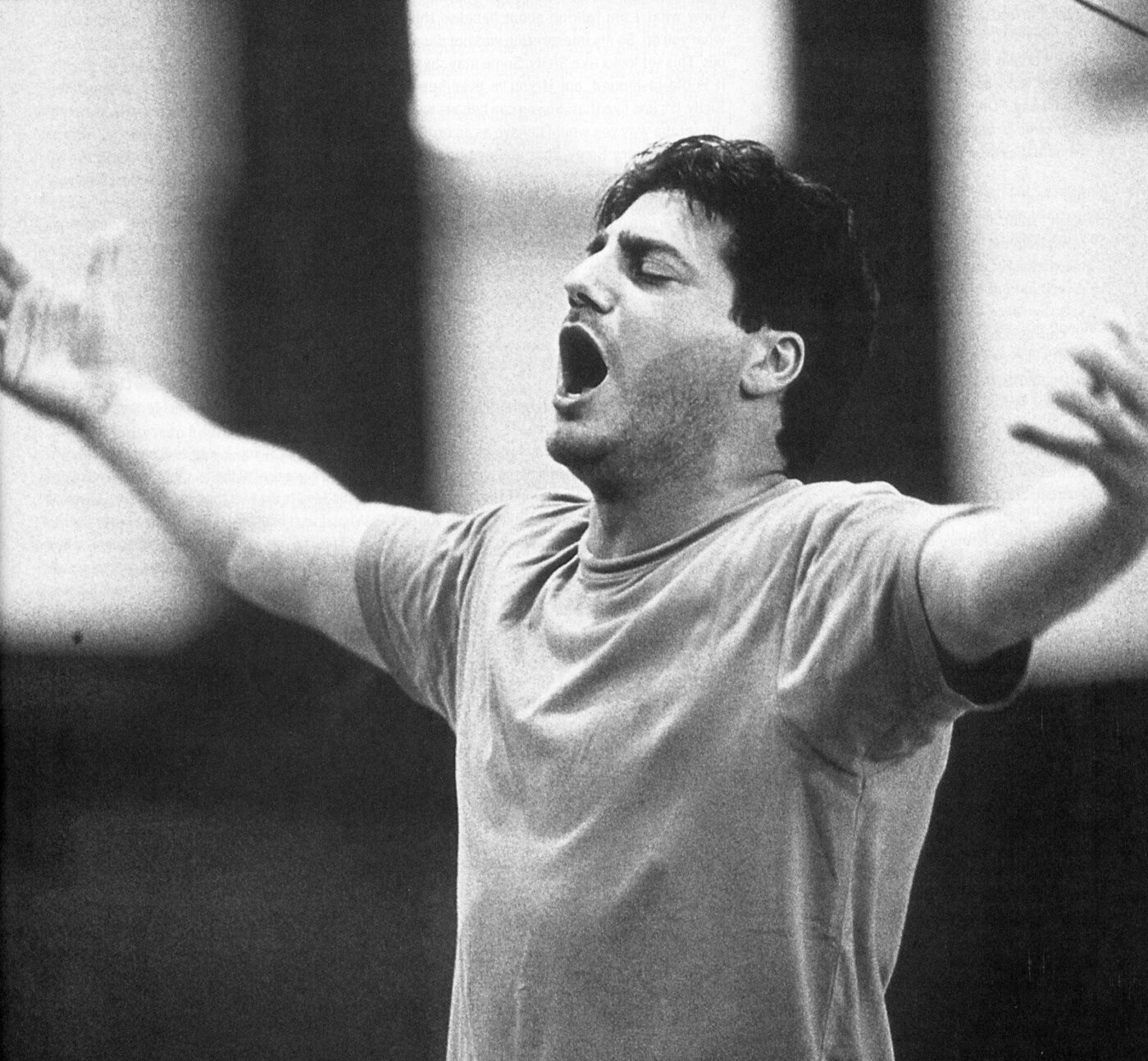
José Cura
 Argentina
theatre director•photographer•opera singer
Also known as: Jose Cura
Birthday
December 5, 1962
Birth Sign
Sagittarius
Birthplace
Rosario, Argentina
Age
63 years old
About
José Luis Victor Cura Gómez is an Argentine tenor, conductor, stage director, scenographer, and photographer. Born December 5, 1962, in Rosario, he has built a career that spans more than three decades, distinguishing himself through intense portrayals of opera's most demanding roles. His repertory includes Verdi's Otello, Saint-Saëns' Samson, Leoncavallo's Canio, and Verdi's Stiffelio, sung in leading houses across Europe and the Americas.
Cura is unusual among tenors for arriving at singing after already working as a composer and conductor. Since 2007 he has also directed and designed his own productions, beginning with La Commedia è finita, and has expanded into photography. He holds the honorary title of Kammersänger from the Wiener Staatsoper and continues to perform, conduct, and stage new works well into his sixties, with recent appointments in Hungary, Bulgaria, and beyond.
Early Life & Background
José Cura grew up in a musical family in Rosario, Argentina. His first instrument was the guitar, which he studied under guitarist Juan di Maestro. Before committing to a singing career, Cura worked professionally as a composer and conductor, building a foundation that would later inform his multifaceted approach to opera.
He made the decision to pursue singing in Italy, where he gave his operatic debut in 1993. His unusual path meant he arrived on the opera scene with a mature musical understanding, which helped him stand out among tenors of his generation.
Career Growth
Cura emerged in the mid-1990s as a distinctive new tenor voice, gaining international attention for his intense, original portrayals of Verdi and verismo roles. A turning point came in 2007 with the premiere of La Commedia è finita, a show he designed, directed, and starred in as Canio, marking the start of his directorial work. He followed with his own productions of Samson et Dalila at the Badisches Staatstheater in 2010, La Rondine at the Opéra national de Lorraine in 2012, and Cavalleria Rusticana and Pagliacci at the Opéra Royal de Wallonie that same year, singing Turiddu and Canio.
In 2013 he performed Otello in San Diego. In February 2019, Cura was appointed the first Principal Guest Artist in the history of the Hungarian Radio Art Groups, covering singer, composer, and conductor roles. He celebrated his 60th birthday with two concerts in Prague in December 2022. In December 2025, he was named Principal Guest Conductor of Stara Zagora Opera in Bulgaria.
Career Timeline
Public Image & Style
Cura is seen as a multifaceted artist who takes on multiple roles within a single production, singing, directing, designing, and conducting. His intense stage presence and willingness to tackle challenging roles have earned him a dedicated following. The fan site Bravo Cura describes him as having strong opinions to offer youth, reflecting his reputation as an outspoken figure. His social media voice is professional, centered on upcoming performances and projects.
Fame & Fandom (iFAMOUS Rankings)
José Cura stands as a distinctive figure in the global arts landscape, recognized for his multifaceted command of opera, conducting, and visual arts. Despite a career spanning over three decades and performances in leading houses across Europe and the Americas, he does not currently hold a placement within the published Global Top 1,000 or any Top-100 scope list according to iFANN's August 2026 evaluation. This absence from the ranked lists reflects a status where influence is concentrated within specific classical music circles rather than generating broad, mass-market viral metrics that typically drive top-tier global rankings. The artist maintains a dedicated following through his official website and verified social media channels, though this community operates without a formalized collective name such as those found in pop culture. Fans identify primarily through engagement with his diverse output, ranging from intense portrayals of Otello to his work as a scenographer and photographer. His reputation for original, sometimes volatile interpretations has evolved into a celebrated mastery, creating a loyal audience that follows his international touring schedule. Recent geopolitical events have further complicated his public standing, resulting in a severance of ties with Estonian institutions while simultaneously securing appointments in Bulgaria and Hungary. These developments underscore a career path defined by artistic autonomy and complex institutional relationships rather than conventional celebrity branding.
Interesting Facts and Legends
Beyond his operatic achievements, José Cura is an accomplished photographer whose work has been exhibited in several cities worldwide. His official website promotes a release titled La Reina Batata, reflecting his ongoing creative output outside the concert hall. He has offered master classes globally, including a notable session in Bloomington, Indiana, in 2004. Known for his outspoken nature, Cura has at times found himself at odds with major institutions due to his strong opinions. A recurring legend among his devotees concerns his vocal evolution; early reviews in the mid-1990s described his pitch and rhythm as wayward, yet this perceived volatility transformed into a celebrated, sable-dark resonance that critics now praise for its exotic otherness and passion. Another iconic moment often retold is his performance as Otello in Liège, where he achieved a peak of tragic dignity that silenced earlier doubts about his technical consistency. More recently, his professional trajectory shifted dramatically when the Estonian National Opera ended its relationship with him over links to working in Russia, even as he was simultaneously named Principal Guest Conductor of the Stara Zagora Opera in Bulgaria.
Family & Personal Life
Notable Connections
José Cura has worked with leading opera houses including the Wiener Staatsoper, where he holds the title of Kammersänger, and the Hungarian Radio Art Groups. His guitar studies were under Juan di Maestro. He has also been associated with the Estonian National Opera, the Badisches Staatstheater, the Opéra national de Lorraine, and the Opéra Royal de Wallonie.
Relationships & Dating History
Salary, Net Worth In 2026
$10 Million
iFANN Editorial Team estimate
Per iFANN's editorial analysis, José Cura's net worth is estimated at $10 million as of 2026. His income derives from performance fees at leading opera houses, conducting engagements, directing and scenography work, recording royalties, and photography exhibitions. He has maintained a steady presence in the opera world for over three decades, with recent appointments in Bulgaria and Hungary adding to his portfolio.
Awards Won (1)
José Cura has received the honorary title of Kammersänger from the Wiener Staatsoper, a prestigious distinction in the German-speaking opera world. He was also appointed the first Principal Guest Artist in the history of the Hungarian Radio Art Groups, a unique honor recognizing his work as a singer, composer, and conductor.
00Honorary Title
Wiener Staatsoper
Known For
Otello
1996 · Otello
Samson et Dalila
1998 · Samson
Pagliacci
2007 · Canio
Stiffelio
1993 · Stiffelio
Keywords
Sources
Quick Facts
- Profession
- theatre director, photographer, opera singer
- Born
- December 5, 1962
- Birthplace
- Rosario, Argentina
- Gender
- Male
- Birth Sign
- Sagittarius
Personal Details
- Full Name
- José Luis Victor Cura Gómez
Frequently Asked Questions
How old is José Cura?
What is José Cura's vocal range?
Why did Estonia ban José Cura?
Is José Cura still singing?
What is José Cura known for?
Similar People
Join the community
fans discussing