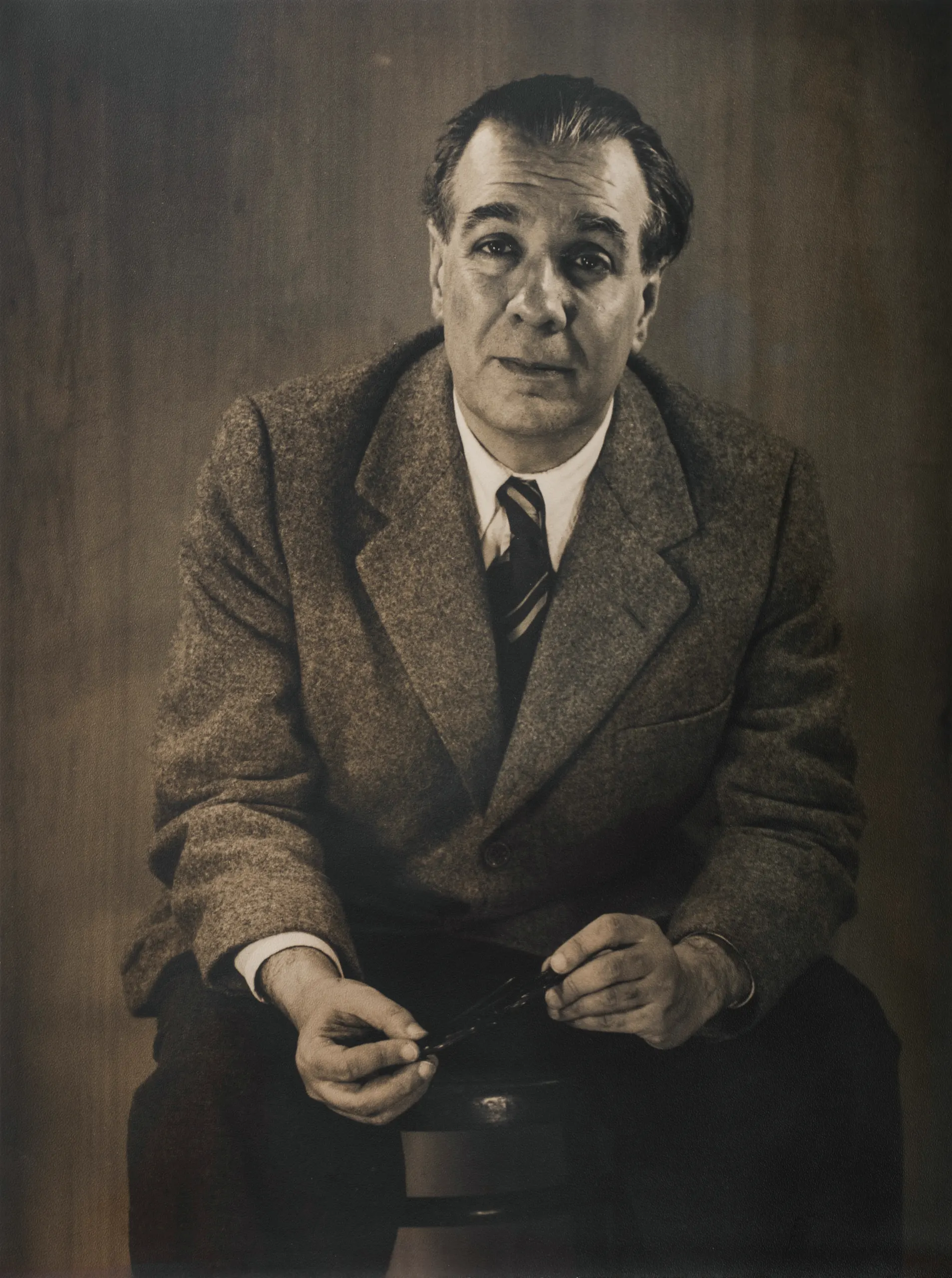
Jorge Luis Borges
 Argentina
short-story writer•essayist•poet•translator
Also known as: Jorge Francisco Isidoro Luis Borges, H. Bustos Domecq, O. Bustos Domecq
Birthday
August 24, 1899
Birth Sign
Sagittarius
Birthplace
Buenos Aires, Argentina
Age
Died at 86
Height
5 ft 9 in (175 cm)
About
Jorge Francisco Isidoro Luis Borges was an Argentine short-story writer, essayist, poet, and translator whose work fundamentally reshaped Spanish-language literature and influenced the global development of magical realism, postmodernism, and speculative fiction. Born in Buenos Aires in 1899 into a prominent family with deep literary roots, he spent his early childhood in the Palermo neighborhood before moving to Europe with his family in 1914 due to health concerns and political instability.
Borges became a central figure in the avant-garde literary scene upon returning to Argentina in 1921. His career reached its zenith in the 1950s and 1960s when he served as director of the National Public Library in Buenos Aires. Despite losing his sight completely by age 55, he continued to write prolifically using oral dictation and memory. His international recognition surged in 1961 when he shared the inaugural International Formentor Prize with Samuel Beckett, leading to widespread translations and invitations to lecture across Europe and the United States.
Early Life & Background
Jorge Luis Borges was born on August 24, 1899, in the Palermo neighborhood of Buenos Aires to Jorge Guillermo Borges Haslam and Leonor Acevedo Suárez. His father was a lawyer who also wrote under a pseudonym, instilling in young Jorge a love for literature from an early age. The family lived comfortably but faced financial struggles later in life. When Borges was nine years old, he began learning English alongside Spanish, a skill that would define much of his future work.
In 1914, due to his father's failing eyesight and the political unrest preceding World War I, the family moved to Geneva, Switzerland. Borges attended the Collège de Genève from 1914 to 1918, where he developed a profound appreciation for English literature and began writing poetry in both Spanish and English. The family traveled extensively through Europe during this period, visiting Spain and other countries, which exposed Borges to diverse cultures and literary traditions.
Upon returning to Argentina in 1921, Borges published his first book of poems, Fervor de Buenos Aires. He became a central figure in the avant-garde literary scene, contributing to journals like Prisma and Martín Fierro. Before achieving international fame, he worked as a librarian, public lecturer, and literary critic. His early career was marked by financial struggles and a growing reliance on alcohol, which exacerbated his declining eyesight, a condition that eventually led to total blindness by age 55. Despite these challenges, his creative output flourished as he developed innovative narrative techniques.
Career Growth
Borges's breakthrough came in the 1940s with the publication of two landmark collections: Ficciones in 1944 and El Aleph in 1949. These works introduced themes of labyrinths, mirrors, infinite libraries, dreams, and fictional writers, establishing him as a master of metaphysical fiction. His career reached its zenith in the 1950s and 1960s when he was appointed director of the National Public Library in Buenos Aires in 1955, a position he held until his retirement in 1973.
By this time, he had lost his sight completely, yet he continued to write prolifically, producing novels, essays, and poetry that were translated into dozens of languages. His international recognition surged in 1961 when he shared the inaugural International Formentor Prize with Samuel Beckett. This award catapulted him onto the world stage, leading to widespread translations and invitations to lecture across Europe and the United States. Throughout the 1960s, he became a key figure in the Latin American Boom, influencing generations of writers including Gabriel García Márquez, Julio Cortázar, and Carlos Fuentes.
In 1979, he received the Miguel de Cervantes Prize, the highest honor in Spanish-language literature. His name appears on countless "Greatest of All Time" lists, with Ficciones frequently cited as one of the most influential books of the 20th century. As of 2026, renewed interest in his work continues with new film adaptations and exhibitions celebrating his legacy.
Career Timeline
Public Image & Style
Borges is remembered for his intellectual rigor, dry wit, and philosophical depth. Media portrayals emphasize his role as a bridge between modernism and postmodernism, with his content often described as dense, layered, and intellectually challenging. His distinctive appearance featured a thick mustache and piercing gaze, especially in his later years when he wore dark glasses due to his blindness.
His social media voice, as represented by fan accounts, is reverent and scholarly, focusing on his contributions to literature and philosophy. He cultivated an image of the erudite scholar who saw the world through complex metaphors and infinite possibilities. Even after his death, his persona remains iconic, symbolizing the power of the written word and the endless nature of knowledge.
Fame & Fandom (iFAMOUS Rankings)
iFANN has not yet collected fame data for this person. While Borges remains a towering figure in world literature, the engine has not yet generated a specific ranking for him in the current September 2026 cycle.
The fandom around Borges is extensive but informal, with fans referring to themselves as "Borgesian" or simply "Borges readers." Fan campaigns include annual readings of his works on his birthday (August 24), charity drives in his name, and fan-funded projects like digital archives of his writings. Notable things Borges did for his fans include hosting literary salons in Buenos Aires and engaging directly with students at the University of Buenos Aires. The community remains active online, sharing quotes and analyzing his complex narratives, keeping his legacy alive for new generations of readers.
Interesting Facts and Legends
Borges famously stated, "I have always imagined that Paradise will be a kind of library." This sentiment reflects his lifelong devotion to books and reading. He also wrote under pseudonyms such as "H. Bustos Domecq" and "O. Bustos Domecq," often collaborating with Adolfo Bioy Casares on humorous detective stories. Another notable fact is his role as a consultant on the screenplay for the film The Man Who Would Be King.
Legends surrounding Borges include the story of his blindness, which many believe fueled his imaginative powers. There is also a myth that he once walked through a labyrinth in Spain and emerged without ever losing his way. Another famous anecdote involves his meeting with Vladimir Nabokov, where they discussed the nature of reality and fiction. These stories are largely verified through biographies and interviews, though some elements may have been embellished over time.
Notable Quotes
“I have always imagined that Paradise will be a kind of library.”
“I am not sure that I exist, actually. I am all the people who read me.”
“The world is a labyrinth, and we are all lost in it.”
Family & Personal Life
Borges married twice. His first marriage was to Elsa Astete Millán in 1938; the couple divorced in 1940 after just two years, reportedly due to incompatibility and Borges's intense focus on his writing. He had no children from this union. His second and most enduring relationship was with María Kodama, whom he met in 1955 when she was a student of his at the University of Buenos Aires. They married in 1967 and remained together until his death in 1986.
Kodama, who was 35 years his junior, became his secretary, editor, and lifelong companion. She managed his estate after his passing and was named his sole heir, though their relationship has been the subject of some controversy regarding her control over his legacy. There is no evidence of other significant romantic relationships or high-profile flings during his lifetime. His parents, Jorge Guillermo Borges Haslam and Leonor Acevedo Suárez, were also literary figures who influenced his early development.
Notable Connections
Relationships & Dating History
Jorge Luis Borges married twice. His first marriage was to Elsa Astete Millán in 1938. The couple divorced in 1940 after just two years, reportedly due to incompatibility and Borges's intense focus on his writing. He had no children from this union.
His second and most enduring relationship was with María Kodama, whom he met in 1955 when she was a student of his at the University of Buenos Aires. They married in 1967 and remained together until his death in 1986. Kodama, who was 35 years his junior, became his secretary, editor, and lifelong companion. She managed his estate after his passing and was named his sole heir. Their relationship was central to his later life, though it has been the subject of some controversy regarding her control over his legacy. There is no evidence of other significant romantic relationships or high-profile flings during his lifetime. At the time of his death, he was widowed, having been married to María Kodama for nearly two decades.
- DivorcedElsa Astete Millán1938 - 1940Married briefly; divorced due to incompatibility and his focus on writing.
- WidowedMaría Kodama1967 - 1986Met in 1955 as student; married in 1967; she managed his estate until her death in 2023.
Death & Aftermath
Died
June 14, 1986 (aged 86)
Death Place
Geneva, Switzerland
Cause of Death
Hepatocellular carcinoma (liver cancer)
Jorge Luis Borges passed away on June 14, 1986, at the Clinique de Genolier in Cologny, a suburb of Geneva, Switzerland. He had been suffering from hepatocellular carcinoma for several months and received palliative care until his final days. His last public appearance occurred earlier that year in February when he returned to Buenos Aires to celebrate his 87th birthday. A recorded telephone message was broadcast on Argentine radio in March, where he thanked supporters before becoming bedridden.
The reaction across the Spanish-speaking world was immediate and profound. Gabriel García Márquez called him "the greatest living writer of our time," while Octavio Paz delivered a eulogy emphasizing his contribution to universal literature. President Raúl Alfonsín declared a day of national mourning in Argentina. Readers gathered spontaneously outside the Argentine embassy in Geneva and at literary cafes in Buenos Aires to pay their respects.
A private funeral took place on June 15, 1986, at the Cimetière des Rois in Geneva. Only close family members, including his mother, and a few personal friends attended. Following his wishes for simplicity, his body was cremated and his ashes interred in the same cemetery. In the months following his death, memorial murals featuring excerpts from his famous stories appeared in Buenos Aires and Madrid. The Jorge Luis Borges International Foundation was established in 1987 to promote literary exchange between Latin America and Europe, and scholarships were launched to support emerging writers. Posthumous publications included The Other, The Same in 1995, and the city of Buenos Aires inaugurated the Plaza Jorge Luis Borges in 1989 with a bust unveiled in the National Library courtyard.
Net Worth (Estate Value)
$5 Million
iFANN Editorial Team estimate
As of 2026, research by the iFANN Editorial Team puts the value of Jorge Luis Borges's estate at approximately $5 million. This figure represents the current worth of his intellectual property, royalties, and licensing deals managed by the Fundación Biblioteca Personal de Jorge Luis Borges. Since his death in 1986, the estate has continued to generate steady revenue through book sales, film adaptations, educational programs, and merchandise.
María Kodama oversaw the estate until her own death in 2023. Since then, the foundation has continued to manage the rights to his works, ensuring they remain accessible and celebrated globally. The estate includes valuable assets such as manuscripts, letters, and the rights to adaptations of his stories. Recent projects like the documentary Life of Jorge Luis Borges and the film Borges and Me released in 2026 have sparked renewed interest, likely boosting the estate's income streams. The financial trajectory remains stable, reflecting the enduring appeal of his work across generations.
Awards Won (5)
Borges received numerous honors throughout his career. He was awarded the International Formentor Prize in 1961, shared with Samuel Beckett, and the Miguel de Cervantes Prize in 1979, the highest honor in Spanish-language literature. He also received the Premio Nacional de Literatura in Argentina in 1961. Additionally, he was named a Commander of the Order of Arts and Letters by the French government and received an honorary knighthood (KBE) from the British monarchy. His name appears on countless "Greatest of All Time" lists, with Ficciones frequently cited as one of the most influential books of the 20th century.
1961 · Literature
Shared with Samuel Beckett
1961 · Literature
Lifetime Achievement
Known For
Ficciones
1944 · Author
El Aleph
1949 · Author
The Garden of Forking Paths
1941 · Short Story Author
The Library of Babel
1941 · Short Story Author
Keywords
Sources
Quick Facts
- Profession
- translator, librarian, literary critic
- Born
- August 24, 1899
- Birthplace
- Buenos Aires, Argentina
- Died
- June 14, 1986
- Death Place
- Geneva, Switzerland
- Gender
- Male
- Spouse
- Elsa Astete Millán, María Kodama
- Birth Sign
- Sagittarius
Personal Details
- Full Name
- Jorge Francisco Isidoro Luis Borges
- Height
- 5 ft 9 in (175 cm)
- Spouse
- Elsa Astete Millán, María Kodama
- Children
- Education
- Collège de Genève, University of Buenos Aires
Filmography
12
Total
8
Film
4
TV
Frequently Asked Questions
Who was Jorge Luis Borges?
When did Jorge Luis Borges die?
What was Jorge Luis Borges' most famous work?
Did Jorge Luis Borges have children?
What awards did Jorge Luis Borges win?
Join the community
fans discussing