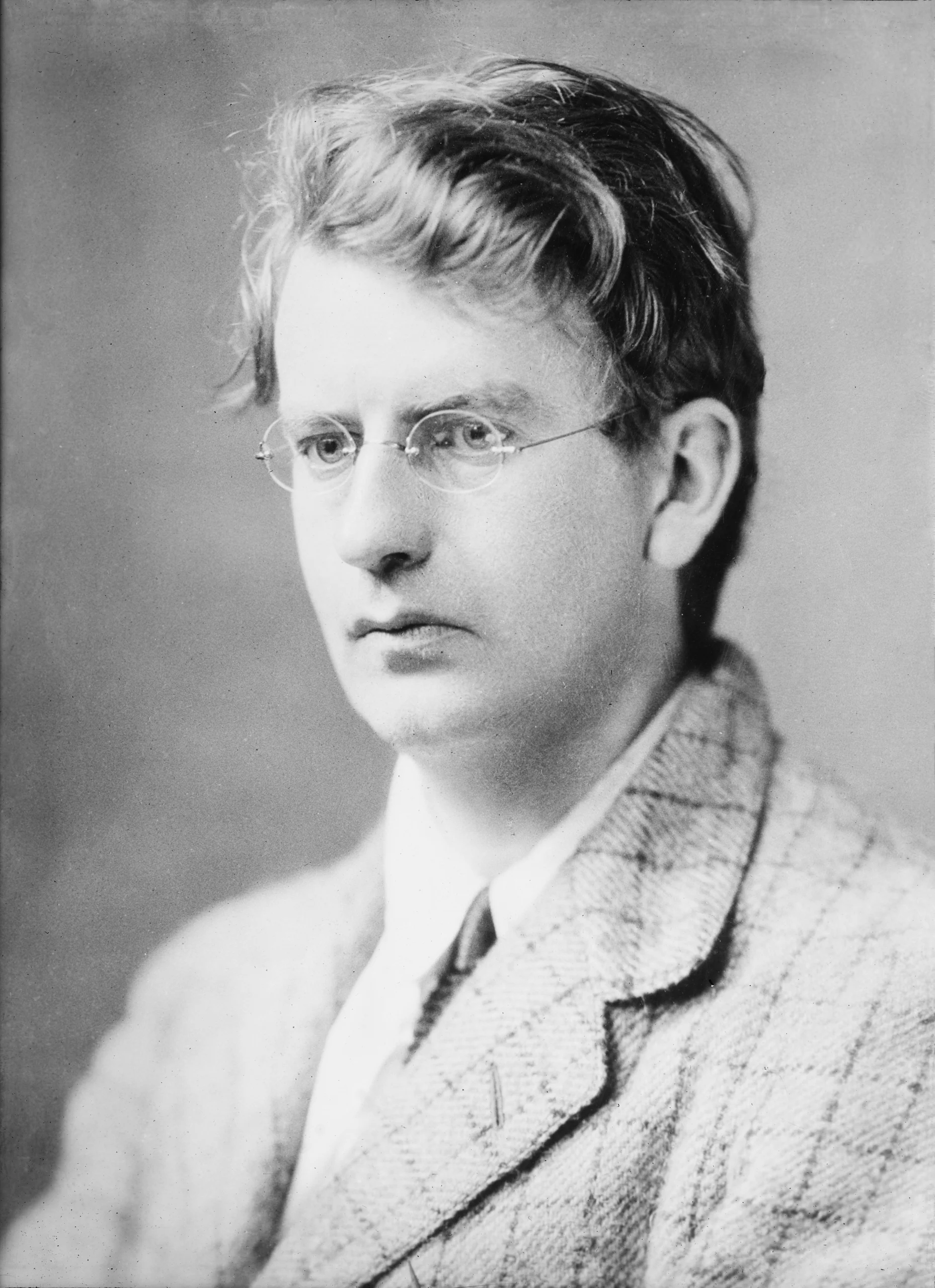
John Logie Baird
 United Kingdom
Inventor•electrical engineer•entrepreneur
Also known as: J. L. Baird, The Father of Television
Birthday
August 13, 1888
Birth Sign
Leo
Birthplace
Helensburgh, Dunbartonshire, Scotland
Age
Died at 57
About
John Logie Baird was a Scottish inventor and electrical engineer who built and publicly demonstrated the world's first working mechanical television system. He showed it to members of the Royal Institution and a reporter from The Times in a rented attic at 22 Frith Street, Soho, on 26 January 1926. The pictures were tiny, flickering and monochrome. They also changed what broadcasting could be.
Baird went on to produce the first publicly demonstrated colour television, the first transatlantic television transmission and a partly electronic colour picture tube. His mechanical system lost the fight to the fully electronic design developed at Marconi-EMI and adopted by the BBC in 1936, and he spent his remaining years on cinema television, radar and colour research. He died in 1946 at 57, with a string of failed businesses behind him and no fortune to show for the invention.
Fame came after the fact. The National Library of Scotland named him one of the 10 greatest Scottish scientists in 2006, the Scottish Engineering Hall of Fame inducted him in 2015, IEEE put a bronze plaque on the Frith Street wall in 2017, and the Royal Mint struck a 50p coin for him in 2021. The 2026 centenary brought museum reconstructions, Soho gatherings and a run of retrospectives that treated him, at last, as television's founding pioneer.
Early Life & Background
Helensburgh, on the Firth of Clyde, was where Baird arrived on 13 August 1888, the fourth and youngest child of the Rev. John Baird, a United Presbyterian minister, and Jessie Morrison Inglis. The household was respectable and short of money. That combination shaped him: he spent his whole life building things out of whatever was lying around.
As a boy he wired his friends' houses together with a telephone switchboard he built himself, and he assembled a small electric motor and other gadgets from scrap. One heritage account describes him as clever, with a curious mind, and fascinated by technology. His health was bad from childhood and stayed bad, a thread that runs through every biography of him.
He went to Larchfield Academy in Helensburgh, then to the Glasgow and West of Scotland Technical College, the institution that became the University of Strathclyde and still counts him as a distinguished alumnus. He moved on to electrical engineering at the University of Glasgow, but the First World War interrupted the degree and he never finished it. Rejected for military service on medical grounds, he took engineering and munitions work instead, including a spell with the Clyde Valley Electrical Power Company.
Peace brought a run of ventures that all went wrong. Soap. A patent-medicine-style preparation called Baird's Speedy Cleaner. Socks. Jam. Shoe polish. An attempt to manufacture diamonds from coal. By the time ill health pushed him south to Hastings, he was about 34 and had, as the BBC puts it, a string of failures behind him. In a cramped attic there he started the experiments that would finally work.
Career Growth
The first results were crude. By 1924 Baird was transmitting televised objects in outline. In 1925 he got recognisable human faces onto the screen, starting with a ventriloquist's dummy called Stooky Bill, who did not blink under the fierce lamps, and then with office boy William Taynton, whose face became the first human face televised.
The public demonstration came on 26 January 1926 at 22 Frith Street, before Royal Institution members and a Times reporter. The audience was not overwhelmed. The images were small and flickering and monochrome, and The Conversation noted on the centenary that the viewers were not convinced. It did not matter. The system worked, and the race was on.
In 1927 Baird founded the Baird Television Development Company and achieved the first television transmission between London and Glasgow, later extending the link to New York. The following year the company made the first transatlantic television transmission and Baird demonstrated the first colour television pictures. The BBC began experimental broadcasts on his 30-line mechanical system in 1929, and regular BBC television broadcasts followed from 1930 using his equipment.
The 1930s brought large-screen cinema television, including a demonstration at the Coliseum in London, along with early radar work and a partly electronic colour picture tube. Then came the reversal. The BBC adopted the rival Marconi-EMI fully electronic system from 1936, and Baird's mechanical approach was retired. Broadcasting shut down entirely during the Second World War, and he turned to radar and colour research. A heart attack in 1944 and a stroke in early 1946 ended the work before he could see television become the mass medium he had promised.
Career Timeline
Public Image & Style
The Baird the public knows is the dogged Scottish tinkerer. Newspapers and heritage bodies have drawn him that way for a century: the man in a cramped attic who made television work with string and sealing wax while better-funded engineers told him it could not be done. The tone is affectionate. It is also a little patronising, since it tends to remember the hatbox and forget the transatlantic transmission, the colour demonstrations and the colour picture tube.
He had no media persona to speak of. There is no footage of him working a crowd, no signature style, no public voice beyond the technical papers and the demonstrations. What survives is the image of a sickly, stubborn man in a small room, and the Frith Street plaque that now marks it. In 2026 the coverage leaned into that picture hard, framing him as television's founding pioneer and letting the irony stand that the industry he started had largely forgotten him.
Fame & Fandom (iFAMOUS Rankings)
Fame data for Baird has not yet been gathered by iFANN, so there is no published placement to report as of the October 2026 rankings. He is also not on the September 2026 iFAMOUS Rankings flagship list. That is the honest picture: a man whose invention reached billions and whose name draws a blank from most of them.
There is no fandom in the modern sense, and no fandom name. Baird died two decades before celebrity fan culture existed, and nobody was organizing streaming pushes for a mechanical scanning disc. His constituency is narrower and older: historians of broadcasting, electrical engineers, Scottish heritage bodies and the staff of the Royal Television Society. What they do is institutional rather than devotional. They mount plaques. They rebuild his equipment. Bournemouth University reconstructed his first set for the centenary, and Strathclyde University marked the anniversary at the London address where he demonstrated it.
The closest thing to fan ritual is the centenary itself. The Conversation, National Geographic, the BBC and ScienceNorway all ran retrospectives in early 2026, and most of them led with the same detail, that the first viewers were not convinced. Alexandra Palace, where his system lost out in 1936, hosted Baird-themed programming. If there is an audience relationship here, it runs through institutions keeping a stubborn inventor in the record rather than through a fanbase keeping him famous.
Interesting Facts and Legends
The first face on television belonged to a dummy. Baird used a ventriloquist's figure called Stooky Bill because it did not blink or complain under the heat of his lamps. When he needed a human, he paid office boy William Taynton to sit still long enough to be scanned.
The first television set was assembled from a hatbox, darning needles, bicycle-lamp lenses, sealing wax and knitting needles. Before television, Baird tried to make diamonds out of coal. He was turned down for military service in the First World War on medical grounds and spent the war in engineering and munitions posts instead.
A story fans of broadcasting history still retell has Baird declaring that television would never replace radio or the cinema. It circulates widely and is usually framed as something he said, but no primary source has been produced for it, so treat it as folklore rather than quotation. What is documented is the reaction in the room on 26 January 1926: the witnesses from the Royal Institution and The Times watched the flickering images and were not impressed.
Family & Personal Life
Baird grew up the youngest of four in a manse household. His father, the Rev. John Baird, ministered to a United Presbyterian congregation, and his mother was Jessie Morrison Inglis. Money was tight enough that the family's frugality became a running theme in accounts of his later habit of building equipment from household scraps.
He married once, late. In 1931, at 42, he married Margaret Albu, a South African-born concert pianist roughly half his age. They had two children, a son named Malcolm and a daughter named Diana. The marriage ran until his death in 1946, and Margaret was widowed rather than divorced. The family lived through the years of his television company, the loss of the BBC contract to Marconi-EMI and the wartime shutdown of broadcasting, and he died at home in Bexhill-on-Sea with the marriage still intact.
Notable Connections
Margaret Albu, his wife of fifteen years and a concert pianist, was the constant in his later life. William Taynton, the office boy paid to sit still, became the first human face on television. Behind the scenes stood the Baird Television Development Company, which backed the transatlantic transmission and the colour demonstrations. His rivals were Isaac Shoenberg's team at Marconi-EMI, whose electronic system took the BBC contract at Alexandra Palace in 1936.
Relationships & Dating History
Baird's romantic history is short and unusually well documented for a man of his era: one marriage, no scandals, no tabloid entanglements. He married Margaret Albu in 1931, when he was 42 and she was a South African-born concert pianist roughly half his age. The match lasted fifteen years, until his death.
There is no credible record of earlier engagements, a first marriage, a divorce or any high-profile pairing. Biographical sources do not support the kind of rumoured flings that attach themselves to famous names, and none has been produced. The couple had two children, a son, Malcolm, and a daughter, Diana, and the family stayed together through the loss of the BBC contract to Marconi-EMI in 1936 and the wartime shutdown of broadcasting that followed.
At the time of his death on 14 June 1946 at Bexhill-on-Sea, Baird was married to Margaret Albu. She was widowed, not divorced, and remained so. Any question of a current partner in 2026 does not apply.
- MarriedMargaret Albu1931 - 1946A South African-born concert pianist roughly half his age; they married in 1931 and had two children, Malcolm and Diana. The marriage ended with his death in 1946, leaving her widowed.
Death & Aftermath
Died
June 14, 1946 (aged 57)
Death Place
Bexhill-on-Sea, Sussex, England
Cause of Death
Stroke
Baird died at his home in Bexhill-on-Sea, Sussex, on 14 June 1946, aged 57. The end came after a long run of bad health: he had a heart attack in 1944 and a serious stroke in early 1946 from which he never recovered. The stroke is the cause given in standard biographical accounts, which rest on reference works rather than on a published death certificate or inquest finding. Contemporaneous detail is thin. The available record does not say where he was buried or cremated, whether the funeral was public or private, or which named peers spoke at any memorial. Obituary coverage from that summer has not surfaced in the sources.
Recognition arrived late and in instalments. The National Library of Scotland put him among the 10 greatest Scottish scientists in its Scottish Science Hall of Fame in 2006. The Scottish Engineering Hall of Fame inducted him in 2015. IEEE placed a bronze plaque at 22 Frith Street in Soho in 2017, and the Royal Mint issued a 50p coin in 2021 marking 75 years since his death.
The hundredth anniversary of the attic demonstration produced the biggest wave yet. Bournemouth University rebuilt his first television set, a reconstruction the BBC reported on 26 January 2026. Strathclyde University marked the centenary at the London demonstration address, and the Royal Television Society held a gathering in Soho on 11 March 2026. Alexandra Palace, the site where the rival Marconi-EMI system displaced his own in 1936, ran Baird-themed programming. The Conversation, National Geographic, History.co.uk, ScienceNorway, Inc. and Anglotopia all published retrospectives between January and March 2026, most of them circling the same question: the first viewers, as The Conversation put it, were not convinced.
Net Worth (Estate Value)
$1 Million
iFANN Editorial Team estimate
Celebrity net-worth trackers do not cover him, no published valuation of his estate has surfaced, and there is no record of posthumous earnings from royalties or licensing. The iFANN Editorial Team's reading of the available record puts the estate at a nominal figure of roughly $1 Million, and that number should be understood as a placeholder for a man who died with modest means rather than a measured valuation.
The career explains why. Baird spent the 1920s funding television research out of his own pocket after a decade of ventures that lost money: soap, socks, jam, shoe polish and an attempt to make diamonds from coal. The Baird Television Development Company gave him a corporate vehicle and a salary, but its great asset, the BBC contract, vanished when the corporation chose the Marconi-EMI electronic system in 1936. Broadcasting then stopped altogether for the war, and his later work on radar and colour television never produced a commercial payoff in his lifetime.
What the estate did not capture, the commemorative economy eventually did. The Royal Mint issued a 50p coin in 2021 marking 75 years since his death, IEEE installed a bronze plaque at 22 Frith Street in 2017, and the 2026 centenary generated museum reconstructions, an Alexandra Palace exhibition and a run of retrospectives in the BBC, National Geographic and The Conversation. None of that revenue flowed to his family. Margaret Albu was widowed in 1946, and no published account describes a significant inheritance passing to their two children, Malcolm and Diana.
Awards & Accolades
View 10 records, honours and achievementsKnown For
First public demonstration of mechanical television
1926 · Inventor and demonstrator
First transatlantic television transmission
1928 · Inventor
First colour television demonstration
1928 · Inventor
Baird Television Development Company
1927 · Founder
Phonovision and early video recording
1928 · Inventor
Keywords
Sources
Quick Facts
- Profession
- Inventor, electrical engineer, entrepreneur
- Born
- August 13, 1888
- Birthplace
- Helensburgh, Dunbartonshire, Scotland
- Died
- June 14, 1946
- Death Place
- Bexhill-on-Sea, Sussex, England
- Cause of Death
- Stroke
- Gender
- Male
- Spouse
- Margaret Albu
- Children
- Malcolm Baird, Diana Baird
- Birth Sign
- Leo
- First TV Demonstration
- January 26, 1926, 22 Frith Street, London
Personal Details
- Full Name
- John Logie Baird
- Spouse
- Margaret Albu
- Children
- Malcolm Baird, Diana Baird
- Education
- Larchfield Academy, Helensburgh; Glasgow and West of Scotland Technical College; University of Glasgow (degree unfinished)
Frequently Asked Questions
What is John Logie Baird most famous for?
Did John Logie Baird really invent television?
How did John Logie Baird die?
Was John Logie Baird married and did he have children?
Why was John Logie Baird's television system replaced?
Similar People
Join the community
fans discussing