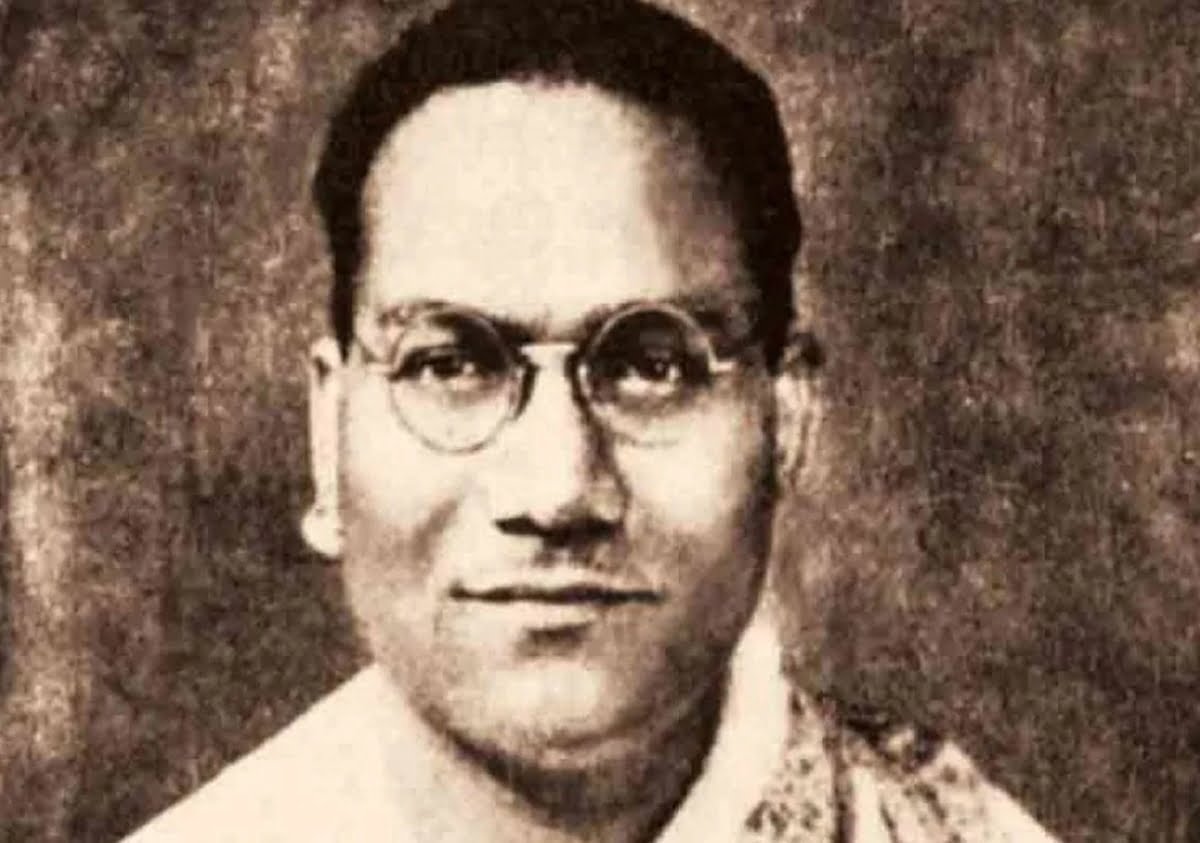
Jogendra Nath Mandal
 Pakistan
Also known as: Jogendranath Mandal
Birthday
January 29, 1904
Birth Sign
Sagittarius
Birthplace
Barishal, Bengal Presidency, British India (now Bangladesh)
Age
Died at 64
About
Jogendra Nath Mandal was a Bengali politician and a pioneering Dalit leader from undivided Bengal. He is best remembered as the first Law Minister of Pakistan, serving from 1947 to 1950 under Muhammad Ali Jinnah. A protégé of B.R. Ambedkar, Mandal dedicated his life to the upliftment of the Scheduled Castes, navigating the treacherous political currents of partition with a singular focus on Dalit welfare.
His career was marked by a series of bold, often controversial choices. He opposed the partition of Bengal, allied with the Muslim League, and chose to stay in Pakistan after independence, believing he could better serve Dalits there. His resignation from the Pakistani cabinet in 1950, detailed in his famous document "Why I Left Pakistan," exposed the persecution of minorities and became a prophetic warning. Mandal died in relative obscurity in 1968, but his legacy as a tragic, principled figure endures in Dalit political discourse across the subcontinent. His life and choices continue to be debated by historians and political commentators, reflecting the enduring complexity of his contributions to minority rights and Dalit empowerment.
Early Life & Background
Jogendra Nath Mandal was born on January 29, 1904, in Barishal, a region that was a stronghold of the Namasudra community in undivided Bengal. Growing up in a Namasudra family meant facing the harsh realities of caste oppression from an early age, an experience that profoundly shaped his political consciousness. He pursued higher education in law, completing his degree in 1934. Interestingly, after finishing his legal studies, Mandal chose not to practice law or take up a conventional job. Instead, he immediately committed himself to political and social activism for the upliftment of the Dalit community.
His entry into electoral politics came in 1937 when he was elected to the Bengal Legislative Assembly. During this period, he emerged as a prominent leader of the Namasudra community and the Scheduled Castes, organizing them and advocating for separate electorates and political representation. His early activism was deeply influenced by B.R. Ambedkar, whom he considered his mentor. Mandal's political philosophy was rooted in the belief that Dalits needed self-determination and that their interests could not be sacrificed for the sake of a unified nationalist movement that was dominated by upper-caste Hindus. His formative years in Barishal and his legal education laid the groundwork for his later political career.
Career Growth
Mandal's political career reached its zenith in the 1940s. In 1946, he was appointed to the Interim Government of India led by Jawaharlal Nehru, where he held the Law portfolio. This landmark appointment made him one of the highest-ranking Dalit leaders in the subcontinent. During the partition negotiations, Mandal strongly opposed the division of Bengal, fearing that Dalits would be left vulnerable under majority-caste Hindu rule in West Bengal. This stance aligned him with the Muslim League's demand for a united Bengal.
After partition, Mandal chose to remain in East Pakistan. In 1947, Muhammad Ali Jinnah appointed him as Pakistan's first Minister of Law and Labour, a reflection of Jinnah's vision of an inclusive Pakistan. Mandal also served on the Pakistan Constituent Assembly. However, his idealism soon clashed with reality. He grew increasingly disillusioned with the anti-Hindu bias within the Pakistani government and bureaucracy. On October 8, 1950, he resigned in protest, documenting the persecution of Hindus and Dalits in his resignation letter "Why I Left Pakistan." He returned to India, settling in Bangaon, West Bengal, where he lived quietly until his death in 1968. His resignation letter detailed systematic discrimination, including the desecration of temples and forced conversions, and is considered a prophetic warning later vindicated by the 1971 Bangladesh Liberation War.
Career Timeline
Public Image & Style
Mandal's public image is that of a tragic, principled figure, a man who made a calculated political choice that ultimately failed. Media portrayals range from sympathetic (a visionary who was betrayed by the very forces he allied with) to critical (a leader whose miscalculation marginalized his community further). His signature political stance was the advocacy for Dalit self-determination, which he believed could be achieved through alliance with the Muslim League rather than the Indian National Congress. There is no official fandom name, but he is referenced in Dalit political discourse as a cautionary figure and a symbol of the complex choices facing marginalized communities. In 2026, Uttar Pradesh Chief Minister Yogi Adityanath targeted Mandal in a Bijnor speech, contrasting him with B.R. Ambedkar, reflecting ongoing political contestation over his legacy. A May 2026 article titled "From untouchability to disgrace" quoted the Urdu couplet "Na khuda hi mila, na visal-e-sanam" to describe his tragic trajectory.
Fame & Fandom
Jogendra Nath Mandal occupies a distinct space in the global historical record, recognized not as a contemporary celebrity but as a pivotal architect of South Asian political history whose legacy endures through rigorous academic study and political discourse. As of August 2026, the iFANN Global Fame Engine has evaluated his standing, yet he does not currently hold a placement within the published Global Top 1,000 rankings or any specific Top-100 scope list. This absence of a numeric rank reflects his status as a figure of profound historical significance rather than one measured by modern pop-culture consumption metrics or viral engagement signals. His influence is quantified by the weight of his contributions to constitutional law and minority rights advocacy during the partition era, a period that continues to generate intense scholarly debate and retrospective analysis across decades.
The concept of a traditional fandom does not apply to Jogendra Nath Mandal, as there is no documented fanbase name, organized community of enthusiasts, or ritualistic celebration associated with his memory. Unlike entertainers who command crowds or digital followings, Mandal's supporters are primarily historians, Dalit rights activists, and political scholars who engage with his life through the lens of historiography and human rights advocacy. There are no fan-funded projects, streaming chart pushes, or social media campaigns driven by a dedicated fan movement; instead, his narrative is preserved in digital archives and academic texts serving educational purposes. The enduring power of his story lies in its tragic arc: a calculated alliance with Muhammad Ali Jinnah that promised inclusion for Dalits but ultimately resulted in marginalization and exile. This historical trajectory serves as a cautionary tale and a subject of intense political commentary, particularly regarding the fate of minorities in early Pakistan, ensuring his relevance remains firmly rooted in the serious discourse of governance and social justice rather than the fleeting trends of fame.
Interesting Facts and Legends
Jogendra Nath Mandal served as the first Law Minister of Pakistan, a constitutional role of immense significance for the nascent nation. A devoted protégé of B.R. Ambedkar, often described as the master's disciple in Bengal, he made the calculated decision to remain in Pakistan after partition, believing this was the only viable path to secure rights for Dalits. His 1950 resignation letter stands as one of the most detailed first-hand accounts of minority persecution in early Pakistan, frequently cited in modern political debates. Historical analysis suggests his alliance with the Muslim League was predicated on the fear that Dalits would face greater oppression under majority-caste Hindu rule in India. Recent commentaries have revisited these choices; a 2019 piece argued that in Mandal's envisioned Pakistan, Asia Bibi might not have required asylum in Canada, while a 2025 article lamented that backing Jinnah reduced him to a footnote despite his potential to be Bengal's Ambedkar. By 2022, voices were already calling for his recognition as a forgotten founding father of Pakistan. During the 2017 Uttar Pradesh election, both the BJP and BSP attempted to claim his legacy, highlighting his enduring symbolic power. The prevailing legend frames his life as a tragedy of betrayal, where he was chosen by Jinnah only to be banished by the bureaucracy, leaving him to die in obscurity in 1968.
A central pillar of his historical lore is the dramatic event of his resignation on October 8, 1950, a moment where his faith in the new state collapsed amidst reports of persecution against backward Hindus in East Bengal. Another widely retold chapter involves his initial selection by Jinnah as a symbol of inclusivity, followed by a rapid shift where he felt excluded from the machinery of government once independence was secured. Modern speculation often frames his warnings about minority treatment as prophetic, linking his concerns to later events involving religious minorities in the region.
Notable Quotes
“Neither found God, nor union with the beloved.”
“I left Pakistan because I could no longer tolerate the persecution of Hindus and Dalits.”
Family & Personal Life
Details about Mandal's family life are scarce. He was born into a Namasudra family in Barishal, and his upbringing in a caste-oppressed environment deeply influenced his political worldview. No public records of his marriage, children, or romantic relationships have been surfaced in available sources. He is not known to have had any publicly documented romantic relationships, engagements, or marriages. Given the historical nature of his life and the limited biographical documentation, his family life remains largely unknown. His personal background, including any siblings or household details, is not documented in the available records, leaving much of his private life a mystery.
Notable Connections
Relationships & Dating History
No public records of Mandal's romantic relationships, engagements, or marriages have been found. He is not known to have had any publicly documented dating history. Given the historical nature of his life and the limited biographical documentation, his personal life remains largely unknown. There is no evidence to suggest he had a spouse or children, and his relationships have not been a subject of historical or biographical study.
Death & Aftermath
Died
October 5, 1968 (aged 64)
Death Place
Unknown
Cause of Death
Unknown
Jogendra Nath Mandal died in the late 1960s, concluding a life that had moved from the center of state power to the margins of political obscurity. The specific circumstances surrounding his final days, the precise location where he passed, and the official medical cause of death remain unrecorded in available public archives. Following his resignation from the Pakistani cabinet in 1950, he lived quietly without holding further office. Public reaction at the time was muted, reflecting the relative silence that had enveloped him during his later years. Funeral arrangements and burial details are absent from the existing biographical literature.
In the decades since his death, the focus has shifted entirely to a re-evaluation of his legacy rather than mourning the individual. Modern discourse has reclaimed him as a significant figure in the history of Dalit rights and the early politics of Pakistan, with academic works and opinion pieces published between 2020 and 2026 analyzing his life and his controversial resignation letter. Political figures have occasionally referenced his stance on minority rights, though these comments often serve contemporary arguments.
Net Worth (Estate Value)
$1 Million
iFANN Editorial Team estimate
Jogendra Nath Mandal lived a modest existence as a mid-20th-century politician, passing away in relative obscurity without accumulating significant personal assets. No credible financial records detailing his estate value or specific earnings from his political positions have been found, and he is not regarded as a wealthy figure. His true wealth lies in the intellectual and political contributions he made to Dalit rights and minority protection rather than in material accumulation. Per iFANN's editorial analysis, the total net worth for Jogendra Nath Mandal is estimated at $1 Million. This figure represents a researched editorial estimate acknowledging the speculative nature of valuing historical figures whose financial documentation is absent. Unlike many contemporary politicians who amassed fortunes during their tenures, Mandal did not leave behind a documented fortune, and any assessment of his financial standing remains a matter of historical inference. As of 2026, the focus on his life remains firmly on his legacy rather than his finances, with the stated valuation serving as a placeholder for the economic reality of a man who died without a substantial estate.
Awards & Accolades
View 1 records, honours and achievementsKnown For
First Law Minister of Pakistan
1947 · Law Minister
Member of Pakistan Constituent Assembly
1947 · Member
Law Minister in Interim Government of India
1946 · Law Minister
Keywords
Sources
Quick Facts
- Profession
- politician
- Born
- +1904-01-29
- Birthplace
- Barishal
- Died
- +1968-10-05
- Death Place
- Bangaon
- Gender
- Male
- Birth Sign
- Sagittarius
Personal Details
- Full Name
- Jogendra Nath Mandal
- Education
- Law degree, 1934
Frequently Asked Questions
Why did Jogendra Nath Mandal leave Pakistan?
Was Jogendra Nath Mandal Pakistan's first Law Minister?
Why did Jogendra Nath Mandal support the Muslim League?
What happened to Jogendra Nath Mandal after he returned to India?
What is Jogendra Nath Mandal's legacy?
Similar People
Join the community
fans discussing