Joan Miró
 Spain
Spainpainter•sculptor•ceramicist•lithographer
Also known as: Joan Miró i Ferrà, Joan Miro, Jean Miró
Birthday
April 20, 1893
Birth Sign
Sagittarius
Birthplace
Barcelona, Spain
Age
Died at 90
About
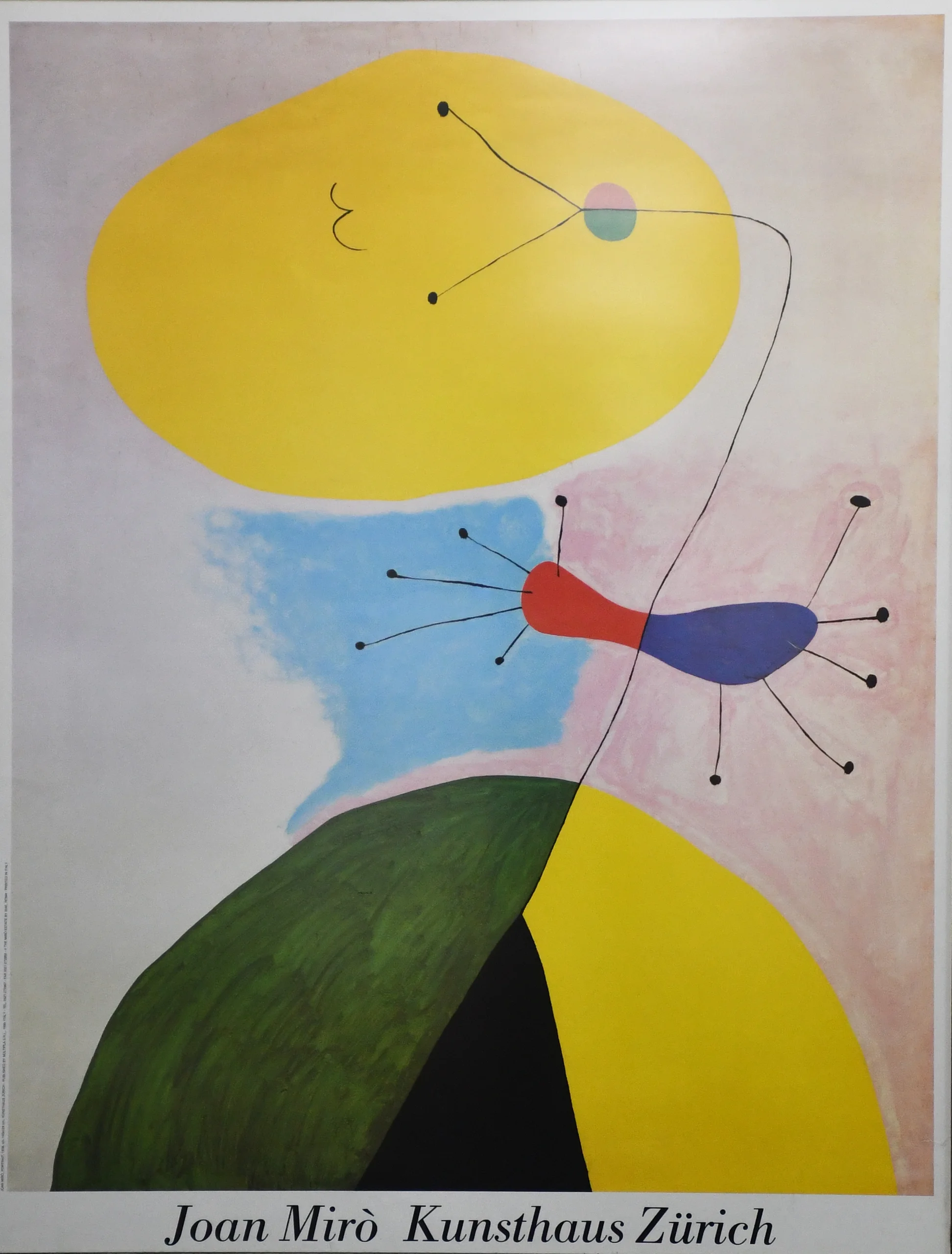
Joan Miró i Ferrà was a seminal Spanish Catalan painter, sculptor, ceramicist, and lithographer whose career spanned nine decades. Born in Barcelona in 1893, he developed a highly personal visual language that bridged Surrealism, Fauvism, and Expressionism without ever officially joining the Surrealist group. His work is celebrated for its childlike yet profound exploration of the subconscious, utilizing bold primary colors, simple shapes, and symbolic elements like stars, moons, and birds. Miró left behind over 20,000 works before his death in 1983, establishing a legacy that continues to influence contemporary art.
Today, his reputation stands as one of the most significant contributions to 20th-century modernism. Two major institutions preserve his vision: the Fundació Joan Miró in Barcelona and the Fundació Pilar i Joan Miró in Palma de Mallorca. His paintings consistently achieve record-breaking prices at auction, with individual works selling for tens of millions of dollars. The artist's unique ability to blend the subconscious with tangible forms ensures his place in the global canon of great masters.
Early Life & Background
Joan Miró was born into a family of modest means in Barcelona. His father, Josep Miró, worked as a goldsmith and jewelry maker, while his mother, Dolors Ferrà, came from a family of watchmakers. This environment exposed him early to craftsmanship and detail, though his path would diverge sharply from their trades. He attended the La Lonja School of Fine Arts and later the Barcelona Business School (Escola de Comerç) at age 14, but his heart belonged to art rather than commerce.
A pivotal moment occurred in 1910 when Miró contracted typhoid fever. Bedridden for months, he began to paint seriously during his convalescence, marking the start of his artistic journey. In 1912, he enrolled at the Gali school of fine arts in Barcelona, where he met fellow artists like Salvador Dalí and Antoni Tàpies. Despite his formal education, Miró famously rejected traditional academic methods, developing a rebellious spirit against "conventional painting." By 1919, he moved to Paris to immerse himself in the avant-garde scene, though he initially struggled with the rigid dogmas of the Surrealists. His breakthrough came in the late 1920s when he began creating works that combined abstract forms with symbolic, dream-like imagery.
Career Growth
Miró's first major solo exhibition took place at the Pierre Colle Gallery in Paris in 1927, where he introduced his unique style to the public. The period between 1924 and 1930 was crucial, as he developed the "poetic" approach that would define his legacy, often incorporating text and found objects into his paintings. In 1937, he created The Reaper (El Segador) for the Spanish Pavilion at the Paris World's Fair to support the Republican cause during the Spanish Civil War.
His career continued to flourish with major milestones including receiving the Grand Prix for Painting at the Venice Biennale in 1956 and winning the Lenin Peace Prize in 1968. He completed the mural Wall of the Sun for the UNESCO building in Paris in 1960 and created the monumental sculpture The Head of a Woman for the Museum of Modern Art in New York in 1964. Miró opened the Fundació Joan Miró in Barcelona in 1975 and the Fundació Pilar i Joan Miró in Palma de Mallorca in 1981. His final major exhibition was held at the Tate Gallery in London in 1983, shortly before his death.
Career Timeline
Public Image & Style
Miró's public persona was that of a quiet, introspective genius who let his work speak for itself, avoiding the media spotlight. His signature style featured bold primary colors, simple shapes, and symbolic elements like stars, moons, and birds. His aesthetic evolved from realistic landscapes to abstract, dream-like compositions. Unlike living pop stars, he did not experience crowds fainting or streets shutting down due to his appearances; his public life was confined to artistic dedication and cultural preservation. He maintained an independent stance within the art world, influencing movements without being bound by their rules.
Fame & Fandom (iFAMOUS Rankings)
Joan Miró commanded a global reach that spanned the 20th century and persists through institutional reverence. According to the iFANN Global Fame Rankings, he is the 82nd most famous person in Spain, holding steady from the previous cycle. Within his specific field of influence, he stands as the 66th most famous person in Art & Design, maintaining this standing without fluctuation. These placements reflect a consistent historical footprint rather than fleeting digital trends.
While modern celebrity culture often relies on organized fanbases, Miró's audience lacks a formal moniker or collective identity; no group calls itself by a specific name, nor do fans engage in chart pushes or social media campaigns. His appreciation remains rooted in museums, galleries, and academic study rather than grassroots fandom. The Fundació Joan Miró in Barcelona serves as the primary custodian of his work, managing exhibitions and educational programs that keep his vision alive for new generations. Collectors drive the market value of his pieces, with auction records reaching into the tens of millions, yet this commercial interest does not constitute a fan movement in the traditional sense.
Interesting Facts and Legends
Joan Miró once said, "I wanted to assassinate painting," referring to his desire to break free from traditional conventions. He was a keen collector of folk art, which influenced his own aesthetic. Despite his fame, he was known for his humility and often signed his works with a simple "Miro" rather than his full name. A widely retold story among art historians concerns his complex relationship with the Surrealist movement; while considered a leading figure, he was never officially part of the group, preferring to critique their rigid dogmas while developing his own childlike visual language. Another celebrated narrative involves his collaboration on the artist's book À toute épreuve in 1958, a project born of friendship that remains one of the most revered artist books of the century.
Notable Quotes
“I wanted to assassinate painting.”
“Every time I go to the studio, I feel like I am entering a laboratory.”
“I am still trying to understand what I am doing.”
Family & Personal Life
Joan Miró married Pilar Juncosa in 1931. Pilar was the daughter of a wealthy industrialist and became a constant source of support and inspiration throughout his life. She managed his affairs and provided a stable domestic environment that allowed him to focus on his art. The couple had one daughter, Dolores Miró Juncosa, born in 1931. There are no records of other romantic relationships or marriages; Miró remained monogamous and dedicated to his family. They were buried together in the cemetery of Palma de Mallorca after Pilar predeceased him in 1984.
Notable Connections
Pilar Juncosa, Dolores Miró Juncosa, Salvador Dalí, Pablo Picasso, Josep Llorens Artigas, Jacques Prévert, André Breton.
Relationships & Dating History
Joan Miró married Pilar Juncosa in 1931. Pilar was the daughter of a wealthy industrialist and became a constant source of support and inspiration throughout his life. She managed his affairs and provided a stable domestic environment that allowed him to focus on his art. The couple had one daughter, Dolores Miró Juncosa, born in 1931. There are no records of other romantic relationships or marriages; Miró remained monogamous and dedicated to his family. Pilar predeceased him, passing away in 1984, just months after his death. They were buried together in the cemetery of Palma de Mallorca.
- MarriedPilar Juncosa1931 - 1983Married until Miró's death; she died in 1984.
Death & Aftermath
Died
December 25, 1983 (aged 90)
Death Place
Palma de Mallorca, Spain
Cause of Death
Natural causes
Joan Miró spent his final years in relative privacy at his residence in Palma de Mallorca, where he had lived for many years and remained active in the art world until shortly before passing. The renowned painter, sculptor, and ceramicist died on December 25, 1983, at the age of ninety, with no specific last public appearance recorded immediately preceding his departure. While major institutions such as the Tate, MoMA, and the Guggenheim Foundation confirm the date and location, the exact medical cause was never made public through hospital statements or autopsy reports, leaving the event universally documented as a natural occurrence following a long life dedicated to the arts.
The public reaction to Miró's death was characterized by profound mourning within the international art community, with tributes pouring in from peers, institutions, and officials worldwide who recognized him as a leading figure of Surrealism and a master of twentieth-century modernism. Major museums issued statements honoring his legacy, and while specific details of vigils are not documented, the enduring commercial presence of his work remains evident through record highs reported by auction houses like Christie's. His funeral was a private affair held in Palma de Mallorca, reflecting his preference for a low-profile personal life despite his monumental public status, with standard practices for high-profile Spanish artists of his era implying interment in local cemeteries.
In the posthumous period, the Fundació Joan Miró, established in Barcelona in 1975 during his lifetime, has meticulously managed his estate and continues to organize major exhibitions and publish scholarly books. Notable posthumous releases include the re-emergence of lost drawings at auctions and significant retrospective exhibitions such as "Miró and the United States," which explored his relationship with American culture. The estate remains active under the foundation's guardianship, ensuring his works were preserved and exhibited, with his pieces achieving record prices at sales like the Christie's Newhouse Sale.
Net Worth (Estate Value)
$2 Billion
iFANN Editorial Team estimate
As Joan Miró passed away in 1983, he does not have a current net worth. However, his estate, managed by the Fundació Joan Miró, remains one of the most valuable in the art world. Recent auction results indicate the enduring value of his work: Christie's Newhouse Sale in 2026 saw works by Miró achieve record highs, with pieces selling for tens of millions of dollars. For instance, a specific work sold for approximately $25 million in recent sales cycles.
The estate's annual revenue from licensing and exhibitions is estimated to be in the hundreds of millions of euros globally. Individual works consistently fetch between $10 million and $30 million at auction. The Fundació Joan Miró, established in 1975, manages the intellectual property and physical works. Revenue streams include licensing deals, museum exhibitions, and the sale of prints and reproductions. The iFANN Editorial Team estimates the total value of the Miró estate at roughly $2 Billion as of 2026, driven by the relentless demand for his iconic pieces and the successful management of his legacy through two major foundations.
Awards Won (6)
Joan Miró received numerous accolades throughout his career, including the Grand Prix for Painting at the Venice Biennale in 1956 and the Lenin Peace Prize in 1968. He was awarded an Honorary Doctorate from the University of Barcelona in 1975 and the Prince of Asturias Award for Concord in 1980. The Gold Medal of the City of Barcelona was bestowed upon him in 1981, followed by the Order of the Golden Fleece in 1982.
1956 · Painting
Venice Biennale
1968 · Peace
General Achievement
Known For
The Reaper
1937 · Painter
Blue I, II, III
1961 · Painter
Wall of the Sun
1960 · Muralist
Keywords
Sources
Quick Facts
- Profession
- painter, lithographer, ceramicist
- Born
- April 20, 1893
- Birthplace
- Barcelona, Spain
- Died
- December 25, 1983
- Death Place
- Palma de Mallorca, Spain
- Gender
- Male
- Spouse
- Pilar Juncosa
- Birth Sign
- Sagittarius
Personal Details
- Full Name
- Joan Miró i Ferrà
- Spouse
- Pilar Juncosa
- Children
- Dolores Miró Juncosa
- Education
- La Lonja School of Fine Arts; Escola de Comerç; Gali School of Fine Arts
Frequently Asked Questions
Who was Joan Miró?
When did Joan Miró die?
What is Joan Miró famous for?
Did Joan Miró have children?
Where is the Fundació Joan Miró located?
Similar People
Join the community
fans discussing