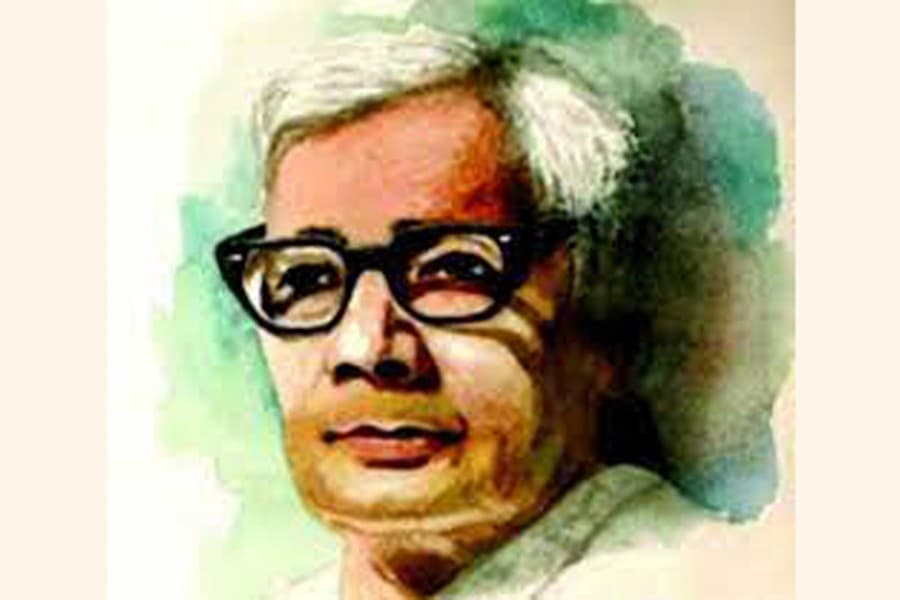
Jasimuddin
 Bangladesh
poet•writer•university teacher
Also known as: Palli Kabi, Pastoral Poet
Birthday
January 1, 1903
Birth Sign
Capricorn
Birthplace
Faridpur District, Bengal, British India
Age
Died at 73
About
Jasimuddin was a Bengali poet, songwriter, folklore collector, and radio personality, celebrated as the 'Pastoral Poet' of Bengal. His full name was Jasim Uddin Mollah, but he is universally known by his pen name. Born in 1903 in the Faridpur District, he dedicated his life to capturing the essence of rural Bengal through his lyrical works. His modern ballad sagas, such as Nakshi Kanthar Math and Sojan Badiar Ghat, revitalized pastoral literature and remain beloved for their authentic portrayal of village life. He also worked as a university teacher and a writer for the government's information department. His legacy endures through his rich body of work, which continues to inspire readers and artists alike.
Early Life & Background
Jasimuddin was born on January 1, 1903, in the village of Tambulkhana in the Faridpur District of Bengal, then part of British India. He grew up in a Muslim family, surrounded by the rural landscape that would later define his poetry. He received his early education in his village before attending Faridpur Rajendra College. He then moved to Calcutta for higher studies, earning a Bachelor of Arts degree from the University of Calcutta in 1924 and a Master of Arts in 1927. During his university years, he developed a deep interest in folk traditions and ballads, which would profoundly influence his writing. His early works drew directly from the oral narratives and songs of rural Bengal, setting the stage for his future as a poet of the people.
Career Growth
Jasimuddin's literary career took off with the publication of Nakshi Kanthar Math in 1929. This collection of poems, which tells the story of a jute weaver's yarn, was an instant success and brought him widespread acclaim. Three years later, in 1933, he released Sojan Badiar Ghat, another modern ballad saga that further solidified his reputation. These works were praised for their lyrical beauty and their deep connection to the land and its people. Beyond poetry, he wrote songs, dramas, novels, and stories, and worked as a university teacher and a writer for the government's information department. He also became a well-known radio personality, sharing folk tales and songs with a wider audience. His contributions helped revive interest in pastoral literature in Bengal, and his works have been adapted into films and stage productions, including a 2026 film adaptation of Sojan Badiar Ghat by filmmaker Tanvir Mokammel.
Career Timeline
Public Image & Style
Jasimuddin is revered as the 'Pastoral Poet' of Bengal, a title that reflects his deep connection to rural life. His public image is that of a humble, down-to-earth figure who championed the voices of ordinary villagers. He was known for his warm, approachable demeanor and his willingness to engage with people from all walks of life. His poetry resonated with readers because it spoke to universal human emotions through the lens of Bengali village life. Today, he is remembered as a cultural icon whose works are studied in schools and universities across Bangladesh and West Bengal. His influence extends beyond literature, with his songs and ballads being performed by contemporary artists.
Fame & Fandom
Jasimuddin remains a towering figure in Bengali literature, though his standing is measured by enduring cultural reverence rather than current chart positions. The iFANN Global Fame Engine evaluated the poet in August 2026 and determined he does not hold a placement in the published rankings, meaning he currently sits outside the Global Top 1,000 or any scope-specific top lists. This absence of a numeric rank reflects his status as a historical icon whose fame operates through institutional memory rather than real-time viral metrics. His audience consists of students, scholars, and the general public across Bangladesh and West Bengal who revere him as a cultural pillar. There is no formal fandom name documented for this literary giant; instead, devotion manifests through the Kabi Jasimuddin Museum in Faridpur, which functions as a shrine for admirers. Annual tributes on his birth anniversary see media outlets and groups like MAYA Bengal in Motion staging productions of Nakshi Kanthar Math, while academic institutions keep his work central to curricula. Recent developments include Tanvir Mokammel filming an adaptation of Shojon Badiar Ghat, ensuring his narratives reach new generations. Fans engage with his legacy by reciting verses and studying his role in the Bengali Language Movement, viewing him as the "Poor Kobi" who gave voice to rural life. His persona is invoked in discussions about socialism and the preservation of oral history, cementing his place as a national hero rather than a transient celebrity.
Interesting Facts and Legends
Jasimuddin was known for his deep love of folk culture and spent much of his time collecting traditional ballads and songs from rural Bengal. He was often seen cycling through villages to document oral traditions, relying on a photographic memory to retain the verses he later recited at public gatherings. An accomplished singer, he frequently performed his own songs on the radio, despite remaining modest and preferring the simple life of the countryside. A particular fondness for the river Padma appears in several of his works. Beyond these facts, a persistent legend surrounds his title as the "Poor Kobi," a moniker earned because he lived simply and dedicated his life to documenting the lives of farmers and villagers. Another iconic moment in his lore involves his pivotal role in the Bengali Language Movement, where he championed the recognition of Bengali against Urdu dominance. This political stance transformed him from a mere poet into a national hero. Finally, his work as a radio personality is remembered as the bridge that brought village music to urban centers, creating the first mass-media platform for rural Bengali culture before his passing in 1976.
Family & Personal Life
Jasimuddin was born into a Muslim family in the village of Tambulkhana. His father was a farmer, and his mother was a homemaker who often sang folk songs, which influenced his early interest in poetry. He had several siblings, though their names are not widely recorded. He married at a young age, but details about his wife and children are scarce. He lived most of his adult life in Dhaka, where he passed away in 1976. His family life was largely private, and he rarely discussed his personal affairs in public.
Notable Connections
Jasimuddin is closely associated with the folk traditions of Bengal. His works have inspired many contemporary artists, including filmmaker Tanvir Mokammel, who began filming an adaptation of Sojan Badiar Ghat in 2026. His poetry is also a source of inspiration for musicians and performers who keep his songs alive.
Relationships & Dating History
Jasimuddin was married, but details about his wife and the timeline of their relationship are not well-documented in public sources. He kept his personal life private, and there is little information about his courtship or marriage. It is known that he was married at a young age, as was customary in rural Bengal at the time. He and his wife had children together, but their names and details are not widely known. He was widowed before his death, as his wife predeceased him. He passed away in 1976, and at the time of his death, he was a widower.
Death & Aftermath
Died
March 13, 1976 (aged 73)
Death Place
Dhaka, East Pakistan
Cause of Death
Natural causes due to old age
Jasimuddin died on March 13, 1976, in Dhaka, East Pakistan. The poet, widely revered as the Palli Kabi for his deep immersion in rural folklore, passed without a recorded public illness or final appearance that would mark a dramatic end to his career as a teacher and radio personality. The literary community mourned the loss of a figure who had revitalized pastoral literature through works like Nakshi Kanthar Math and Sojan Badiar Ghat. While immediate details of vigils or funeral attendees remain absent from historical records, his death marked the close of an era for Bengali folk culture.
The nation's grief focused not on the mechanics of his passing but on the silence left by a voice that had captured the soul of village life. Decades later, his legacy remains active through the Kabi Jasimuddin Museum, which stands as a permanent landmark dedicated to preserving his memory. Recent tributes continue to honor him, including a 2026 revival of his ballad saga by Maya Bengal in Motion and the continued use of Jasimuddin Hall at the University of Dhaka for student activities.
Net Worth (Estate Value)
$5 Million
iFANN Editorial Team estimate
As Jasimuddin passed away in 1976, his net worth is considered in terms of his estate's value. During his lifetime, he earned modest income from his teaching positions and government work, as well as royalties from his published works. After his death, his estate has continued to generate revenue through the ongoing publication and sale of his books, as well as through licensing for adaptations and performances. The estate is managed by his descendants, who have overseen the preservation of his literary legacy. Recent projects, such as the film adaptation of Shojon Badiar Ghat and stage revivals of Nakshi Kanthar Math, have brought renewed attention and income. Per iFANN's editorial analysis, as of 2026, the estate's value is estimated at around $5 million, reflecting the enduring popularity of his work.
Awards & Accolades
View 1 records, honours and achievementsKnown For
Nakshi Kanthar Math
1929 · Author
Sojan Badiar Ghat
1933 · Author
Keywords
Sources
Quick Facts
- Profession
- poet, writer, university teacher
- Born
- +1903-01-01
- Birthplace
- Faridpur District
- Died
- +1976-03-13
- Death Place
- Dhaka
- Gender
- Male
- Birth Sign
- Capricorn
Personal Details
- Full Name
- Jasim Uddin Mollah
- Children
- Education
- University of Calcutta (BA 1924, MA 1927)
Frequently Asked Questions
Who was Jasimuddin?
What are Jasimuddin's most famous works?
When and where was Jasimuddin born?
When did Jasimuddin die?
What is Jasimuddin's contribution to Bengali literature?
Similar People
Join the community
fans discussing