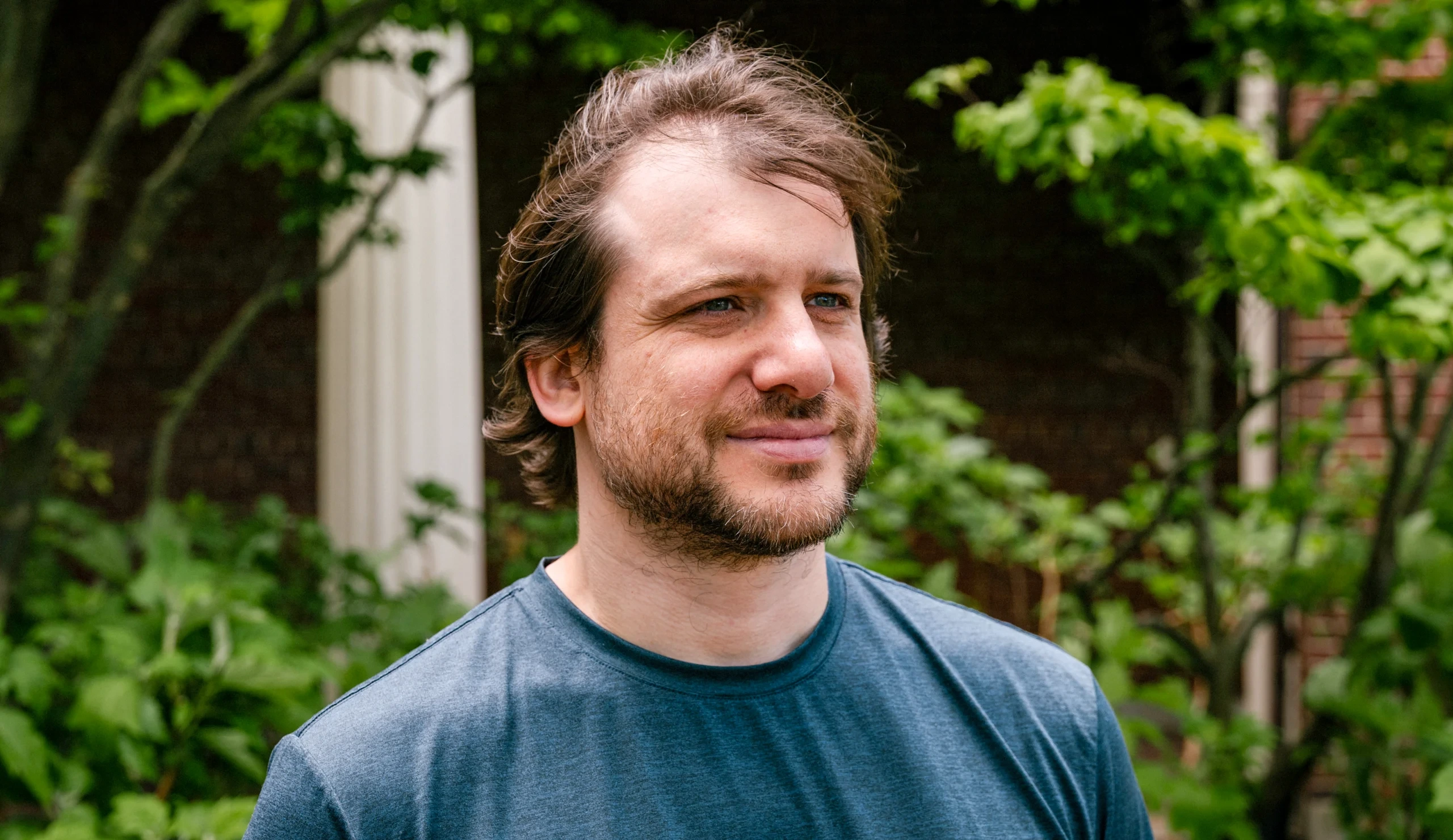
Jacob Tsimerman
 Russia
Birthday
April 26, 1988
Birth Sign
Taurus
Birthplace
Kazan, Soviet Union (now Russia)
Age
38 years old
About
Jacob Tsimerman is a Canadian mathematician and professor at the University of Toronto, widely recognized for his breakthroughs in number theory and algebraic geometry. In 2026, he was awarded the Fields Medal for his work on o-minimality, Griffiths' conjecture, and the André–Oort conjecture. He is known for his collaborative spirit and infectious enthusiasm for mathematics, which he describes as 'basically puzzles.' Tsimerman's research has reshaped how mathematicians understand the distribution of special points and Hodge loci, and he has mentored numerous graduate students at U of T. He has also co-authored a paper on AI safety and served as leader of Canada's IMO delegation.
Early Life & Background
Jacob Tsimerman was born on April 26, 1988, in Kazan, then part of the Soviet Union, to a Russian-Jewish family. When he was two, his family moved to Israel, and at age eight they relocated to Toronto, Canada. By age three, he was already enjoying math puzzles, encouraged by his grandfather, a physicist, and his mother, a math teacher. He attended the University of Toronto Schools for high school, where he represented Canada at the International Mathematical Olympiad in 2003 and 2004, winning gold medals both years and achieving a perfect score in 2004. At just 16, he began his undergraduate studies at University College, University of Toronto, and earned a bachelor's degree in mathematics in two years, graduating in 2006. He then pursued a PhD at Princeton University under the supervision of Peter Sarnak, completing it in 2011. During graduate school, he briefly interned at the quantitative trading firm Jane Street for two months and worked part-time for another investment firm, but ultimately chose academic mathematics, saying he preferred longer research projects that were freer.
Career Growth
After earning his PhD in 2011, Tsimerman became a Junior Fellow at the Harvard Society of Fellows, a prestigious postdoctoral position. In 2013, he and Jonathan Pila published an unconditional proof of the André–Oort conjecture for the coarse moduli space of principally polarized abelian surfaces, a major breakthrough. He joined the University of Toronto as an assistant professor in 2014, becoming the youngest faculty member in the Department of Mathematics. That same year, he received a Sloan Fellowship. In 2015, he was awarded the SASTRA Ramanujan Prize for his contributions to the André–Oort conjecture and work in analytic number theory and algebraic geometry. He won the Ribenboim Prize in 2016 and the Coxeter-James Prize in 2019. In 2022, he received the New Horizons in Mathematics Prize, and in 2023, the Ostrowski Prize. The crowning achievement came in 2026, when he was awarded the Fields Medal at the International Congress of Mathematicians. He has also co-authored a paper on AI safety and served as leader of Canada's IMO delegation. He became the youngest person ever appointed full professor in the University of Toronto Department of Mathematics, and was a distinguished visiting professor at the Institute for Advanced Study in 2024–2025.
Career Timeline
Public Image & Style
Tsimerman is portrayed in media as a brilliant and collaborative mathematician with an infectious love for mathematics. He is known for his collaborative style, often working with students at blackboards in the department lounge. He describes mathematics as 'such a team sport.' His public image is that of a humble and playful genius, grounded in his love for puzzles and teamwork. No official fandom name or fan-culture rituals have been documented.
Fame & Fandom
Jacob Tsimerman commands a presence defined by the quiet gravity of academic distinction rather than the noise of celebrity culture. His audience consists almost exclusively of mathematicians, graduate students, and science journalists who follow his work on o-minimality and the André–Oort conjecture with intense professional interest. Unlike pop icons or athletes, he has no organized fanbase, no collective name for his followers, and no rituals of devotion; his public image remains that of a collaborative scholar whose fame is measured in citations and breakthrough proofs rather than merchandise sales or social media metrics. The transition from pure mathematics to AI safety in 2026 drew significant attention within the tech and scientific communities, yet this interest remained focused on the implications for the field rather than personal adoration. There are no fan clubs, birthday billboards, or crowdfunding campaigns supporting him, as his career trajectory has been shaped by institutional roles and peer recognition rather than public engagement. While the mathematical community celebrates his Fields Medal victory and his pivot to OpenAI, these events serve as milestones in a professional narrative rather than moments of viral spectacle. According to the August 2026 evaluation by the iFANN Global Fame Engine, Jacob Tsimerman is currently evaluated but does not hold a placement in the published rankings, meaning he is not ranked within the Global Top 1,000 or any Top-100 scope list. This absence of a numerical rank reflects the specialized nature of his influence, which remains potent within his discipline but does not translate to broad global celebrity metrics tracked by the engine.
Interesting Facts and Legends
Jacob Tsimerman possesses a diverse array of interests outside the blackboard, including improv comedy, escape rooms, comic books, judo, guitar, and tango. He once quipped that solving difficult problems would be easier if he possessed Spider-Man's powers. In 2004, he achieved a perfect score at the International Mathematical Olympiad. A 2016 interview captured his view that mathematics is 'basically puzzles,' a sentiment that underscores his playful approach to complex theory. Despite his success, he has ceased accepting new graduate students, citing uncertainty regarding how artificial intelligence will reshape the landscape of mathematical research. He is a Fellow of the Royal Society and served as an invited speaker at the 2018 International Congress of Mathematicians. Recent years have added two defining chapters to his professional legend: the 2026 awarding of the Fields Medal for his proof of the André–Oort conjecture, and his subsequent departure from academia to join OpenAI to address AI safety concerns. These events marked a rare shift where a top-tier number theorist prioritized the future of human discovery over continued academic prestige, creating a narrative of a genius choosing responsibility over reputation.
Notable Quotes
“By the time I was three, I was enjoying math puzzles. My grandfather was a physicist and my mother taught math, so I had a lot of support and resources growing up, along with plenty of puzzles to solve. And that's what mathematics is, basically: puzzles.”
“It's an incredible honour to win this award, not just for me, but for all my collaborators without whom this truly would not be possible. Math is such a team sport that it becomes impossible to disentangle who contributed what on projects.”
“I wish I had Spider-Man's powers.”
“I just like doing longer research projects. They were freer.”
“I stopped doing fun side projects and buckled down on projects that were high-return.”
Family & Personal Life
Tsimerman's mother was a math teacher and his grandfather was a physicist. His father is also part of the family, though his name is not publicly documented. Tsimerman is married and has children, who were present at a dinner during the Fields Medal ceremony according to a Quanta Magazine interview. Specific details about his spouse and children are kept private.
Notable Connections
Peter Sarnak was his PhD advisor at Princeton. He frequently collaborates with Jonathan Pila on the André–Oort conjecture and Ax-Schanuel. Other collaborators include Arul Shankar, Ananth Shankar, Benjamin Bakker, Vivek Shende, Nicholas Templier, and Andrew Critch, with whom he co-authored an AI safety paper.
Relationships & Dating History
Jacob Tsimerman is married, though his spouse's name and the timeline of their relationship are not publicly documented. He has children, as mentioned in a Quanta Magazine interview. No previous relationships or dating history have been reported in credible sources. As of 2026, he remains married.
- MarriedCurrentSpouse's name not publicly documented; they have children together.
Salary, Net Worth In 2026
$1.5 Million
iFANN Editorial Team estimate
Per iFANN's editorial analysis, Jacob Tsimerman's net worth stands at $1.5 Million as of 2026. This figure is derived primarily from his full professorship salary at the University of Toronto. Additional income stems from major accolades, including the Fields Medal which carries a monetary award of approximately CAD $15,000, the SASTRA Ramanujan Prize totaling $10,000, and the New Horizons in Mathematics Prize amounting to $100,000. During his graduate studies, he gained early financial experience through brief stints in quantitative finance at Jane Street and another firm. No real estate holdings, endorsement deals, or business ventures are publicly documented. His financial standing reflects a career built on academic excellence and prize earnings without commercial diversification.
Awards Won (6)
Jacob Tsimerman has won several of mathematics' most prestigious awards. He received the SASTRA Ramanujan Prize in 2015, the New Horizons in Mathematics Prize in 2022, and the Ostrowski Prize in 2023. In 2026, he was awarded the Fields Medal, the highest honor in mathematics.
2026 · Mathematics
Work on o-minimality, Griffiths' conjecture, and the André–Oort conjecture
2023 · Mathematics
Outstanding achievements in mathematics
Known For
André–Oort conjecture
2013 · Co-prover
Griffiths' conjecture
2026 · Prover
Fields Medal
2026 · Recipient
Keywords
Sources
Quick Facts
- Profession
- Mathematician
- Born
- April 26, 1988
- Birthplace
- Kazan, Soviet Union
- Gender
- Male
- Birth Sign
- Taurus
Personal Details
- Full Name
- Jacob Tsimerman
- Children
- Yes
- Education
- PhD, Princeton University (2011); BSc, University of Toronto (2006)
Frequently Asked Questions
How old is Jacob Tsimerman?
What is Jacob Tsimerman's net worth in 2026?
Is Jacob Tsimerman married?
Did Jacob Tsimerman win the Fields Medal?
What is Jacob Tsimerman best known for?
Similar People
Join the community
fans discussing