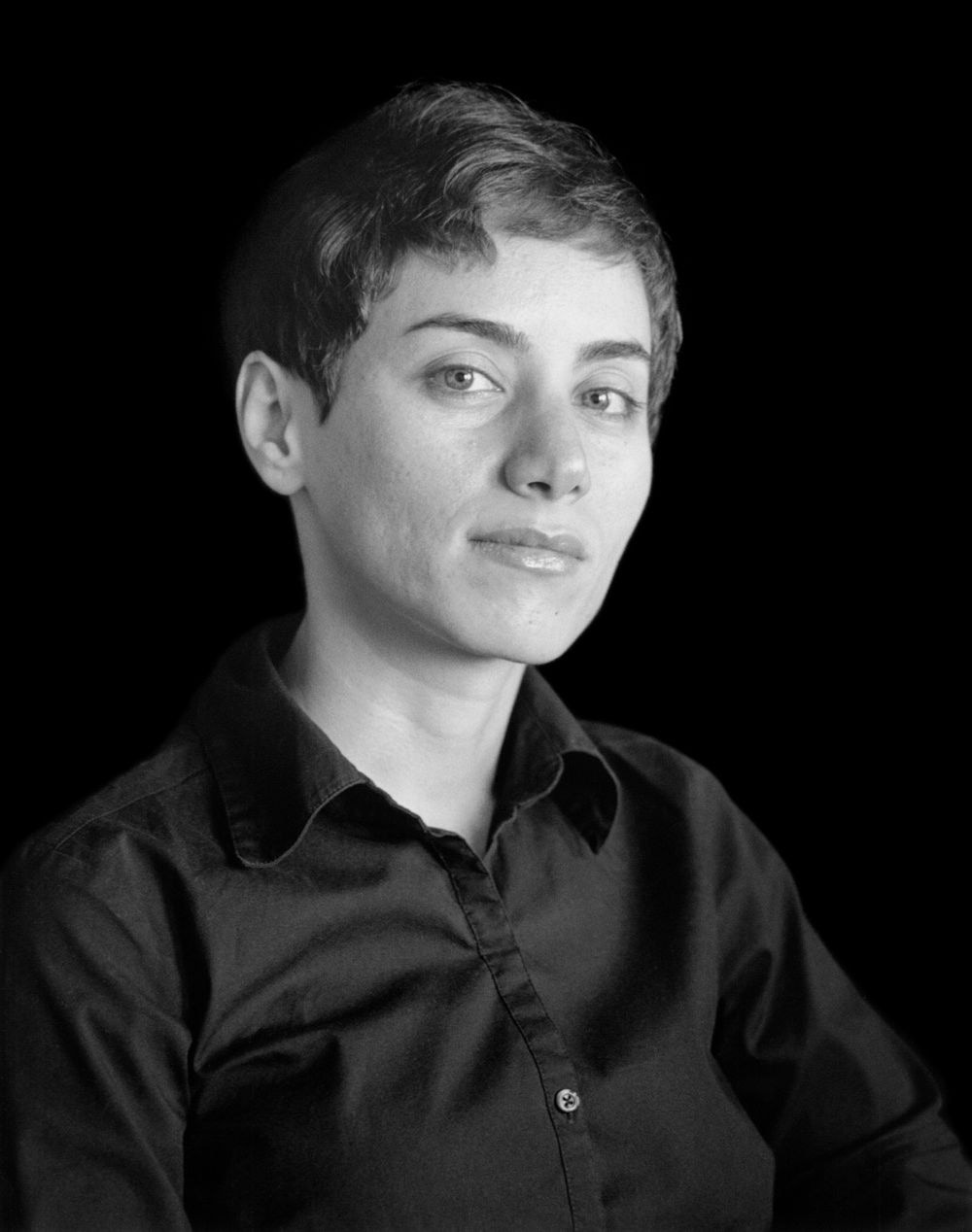
Maryam Mirzakhani
 Iran
Iranmathematician•university teacher•topologist
Birthday
May 12, 1977
Birth Sign
Taurus
Birthplace
Tehran, Iran
Age
Died at 40
Height
5 ft 5 in (165 cm)
About
Maryam Mirzakhani was an Iranian mathematician and professor. She is famous for her profound contributions to the dynamics and geometry of Riemann surfaces and their moduli spaces, becoming the first woman and first Iranian to win the Fields Medal in 2014. Her research focused on hyperbolic geometry, dynamical systems, and topology. With Alex Eskin and later Amir Mohammadi she proved breakthrough results on moduli space dynamics known as the "magic wand theorem." She also received the Blumenthal Award, the Satter Prize, and the Clay Research Award.
Mirzakhani joined Stanford University as a full professor in 2009. She died from breast cancer on July 14, 2017, at age 40. Her legacy continues through the Maryam Mirzakhani New Frontiers Prize and the 12 May Initiative, which support women in mathematics. She remains an inspiration for her groundbreaking achievements and her role as a trailblazer for women in STEM.
Early Life & Background
Maryam Mirzakhani was born in Tehran, Iran, on May 12, 1977. Growing up in her hometown, she was an avid reader who found great joy in devouring biographies and novels, a passion that initially led her to dream of becoming a writer. Her exceptional mathematical talent began to emerge during her high school years at the Farzanegan School, a highly selective all-girls institution designed for gifted students. A pivotal moment in her intellectual journey occurred when she and her close friend, Roya Beheshti, encountered a Russian translation of a mathematics problem book by Wacław Sierpiński. This experience proved to be a profound turning point, igniting in Mirzakhani a deep and lasting interest in mathematics.
Her burgeoning mathematical prowess quickly garnered significant recognition. She distinguished herself by winning gold medals at the International Mathematical Olympiad, first in 1994 in Hong Kong with a score of 41 out of 42, and then achieving a perfect score of 42 out of 42 in Toronto in 1995. These remarkable achievements made her the first Iranian woman to earn a perfect score at the Olympiad, bringing her national acclaim and providing a direct path to higher education. Mirzakhani pursued her undergraduate studies at Sharif University of Technology, where she earned her Bachelor of Science in Mathematics in 1999, graduating at the top of her class. Following this, she moved to the United States to continue her academic pursuits, completing her graduate studies at Harvard University and earning her Ph.D. in 2004 under the esteemed supervision of Curtis T. McMullen.
Career Growth
Mirzakhani completed her PhD at Harvard in 2004 under Fields Medalist Curtis T. McMullen, with a dissertation titled "Simple Geodesics on Hyperbolic Surfaces and the Volume of the Moduli Space of Curves." She then served as a Clay Mathematics Institute Research Fellow at Princeton University and the Institute for Advanced Study from 2004 to 2008.
In 2008, she joined Stanford University as an associate professor and was promoted to full professor in 2009. In 2010, she published a landmark paper with Alex Eskin proving the "magic wand theorem," which showed that the action of SL(2,R) on moduli spaces is ergodic. In 2013, with Amir Mohammadi, she extended this to the Eskin–Mirzakhani–Mohammadi theorem. In 2014, she was awarded the Fields Medal at the International Congress of Mathematicians in Seoul, becoming the first woman and first Iranian to receive the honor. The citation recognized "her outstanding contributions to the dynamics and geometry of Riemann surfaces and their moduli spaces."
Career Timeline
Public Image & Style
Mirzakhani was known for her modest, academic appearance, often photographed in simple clothing with dark hair and a warm smile. She was described as humble, shy, and deeply focused on her work. The media consistently portrays her as a trailblazer for women in STEM, a symbol of Iranian scientific achievement, and a tragic loss to mathematics. Her story is often framed as a narrative of perseverance against gender barriers. On her birthday, May 12, many mathematics departments and women-in-STEM groups hold events and social media campaigns celebrating her life and work. Memorial accounts post about her achievements and inspirational quotes from her interviews.
Fame & Fandom (iFAMOUS Rankings)
Maryam Mirzakhani's legacy is defined not by celebrity, but by the profound silence of a breakthrough that shattered a ninety-year ceiling. She remains the only woman to have ever won the Fields Medal, a distinction that anchors her global standing in mathematics. In August 2026, she holds the position of the 99th most famous person in Iran and stands as the 13th most famous person from Iran, rankings that reflect a steady, enduring reverence across borders. These placements within the iFANN Global Fame Rankings track how her story resonates through media coverage and educational discourse worldwide. While her fame is academic rather than pop-cultural, it carries a weight that transcends typical metrics. The mathematical community does not rally with unofficial names or organized campaigns; there is no fanbase with a specific moniker to claim ownership of her image. Instead, admirers are students, professors, and scientists who view her through a lens of deep professional respect. Her "fans" gather annually on May 12 to honor her birthday, transforming the date into a quiet ritual of scholarship rather than spectacle. No subway ads funded by crowds or chart pushes marked her life; her influence is measured in theorems proven and young women inspired to enter the field. The absence of a formal fandom name underscores the nature of her impact: a singular figure whose presence is felt in lecture halls and research papers rather than social media feeds. Even after her passing, the narrative remains one of intellectual triumph. The world knows her as a pioneer who walked alone through the jungle of hyperbolic geometry, leaving behind a map that others now follow.
Interesting Facts and Legends
Maryam Mirzakhani and her friend Roya Beheshti faced a gender barrier early on when denied entry to a boys-only math Olympiad training program in Iran. They successfully argued their case to the school principal, claiming they had no other mentors, which secured their spot. Her PhD dissertation was so revolutionary that editors split the work into three separate papers published in top-tier journals. Mirzakhani often described her problem-solving method as being lost in a jungle, relying on every ounce of knowledge to find an exit. She worked by drawing intricate doodles on large sheets of paper, a process she called her thinking style. The Fields Medal she received in 2014 was named after John Charles Fields, making Mirzakhani the 52nd recipient overall and, as of 2026, the only woman to hold the title. A defining legend surrounding her is her reputation as a slow thinker who approached complex problems with intense patience and curiosity. This trait became central to her mythos, highlighting that brilliance does not always require speed. Her death from breast cancer on July 14, 2017, at age 40 triggered a global outpouring of grief, cementing her status as a national icon in Iran and a symbol of female empowerment in STEM. Since then, rituals have emerged to honor her memory, including the Maryam Mirzakhani Junior Prize for undergraduate women established by École Polytechnique and annual commemorations at institutions like San Francisco State University.
Notable Quotes
“The more I spend time on mathematics, the more excited I get.”
“I don't think that everyone should become a mathematician, but I do think that many students don't give mathematics a real chance.”
“The beauty of mathematics only shows itself to more patient followers.”
“It is like being lost in a jungle and trying to use all the knowledge you can to find your way out.”
“I hope that young women and girls will see that they can achieve great things in mathematics and science.”
Family & Personal Life
Mirzakhani was born to Ahmad Mirzakhani, an electrical engineer, and Zahra Mirzakhani, a homemaker. She had an older brother and a younger sister. In 2008, she married Jan Vondrák, a Czech-American mathematician and computer scientist who is a professor at Stanford University. They met while both were at Princeton University in the mid-2000s. The couple had one daughter, Anahita Vondrák, born in 2011. Mirzakhani's family was deeply supportive of her work; Vondrák has spoken publicly about managing her care during her illness.
Notable Connections
Mirzakhani's PhD advisor was Curtis T. McMullen, a Fields Medalist. She collaborated closely with Alex Eskin on moduli space dynamics, co-proving the "magic wand theorem." She also worked with Amir Mohammadi on the Eskin–Mirzakhani–Mohammadi theorem. Her husband, Jan Vondrák, is a mathematician and computer scientist at Stanford. Her childhood friend Roya Beheshti studied mathematics alongside her. Fellow Fields Medalist Caucher Birkar dedicated his 2018 medal to her memory.
Relationships & Dating History
Mirzakhani's known romantic relationships are limited to her marriage. There are no documented public relationships prior to her marriage. She married Jan Vondrák, a Czech-American mathematician and computer scientist, in 2008. They met while both were at Princeton University in the mid-2000s, Mirzakhani as a Clay Mathematics Institute Research Fellow and Vondrák as a postdoctoral researcher. The couple had one daughter, Anahita, born in 2011. Vondrák has spoken publicly about supporting her work and managing her care during her illness. Mirzakhani was married to Vondrák at the time of her death on July 14, 2017.
- MarriedJan Vondrák2008 - 2017Met while both were at Princeton University. Married in 2008 and had one daughter, Anahita, born in 2011.
Death & Aftermath
Died
July 14, 2017 (aged 40)
Death Place
Unknown
Cause of Death
Unknown
Net Worth (Estate Value)
$2 Million
iFANN Editorial Team estimate
As of 2026, the estate of Maryam Mirzakhani is valued at approximately $2 million. Per iFANN's editorial analysis, this figure reflects the modest accumulation of wealth typical for an academic mathematician who did not engage in commercial ventures. During her tenure as a full professor at Stanford University from 2009 until her death in 2017, her annual salary ranged between $150,000 and $200,000. The Fields Medal carried a monetary award of 15,000 Canadian dollars, roughly equivalent to $11,000 USD. Following her passing, her husband Jan Vondrák manages the estate, which generates revenue through book royalties, licensing fees for educational initiatives, and rights related to posthumous documentaries. The Maryam Mirzakhani New Frontiers Prize operates separately under the Breakthrough Prize Foundation and draws no funds from her personal estate.
Awards Won (6)
Mirzakhani won the Fields Medal in 2014, the highest honor in mathematics, becoming the first woman and first Iranian recipient. She also received the Clay Research Award in 2014, the Satter Prize in 2013, and the Blumenthal Award in 2009, all from the American Mathematical Society. She won gold medals at the International Mathematical Olympiad in 1994 and 1995, including a perfect score. She was elected to the American Academy of Arts and Sciences in 2015 and the National Academy of Sciences in 2016.
2014 · Mathematics
Contributions to dynamics and geometry of Riemann surfaces and moduli spaces
2014 · Mathematics
Breakthrough results on moduli spaces
Known For
Fields Medal
2014 · Recipient
Eskin–Mirzakhani theorem
2010 · Co-author
Eskin–Mirzakhani–Mohammadi theorem
2013 · Co-author
Keywords
Quick Facts
- Profession
- mathematician, university teacher, topologist
- Born
- +1977-05-12
- Birthplace
- Tehran
- Died
- +2017-07-14
- Death Place
- Stanford
- Gender
- Female
- Spouse
- Jan Vondrák
- Birth Sign
- Taurus
Personal Details
- Height
- 5 ft 5 in (165 cm)
- Spouse
- Jan Vondrák
- Children
- Anahita Vondrák
- Education
- Sharif University of Technology (B.Sc., 1999), Harvard University (Ph.D., 2004)
Frequently Asked Questions
How did Maryam Mirzakhani die?
Did Maryam Mirzakhani have kids?
What did Maryam Mirzakhani win the Fields Medal for?
How old was Maryam Mirzakhani when she died?
Is Maryam Mirzakhani the only woman to win the Fields Medal?
Social Media
Join the community
fans discussing