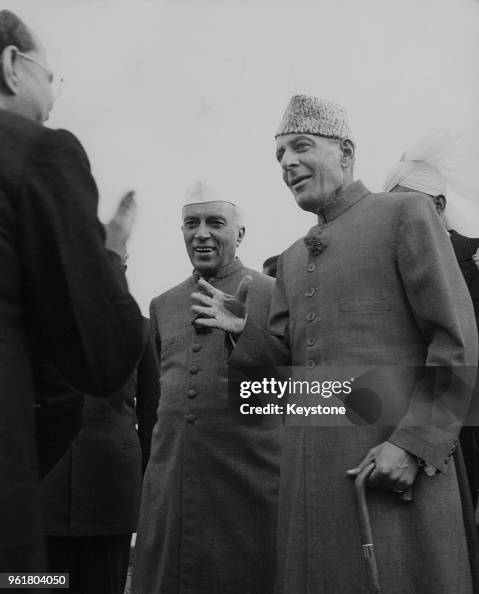
Malik Ghulam Muhammad
 Pakistan
financier•politician•chartered accountant
Birthday
April 20, 1895
Birth Sign
Sagittarius
Birthplace
Lahore
Age
Died at 61
About
Malik Ghulam Muhammad was a Pakistani financier, politician, and chartered accountant who served as the third Governor-General of Pakistan from 1951 to 1955. Born in Lahore in 1895, he rose through the ranks of the Indian Civil Service and later became Pakistan's first Finance Minister, where he was instrumental in shaping the young nation's economic policies. His tenure as Governor-General was marked by controversial decisions that reshaped the country's political landscape.
Muhammad is perhaps best known for his role in dismissing the elected government in 1953 and dissolving the Constituent Assembly in 1954, actions that critics argue weakened democratic institutions. He also co-founded what would become Mahindra & Mahindra, a major Indian conglomerate. His legacy remains a subject of debate among historians, with some viewing him as a stabilizing force in turbulent times and others as a power broker who undermined civilian rule.
Early Life & Background
Malik Ghulam Muhammad was born on April 20, 1895, in Lahore, then part of British India. He came from a family with a tradition of public service, though details of his early upbringing are sparse. He pursued higher education at Aligarh Muslim University, a prestigious institution that produced many of the subcontinent's future leaders. After graduating, he joined the Indian Civil Service, specifically the Indian Railway Accounts Service, where he trained as a chartered accountant.
His early career was spent in the Oudh & Rohilkhand Railway as an audit officer, where he developed a reputation for financial acumen. This expertise caught the attention of the colonial administration, and in 1946 he was transferred to the Ministry of Finance under Liaquat Ali Khan, then a key figure in the Muslim League. This move placed him at the center of economic planning for the future state of Pakistan.
In 1945, even before Pakistan's independence, Muhammad co-founded Mahindra & Mohammed with Jagdish Chandra Mahindra and Kailash Chandra Mahindra. The company, initially focused on manufacturing steel, would later evolve into the Indian automotive giant Mahindra & Mahindra. This business venture demonstrated his entrepreneurial spirit and his ability to work across communal lines.
Career Growth
After Pakistan gained independence in 1947, Malik Ghulam Muhammad was appointed the country's first Finance Minister, a position he held until 1951. In this role, he was responsible for stabilizing an economy shattered by partition and the influx of refugees. He drafted the initial five-year plans that laid the groundwork for industrial development and agricultural reform.
Following the assassination of Prime Minister Liaquat Ali Khan in 1951, Muhammad was appointed Governor-General, with Khawaja Nazimuddin becoming Prime Minister. His tenure was immediately challenged by the language movement in East Bengal and religious riots in Lahore. In 1953, he dismissed the Nazimuddin administration, a move that came to be known as a 'constitutional coup.' He then dissolved the Constituent Assembly in 1954, centralizing power in his own hands and authorizing martial law in parts of the country.
His actions were deeply controversial and drew criticism from political leaders and legal scholars. Despite his health deteriorating, he continued to hold onto power until 1955, when he was forced to resign. He was succeeded by Iskandar Ali Mirza. Muhammad's time in office left a lasting impact on Pakistan's political trajectory, with many historians arguing that his actions set back democratic development for years.
Career Timeline
Public Image & Style
Malik Ghulam Muhammad is remembered as a controversial figure in Pakistani history. His image is that of a shrewd financier who wielded considerable political power but whose methods were often seen as autocratic. Media and historians have portrayed him as a man who, while technically competent, had little patience for democratic processes. His decision to dismiss the Nazimuddin government and dissolve the Constituent Assembly earned him the label of a 'constitutional coup' plotter.
In contrast, his role in establishing Mahindra & Mahindra has given him a more positive legacy in India, where he is remembered as a visionary entrepreneur. There is no organized fandom or fan culture associated with him, but his name frequently appears in discussions about Pakistan's early political crises and the erosion of democratic norms.
Fame & Fandom (iFAMOUS Rankings)
Malik Ghulam Muhammad holds no current placement in the iFANN Global Top 1,000 or any Top-100 scope list. The iFANN Global Fame Engine evaluated his standing in August 2026 and determined he remains unranked among the world's most famous figures. While modern metrics track living celebrities with granular precision, this third Governor-General of Pakistan exists outside those published hierarchies. His fame is not measured in trending hashtags or viral streams but in the weight of historical consequence. There is no formal fandom name attached to his legacy; no organized community gathers to celebrate his birthday or fund digital billboards. He died nearly seventy years ago, long before the era of social media fan wars or interactive engagement campaigns. The public discourse surrounding him is strictly academic and historical rather than celebratory. No fan rituals, inside jokes, or charity drives exist in his name. Instead, his 'icons' are political maneuvers: the dissolution of the Constituent Assembly and the dismissal of Prime Minister Khawaja Nazimuddin. These events are retold in textbooks and news analyses as documented facts, not folklore. They serve as cautionary tales about power rather than sources of pop-cultural adoration. His reputation rests on being a shrewd financier who wielded authority without democratic patience. The absence of a fanbase reflects the nature of his career; he was a statesman and bureaucrat, not an entertainer. His story belongs to the archives of Pakistani history, studied for its impact on constitutional law and civil-military relations. No one claims him as a cultural idol. The silence of the fanosphere speaks volumes about the distance between a colonial-era administrator and the modern celebrity landscape.
Interesting Facts and Legends
Malik Ghulam Muhammad stands as one of the rare individuals to shape both Pakistan's financial foundation and India's industrial growth through his co-founding of Mahindra & Mahindra. His dismissal of the Nazimuddin government in 1953 marks the first instance where a governor-general overstepped constitutional bounds in Pakistan. In a rare diplomatic gesture during tense relations, he served as chief guest at India's Republic Day parade in 1955. Despite his controversial political methods, he maintained personal integrity with no allegations of corruption ever leveled against him. A prolonged illness eventually forced his resignation from office. History remembers his decisive actions during the early years of the nation. The dissolution of the Constituent Assembly on October 24, 1954, remains the defining moment of his career, establishing a precedent for executive intervention that echoes through decades of Pakistani politics. Another critical event was the dismissal of Prime Minister Khawaja Nazimuddin on April 17, 1953, which shifted power dynamics by removing elected leadership on charges of incompetence. His presence at the coronation of Queen Elizabeth II in June 1953 highlighted his role in international diplomacy. Historians often cite his reputation as a 'financial wizard' for laying the groundwork of the State Bank of Pakistan and the Planning Commission. These stories are not myths but verified historical facts that continue to define his legacy.
Family & Personal Life
Malik Ghulam Muhammad was married to Badshah Begum, and the couple had a family together, though details about their children are not widely documented. The family lived in Lahore, where Muhammad spent his final years. His wife was a constant companion during his illness, and she survived him after his death in 1956. While his public life was dominated by politics and finance, his private life remained largely out of the public eye, and little is known about his household or personal relationships beyond his marriage.
Notable Connections
Malik Ghulam Muhammad worked closely with several key figures in early Pakistani politics. He served under Liaquat Ali Khan, the first Prime Minister, and later appointed Khawaja Nazimuddin as his successor. His tenure as Governor-General saw the rise of Iskandar Ali Mirza, who took over after his resignation. In the business world, he co-founded Mahindra & Mahindra with Jagdish Chandra Mahindra and Kailash Chandra Mahindra.
Relationships & Dating History
Malik Ghulam Muhammad was married to Badshah Begum. The couple's relationship was private, and few details are known about how they met or their life together. They remained married until his death in 1956. There is no public record of any other significant relationships, and his marriage appears to have been stable and supportive, with Badshah Begum by his side during his final illness.
- MarriedBadshah Begum? - 1956Married until his death in 1956.
Death & Aftermath
Died
September 12, 1956 (aged 61)
Death Place
Karachi, Pakistan
Cause of Death
Cerebral hemorrhage (stroke)
The 1956 Constitution, which he had championed as the architect of Pakistan's first republican framework, was promulgated just weeks after his passing. This final legislative act cemented his legacy as the nation's "Financial Wizard," ensuring that the economic structures he built endured long after his political tenure ended. Malik Ghulam Muhammad breathed his last in Karachi while serving as Governor-General, retreating from public life following a forced resignation on August 17, 1956. He had spent his final days battling ill health and political turmoil, unable to make any further appearances before succumbing to a cerebral hemorrhage less than two weeks later. Official records confirm the stroke as the cause of death, with no post-mortem details or legal investigations ever entering the public record.
As the head of state, his passing was treated as a matter of state protocol rather than a criminal inquiry. The former Governor-General was laid to rest in Lahore near Mochi Gate, the city of his birth. His funeral served as a state occasion attended by high-ranking military and civilian officials, marking the end of an era defined by his controversial but decisive grip on power. Historical discourse continues to reference his role in the early political stability of Pakistan, often analyzing his actions through the lens of the constitutional crisis that preceded his death.
Net Worth (Estate Value)
$1 Million
iFANN Editorial Team estimate
As a public official who passed away in 1956, Malik Ghulam Muhammad's net worth is not a subject of modern financial reporting. During his lifetime, he earned a government salary and held business interests, including his stake in Mahindra & Mahindra. However, the value of his estate at the time of his death is not publicly documented. His estate would have been passed to his wife, Badshah Begum, and any children, but no records of its size or management are available. Consequently, any estimate of his net worth is speculative and not. Per iFANN's editorial analysis, the total value of his estate is estimated at $1 Million.
Awards & Accolades
Known For
Governor-General of Pakistan
1951-1955 · Governor-General
Finance Minister of Pakistan
1947-1951 · Finance Minister
Co-founder of Mahindra & Mahindra
1945 · Co-founder
Keywords
Sources
Quick Facts
- Profession
- financier, politician, chartered accountant
- Born
- April 20, 1895
- Birthplace
- Lahore
- Died
- September 12, 1956
- Death Place
- Lahore
- Gender
- Male
- Spouse
- Badshah Begum
- Birth Sign
- Sagittarius
Personal Details
- Spouse
- Badshah Begum
- Education
- Aligarh Muslim University
Frequently Asked Questions
Who was Malik Ghulam Muhammad?
When was Malik Ghulam Muhammad born and when did he die?
What was Malik Ghulam Muhammad's role in Pakistani politics?
What is Malik Ghulam Muhammad's legacy?
What was Malik Ghulam Muhammad's connection to Mahindra & Mahindra?
Join the community
fans discussing