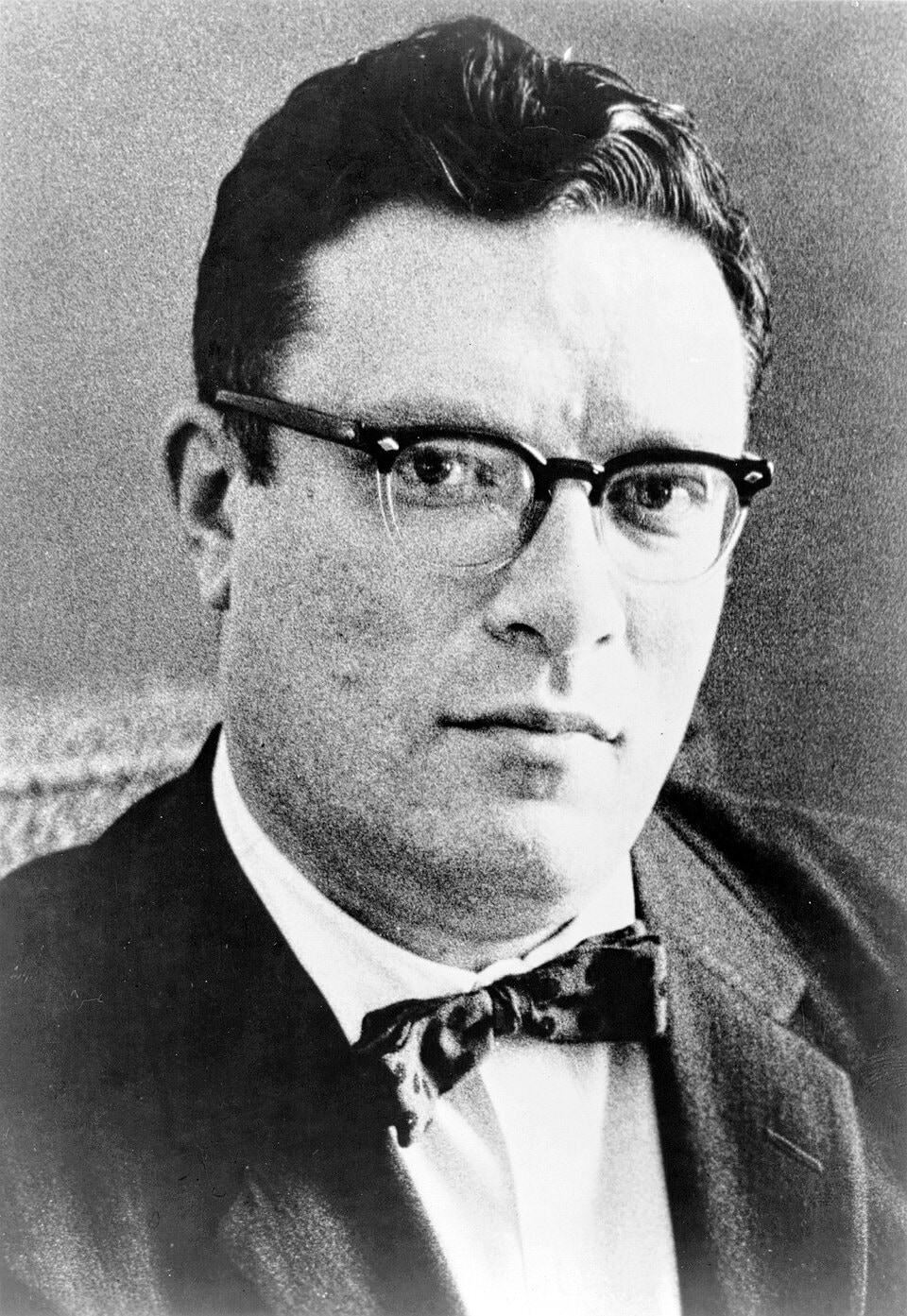
Isaac Asimov
 Russia
biochemist•novelist•prose writer
Also known as: Paul French
Birthday
January 2, 1920
Birth Sign
Capricorn
Birthplace
Petrovichi, Smolensk Governorate, Russian SFSR
Age
Died at 72
Height
5 ft 9 in (175 cm)
About
Isaac Asimov was an American biochemist and one of the most prolific writers of the 20th century, best known for his science fiction works, particularly the Foundation and Robot series. He wrote or edited over 500 books and an estimated 90,000 letters and postcards, covering science fiction, popular science, mysteries, fantasy, and nonfiction on topics from the Bible to Shakespeare. His Three Laws of Robotics remain a foundational concept in both literature and real-world robotics. Asimov's writing is characterized by clear, conversational prose and a deep optimism about human progress through science and reason. He served as president of the American Humanist Association and received numerous awards, including multiple Hugo and Nebula Awards. As of 2026, his legacy continues through ongoing adaptations like Apple TV+'s Foundation series, which has introduced his work to a new generation.
Early Life & Background
Asimov was born in Petrovichi, a small village in Russia, and emigrated with his family to Brooklyn, New York, in 1923. His parents owned a series of candy stores, where young Isaac taught himself to read at age five. The pulp magazines sold in the store sparked his lifelong love of science fiction. He began writing his own stories at 11. A key moment came in 1938 when he met John W. Campbell, the editor of Astounding Science Fiction, who became his mentor. His first published story, "Marooned off Vesta," appeared in Amazing Stories in 1939. Asimov earned a B.S. (1939), M.A. (1941), and Ph.D. in Biochemistry (1948) from Columbia University, all while writing science fiction on the side.
Career Growth
Asimov's breakthrough came in 1941 with the story "Nightfall," which was voted the best science fiction short story ever by the Science Fiction Writers of America. During World War II, he worked at the Naval Air Experimental Station in Philadelphia, alongside fellow writers Robert Heinlein and L. Sprague de Camp. After the war, he joined the faculty of Boston University School of Medicine in 1949. His major works include the Foundation trilogy (1951–1953), which won a special Hugo Award for Best All-Time Series in 1966, and the Robot novels starting with The Caves of Steel (1954). In 1972, The Gods Themselves won both Hugo and Nebula Awards. Asimov became a full-time writer in 1958, writing a monthly science column for The Magazine of Fantasy & Science Fiction for over 30 years. His later novels, such as Foundation's Edge (1982), became New York Times bestsellers. In 1986, Foundation and Earth unified his Robot, Empire, and Foundation series into a single timeline.
Career Timeline
Public Image & Style
Asimov is remembered as a kindly, brilliant, and incredibly prolific intellectual with a disarming sense of humor. His public persona was that of a friendly, approachable genius who could explain complex science in simple terms. He was often called the "father of modern robotics" due to his Three Laws. His fans, known as "Asimovians," celebrate his work through annual readings of stories like "Nightfall" and "The Last Question." Debates about the Three Laws remain a staple of fan forums. The official estate YouTube channel preserves his lectures and interviews, maintaining an archival, scholarly tone.
Fame & Fandom (iFAMOUS Rankings)
The audience for Isaac Asimov's work defies the modern model of a celebrity cult. There is no formal name for his followers, no organized fanbase structure, and no specific rituals or hashtags that define their community. Instead, his legacy rests on a quiet, enduring reverence from readers who view him as a foundational architect of science fiction rather than a pop culture icon with a dedicated following. His relationship with the public was defined by an educational mission; he introduced terms like "positronic" and "psychohistory" into the English language, creating the very vocabulary that fans use today without ever needing to engage in direct fan service or interactive campaigns. The most iconic moments surrounding him are intellectual rather than physical, his appearance on The David Letterman Show where he discussed his medical predictions remains a legendary clip, and his lament about the "Cult of Ignorance" has been revived as a viral anecdote in recent years. While stories circulate about crowds reacting to his presence, the reality is that his fame stems from a vast bibliography of over 500 books that continue to shape the genre decades after his passing. He stands as a figure whose influence permeates the culture through ideas rather than stage appearances. This enduring global attention places him firmly within the current metrics of fame. He is currently ranked as the 20th most famous person from Russia, a position holding steady from the previous cycle according to the iFANN Global Fame Rankings.
Interesting Facts and Legends
Isaac Asimov possessed a unique psychological profile, being a claustrophile who loved enclosed spaces yet harbored a deep terror of flying. A true polyglot, he spoke English, Yiddish, Russian, and some French and German. In 1941, he coined the term "robotics" in his story "Liar!" and wrote the Lucky Starr juvenile novels under the pen name Paul French. He once penned a limerick about himself: "There once was a writer named Asimov / Whose writing was quite a great prism of / All things bright and new / From the Robot to You / And the Foundation of all that is his." Beyond fiction, he authored guides to both the Bible and Shakespeare. A widely retold legend involves his appearance on The David Letterman Show, where he shared his vision of future medicine and communications, a moment that has garnered millions of views years later. Another persistent story features his 1980 quote decrying the "Cult of Ignorance" in the United States, which has recently been revived in commentary to critique societal trends. These intellectual milestones cement his status as a visionary whose concepts, such as the Three Laws of Robotics and Psychohistory, have become part of scientific mythology.
Notable Quotes
“The most exciting phrase to hear in science, the one that heralds new discoveries, is not 'Eureka!' but 'That's funny...'”
“I do not fear computers. I fear the lack of them.”
“Violence is the last refuge of the incompetent.”
“Self-education is, I firmly believe, the only kind of education there is.”
Family & Personal Life
Asimov's parents were Judah Asimov and Anna Rachel Berman, Jewish immigrants from Russia. He had a younger sister, Marcia. He married Gertrude Blugerman in 1942; they had two children, David (born 1951) and Robyn Joan (born 1955). The marriage ended in divorce in 1973. That same year, he married Janet Opal Jeppson, a psychiatrist and writer. Janet edited several of his posthumous works and wrote her own science fiction. Asimov's daughter Robyn manages his literary estate.
Notable Connections
Asimov was mentored by editor John W. Campbell. He was part of the 'Big Three' of science fiction alongside Arthur C. Clarke and Robert A. Heinlein. His second wife, Janet Asimov, was a writer and editor. His daughter Robyn Asimov manages his literary estate.
Relationships & Dating History
Asimov married Gertrude Blugerman in 1942 after meeting on a blind date. They had two children, David and Robyn, but the marriage was strained by Asimov's infidelity and demanding work schedule. They divorced in 1973. Later that year, he married Janet Opal Jeppson, a psychiatrist and writer with whom he had an affair before his divorce. Janet became his lifelong partner, editing several of his posthumous works. Asimov remained married to Janet until his death in 1992. He had no further relationships after his marriage to Janet.
- MarriedGertrude Blugerman1942 - 1973Met on a blind date; had two children; divorced due to infidelity and work pressures.
- MarriedJanet Opal Jeppson1973 - 1992CurrentPsychiatrist and writer; edited his posthumous works; remained married until his death.
Death & Aftermath
Died
April 6, 1992 (aged 72)
Death Place
New York City, New York, USA
Cause of Death
Heart failure due to HIV/AIDS complications
Isaac Asimov died on April 6, 1992, at his home in New York City. The official cause was heart failure resulting from complications of HIV/AIDS, a condition contracted through blood transfusions during heart surgery in 1983. He had lived with the illness for several years while keeping the diagnosis private until shortly before his passing, and his final days were spent under the care of his wife Janet and close friends. Tributes poured in immediately from peers like Arthur C. Clarke and Robert Silverberg, while libraries and bookstores held moments of silence and fan gatherings featured black ribbons. Sales of his major works surged as reprints of the Foundation series and I, Robot became bestsellers.
A private funeral service took place on April 9, 1992, at the Riverside Memorial Chapel in New York City, attended by family including his daughter Robyn and wife Janet. Following the service, Asimov was cremated and his ashes were scattered over the Hudson River near his Manhattan home. No public eulogies were delivered to reflect the family's desire for a low-key departure. Posthumous releases included collections of his letters and essays, while the estate managed by Robyn oversaw new adaptations like the Apple TV+ series Foundation. He has since been inducted into the Science Fiction Hall of Fame and the Mystery Writers of America Hall of Fame, with scholarships established to support aspiring writers.
Net Worth (Estate Value)
$12 Million
iFANN Editorial Team estimate
Per iFANN's editorial analysis, the estate of Isaac Asimov is valued at $12 Million as of 2026. This wealth derives primarily from ongoing royalties generated by his extensive bibliography of over 500 books, which maintain strong sales worldwide. Licensing agreements for film and television adaptations, specifically Apple TV+'s Foundation series (2021–present), have introduced significant new revenue streams for the estate. Additional income flows from the continued sale of his short stories and nonfiction works. Robyn Asimov manages the estate on behalf of the family. No major catalog sales or legal settlements have been reported. The estate's value has seen modest growth since his death, driven largely by renewed interest sparked by the television adaptation.
Awards Won (22)
Asimov won multiple Hugo and Nebula Awards, including Hugo Awards for Best Novel for The Gods Themselves (1973) and Foundation's Edge (1983), and a special Hugo in 1963 for adding science to science fiction. His Foundation trilogy was awarded a one-time Hugo for Best All-Time Series in 1966. He also won Nebula Awards for The Gods Themselves and The Bicentennial Man, along with several Locus Awards and a Retro Hugo in 2016 for 'Robbie.'
1995 · Best Related Book
I. Asimov: A Memoir
1992 · Best Nonfiction Book
Asimov: A Memoir
Known For
Foundation series
1951 · Author
Robot series
1950 · Author
I, Robot
1950 · Author
The Gods Themselves
1972 · Author
Nightfall
1941 · Author
Keywords
Quick Facts
- Profession
- biochemist, novelist, prose writer
- Born
- +1920-01-02
- Birthplace
- Petrovichi
- Died
- +1992-04-06
- Death Place
- Manhattan
- Gender
- Male
- Spouse
- Janet Asimov, Gertrude Asimov
- Birth Sign
- Capricorn
Personal Details
- Full Name
- Isaak Yudovich Ozimov
- Height
- 5 ft 9 in (175 cm)
- Spouse
- Janet Opal Jeppson (m. 1973–1992), Gertrude Blugerman (m. 1942–1973)
- Children
- David Asimov (son), Robyn Joan Asimov (daughter)
- Education
- Columbia University (B.S., M.A., Ph.D. in Biochemistry)
Frequently Asked Questions
What is Isaac Asimov's most famous work?
What are the Three Laws of Robotics?
How many books did Isaac Asimov write?
When and how did Isaac Asimov die?
Was Isaac Asimov a professor?
Social Media
Similar People
Join the community
fans discussing