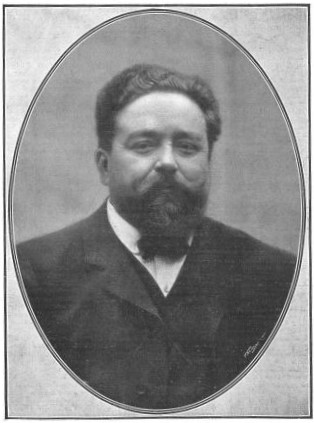
Isaac Albéniz
 Spain
Spainclassical pianist•composer•conductor
Birthday
+1860-05-29
Birth Sign
Sagittarius
Birthplace
Camprodon
Age
Died at 48
About
Born in Camprodon, Spain, on May 29, 1860, Isaac Albéniz became a towering figure in Spanish classical music. He was not just a composer but also a gifted pianist and conductor, shaping the sound of the post-romantic era. Albéniz’s music is deeply rooted in the folk traditions of Spain, weaving intricate melodies and rhythms that evoke the spirit of his homeland. His influence extended to his peers and a generation of younger composers, solidifying his place as a vital voice in European music.
Fame & Fandom
The audience for Isaac Albéniz has never coalesced into a formal fandom with an official name, organized campaigns, or social media rituals. His admirers are primarily scholars, musicians, and listeners who engage with his work through performance and study rather than collective fanfare. While the modern era often celebrates celebrity through active fanbases, Albéniz remains a figure of historical reverence where the relationship between creator and listener is defined by the enduring power of the compositions themselves. This lack of a structured movement does not diminish his stature; indeed, it underscores the timeless nature of his contribution to classical music. Within the iFANN Global Fame Rankings, Albéniz holds a position of significant prominence among his peers. He is currently ranked as the 61st most famous person in Classical, a placement that reflects his sustained relevance in the post-Romantic canon. This ranking indicates a steady standing from the previous cycle, confirming that his music continues to resonate within the specific cultural sphere of classical composition without needing the volatility of contemporary trends. The absence of a named fanbase simply means that his legacy is carried by the universal appreciation of his artistry rather than the noise of a dedicated following.
Interesting Facts and Legends
Born in Camprodon in 1860, Albéniz was a child prodigy who appeared on stage at the age of four, a verified biographical fact recorded by multiple authoritative sources. His career as a touring virtuoso pianist established him as a central voice in Spanish nationalist music during the late 19th century. A central pillar of his legend is the suite *Iberia*, a twelve-piece collection intended to capture the essence of Spain. Although originally written for piano, the work became a guitar staple largely due to Andrés Segovia, who transcribed the pieces despite Albéniz never composing for the instrument. This cross-instrumental adaptation cemented the music's place in classical lore. Another iconic element of his mythology is *Asturias (Leyenda)*, a piece so ubiquitous it became a pre-digital viral hit, frequently appearing in films and advertisements. Modern performances continue to validate this legacy, such as Tomás Cotik playing *Asturias* on the violin in 2026. Albéniz passed away in Paris on May 19, 1909, leaving behind a static but powerful body of work that remains a primary entry point for many exploring Spanish classical music.
Death & Aftermath
Died
+1909-05-18 (aged 48)
Death Place
Camprodon, Catalonia, Spain
Cause of Death
Cancer of the stomach
The posthumous publication of the piano suite Iberia between 1909 and 1911 by Eduardo M. de la Sota cemented Isaac Albéniz's legacy as a master of solo keyboard writing, while the establishment of the Premio Isaac Albéniz and numerous streets bearing his name across Spain ensured his influence endured well beyond his final days. Tributes from peers such as Manuel de Falla and Enrique Granados flowed into Madrid and Barcelona, where memorial concerts were organized to honor the composer who had been hailed as a national hero and the father of modern Spanish musical nationalism. The funeral service took place on May 20, 1909, in the local church of Camprodon, followed by burial in the Camprodon Cemetery, attended by local dignitaries, cultural elites, and former students including Joaquín Turina.
Albéniz passed away in his hometown of Camprodon on May 18, 1909, at the age of 48, having retreated there for health reasons after his last public appearance in London earlier that year. His death was attributed to cancer of the stomach, a condition that had plagued him since approximately 1907 and forced him to cease concert activities by early 1909. Following his death, his widow Clara Blau managed his estate and oversaw the publication of remaining works until her own passing in 1929.
Awards & Accolades
Keywords
Quick Facts
- Profession
- classical pianist, composer, conductor
- Born
- +1860-05-29
- Birthplace
- Camprodon
- Died
- +1909-05-18
- Death Place
- Cambo-les-Bains
- Gender
- Male
- Birth Sign
- Sagittarius
Join the community
fans discussing