 Russia
About
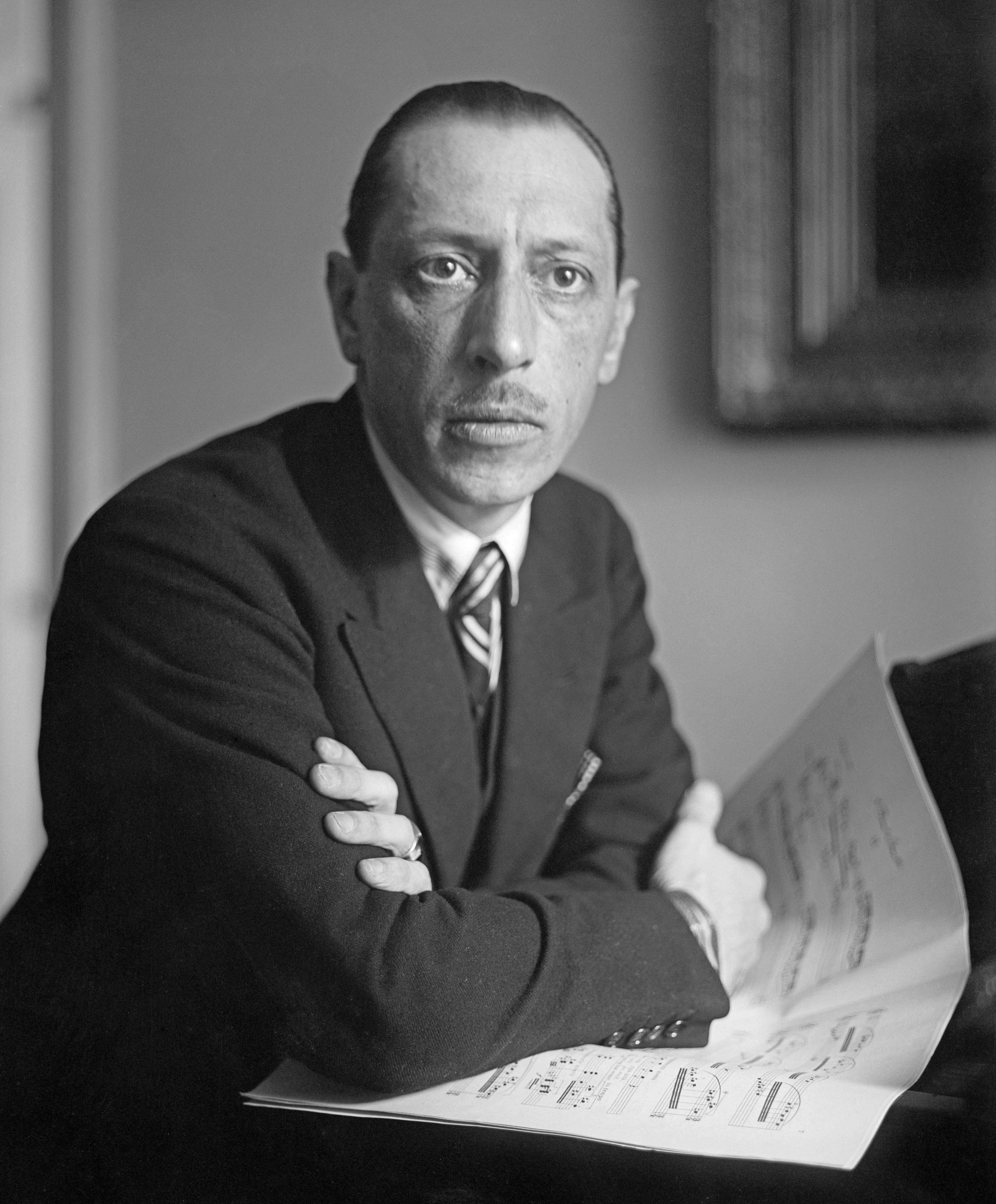
Born in Lomonosov, Russia, on June 18, 1882, Igor Stravinsky became one of the 20th century's most significant and widely recognized composers. He was also an accomplished conductor and pianist. His early life in Saint Petersburg included piano and music theory lessons, but he initially pursued law at the University of Saint Petersburg. It was there he met the composer Nikolai Rimsky-Korsakov, who became his mentor until his death in 1908. This musical apprenticeship set the stage for Stravinsky's own remarkable creative journey. Stravinsky's career trajectory took a dramatic turn when impresario Sergei Diaghilev commissioned him to compose three ballets for the Ballets Russes in Paris. The resulting works, The Firebird (1910), Petrushka (1911), and the revolutionary The Rite of Spring (1913), cemented his international reputation. The premiere of The Rite of Spring famously caused a near-riot, a testament to its daringly modern sound and complex rhythmic structures, which would go on to reshape musical composition. His prolific output is often categorized into distinct stylistic periods. The Russian period (ending around 1920) drew heavily on Russian folklore and styles, seen in pieces like Renard and Les noces. He then entered his Neoclassical period, which lasted for decades and saw him drawing inspiration from the forms and themes of classical antiquity, evident in works such as Octet (1923), Apollon musagète (1927), and Oedipus rex (1927). Later in his career, from the mid-1950s, Stravinsky explored serialism, adopting techniques like the twelve-tone method in compositions including In Memoriam Dylan Thomas (1954). His final major composition was the Requiem Canticles (1966), performed at his own funeral. Stravinsky became a naturalized American citizen in 1945 and died in New York City on April 6, 1971, at the age of 88, leaving behind a vast and varied musical legacy.
Fame & Fandom
The premiere of The Rite of Spring in 1913 ended in a riot that still echoes through concert halls today. Igor Stravinsky remains a towering figure in the classical canon, recognized globally for his radical reinvention of rhythm and form. Current data places him as the 26th most famous person in Classical, a position he has held steady since the last cycle. This standing reflects his enduring presence in orchestral programming worldwide, from Dallas to Chicago, where his works continue to define the genre's boundaries. He also ranks as the 22nd most famous person from Russia, cementing his status as a national icon alongside Tolstoy and Dostoevsky. These placements within the iFANN Global Fame Rankings track his massive footprint across media coverage and consumption signals globally. Despite his death decades ago, Stravinsky commands a dedicated following of musicians, scholars, and enthusiasts who study his scores with intense scrutiny. His audience lacks a formal name or organized fanclub, operating instead as a dispersed community of classical music lovers rather than a modern pop culture movement. There are no birthday billboards or social media campaigns driving his legacy; instead, reverence is shown through the faithful performance of his complex ballets and symphonies. While some legends paint him as a volatile egotist, his musical genius transcends personal flaws, ensuring his work remains central to the cultural conversation.
Interesting Facts and Legends
Igor Stravinsky was born in Lomonosov, Russia, on June 18, 1882, initially studying law before pivoting to music under Nikolai Rimsky-Korsakov. A defining moment in his career occurred at the premiere of The Rite of Spring in Paris. The avant-garde rhythms caused the audience to erupt into shouting matches and physical fights, forcing police intervention and drowning out the dancers. Another legendary event was the dazzling success of The Firebird, which established his reputation overnight. Folklore often surrounds his character, with recent accounts describing him as too much of an egotist to be a good parent and a brute to his first wife. In 2026, his influence remained potent when his music was juxtaposed with Kendrick Lamar in a notable collaboration, proving his relevance extends far beyond traditional classical circles. These stories of chaos and innovation distinguish him as one of the most significant composers of the 20th century.
Death & Aftermath
Died
+1971-04-06 (aged 88)
Death Place
New York City, New York, USA
Cause of Death
Heart failure
On the evening of April 6, 1971, Igor Stravinsky slipped into sleep at his West End Avenue residence in New York City. The composer, who had lived in the United States since 1940, passed away quietly without a final public appearance or dramatic farewell. His attending physician confirmed heart failure as the cause, and family statements validated the natural progression of events. News of the loss rippled through the global music community with immediate intensity. Radio stations worldwide broadcast his compositions, while classical sales surged instantly. Major orchestras like the New York Philharmonic and the London Symphony Orchestra issued tributes honoring him as the greatest composer of the 20th century. Concert halls observed moments of silence to mark the departure of the man who revolutionized harmony and rhythm.
Stravinsky's funeral took place not in New York but at the Church of St. Stephen in Venice, Italy. This choice reflected his complex history with the Soviet Union and his desire for a quiet exit. He was cremated, and his ashes rest in the cemetery of San Michele on the island of San Michele, buried beside his friend and mentor Sergei Diaghilev. Only close associates and his son Soulima attended the low-key ceremony. The Fondation Igor Stravinsky now manages his estate and copyrights to preserve his legacy. His works remain staples of the classical canon, with recent seasons featuring new recordings of pieces like The Firebird. His induction into multiple halls of fame stands as a reflection of an enduring influence that continues to shape musical thought.
Awards & Accolades
Keywords
Quick Facts
- Profession
- composer, conductor, pianist
- Born
- +1882-06-18
- Birthplace
- Lomonosov
- Died
- +1971-04-06
- Death Place
- New York City
- Gender
- Male
- Spouse
- Yekaterina Nosenko, Vera de Bosset
- Birth Sign
- Gemini
Personal Details
- Spouse
- Yekaterina Nosenko, Vera de Bosset
Join the community
fans discussing