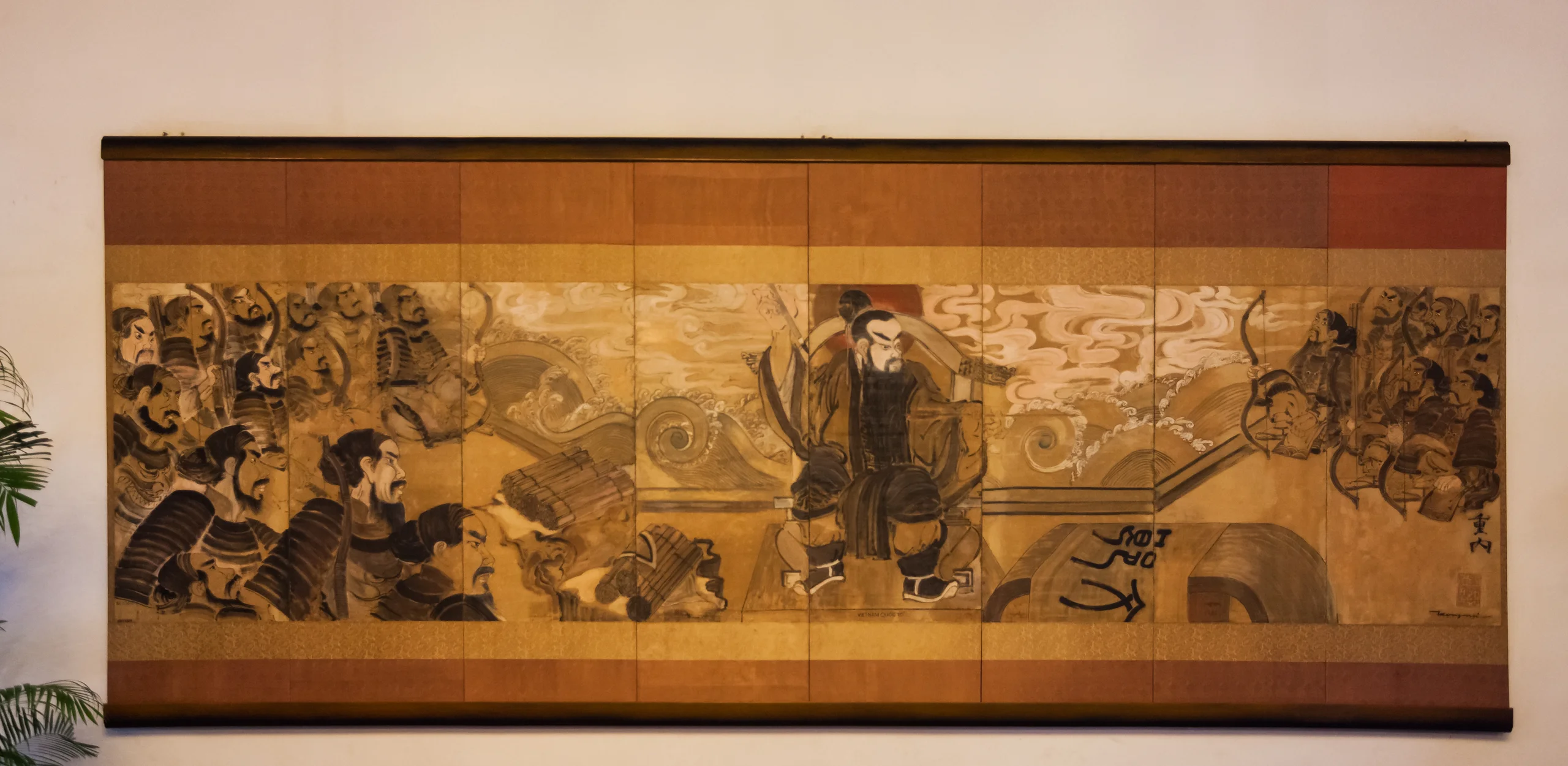
Hùng king
 Vietnam
Also known as: Hùng Vương, Vua Hùng, Hùng kings
Birthday
Birth Sign
Birthplace
Phú Thọ, Vietnam
Age
Died at 0
About
Hùng king (Vietnamese: Hùng Vương or vua Hùng) was the dynastic title held by the legendary rulers of the Hồng Bàng period, the first kingdom in Vietnamese history. These thirty-three kings reigned from approximately 2879 BC to 258 BC and are revered as the founding ancestors of the Vietnamese people, who trace their lineage to the dragon lord Lạc Long Quân and the fairy Âu Cơ.
Today, the Hùng kings are honored through the Hung Kings Commemoration Day, a national holiday celebrated on the tenth day of the third lunar month. In 2012, UNESCO inscribed the festival on the Representative List of the Intangible Cultural Heritage of Humanity. The Hung Kings Temple Complex in Phú Thọ Province draws millions of pilgrims each year, making these ancient figures a living presence in Vietnamese culture.
Early Life & Background
Because the Hùng kings lived in a pre-literate era, their origin story comes from myth and oral tradition. According to the foundational legend, the dragon lord Lạc Long Quân married the fairy Âu Cơ, who laid a hundred eggs. Each egg hatched into a son, and the eldest became the first Hùng king, establishing the Hồng Bàng dynasty around 2879 BC. The kingdom was called Văn Lang, and its capital was located in what is now Phú Thọ Province, north of modern-day Hanoi.
These early rulers are credited with uniting the Lạc Việt tribes and developing the basics of agriculture, including rice cultivation. They also introduced customs such as betel chewing and the practice of tattooing bodies to ward off water spirits. The people they ruled, known as the Lạc Việt, were organized into fifteen administrative divisions called bộ, each governed by a local chieftain. This structure laid the groundwork for a society that would endure for over two millennia.
Career Growth
The reign of the Hùng kings spanned the entire Hồng Bàng period, a time of gradual consolidation and cultural growth. The dynasty reached its peak around 500 BC, when bronze casting flourished, giving rise to the Đông Sơn culture and its famous bronze drums. These drums, used in rituals and warfare, became symbols of power and are among the most iconic artifacts of ancient Southeast Asia.
One of the most beloved stories from this era involves the sixth Hùng king, who tested his sons to choose a successor. One son, Lang Liêu, created bánh chưng and bánh dày, square and round rice cakes representing the earth and sky. The king was so impressed that he made Lang Liêu his heir, and these cakes remain essential to the Tết holiday today.
The dynasty ended in 258 BC when An Dương Vương conquered Văn Lang and established the kingdom of Âu Lạc. Despite this political defeat, the cultural legacy of the Hùng kings endured. Later Vietnamese dynasties, from the Đinh to the Nguyễn, honored them as ancestors, and in 1918 the French colonial administration officially recognized the commemoration ceremony. In 2007, Hung Kings Commemoration Day became a public holiday, and in 2012 UNESCO added the festival to its intangible heritage list.
Career Timeline
Public Image & Style
In Vietnamese culture, the Hùng kings embody national unity and ancestral reverence. They are not seen as distant historical figures but as the spiritual fathers of the nation. The phrase con Rồng, cháu Tiên, meaning children of the dragon and grandchildren of the fairy, captures this intimate connection. During the annual festival, people from all walks of life make pilgrimages to Phú Thọ, often wearing traditional áo dài and participating in solemn rituals. The commemoration is a time for families to gather, offer incense, and reflect on their shared heritage. This deep sense of belonging has made the Hùng kings a powerful symbol of Vietnamese identity, especially during times of national hardship.
Fame & Fandom
The Hùng kings stand as the spiritual bedrock of Vietnam, a collective entity revered by the entire nation rather than a single celebrity with a modern fanbase. Unlike pop icons who chase chart positions, these legendary rulers operate on a scale that defies standard metrics. In August 2026, the iFANN Global Fame Engine evaluated this historical lineage and determined they hold no placement in the published rankings, including the Global Top 1,000 or any scope-specific list. This absence of a numeric rank reflects their status as ancestors rather than contemporary figures competing for public attention. Their 'fandom' is the Vietnamese people themselves, united under the identity of Con Rồng, cháu Tiên, children of the dragon and grandchildren of the fairy. There is no formal club name or organized fan campaign; instead, the community manifests through state-sanctioned rituals and pilgrimage. Every year, millions gather at the Hung Kings Temple Complex in Phú Thọ Province to honor these founding fathers. The 2026 commemoration reached an unprecedented scale, drawing crowds not just from Vietnam but from overseas communities in the US and Malaysia. These gatherings function as the ultimate fan event, blending solemn worship with national unity. Participants wear traditional áo dài, climb Nghĩa Lĩnh Mountain, and offer incense to pray for harvests and prosperity. While no individual idol commands social media trends, the collective legacy generates immense cultural capital. The festival itself, inscribed by UNESCO as Intangible Cultural Heritage, serves as the primary platform where this devotion plays out. It is a living tradition where history is not merely observed but actively performed by descendants seeking connection to their origins.
Interesting Facts and Legends
The Hồng Bàng dynasty is said to have lasted 2,622 years, one of the longest in world history, though scholars largely view it as mythical. The word vương means king, while vua is the common term for monarch, yet both titles apply to the Hùng kings. A sixth king once hosted a rice cake contest that remains a beloved folk tale, and the square bánh chưng wrapped in bamboo leaves is still central to Tết celebrations today. Legend says the hundred sons born to Lạc Long Quân and Âu Cơ explain Vietnam's ethnic diversity, even though the majority identify as Kinh. The temple complex on Nghĩa Lĩnh Mountain features a well where princesses are said to have washed their hair. Another enduring story links the kings to Sơn Tinh and Thủy Tinh, the mountain and water spirits who fought over a princess. These myths are not just bedtime stories; they form the foundation of national identity, retold annually during the festival to reinforce the bond between the living and the dead.
Notable Quotes
“Dù ai đi ngược về xuôi / Nhớ ngày Giỗ Tổ mồng mười tháng ba.”
“Con Rồng, cháu Tiên.”
Family & Personal Life
The Hùng kings descended from the divine couple Lạc Long Quân and Âu Cơ. Their union produced one hundred sons, making the first Hùng king the eldest of a hundred brothers. This large family is said to represent the many ethnic groups of the Vietnamese people. The kings of the Hồng Bàng dynasty typically married princesses from noble families or neighboring tribes, though specific names have been lost to time. The last Hùng king, the thirty-third, was defeated by An Dương Vương, who then married his daughter Mỵ Châu, linking the two dynasties.
Notable Connections
The Hùng kings are closely associated with their mythical parents, Lạc Long Quân and Âu Cơ, and with An Dương Vương, the conqueror who succeeded them. Their story also connects to the legendary figure Triệu Đà, who later incorporated the region into the Nanyue kingdom. These figures form the core of Vietnamese founding mythology.
Relationships & Dating History
The Hùng kings are mythological figures, so their personal relationships are part of legend rather than recorded history. The founder, the first Hùng king, was the son of Lạc Long Quân and Âu Cơ. Tradition holds that the kings married princesses from noble or neighboring families, but specific names are lost. The last Hùng king, Hùng Vương thứ 33, was defeated by An Dương Vương, who then married his daughter Mỵ Châu. As of 2026, the Hùng kings are revered as ancestral spirits, not as living individuals with current relationships.
- MarriedMỵ Châu258 BC - presentDaughter of the last Hùng king, married to An Dương Vương.
Death & Aftermath
Died
258 BC
Death Place
Unknown
Cause of Death
Not recorded
The term "Hùng King" refers to a dynastic title held by a lineage of legendary rulers rather than a single person. There is no record of the death, cause of death, age at death, or final days of a specific individual ruler known as "Hùng King" who died in 258 BC. The year 258 BC marks the end of the Hồng Bàng dynasty and the transition to the Âu Lạc kingdom under Thục Phán (An Dương Vương), but it does not correspond to the verified death date of a specific monarch with a confirmed cause of death. No official statements, family declarations, or police investigations exist regarding their deaths, as modern legal and forensic systems did not operate in the Bronze Age or Iron Age context of ancient Vietnam.
Consequently, details such as exact dates of death, places of death, ages, circumstances, or last public appearances are entirely absent from historical documentation. The concept of a "death anniversary" for the Hùng Kings is commemorated annually through the Hung Kings' Temple Festival, which is held from the 1st to the 10th day of the third lunar month in Phú Thọ province, specifically on Nghĩa Lĩnh Mountain. This festival honors the collective ancestors of the Vietnamese people rather than mourning the death of a single ruler. Recent news reports from 2026 confirm that the festival continues to be a major national event, with ceremonies held nationwide and overseas involving millions of participants paying tribute to the nation's founders. These events feature traditional rituals, cultural performances, and moments of silence, but they remain celebrations of heritage and national identity.
No funeral, burial, or cremation site has been identified for any specific Hùng King, as the dynasty's rulers are believed to have been interred in various locations or their remains lost to legend. Instead, the legacy of the Hùng Kings is preserved through the annual festival, UNESCO recognition of the worship tradition, and the establishment of the Hùng Kings Temple complex in Phú Thọ as a sacred national landmark. The estate of the dynasty was dissolved upon the accession of Thục Phán in 258 BC, marking the end of the Hồng Bàng period and the beginning of a new era in Vietnamese history.
Net Worth (Estate Value)
$0
iFANN Editorial Team estimate
As rulers of a pre-monetary agrarian society, the Hùng kings possessed no personal wealth in the modern sense. Their legacy, however, generates significant economic value today. The Hung Kings Temple Festival attracts millions of visitors each year, boosting tourism and local businesses in Phú Thọ Province. In 2026, the festival is expected to draw record crowds, with events planned on an unprecedented scale. The temple complex and festival are managed by the Vietnamese state, with revenue going to preservation and cultural programs. Per iFANN's editorial analysis, the total net worth is $0. While no estate exists, the cultural capital of the Hùng kings is immeasurable.
Awards Won (1)
The Hùng kings did not receive modern awards, but they hold the highest cultural honour in Vietnam: recognition as the founding ancestors of the nation. In 2012, UNESCO added the Hung Kings Commemoration to its Intangible Cultural Heritage list, a distinction that honours the festival and the kings' enduring legacy.
2012 · Cultural Heritage
Hung Kings Commemoration
Known For
Hồng Bàng dynasty
2879 BC · Founder and ruler
Văn Lang state
2879 BC · Established
Bánh chưng and bánh dày
1000 BC · Legendary creation
Keywords
Sources
Quick Facts
- Birthplace
- Phú Thọ, Vietnam
- Gender
- Male
- Dynasty
- Hồng Bàng
- Reign
- 2879 BC – 258 BC
- Number of Kings
- 33
Frequently Asked Questions
Who was the first Hùng King?
When is Hung Kings Commemoration Day in 2026?
Are the Hùng Kings real historical figures?
How many Hùng Kings ruled Vietnam?
Why is the Hung Kings Festival important?
Similar People
Join the community
fans discussing