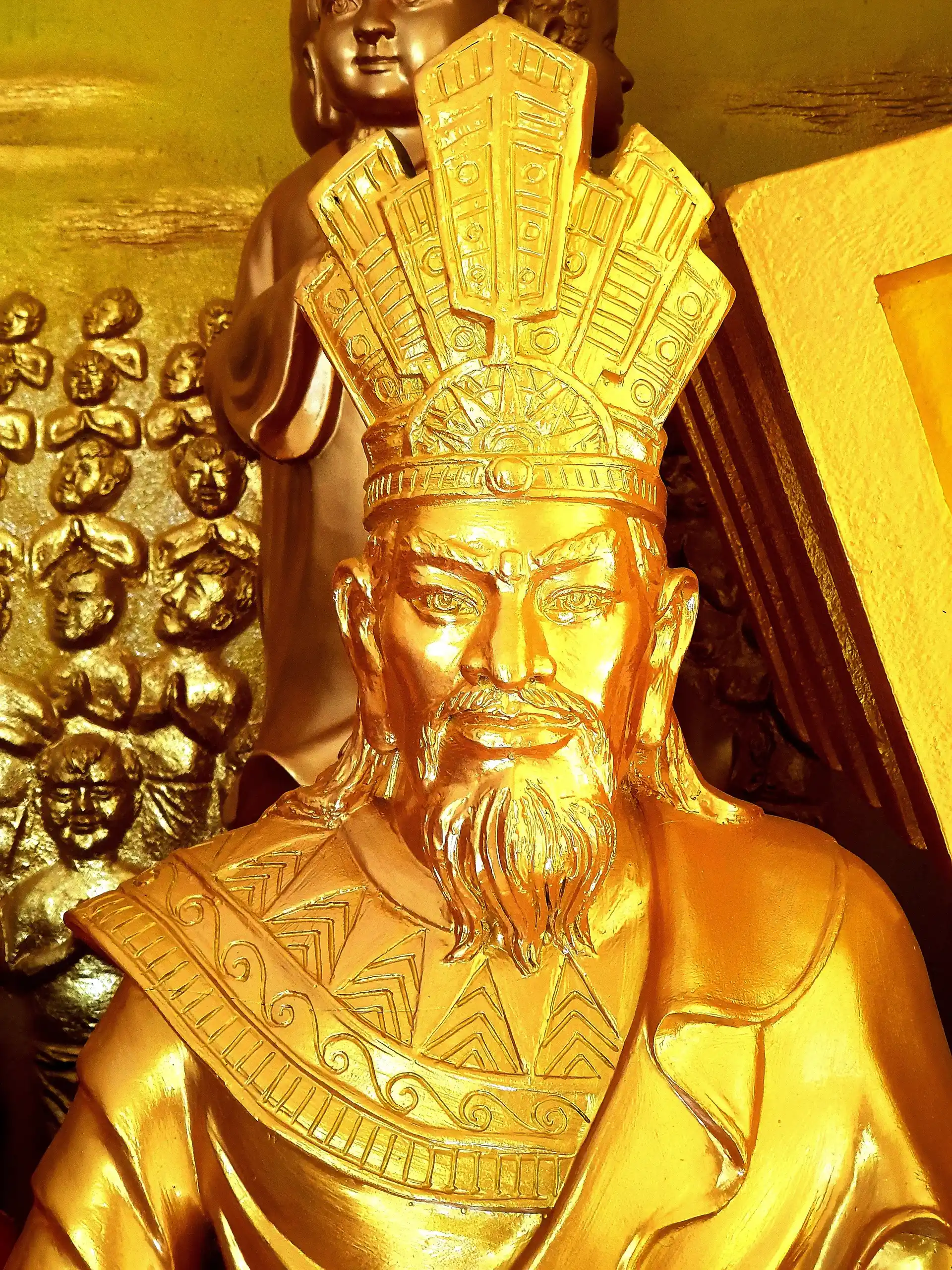
Lạc Long Quân
 Vietnam
Also known as: Sùng Lãm, Dragon King of Lạc
Birthday
Birth Sign
Birthplace
Vietnam
Age
Died at 2500
About
Lạc Long Quân, also known as Sùng Lãm, was a foundational figure in Vietnamese mythology, revered as the Dragon King of Lạc and the second king of the Hồng Bàng dynasty. He ruled the ancient kingdom of Xích Quỷ, inheriting the throne from his father, Kinh Dương Vương. His legend is central to the creation story of the Vietnamese people, explaining their divine origins and the unity of the nation.
Today, Lạc Long Quân is venerated as Đức Quốc Tổ, the National Ancestor, with annual ceremonies held across Vietnam to honor him and his wife, Âu Cơ, the National Mother. His story remains a powerful symbol of Vietnamese identity, celebrated in festivals, schools, and public spaces named after him.
Early Life & Background
According to legend, Lạc Long Quân was born as the son of Kinh Dương Vương, a mountain god, and the dragon goddess Thần Long. He was a dragon by nature, residing in the sea, but he came to the Red River plain to help the people. He slew a giant centipede-like fish in the East Sea, taught wet rice cultivation, and drove away demons, establishing himself as a culture hero before his famous marriage.
His heroic deeds and his role in civilizing the land set the stage for his union with Âu Cơ, which would become the defining moment of Vietnamese mythology.
Career Growth
Lạc Long Quân's reign as king marked the consolidation of the Hồng Bàng dynasty. His most significant act was his marriage to Âu Cơ, which produced a sac with 100 eggs, from which 100 sons were born. This miraculous event is seen as the origin of the Vietnamese race. However, their differing natures led to their separation. Lạc Long Quân took 50 sons to the sea, while Âu Cơ took the other 50 to the mountains, dividing the nation into coastal and highland peoples.
The eldest son, who followed his mother, succeeded Lạc Long Quân, continuing the dynasty. After his death around 2500 BCE, Lạc Long Quân was deified as the National Ancestor, and his legacy is honored annually through festivals and ceremonies.
Career Timeline
Public Image & Style
Lạc Long Quân is viewed as a wise and benevolent dragon king who prioritized the greater good over personal happiness. His separation from Âu Cơ is celebrated as the foundation of Vietnam's unity in diversity. He receives nationwide ancestral worship, with the Hung Kings' Commemoration Day being a public holiday. His image is that of a powerful yet compassionate father of the nation.
Fame & Fandom (iFAMOUS Rankings)
The reverence surrounding Lạc Long Quân differs sharply from modern celebrity fandoms; there are no fan clubs, social media armies, or commercial campaigns. Instead, his following is the entire Vietnamese nation, united by a shared identity as "Con Rồng Cháu Tiên" (Children of the Dragon, Descendants of the Fairy). This connection transcends typical adoration, rooted in ancestor worship and national mythology rather than pop culture consumption. His legacy is maintained through state-sanctioned rituals at the Hung Kings Temple Festival and enduring educational narratives that trace the origins of the people to his union with Âu Cơ. While younger generations navigate shifting cultural landscapes, the core devotion remains a foundational pillar of Vietnamese spiritual life, blending ancient tradition with contemporary expressions of heritage. His standing within global historical consciousness is substantial, reflecting his role as a primary symbol of national identity. According to the iFANN Global Fame Rankings, he holds significant positions among historical figures. He is currently ranked as the 63rd most famous person in Vietnam, a placement that has remained steady across recent cycles. Furthermore, when measured against all individuals originating from the region, he stands as the 77th most famous person from Vietnam. These metrics, drawn from comprehensive tracking of global attention across media coverage, search trends, and cultural consumption signals worldwide, confirm his enduring prominence as a mythical ancestor who continues to shape the collective memory of his people.
Interesting Facts and Legends
While his name translates to Dragon King of Lạc and some versions cite Sùng Lãm as his birth name, the core of his legacy lies in his unique nature as a water-dwelling dragon rather than a slayer. The most enduring tale involves his union with Âu Cơ producing one hundred eggs that hatched into sons. To manage this vast family, he separated them, taking fifty to the sea while Âu Cơ led the other fifty to the mountains, a narrative still retold to explain Vietnam's unity in diversity. This separation gave rise to the proverbial phrase describing their incompatibility as being as water is with fire. Beyond the origin myth, folklore recounts his divine intervention centuries later to aid Lê Lợi against the Ming Dynasty, linking the first emperor of the Later Lê Dynasty back to the ancestral line. Modern adaptations of these legends continue to appear in theatrical productions and cultural festivals, ensuring the story of the Hundred Sons remains a living part of the national narrative. The Hùng King Temple Festival is the primary ritual gathering where millions gather to honor the lineage starting with him.
Notable Quotes
“I am descended from dragons, you from immortals. We are as incompatible as water is with fire. So we cannot continue in harmony.”
Family & Personal Life
Lạc Long Quân was the son of Kinh Dương Vương and the dragon goddess Thần Long. He married Âu Cơ, a mountain fairy, and together they had 100 sons. After their separation, he took 50 sons to the sea, while Âu Cơ took the other 50 to the mountains. The eldest son, who followed his mother, became his successor, ensuring the dynasty's continuation.
Notable Connections
Relationships & Dating History
Lạc Long Quân's only recorded relationship is his marriage to Âu Cơ, a mountain goddess. Their union produced 100 sons, but their differing natures led to an amicable separation. He took 50 sons to the sea, while she took the other 50 to the mountains. This division is mythologically significant, explaining the origins of Vietnam's coastal and highland peoples. As of 2026, the couple remain mythologically separated, with Lạc Long Quân residing in the sea.
- MarriedÂu CơMarried; produced 100 sons; separated due to incompatible natures.
Death & Aftermath
Died
-2500 (aged 2500)
Death Place
Unknown
Cause of Death
Unknown
There is no record of a death for Lạc Long Quân, as he is a mythical figure from Vietnamese legend rather than a historical person whose life events can be verified through modern forensic, legal, or medical documentation. The sources consistently describe him as the son of Kinh Dương Vương and the father of Âu Cơ, credited with founding the Hồng Bàng dynasty and being the ancestor of the Vietnamese people. According to the legends found in the search results, Lạc Long Quân possessed magical powers and the body of a dragon, living during the ancient period traditionally dated to around 2500 BC or earlier, though these dates are part of mythological chronology rather than recorded history.
The stories focus on his marriage to Âu Cơ, the birth of their 100 sons, and the division of the children between land and water, but they do not contain narratives detailing his final days, public appearances prior to death, or the circumstances of his passing. Public reaction to his 'death' does not exist in the form of vigils, chart surges, or memorials tied to a specific event, as his departure from the mortal realm is not a singular historical incident documented in news or official records.
Instead, he is honored continuously through cultural practices, temples (such as the Lạc Long Quân Temple), and annual festivals celebrating the origin of the Vietnamese nation. Any tributes, films, books, or awards mentioned in relation to him are dedicated to his legacy and the legend itself, rather than commemorating a specific death date or posthumous estate settlement.
Net Worth (Estate Value)
$0
iFANN Editorial Team estimate
As a mythological figure who passed down through ancient lore, Lạc Long Quân possesses no material wealth or estate. His legacy is cultural rather than financial, measured in the enduring veneration of the Vietnamese people. Per iFANN's editorial analysis, the total value attributed to his influence stands at $0.
Awards Won (1)
As a mythological figure, Lạc Long Quân holds the highest cultural distinction in Vietnam: veneration as Đức Quốc Tổ, the National Ancestor. This honor is not an award in the conventional sense but a permanent state of national reverence.
Cultural Honor
Vietnam
Known For
Hồng Bàng Dynasty
-2800 · King
Myth of Lạc Long Quân and Âu Cơ
· Protagonist
Keywords
Sources
Quick Facts
- Birthplace
- Vietnam
- Died
- -2500
- Gender
- Male
- Spouse
- Âu Cơ
Personal Details
- Full Name
- Sùng Lãm
- Spouse
- Âu Cơ
- Children
- 100 sons
Frequently Asked Questions
Is Lạc Long Quân real?
Who is Lạc Long Quân's wife?
What does Lạc Long Quân mean?
How many children did Lạc Long Quân have?
Why did Lạc Long Quân and Âu Cơ separate?
Similar People
Join the community
fans discussing