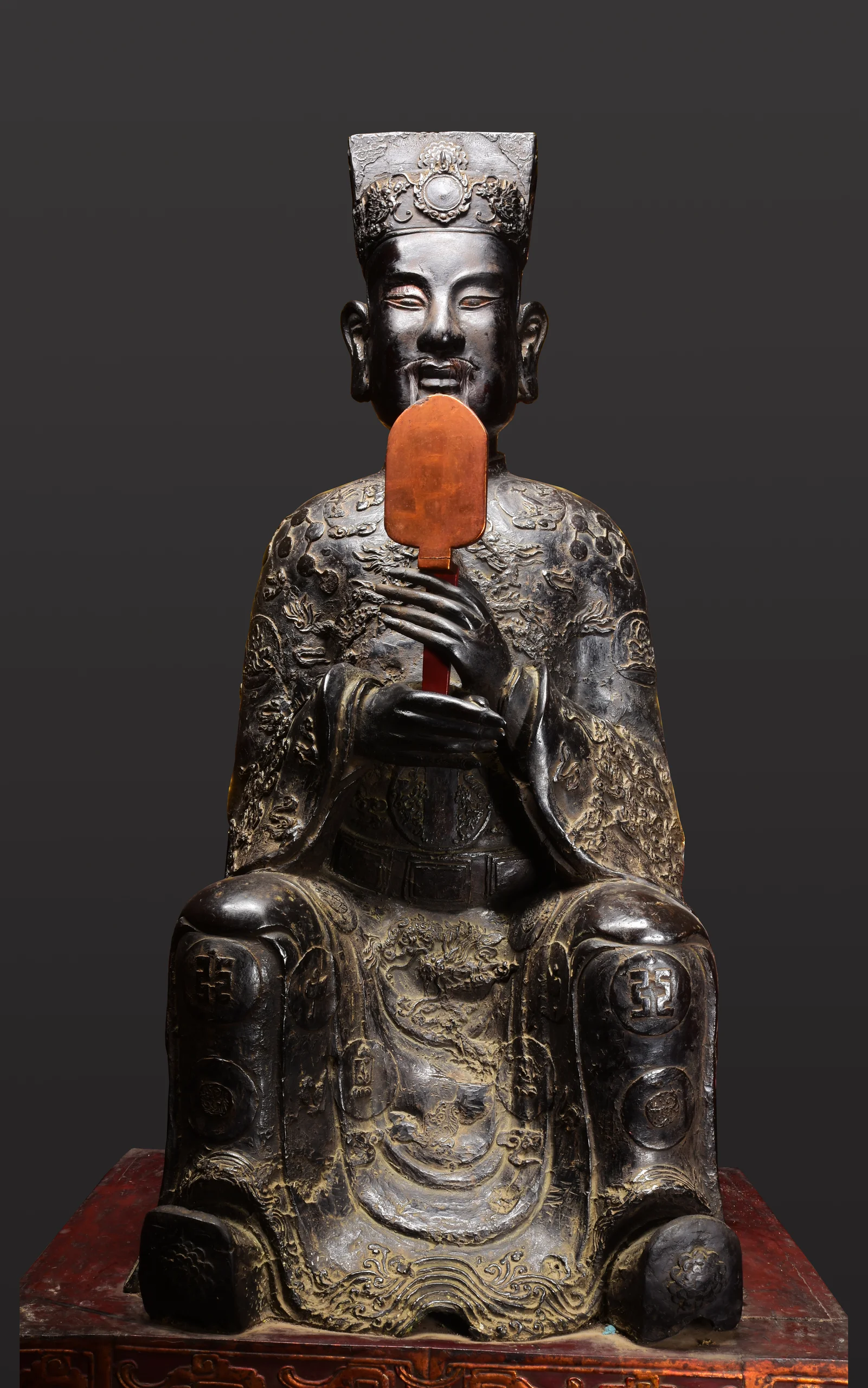
An Dương Vương
 Vietnam
Also known as: Thục Phán, King of Âu Lạc, 蜀泮
Birthday
-0257
Birth Sign
Capricorn
Birthplace
Tây Âu region (modern-day Yên Bái or Lào Cai, Vietnam)
Age
Died at 464
About
An Dương Vương, born Thục Phán, was the founding king and sole sovereign of the ancient kingdom of Âu Lạc, ruling in the Red River Delta region of what is now northern Vietnam. Born approximately 257 BCE, he emerged from a lineage of Âu Việt tribal leaders to unify the Lạc Việt and Âu Việt peoples. His reign marked a pivotal transition in early Vietnamese history, establishing the first centralized state after defeating the final Hùng King of Văn Lang.
He is best known for constructing the massive, spiral-shaped Cổ Loa Citadel and forging the legendary Nỏ Thần magic crossbow. His rule ended tragically around 207 BCE following a betrayal involving his daughter, Mỵ Châu, and the invasion by the Kingdom of Nanyue. According to legend, he ascended on a white dragon into the sea rather than be captured. His legacy persists as a foundational pillar of Vietnamese national identity and a cautionary tale about loyalty.
Early Life & Background
Before ascending to the throne, Thục Phán served as the leader of the Âu Việt tribe, a powerful group situated north of the traditional Văn Lang territory. Historical accounts suggest he possessed significant military acumen and political foresight that set him apart from other chieftains of the era. His origins trace back to the Tây Âu region, encompassing areas in modern-day Yên Bái and Cao Bằng provinces, where he likely spent his formative years managing resources and leading nomadic groups.
The path to power began when he challenged the established order of the Hồng Bàng dynasty. In the late 3rd century BCE, Thục Phán led his forces against the last Hùng King of Văn Lang. His victory was not merely a military triumph but a political unification that merged two major ethnic confederations of the delta. This conquest allowed him to assume the royal title "An Dương Vương" (King of Pacified Yang) around 257–258 BCE, marking the end of nearly 2,000 years of Hồng Bàng rule and the birth of the new kingdom of Âu Lạc.
Career Growth
As the only ruler of Âu Lạc, An Dương Vương's reign is defined by monumental infrastructure and military innovation rather than commercial projects. His most enduring achievement was the construction of the Cổ Loa Citadel, a massive fortress featuring concentric earthen walls, moats, and defensive towers. This architectural marvel represented a leap in urban planning and military engineering for the era, designed to protect the new kingdom from external threats.
According to legend, which permeates Vietnamese historical memory, An Dương Vương received a magical golden claw from a divine turtle god. Using this relic, he forged the Nỏ Thần, a crossbow capable of firing hundreds of bolts with a single trigger pull. This weapon secured his victories against initial incursions and solidified his power for decades. To secure peace with the southern neighbor, the Kingdom of Nanyue, he engaged in a diplomatic marriage alliance by marrying his daughter, Mỵ Châu, to Trọng Thủy, the son of Triệu Đà. This decision, intended to foster unity, ultimately proved fatal due to betrayal, leading to the collapse of his kingdom in 207 BCE.
Career Timeline
Public Image & Style
An Dương Vương is portrayed as a tragic hero, a visionary leader whose downfall was caused by familial betrayal. His image is one of dignity, wisdom, and ultimate sacrifice. In Vietnamese culture, he represents the dangers of naivety and the importance of vigilance. His story is ubiquitous in textbooks, literature, and theater, serving as a moral parable on loyalty and treason. The image of the king riding a white dragon into the sea is a defining visual in Vietnamese art and folklore, representing his transition from a mortal king to a spiritual ancestor.
Fame & Fandom
An Dương Vương commands a unique place in Vietnamese consciousness, not as a celebrity with a modern fanbase, but as an ancestral pillar whose legacy is woven into the very fabric of national identity. There is no organized group of followers bearing a specific moniker, nor are there campaigns or rituals typical of contemporary pop culture; instead, reverence for the founder of Âu Lạc manifests through state-led preservation and deep cultural memory. Temples like the Đền An Dương Vương stand as sites of historical worship rather than fan pilgrimage centers, reflecting a relationship built on heritage rather than fandom. The stories surrounding him, the spiral construction of Cổ Loa Citadel, the magic of the Nỏ Thần crossbow, and the tragic betrayal by his daughter Mỵ Châu, serve as foundational myths that define the nation's moral landscape.
This enduring presence has secured his standing in the iFANN Global Fame Rankings. His influence remains steady and profound, cementing his status as a figure of immense historical weight. As of the September 2026 rankings, he is currently the 44th most famous person in Vietnam, holding steady from the previous cycle. Furthermore, he ranks as the 48th most famous person from Vietnam, also maintaining his position from the prior assessment.
Interesting Facts and Legends
Born Thục Phán, this sovereign unified the Âu Việt and Lạc Việt tribes to establish the kingdom of Âu Lạc in the 3rd century BCE. While the historical record confirms his role as a formidable leader who defeated the final Hùng king, much of his story exists within the realm of folklore. A widely retold legend claims he received a magical golden claw from a divine turtle god to forge the Nỏ Thần, a crossbow capable of killing hundreds with a single shot. This weapon initially secured his victories against invaders from the Nanyue kingdom. However, the narrative takes a tragic turn when his daughter, Mỵ Châu, inadvertently reveals the weapon's secret to her lover Trọng Thủy. Following this betrayal, the crossbow fails during the invasion, leading to An Dương Vương's flight and eventual death in 207 BCE. Another central tale describes the construction of the massive, spiral-shaped Cổ Loa Citadel, which serves as a symbol of his visionary leadership. These stories, passed down through centuries, transform him from a mere historical figure into a mythological hero whose life lessons on loyalty and treason remain deeply embedded in Vietnamese culture.
Family & Personal Life
An Dương Vương's personal life is documented primarily through folklore and historical chronicles like the Đại Việt sử ký toàn thư. His wife's name is not explicitly recorded in major historical texts, though she is often referred to as the Queen Mother in later cultural depictions. His most famous relationship was with his daughter, Mỵ Châu, who was married to Trọng Thủy, the prince of Nanyue. This union was a political strategy to prevent war, but it resulted in the downfall of his kingdom when Trọng Thủy, instructed by his father, stole the secret of the magic crossbow. There are no records of other offspring mentioned in primary legends.
Notable Connections
Relationships & Dating History
An Dương Vương's relationships were dynastic and political, characteristic of ancient monarchies. His most significant union was with his daughter, Mỵ Châu, whom he married off to Trọng Thủy, the son of Triệu Đà, King of Nanyue. This marriage was intended as a diplomatic strategy to foster peace between Âu Lạc and Nanyue. However, the alliance turned disastrous when Trọng Thủy, acting on his father's orders, convinced Mỵ Châu to reveal the secret mechanism of the Nỏ Thần. This betrayal directly led to the fall of the kingdom. No other spouses or children are recorded in historical texts beyond Mỵ Châu.
- Parent-ChildMỵ Châu-257 - -207Daughter who betrayed him by revealing the secret of the magic crossbow.
Death & Aftermath
Died
-0207 (aged 464)
Death Place
Cổ Loa, Âu Lạc (modern-day Hanoi, Vietnam)
Cause of Death
Ascension via divine dragon (legend)
The final chapter of An Dương Vương unfolded as his capital at Cổ Loa fell to the invading forces of Triệu Đà, King of Nanyue. Following the tragic betrayal by his daughter Mỵ Châu and the loss of his magical crossbow, the sovereign fled toward the sea rather than face capture. Legend recorded in the Đại Việt sử ký toàn thư describes him mounting a divine white dragon to ascend into the ocean, vanishing from the mortal world without a confirmed physical end or burial site. This departure remains rooted in myth rather than forensic fact, inquest, or medical ruling ever documented for events over two millennia ago.
The historical reaction to this event has been one of enduring veneration rather than mourning for a sudden passing. He is honored today as the founder of Âu Lạc and a symbol of sovereignty, with the An Dương Vương Temple within the Cổ Loa Citadel complex serving as a major pilgrimage site. Annual festivals held during the Lunar New Year and the anniversary of his reign allow communities to pay respects, though these are cultural commemorations of his life and legacy rather than vigils for a specific death. His kingdom was absorbed by Nanyue, and his lineage is remembered through the enduring folklore surrounding his daughter. His story remains central to Vietnamese literature, school curricula, and national identity.
Net Worth (Estate Value)
$0
iFANN Editorial Team estimate
Awards & Accolades
View 7 records, honours and achievementsKnown For
Founding of Âu Lạc
-257 · Sovereign
Cổ Loa Citadel
-257 · Architect
Legend of the Nỏ Thần
-257 · Legendary Figure
Keywords
Sources
Quick Facts
- Profession
- sovereign
- Born
- -0257
- Birthplace
- Tây Âu region (modern-day Yên Bái or Lào Cai, Vietnam)
- Died
- -0207
- Gender
- Male
Personal Details
- Full Name
- Thục Phán
- Children
- Mỵ Châu
Frequently Asked Questions
Who was An Dương Vương?
What happened to An Dương Vương?
Where is An Dương Vương buried?
What is the story of Mỵ Châu and Trọng Thủy?
Is the Cổ Loa Citadel a real place?
Similar People
Join the community
fans discussing